Side-by-Side Cognitive Profiles
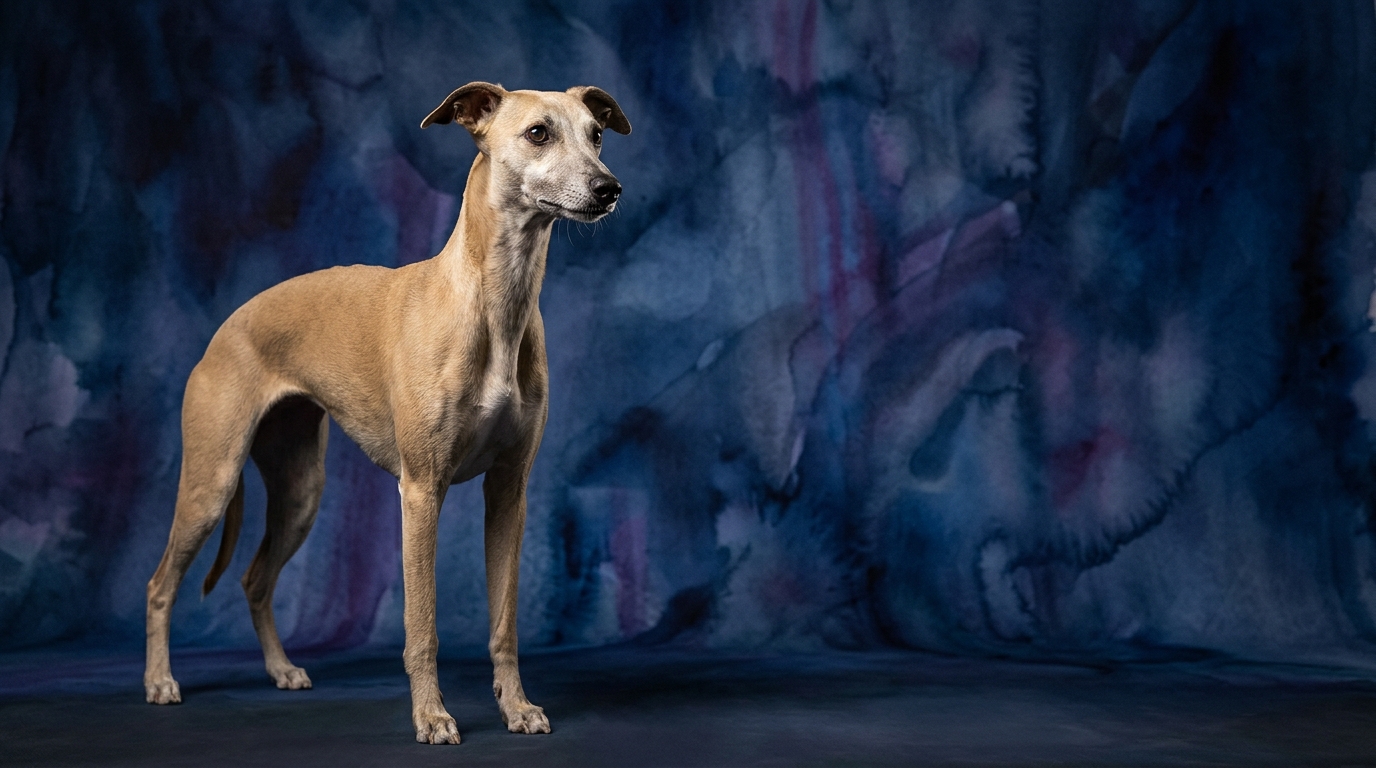
Our Cosmic Pet Pet IQ Lab assesses five crucial dimensions of canine cognition. For the Whippet, a Coren rank of #51 places them in the above-average working intelligence category. Their cognitive breakdown includes Problem Solving at 3/5, Training Speed at 2/5, Social Intelligence at 4/5, Instinctive Drive at 5/5, and Memory at 3/5. This profile paints a picture of a perceptive companion with a potent, specialized instinct.
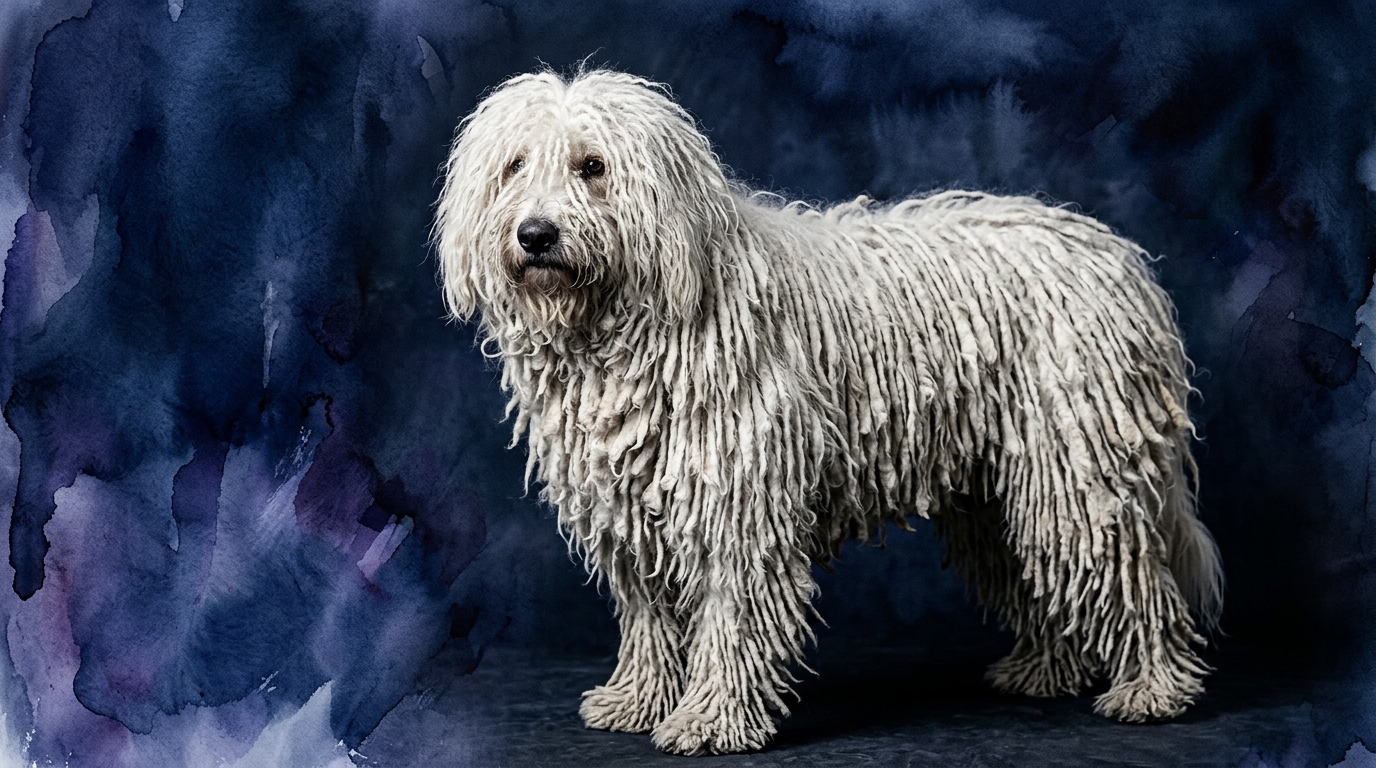
The Komondor, with a Coren rank of #67, falls into a slightly lower but still respectable tier for working intelligence. Their cognitive scores are Problem Solving 3/5, Training Speed 3/5, Social Intelligence 3/5, Instinctive Drive 3/5, and Memory 3/5. This suggests a more balanced, perhaps less extreme, distribution across their cognitive capabilities, reflecting their historical role as independent guardians.
Delving deeper, a Whippet's Problem Solving at 3/5 manifests in navigating complex environments during a chase or cleverly securing a prime napping spot, applying their moderate cognitive flexibility to immediate, often self-serving, tasks. Their Social Intelligence at 4/5 indicates a keen awareness of human emotional states and household dynamics, allowing them to integrate smoothly into family life and respond to subtle cues. The Instinctive Drive at 5/5 is a defining feature, representing an almost unparalleled, innate urge to pursue moving objects, a specialized and highly refined predatory motor pattern.
For the Komondor, a Problem Solving score of 3/5 typically revolves around assessing their territory and identifying potential threats, evaluating situations rather than engaging in complex puzzle-solving. Their Social Intelligence at 3/5 reflects a reserved nature; while they bond deeply with their family, they are less overtly expressive or attuned to the nuances of human social interactions with outsiders. The Instinctive Drive at 3/5 for a Komondor is primarily a strong, protective guarding impulse, a watchful vigilance rather than a high-energy chase drive, requiring careful management and early socialization to channel appropriately.
Where the Whippet Excels Cognitively
The Whippet's cognitive strengths shine particularly in their Social Intelligence (4/5) and their exceptional Instinctive Drive (5/5). Their elevated social intelligence means they are often remarkably attuned to the emotional landscape of their human companions. They possess an intuitive ability to read moods and respond with comforting presence or playful invitations, fostering a deep, empathetic connection within the family unit. This isn't merely affection; it's a sophisticated understanding of social dynamics.
Furthermore, the Whippet's Instinctive Drive, rated at a perfect 5/5, represents a pinnacle of specialized canine cognition. This drive isn't just about speed; it encompasses lightning-fast visual processing, rapid decision-making in pursuit, and an inherent understanding of spatial dynamics during a chase. Their neurological wiring is optimized for spotting, tracking, and maneuvering with incredible precision and focus, making them masters of their sighthound craft. This specialized cognitive prowess allows them to excel in activities like lure coursing, where their natural inclinations are expertly channeled.
Their moderate Memory (3/5) supports their social intelligence by allowing them to recall routines and the preferences of their human family members, reinforcing positive interactions. They remember where the most comfortable couch is, the schedule for walks, and the specific cues associated with their favorite games, contributing to their seamless integration into domestic life.
Where the Komondor Demonstrates Cognitive Strengths
The Komondor’s cognitive profile, while different from the Whippet's, presents its own distinct advantages, particularly in their Training Speed (3/5) relative to the Whippet, and the specific application of their Problem Solving and Memory in their guarding role. Their Training Speed of 3/5 indicates a moderate capacity for learning and retaining structured commands, often showing a quicker initial grasp of obedience cues compared to the more independently minded Whippet. This is a practical cognitive asset for a large working breed that needs to understand boundaries and expectations.
A Komondor's moderate Problem Solving (3/5) and Memory (3/5) are uniquely geared towards their historical purpose. These dogs exhibit a nuanced ability to assess their environment, remember perceived threats, and develop strategic patrol patterns within their territory. This isn't about solving abstract puzzles, but rather about practical, real-world assessment of their surroundings, identifying anomalies, and making independent judgments about the safety of their flock or family. Their memory allows them to recall specific individuals or situations that have previously required their vigilance.
Their Instinctive Drive (3/5), though lower than the Whippet's chase drive, is a formidable cognitive strength in its own right—a deep-seated, unwavering commitment to protection. This drive is manifested in their calm, watchful demeanor, their ability to discern friend from foe, and their readiness to intervene when a threat is genuinely perceived. It’s a cognitive process rooted in vigilance, assessment, and territorial defense, demanding a different kind of mental engagement than the Whippet's pursuit-oriented focus.
Ease of Training: Whippet vs. Komondor
When evaluating which breed is easier to train, The Cosmic Pet Pet IQ Lab data suggests a subtle but significant difference. The Komondor, with a Training Speed of 3/5, generally exhibits a slightly quicker uptake of new commands and a greater willingness to engage in structured learning sessions compared to the Whippet’s 2/5. This is often attributed to the Komondor's working breed heritage, where responding to specific directives was crucial for their guarding duties, even if their independence means they won't be robotically compliant.
The Whippet's Training Speed of 2/5 indicates that while capable, they may require more patience, consistency, and creative motivation to master new behaviors. Their strong Instinctive Drive (5/5) means they are easily distracted by movement or potential chase opportunities, which can override their focus on human-directed tasks. Training a Whippet often involves short, engaging sessions, positive reinforcement, and careful management of their environment to minimize competing stimuli, leveraging their social intelligence to build a strong working relationship.
Conversely, the Komondor's training challenges stem from their independent nature and their deep-seated guarding instincts. While they might learn commands at a moderate pace, their decision-making is often rooted in their protective role. They may question or ignore a command if it conflicts with what they perceive as their duty to guard. This requires an owner who understands breed-specific motivations and can establish clear, consistent leadership and early, extensive socialization to ensure their protective instincts are well-managed and directed.
In practical terms, neither breed is inherently 'easy' for a novice owner, but for different reasons. The Komondor's slightly higher training speed suggests a more direct path to command acquisition, provided the owner respects their independent, guarding mindset. The Whippet's lower training speed, coupled with their intense chase drive, demands a more nuanced approach to engagement and distraction management, making consistent, creative training essential to harness their focus.
Active Owners vs. Relaxed Owners: A Cognitive Fit
The distinct cognitive profiles of the Whippet and Komondor dictate very different lifestyle fits for their owners. Whippets, with their unparalleled Instinctive Drive (5/5) and moderate Problem Solving (3/5), are ideally suited for active owners who can provide consistent outlets for their need to run and chase. These dogs thrive on bursts of intense physical activity, such as lure coursing, fetch in a securely fenced area, or long, brisk walks where they can stretch their legs. Their social intelligence (4/5) means they enjoy sharing these activities with their human companions, forming strong bonds through shared experiences.
A relaxed owner who cannot commit to providing these outlets may find a Whippet's unfulfilled instinctive drive manifests in restless behavior or a struggle to manage their powerful prey instinct in inappropriate environments. While they are renowned for their couch-potato tendencies indoors, this tranquility is often contingent on having their physical and cognitive needs for speed and chase met regularly.
The Komondor, while a large working breed, paradoxically suits a more 'relaxed' owner in terms of high-energy, structured exercise, but demands a vigilant and consistent owner. Their Instinctive Drive (3/5) is geared towards patrolling and observation rather than high-speed pursuit. They are content with supervising their territory, requiring regular but not necessarily intense physical activity. Their moderate Problem Solving (3/5) and Memory (3/5) are constantly engaged in assessing their environment for perceived threats, making their 'work' more mental than purely physical.
Owners who appreciate a steadfast, independent guardian and are prepared for extensive socialization and consistent, firm training will find the Komondor a fulfilling companion. They are not dogs that demand constant interaction or high-octane adventures; rather, they prefer to be close, observing, and maintaining their watchful presence. Their need is for an owner who understands and respects their inherent protective nature, providing clear boundaries and a secure environment where their guarding instincts can be appropriately expressed without becoming problematic.
The Verdict: When to Choose Each Breed
Choosing between a Whippet and a Komondor ultimately depends on an owner's lifestyle, experience, and the specific cognitive traits they seek in a canine companion. Each breed offers a unique neurological tapestry that shapes their behavior and compatibility with different human environments.
If you are an active individual or family seeking an empathetic, agile companion who thrives on speed, bursts of activity, and a deep social bond, and you are prepared to manage a strong chase instinct, the Whippet's cognitive makeup makes them an excellent fit. Their joy in movement and their attunement to human emotion create a wonderfully interactive partnership.
Conversely, if you are an experienced owner seeking a steadfast, protective guardian with an independent and discerning mind, prepared for a commitment to early and continuous socialization, and capable of understanding the nuances of a powerful working breed's protective drives, the Komondor will be a profoundly rewarding choice. Their cognitive strengths lie in their unwavering vigilance and their ability to independently assess and protect their domain.
The Verdict
Choose a Whippet if you desire an empathetic, agile companion who thrives on speed and shared activity, and you are prepared to manage a strong chase instinct.
Choose a Komondor if you seek a steadfast, protective guardian with an independent and discerning mind, ready for a commitment to early socialization and understanding of working breed traits.
🧠 Find Your Pet's IQ Score
Our Pet IQ Lab assessment covers 25+ tests across 5 cognitive dimensions — personalized to your breed.
Take the Full IQ Test →Frequently Asked Questions
Do Whippets and Komondors enjoy learning new tricks?
Whippets, with their moderate problem-solving and social intelligence, can enjoy learning tricks, especially if framed as a fun game with positive reinforcement, though their training speed is slower. Komondors, with slightly faster training speed and a working mindset, can learn tricks but might be less enthusiastic about arbitrary tasks, preferring activities aligned with their guarding instincts.
How does a Whippet's social intelligence manifest in daily life?
A Whippet's high social intelligence means they are often very attuned to their owner's moods, offering comfort when sad or initiating play when happy. They adapt well to household routines and are generally polite with familiar guests, often seeking out affection and interaction within their social circle, making them empathetic family members.
Is a Komondor's guarding instinct trainable?
A Komondor's guarding instinct is deeply ingrained but can be managed and directed through extensive early socialization and consistent, firm training. While you cannot extinguish their protective nature, proper training teaches them appropriate times and situations for vigilance versus intervention, ensuring they are discerning guardians rather than indiscriminately aggressive.