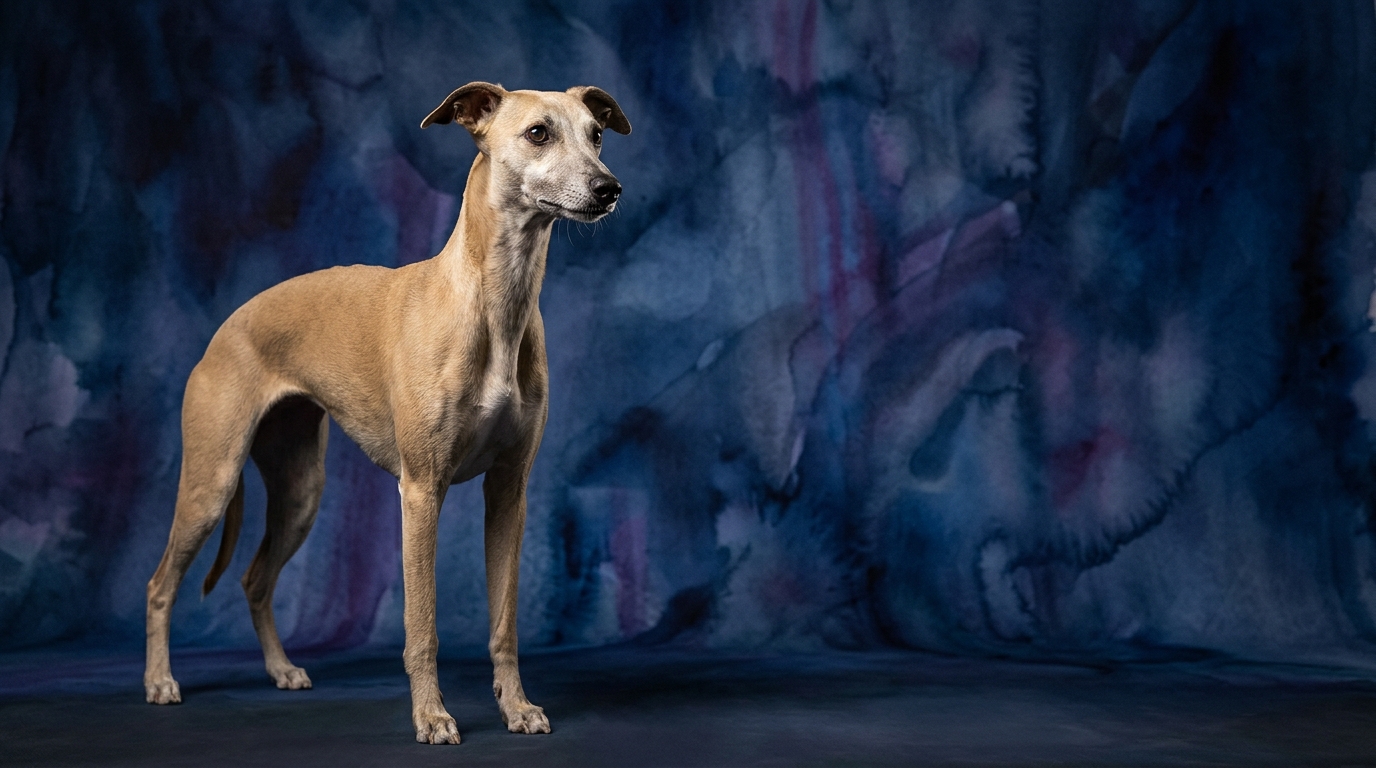
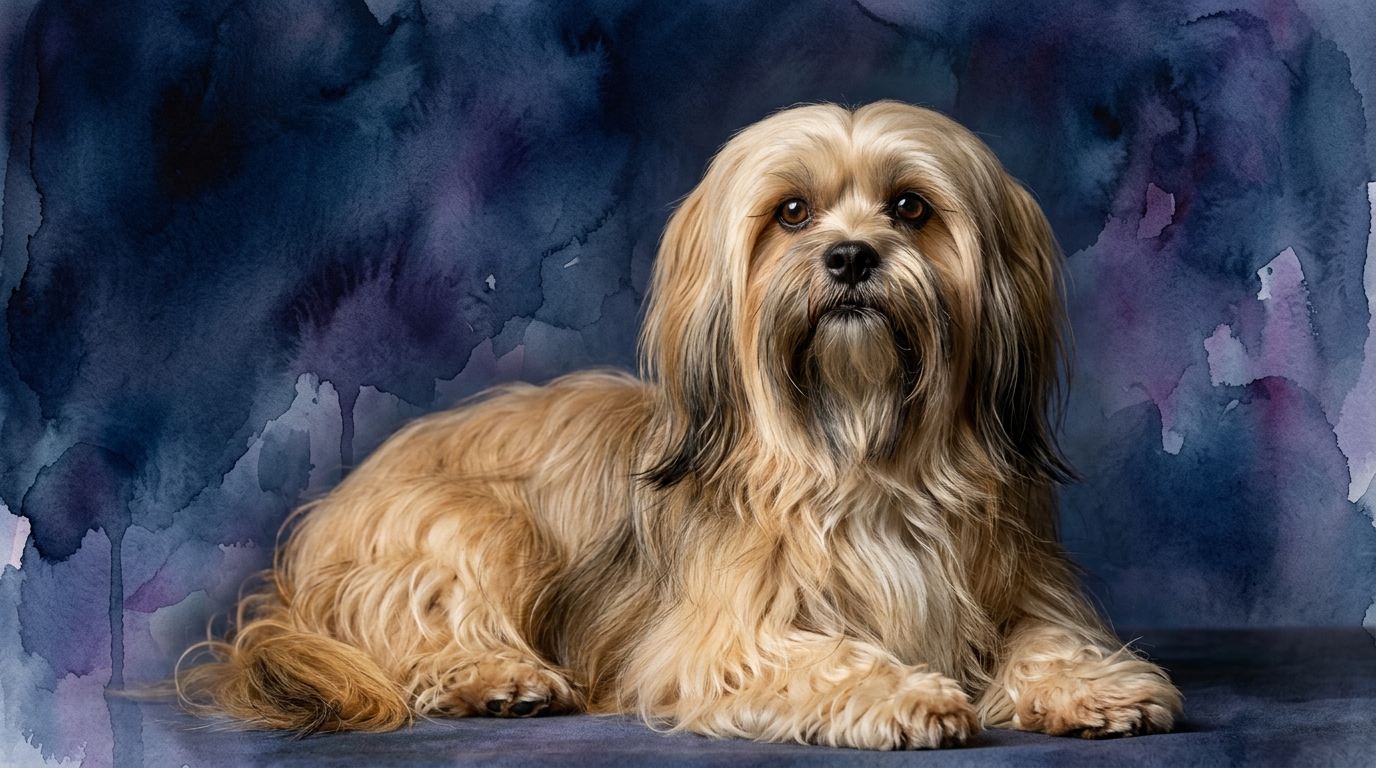
Side-by-Side Cognitive Profiles
The Cosmic Pet Pet IQ Lab employs a five-dimensional framework to assess canine intelligence, offering a nuanced view beyond a single score. For the Whippet, ranked #51 by Coren, their cognitive breakdown includes a Problem Solving score of 3/5, indicating a moderate ability to navigate novel situations or puzzles, learning from experience but perhaps not innovating complex solutions. Their Training Speed is rated 2/5, suggesting they might take longer to consistently grasp new commands, often requiring patient, repetitive methods. A notable strength is their Social Intelligence at 4/5, reflecting a strong capacity to understand human cues and emotional states. Instructive Drive is exceptionally high at 5/5, highlighting their inherent drive for chasing and running. Finally, their Memory sits at 3/5, an average recall for learned tasks and routines.
In contrast, the Lhasa Apso, with a Coren rank of #68, presents a slightly different cognitive texture. They share a Problem Solving score of 3/5 with the Whippet, indicating similar moderate capabilities in figuring out challenges. Their Training Speed is rated 3/5, suggesting they can learn new commands a bit more readily than the Whippet, perhaps due to a different motivational structure. Social Intelligence for the Lhasa Apso is 3/5, meaning they possess a moderate understanding of social cues, capable of forming strong bonds but potentially more reserved or selective in their interactions. Their Instinctive Drive is 3/5, reflecting a moderate level of inherent behaviors, primarily related to their historical guarding role rather than high-speed pursuit. Their Memory, like the Whippet, is rated 3/5, signifying average retention of experiences and commands.
Where the Whippet Excels Cognitively
The Whippet’s standout cognitive strength lies in its Social Intelligence, scoring 4/5 compared to the Lhasa Apso’s 3/5. This manifests as a profound attunement to human emotions and subtle social cues. Whippets often seem to anticipate their owner's moods, offering comfort or seeking interaction based on perceived emotional states. They are remarkably sensitive companions, thriving on close interaction and easily integrating into family dynamics, often becoming silent, empathetic observers of household life. This heightened social awareness makes them incredibly responsive to their human companions, forming deep, intuitive bonds.
Another area where Whippets truly shine is their Instinctive Drive, rated a perfect 5/5 against the Lhasa Apso’s 3/5. While this intense drive, particularly their prey instinct, can present training challenges, it is a testament to their specialized cognitive processing. This drive fuels their explosive athleticism and laser-like focus when a small, moving object catches their eye. Their ability to rapidly detect, track, and pursue targets demonstrates a highly evolved form of spatial reasoning and reaction time, a cognitive marvel honed over centuries of sighthound breeding. This isn't merely physical prowess; it's a deep-seated mental blueprint for efficient pursuit.
Where the Lhasa Apso Demonstrates Cognitive Strengths
The Lhasa Apso edges out the Whippet in Training Speed, scoring 3/5 compared to the Whippet’s 2/5. This doesn't necessarily mean they are more 'clever' in a general sense, but rather that they often show a slightly quicker initial grasp of new commands and a greater willingness to engage in structured learning sessions. Their historical role as vigilant watchdogs in Tibetan monasteries required them to be alert and responsive to specific environmental cues, fostering a disposition that translates to a more focused and attentive attitude during training, particularly when clear rewards are involved. They can be very methodical in their learning, absorbing routines with consistent repetition.
While their overall Social Intelligence is rated lower than the Whippet’s, the Lhasa Apso’s social cognition is uniquely tailored to their guardian heritage. They exhibit a discerning and selective social intelligence, quickly identifying what is 'normal' versus 'unusual' in their environment and reacting accordingly. This makes them exceptional at recognizing strangers or novel situations, often with a reserved and watchful demeanor rather than immediate engagement. Their strong sense of territory and selective bonding means they are less prone to indiscriminate friendliness, offering a distinct cognitive strength in their ability to act as alert, reliable sentinels for their chosen family and home.
Training Dynamics: Whippet vs. Lhasa Apso
When considering ease of training, the Whippet, with its Training Speed score of 2/5, can present a more significant challenge. Their independent hound nature means they often prioritize their intrinsic motivations, such as the irresistible urge to chase something, over human commands, particularly in distracting outdoor environments. Success with Whippets requires immense patience, consistent positive reinforcement, and building a very strong, trusting bond. While their high social intelligence means they understand what you want, their deep-seated instinctive drives can frequently override their willingness to comply unless the motivation is compelling or the proof that following a command is more rewarding than chasing is consistently demonstrated. They are sensitive dogs that respond poorly to harsh or punitive methods, often shutting down or becoming fearful. Training needs to be framed as a fun, collaborative activity.
The Lhasa Apso, scoring 3/5 in Training Speed, can be somewhat easier to train in terms of initial command acquisition. They are often highly food-motivated and can maintain focus during shorter, engaging training sessions. However, their independent and sometimes stubborn streak, coupled with their inherent guarding instincts, means they can be particular about who they listen to and under what circumstances. While less likely to bolt after prey, a Lhasa Apso might choose to ignore a command if they perceive something else as more important, such as barking at a perceived intruder or defending their favorite spot on the couch. Consistent, firm, yet gentle leadership is paramount, establishing clear boundaries and routines from a young age to channel their inherent alertness and strong will into desirable behaviors. Their training journey benefits from understanding their historical purpose and respecting their discerning personality.
Lifestyle Fit: Active vs. Relaxed Owners
For active owners, the Whippet often presents an intriguing paradox. While they possess an exceptional Instinctive Drive for bursts of speed (5/5), they are not endurance athletes. Whippets thrive with owners who can provide regular opportunities for short, intense sprints in a safely enclosed area. This could be a fenced yard, a dog park, or even organized lure coursing. The exhilaration of a full-speed run is crucial for their physical and mental well-being. However, once their exercise needs are met, Whippets transform into remarkably relaxed, even sedentary, indoor companions. They are content to spend hours curled up on a soft couch, often seeking the warmth and comfort of their human family. They are not suited for long, sustained jogs but perfect for owners who appreciate intense, brief activity followed by considerable downtime.
Conversely, the Lhasa Apso is generally a better fit for more relaxed owners. Their moderate Instinctive Drive (3/5) and lower overall exercise requirements mean daily walks and indoor playtime are usually sufficient to keep them content. They adapt well to apartment living and do not demand extensive outdoor adventures or high-impact activities. Their cognitive needs lean more towards consistent routines, mental stimulation through training games, and puzzle toys, rather than extreme physical exertion. They are quite content to be close companions, observing their surroundings and providing a watchful presence. Owners who enjoy a calmer pace of life, but are prepared to engage in consistent, gentle training and socialization, will find a rewarding companion in the Lhasa Apso.
The Verdict
Choose a Whippet if you appreciate a sensitive, socially astute companion who loves short, exhilarating sprints and then enjoys long, peaceful naps curled up beside you, and you're prepared for patient, consistent training to manage their strong chase instinct.
Choose a Lhasa Apso if you seek a discerning, alert, and steadfast companion with moderate exercise needs, who appreciates consistent routines and a calm home environment, and you're ready for their independent streak during training.
🧠 Find Your Pet's IQ Score
Our Pet IQ Lab assessment covers 25+ tests across 5 cognitive dimensions — personalized to your breed.
Take the Full IQ Test →Frequently Asked Questions
Are Whippets good with children?
Whippets are generally gentle and tolerant with children, especially if raised with them. Their social intelligence helps them understand family dynamics, but their lean build makes them susceptible to injury from rough play, so supervised interactions are essential.
Do Lhasa Apsos bark a lot?
Lhasa Apsos were historically watchdogs, so they possess a natural inclination to bark at perceived threats or strangers. With proper training and socialization, this can be managed, but owners should anticipate them to be vocal guardians, especially when their territory is challenged.
Which breed is more prone to separation anxiety?
Whippets, with their high social intelligence and strong desire for companionship, can be more prone to separation anxiety if left alone for extended periods. Lhasa Apsos, while also forming strong bonds, tend to be more independent and may cope better with solitude, provided they have been trained and socialized appropriately.