Side-by-Side IQ Profile: Whippet vs Miniature Bull Terrier
The Cosmic Pet Pet IQ Lab employs a unique five-dimensional framework to assess canine cognition, providing a granular look beyond traditional metrics. Examining the elegant Whippet and the robust Miniature Bull Terrier through this lens reveals distinct cognitive landscapes, shaped by their historical roles and inherent breed traits.
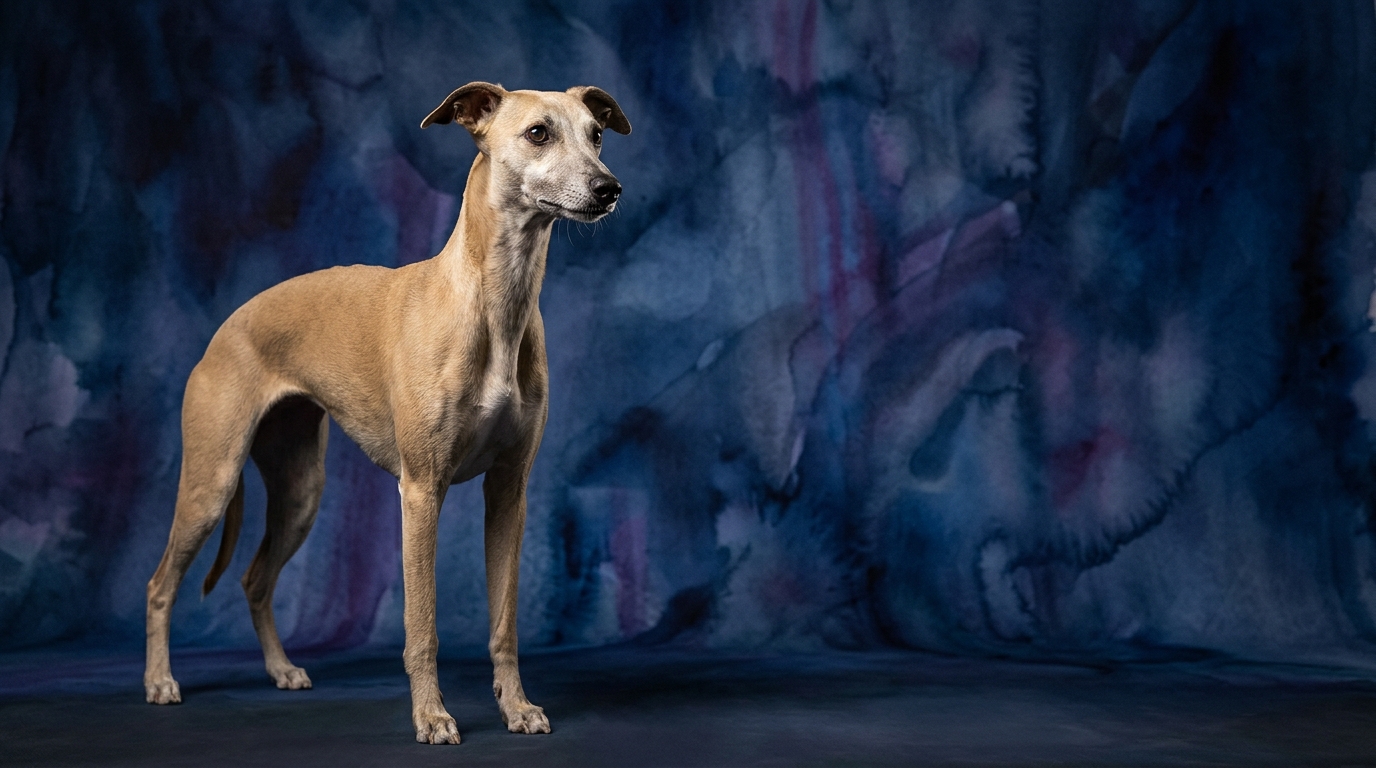
The Whippet, a sighthound ranked #51 by Coren, exhibits a Problem Solving score of 3/5, indicating moderate capacity for independent thought and navigating novel situations. Its Training Speed is rated 2/5, suggesting slower acquisition of new commands, often requiring sustained patience and consistent reinforcement. Social Intelligence shines at 4/5, reflecting keen sensitivity to human emotions and social cues, while its Instinctive Drive is a powerful 5/5, a clear manifestation of its sighthound heritage and profound chase impulse. Memory for the Whippet stands at 3/5, an average recall for learned behaviors and environmental specifics.
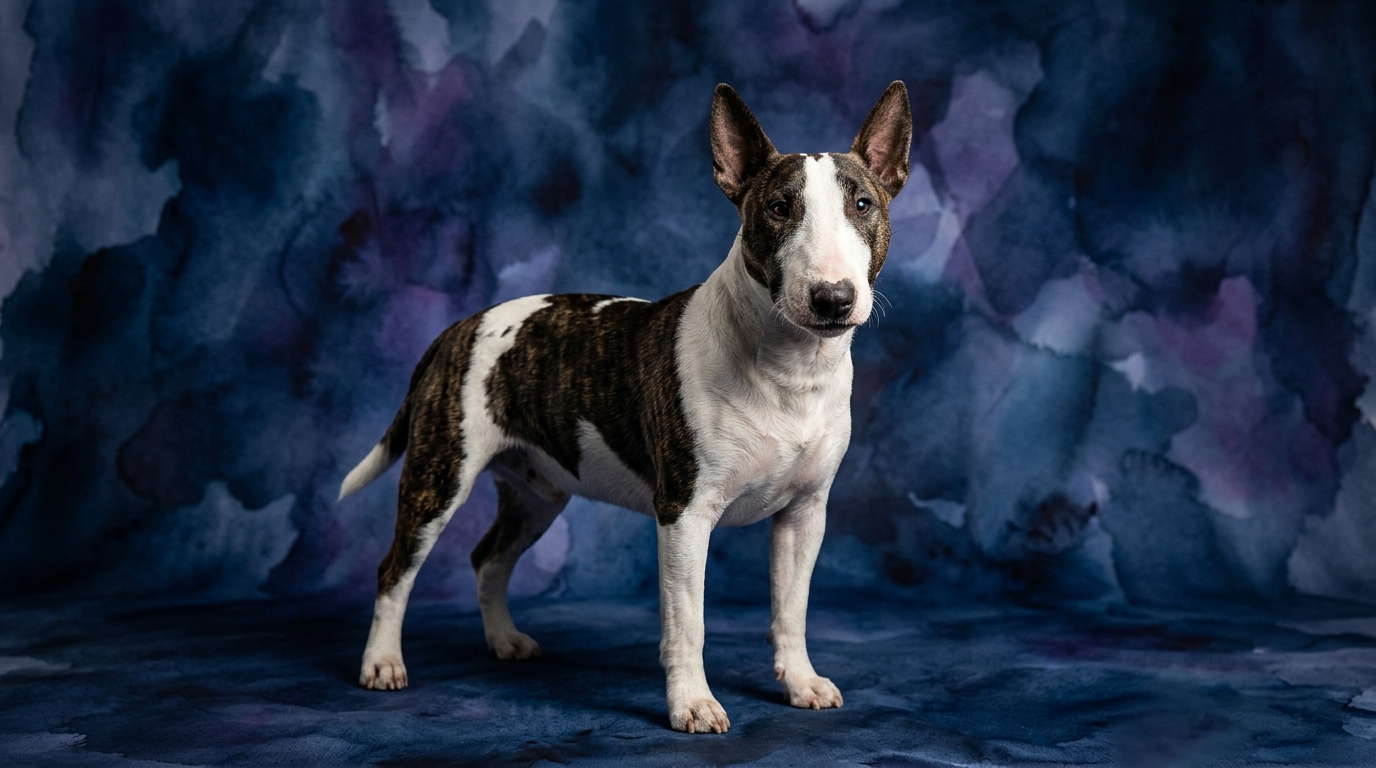
In contrast, the Miniature Bull Terrier, a Terrier breed not specifically ranked by Coren, demonstrates a similar Problem Solving ability at 3/5, indicating an equivalent moderate aptitude for figuring things out. Its Training Speed, however, is rated 3/5, suggesting a slightly quicker grasp of new tasks compared to the Whippet, though still requiring commitment. Social Intelligence for the Miniature Bull Terrier is 3/5, denoting moderate awareness of social dynamics and human interactions. Its Instinctive Drive is also 3/5, reflecting a balanced, less specialized drive compared to the Whippet's intense prey focus. Like the Whippet, its Memory is 3/5, signifying an average capacity for retaining information.
Where the Whippet Wins Cognitively
The Whippet’s cognitive profile demonstrates a clear advantage in social intelligence and instinctive drive, particularly appealing to owners who value deep emotional connections and specific natural behaviors. Their Social Intelligence score of 4/5 means Whippets often exhibit a remarkable capacity for empathy, reading their owner’s moods, and responding with comforting presence or playful invitations. This attunement fosters a profound bond, making them incredibly intuitive companions who seem to understand without words.
Furthermore, the Whippet's Instinctive Drive, rated at an impressive 5/5, represents a pinnacle of sighthound capability. This isn't just about chasing; it's a highly refined cognitive process involving rapid visual tracking, predictive movement, and explosive bursts of speed. Owners who appreciate and can safely channel this powerful, innate drive—perhaps through activities like lure coursing—will find the Whippet's focused determination in pursuit to be a captivating display of specialized canine cognition.
Where the Miniature Bull Terrier Wins Cognitively
While the Whippet excels in specific areas, the Miniature Bull Terrier presents its own cognitive strengths, notably in its slightly more adaptable training speed and a broader, less specialized instinctive drive. The Miniature Bull Terrier’s Training Speed of 3/5, compared to the Whippet’s 2/5, suggests it may assimilate new commands and routines with marginally greater efficiency. This can translate into a smoother initial training period, potentially making the learning process feel more rewarding for both dog and owner.
Additionally, the Miniature Bull Terrier’s Instinctive Drive, at 3/5, offers a different kind of cognitive benefit. While not as intensely focused on pursuit as a sighthound, this moderate drive means their attention isn't overwhelmingly fixated on a single type of stimulus. Instead, their cognitive energy is more broadly distributed, allowing them to engage with a wider variety of tasks and environmental stimuli without the singular, almost compulsive, focus of a specialized hunter. This can make them more versatile in varied activities and less prone to being singularly distracted by movement.
Which is Easier to Train and Why
Assessing which breed is "easier" to train involves navigating their distinct cognitive and behavioral predispositions. The Miniature Bull Terrier, with its Training Speed of 3/5, generally offers a more straightforward learning curve for basic obedience. While terriers are often described as having a stubborn streak, their moderate instinctive drive and problem-solving aptitude mean they are often engaged by new challenges and can learn consistent routines with dedicated, positive reinforcement. Their robust nature means they can often handle more repetition and varied training environments without becoming overly sensitive.
The Whippet, conversely, presents a unique set of training considerations due to its 2/5 Training Speed and powerful 5/5 Instinctive Drive. Their sighthound nature means they are keenly observant of movement and can be profoundly distracted by anything that triggers their chase response, making training in stimulating environments particularly challenging. They are also known for being sensitive and respond best to gentle, reward-based methods, as harsh corrections can lead to shutdown or avoidance. While they can learn, their independent spirit and inherent drive require a patient, understanding trainer who makes learning feel like a collaborative game. For a novice owner, the Miniature Bull Terrier might offer a slightly less demanding introduction to dog training, despite its own terrier quirks.
Which Suits Active Owners vs. Relaxed Owners
The ideal owner match for each breed is closely tied to their cognitive needs and energy profiles. For active owners, both breeds offer engagement, but in different ways. The Whippet, despite its reputation as a couch potato, requires intense bursts of physical activity to satisfy its 5/5 Instinctive Drive. This means owners must provide safe, expansive spaces for full-speed sprints, perhaps through lure coursing or secure off-leash areas, to meet their cognitive and physical need for chase. Once these needs are met, they transition beautifully into a relaxed indoor companion, making them suitable for active individuals who also appreciate quiet downtime.
The Miniature Bull Terrier, with its 3/5 Instinctive Drive and moderate energy, suits owners who prefer consistent, vigorous activity rather than explosive sprints. They thrive on structured walks, energetic play sessions, and mental enrichment activities that challenge their problem-solving skills. Their endurance and robust build make them excellent partners for hiking or longer walks. For truly relaxed owners who prefer minimal daily engagement, neither breed is an ideal fit, as both require regular mental and physical stimulation to prevent boredom and potential behavioral issues. However, the Whippet’s ability to "switch off" indoors after a good run might make it seem more relaxed than the MBT, whose need for interaction and activity is more continuous.
The Verdict
For owners who cherish deep emotional connections, are prepared to manage a potent chase instinct, and can provide exhilarating sprints balanced with calm indoor living, the empathetic Whippet is an exceptional choice.
Conversely, if you seek a robust, characterful companion with a moderate activity level, and are ready to engage in consistent training to channel their terrier tenacity and problem-solving aptitude, the Miniature Bull Terrier will be a rewarding partner.
🧠 Find Your Pet's IQ Score
Our Pet IQ Lab assessment covers 25+ tests across 5 cognitive dimensions — personalized to your breed.
Take the Full IQ Test →Frequently Asked Questions
Are Whippets good for first-time dog owners?
Whippets can be suitable for first-time owners who are prepared for their specific needs, including managing a strong prey drive and understanding their sensitive nature during training. Their calm indoor demeanor is a plus, but their outdoor exercise requirements are non-negotiable.
How much exercise does a Miniature Bull Terrier need daily?
Miniature Bull Terriers require at least 60-90 minutes of vigorous exercise daily, which can include brisk walks, playtime, and mental stimulation activities. Consistent activity helps prevent boredom and channel their energetic terrier temperament positively.
Do Whippets and Miniature Bull Terriers get along with other pets?
Whippets can coexist with other pets, especially if introduced early, but their strong prey drive means small, fast-moving animals might trigger their chase instinct. Miniature Bull Terriers generally get along with other dogs with proper socialization, but their terrier tenacity can sometimes lead to conflicts, especially with smaller pets if not well-trained.