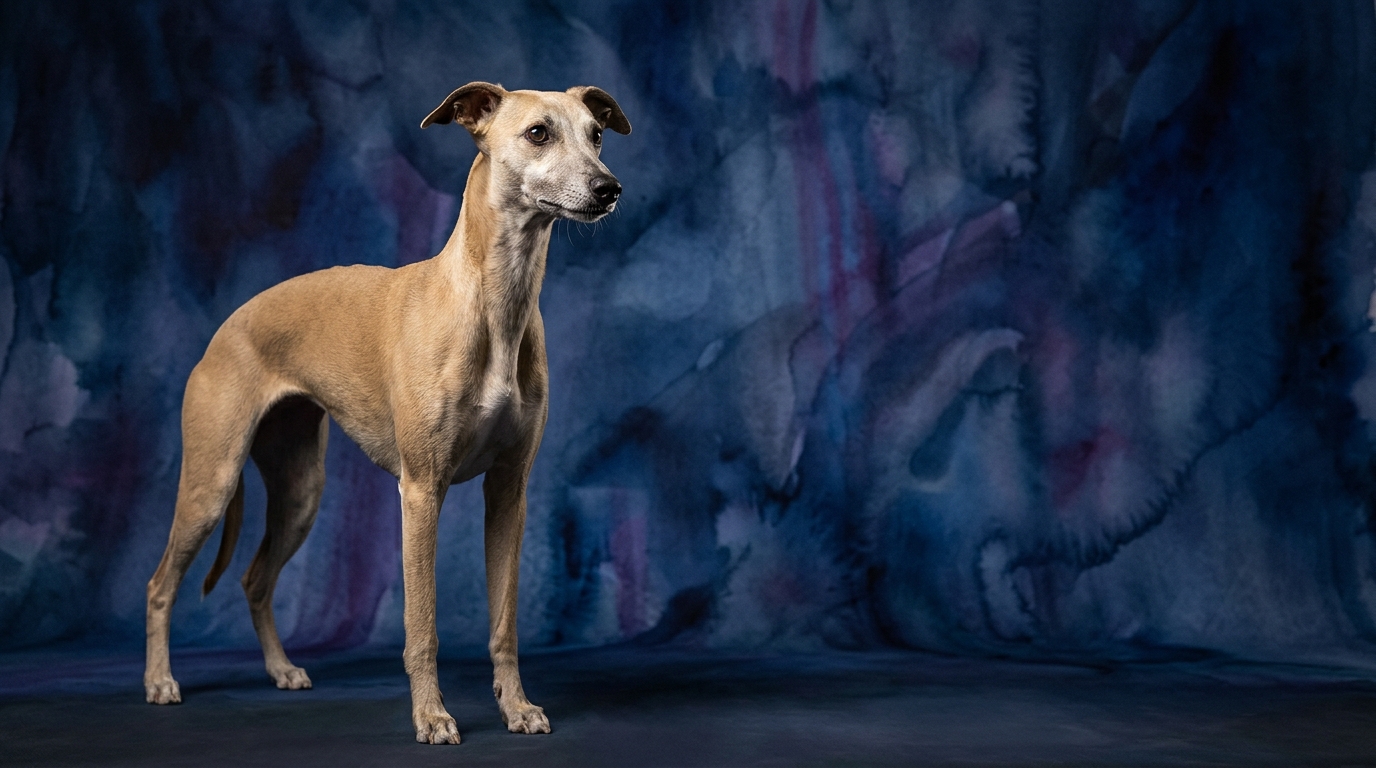

Side-by-Side IQ Profile: Whippet vs. Parson Russell Terrier
The Cosmic Pet Pet IQ Lab employs five core dimensions to map a breed's cognitive architecture, offering a detailed look at how these two breeds process their world. The Whippet, a sighthound, holds a Coren rank of #51, indicating a good capacity for obedience learning, though not among the top echelons. Its Problem Solving is rated 3/5, suggesting a moderate ability to navigate practical dilemmas like finding a comfortable napping spot or circumventing minor obstacles, but not complex puzzles. Training Speed is 2/5, meaning they require more repetition and patience to grasp new commands due to their independent nature. Social Intelligence shines at 4/5, reflecting their deep attunement to human emotions and household dynamics. An Instinctive Drive of 5/5 underscores their powerful, visually driven prey chase. Finally, their Memory is 3/5, indicating an average recall for routines, people, and past experiences.
The Parson Russell Terrier, a working terrier, is not included in Coren's traditional ranking, but our IQ assessment provides clarity. Its Problem Solving matches the Whippet at 3/5, demonstrating an ability to figure out practical challenges, often aided by tenacity. Training Speed is slightly higher at 3/5, suggesting a quicker grasp of new commands, though still tempered by a strong independent streak typical of terriers. Social Intelligence stands at 3/5, indicating they are capable of understanding their human companions and forming strong bonds, but perhaps with less overt sensitivity than the Whippet. Their Instinctive Drive is 3/5, representing a persistent, scent-driven drive to investigate and dig, geared towards flushing quarry. Memory is also 3/5, comparable to the Whippet in its average capacity for recall of learned behaviors and associations.
Where the Whippet Excels Cognitively
The Whippet's most pronounced cognitive advantage lies in its exceptional Social Intelligence, scoring 4/5. This isn't just about being friendly; it signifies a nuanced capacity to read subtle human cues, emotional states, and household routines without explicit instruction. A Whippet might intuitively offer comfort when an owner is distressed or understand the unspoken rhythm of a busy home, making them incredibly empathetic and attuned companions. This sensitivity allows them to integrate seamlessly into family life, often anticipating needs or moods with remarkable subtlety.
Furthermore, their Instinctive Drive, rated 5/5, represents a peak specialization in visual hunting. While this can be a challenge in a domestic setting, it's a testament to their unparalleled cognitive efficiency in their traditional role. For activities like lure coursing, where their natural drive to chase is safely channeled, their speed, focus, and precision in tracking a moving target are unmatched. This isn't merely physical prowess; it involves rapid visual processing, predictive tracking, and an innate understanding of pursuit dynamics, showcasing a unique form of cognitive brilliance.
Where the Parson Russell Terrier Shows Its Cognitive Strengths
The Parson Russell Terrier demonstrates a distinct advantage in Training Speed, scoring 3/5 compared to the Whippet's 2/5. This slight edge means they generally pick up new commands and routines more readily, often driven by their terrier eagerness to engage and work alongside their handler. Their inherent curiosity and desire for interaction can make initial training phases more straightforward, as they tend to be more focused on the task at hand when properly motivated, leading to faster acquisition of new skills.
Additionally, while both breeds score 3/5 in Problem Solving, the Parson Russell's tenacity often amplifies this trait. Their persistent, investigative nature means they are less likely to abandon a challenge, whether it's figuring out how to retrieve a hidden toy or navigating a complex environment. This cognitive resilience, coupled with their moderate yet versatile Instinctive Drive (3/5) geared towards scent and digging, allows them to excel in activities like earthdog trials or scent work. These tasks demand sustained focus, strategic thinking, and a drive to overcome obstacles, showcasing a different but equally effective form of problem-solving intelligence.
Training Dynamics: Whippet vs. Parson Russell Terrier
When it comes to ease of training, the Parson Russell Terrier generally presents a more manageable experience for the average owner. Their 3/5 training speed, combined with a willingness to engage, means they respond well to consistent, positive reinforcement. They thrive on clear structure and enjoy the interactive challenge of learning, often being highly motivated by praise, toys, or food. While their terrier independence can manifest as stubbornness, it is typically balanced by a desire to participate and please, making them receptive to learning a wide array of obedience commands and tricks with moderate effort and a patient, engaging approach.
The Whippet, conversely, can be more challenging for a novice trainer due to its 2/5 training speed and independent sighthound nature. They often prioritize their own motivations—like the irresistible urge to chase something in the distance—over human directives. Training Whippets requires immense patience, short, positive-reinforcement-based sessions, and a deep understanding of their sensitive temperament (social intelligence 4/5), which means harsh corrections are counterproductive. They might learn a command but choose not to execute it if a more interesting stimulus is present, highlighting a difference in intrinsic motivation and focus rather than a lack of cognitive capacity to understand the command itself.
Ideal Owners: Active Pursuits vs. Relaxed Companionship
For owners seeking a relaxed, yet subtly engaging companion, the Whippet often fits the bill perfectly. Despite their legendary speed, Whippets are frequently dubbed "45-mph couch potatoes." They require intense, short bursts of exercise daily, ideally in a secure, fenced area where they can sprint. However, once their physical needs are met, their high social intelligence and desire for comfort make them content to lounge, often preferring to be close to their human family. They adapt well to apartment living, provided their crucial outlet for instinctive running is consistently provided, making them ideal for individuals who appreciate a quiet, affectionate presence indoors but can facilitate their unique exercise requirements.
The Parson Russell Terrier, on the other hand, is tailor-made for active owners who relish daily engagement and structured activity. Their moderate instinctive drive and tenacious problem-solving mean they thrive on more than just basic walks; they need mental stimulation and physical challenges. Long hikes, vigorous play sessions, agility training, or earthdog trials are excellent outlets for their boundless energy and inquisitive minds. Without sufficient physical and mental exertion, a Parson Russell can become bored, leading to destructive behaviors. They are best suited for owners who lead an active, adventurous lifestyle and are prepared to involve their dog deeply in their daily activities and provide consistent, stimulating tasks.
The Verdict
Choose the Whippet if you seek a quiet, empathetic companion who understands subtle social cues and enjoys long periods of lounging, provided you can offer a secure space for daily sprints and appreciate an independent, sensitive spirit.
Choose the Parson Russell Terrier if you are an active individual or family desiring a tenacious, engaged partner for outdoor adventures, dog sports, and mental challenges, and are prepared to provide consistent training and ample outlets for their energy and curiosity.
🧠 Find Your Pet's IQ Score
Our Pet IQ Lab assessment covers 25+ tests across 5 cognitive dimensions — personalized to your breed.
Take the Full IQ Test →Frequently Asked Questions
Are Whippets generally good with children?
Whippets often exhibit excellent social intelligence (4/5) and are typically gentle and patient with children, especially when properly socialized from a young age. Their calm indoor demeanor and sensitivity mean they thrive in quiet, respectful family environments, preferring gentle interactions over boisterous play.
Do Parson Russell Terriers tend to bark frequently?
Parson Russell Terriers, with their strong instinctive drive and alert nature, can indeed be prone to barking, particularly if they are bored, lack sufficient mental and physical stimulation, or are left alone for extended periods. Consistent training, addressing the root cause of the barking, and providing ample engagement are crucial for managing this behavior.
Which breed is more suitable for a first-time dog owner?
For a dedicated first-time owner prepared for an active dog, the Parson Russell Terrier might be marginally easier due to its slightly faster training speed (3/5) and eagerness to engage. However, the Whippet's calmer indoor demeanor and higher social intelligence can also make it a good fit for a first-timer who understands their specific exercise needs and appreciates their independent yet affectionate nature.