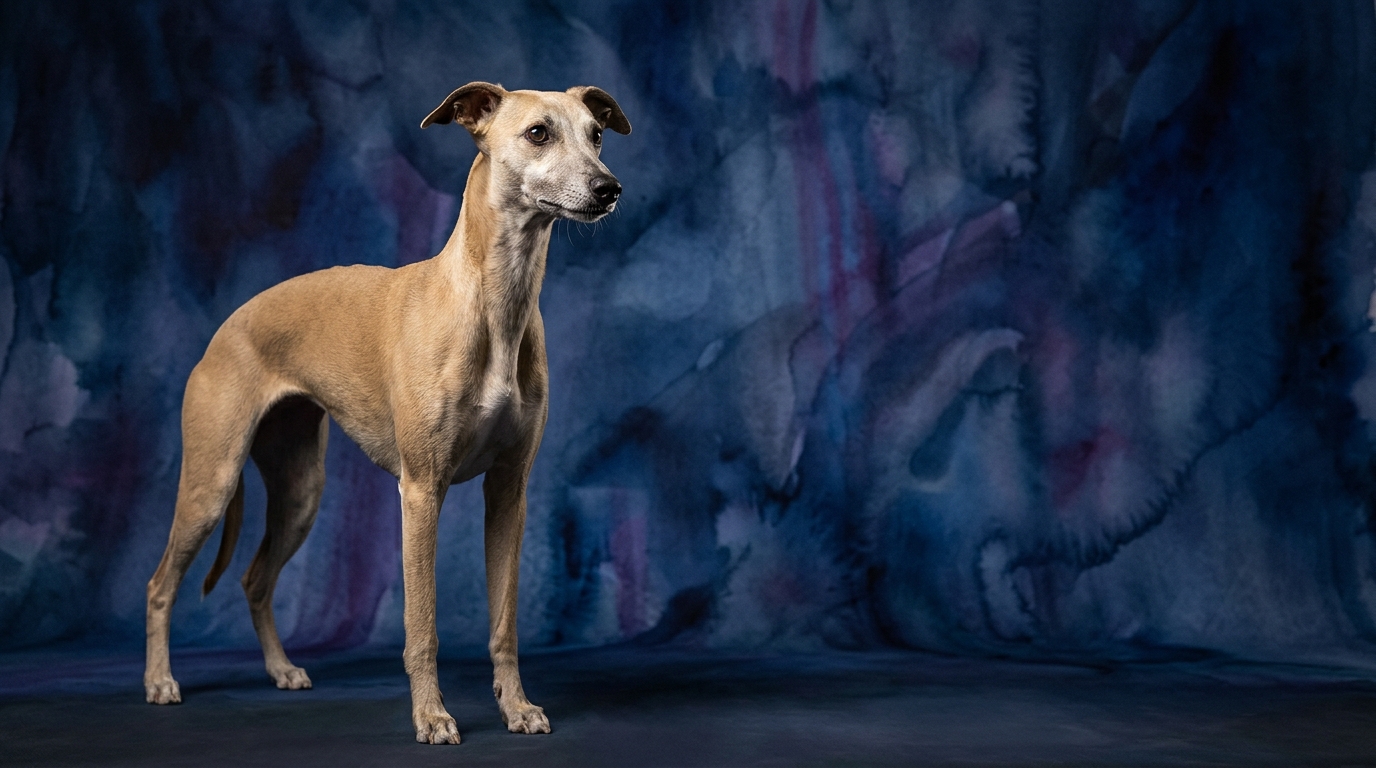
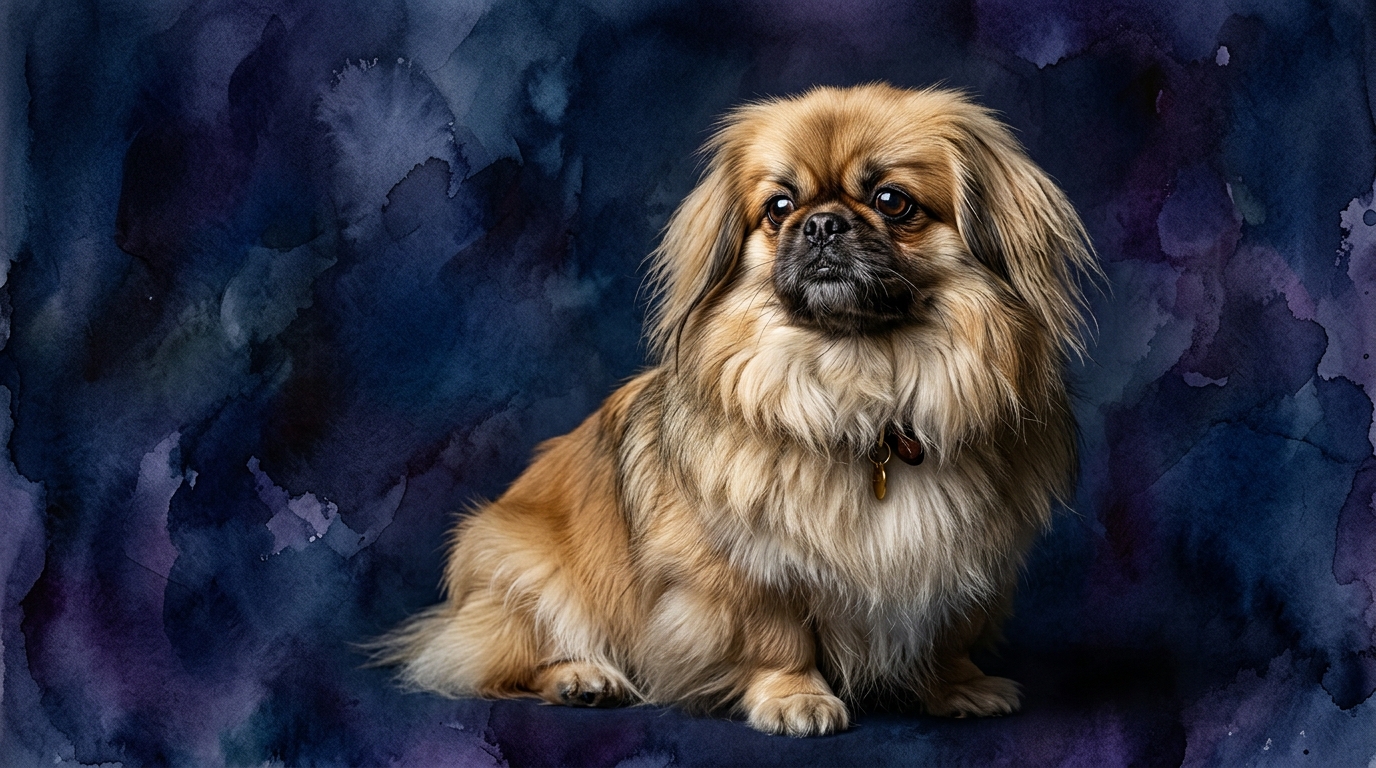
Side-by-Side IQ Profile: Whippet vs Pekingese
At The Cosmic Pet Pet IQ Lab, we evaluate canine intelligence across five key dimensions, offering a nuanced perspective beyond simple rankings. The Whippet, ranking #51 on Coren's scale, and the Pekingese, at #77, showcase distinct cognitive blueprints.
The Whippet's cognitive profile reflects its heritage as a swift, pursuit hunter. Its Problem Solving is rated 3/5, indicating a moderate capacity for navigating novel challenges, often manifesting in practical ways like finding the quickest route to a lure or efficiently locating a comfortable sunbeam. Training Speed scores 2/5; their independent spirit and strong instinctive drives mean Whippets can be slower to pick up new commands, requiring patience and consistent, reward-based methods aligned with their natural inclinations. Social Intelligence is high at 4/5, demonstrating a strong ability to read and respond to human cues, thriving on companionship and often forming deep, empathetic bonds. Instinctive Drive is exceptional at 5/5, reflecting an exceptionally high prey drive and an innate urge to chase, which dictates much of their behavior. Memory is rated 3/5, indicating a solid, practical recall for routines, learned behaviors, and significant events, rather than intricate detail.
The Pekingese, while lower on Coren's scale, possesses a cognitive makeup perfectly suited for its role as a companion. Its Problem Solving is also 3/5; their challenges often revolve around their immediate environment, such as navigating furniture or communicating desires to their owners, displaying resourcefulness in achieving comfort. Training Speed scores 3/5, slightly higher than the Whippet, suggesting they can be quite capable learners, though their occasional stubborn streak requires a firm yet gentle approach. Social Intelligence is 3/5; they form strong attachments to primary caregivers and are attuned to household dynamics, though they can be more reserved with strangers. Instinctive Drive is 3/5; while they possess a guarding instinct and a desire for companionship, their drives are less pronounced than a sighthound's, leaning towards territoriality and a preference for comfort. Memory is 3/5, similar to the Whippet, providing reliable recall for routines, preferred people, and locations, contributing to their sense of security.
Where the Whippet Wins Cognitively
The Whippet's cognitive strengths distinctly align with its ancestral role as a pursuit hunter. Its Instinctive Drive, scoring a perfect 5/5, is a profound cognitive advantage when it comes to activities requiring focus, speed, and precision in pursuit. This isn't merely about physical running; it's about the sophisticated processing of visual stimuli, rapid decision-making in a chase, and an unwavering focus on a moving target. This intense drive translates into a breed that excels in lure coursing, racing, or any activity that taps into their natural inclination to chase. Furthermore, their Social Intelligence, at 4/5, surpasses the Pekingese, suggesting a greater capacity for nuanced understanding of human social cues and emotional states. This allows for a deeper, more cooperative bond in activities where the human-dog partnership is key, even if their training speed isn't always lightning-fast. They are adept at reading body language and intentions, making them sensitive and responsive companions within their family unit.
Where the Pekingese Wins Cognitively
While not built for the chase, the Pekingese demonstrates a subtle cognitive edge in areas better suited for a life of domestic companionship. Their Training Speed, scoring 3/5, outpaces the Whippet's 2/5, indicating a potentially greater willingness and aptitude for formal obedience training, despite their sometimes-stubborn reputation. This suggests they might process and internalize commands more readily, making the initial stages of training less protracted. Both breeds share an equal Problem Solving score of 3/5, but for the Pekingese, this often manifests in navigating their indoor environment with cleverness, finding comfortable spots, or devising ways to gain attention or specific desired items. Their problem-solving isn't about the hunt but about optimizing their immediate comfort and social interactions, displaying a unique form of domestic ingenuity within their domestic sphere.
Which is Easier to Train and Why?
Based on the given scores, the Pekingese, with a Training Speed of 3/5, generally presents an easier training experience compared to the Whippet, which scores 2/5. The Whippet's lower training speed is largely attributable to its powerful instinctive drive and independent sighthound nature. Their natural inclination is to chase anything that moves, and this intense focus can override commands if not carefully managed. Training a Whippet requires significant patience, consistency, and highly motivating rewards to capture and maintain their attention against their innate desires. Their independence means they often evaluate whether a command is worth their effort. In contrast, the Pekingese, while capable of a stubborn streak, tends to be more motivated by pleasing their primary caregivers and a desire for comfort. Their instinctive drives are less dominant, making them more amenable to consistent positive reinforcement. While they might not be the fastest learners, their willingness to engage and their lower distraction threshold for external stimuli often make the training process smoother for an owner.
Suitability for Active vs. Relaxed Owners
The choice between these two breeds for an owner's lifestyle is quite distinct. The Whippet is undoubtedly the better fit for active owners. Their exceptionally high Instinctive Drive (5/5) means they possess a profound need for regular, vigorous exercise that allows them to run and stretch their athletic bodies. This isn't just about physical health; it's crucial for their mental well-being, as their cognitive makeup is geared towards bursts of speed and the thrill of the chase. Owners who enjoy activities like jogging, cycling with their dog, or participating in dog sports such as lure coursing will find a Whippet to be an enthusiastic and fulfilled companion. Conversely, the Pekingese is ideally suited for relaxed owners. While they appreciate short, leisurely walks, their physical needs are minimal, and their cognitive focus is more on comfort and companionship within the home. They thrive in environments where they can be close to their people, enjoying quiet time, and being the center of attention without the demand for extensive outdoor adventures. Their contentment is found in cozy laps and predictable routines, making them perfect for those seeking a less physically demanding companion.
The Verdict
Opt for a Whippet if you lead an active lifestyle, appreciate an independent yet deeply social companion, and are prepared to provide consistent outlets for their powerful chase instincts and need for speed.
Select a Pekingese if you prefer a more relaxed pace of life, desire an affectionate and sometimes opinionated companion who thrives indoors, and are content with minimal physical exercise requirements.
🧠 Find Your Pet's IQ Score
Our Pet IQ Lab assessment covers 25+ tests across 5 cognitive dimensions — personalized to your breed.
Take the Full IQ Test →Frequently Asked Questions
Are Whippets good with children?
Whippets generally have a gentle and tolerant nature, often forming strong bonds with children within their family. Their high social intelligence helps them adapt, but their play can be energetic, so supervision is important with very young children to prevent accidental knocks.
Do Pekingese shed a lot?
Yes, Pekingese have a thick double coat that sheds moderately year-round, with heavier shedding periods seasonally. Regular grooming, including daily brushing, is essential to manage their coat and minimize shedding around the home.
Can a Pekingese live in an apartment?
Absolutely. Pekingese are very well-suited for apartment living due to their small size and low exercise requirements. They are content with indoor life and short daily walks, making them excellent companions for urban dwellers.