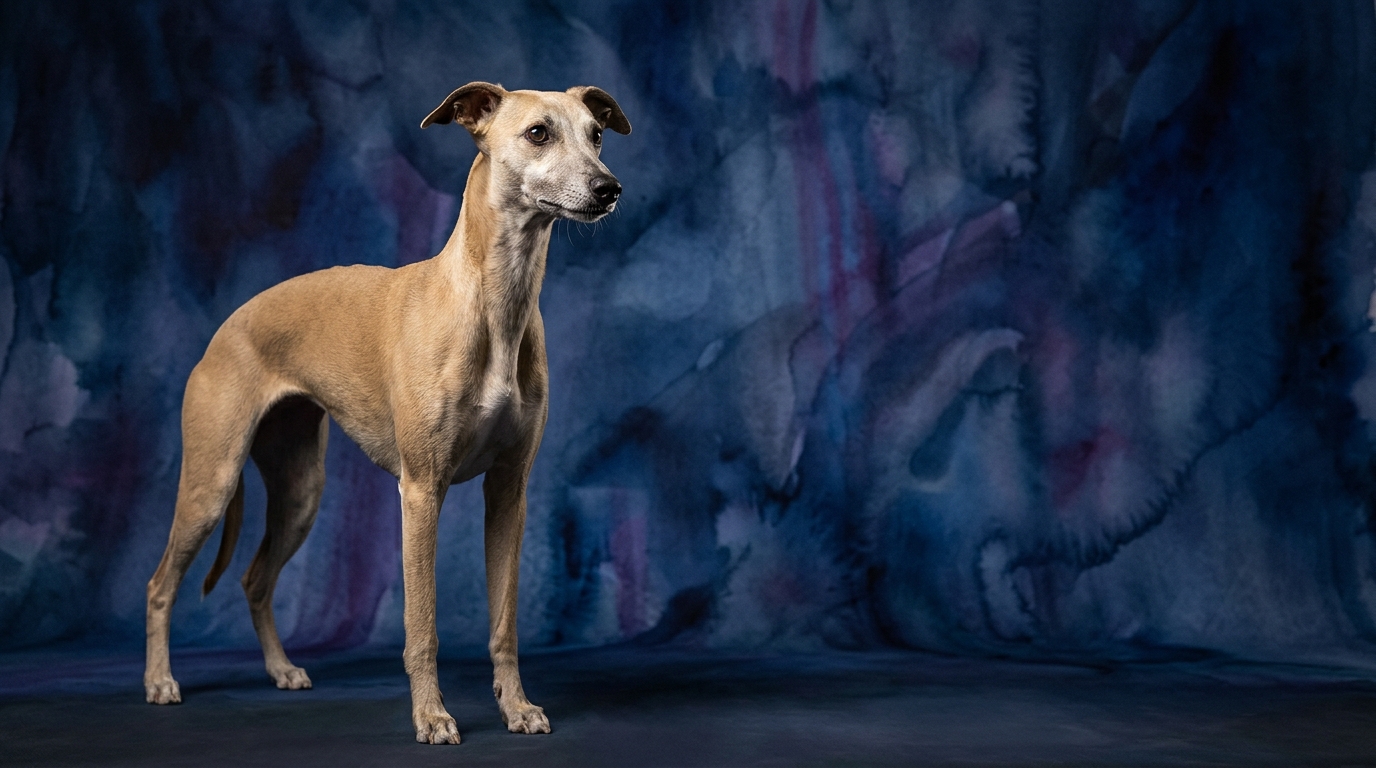

Side-by-Side IQ Profile: Whippet vs. Pointer
At The Cosmic Pet Pet IQ Lab, we dissect canine intelligence across five key dimensions, offering a granular view of each breed’s mental landscape. The Whippet, a sighthound ranked #51 by Coren, presents a unique blend of traits: a Problem Solving score of 3/5, indicating moderate adaptability to new challenges; a Training Speed of 2/5, suggesting a more independent learning pace; a Social Intelligence of 4/5, highlighting their strong interpersonal connection; an Instinctive Drive of 5/5, reflecting their powerful chase instinct; and a Memory score of 3/5, denoting average retention.
The Pointer, a sporting breed without a specific Coren ranking, showcases a different cognitive blueprint. They share the Whippet’s Problem Solving score of 3/5, signifying similar adaptive capabilities. However, their Training Speed is 3/5, indicating a more responsive and cooperative approach to learning commands. Their Social Intelligence stands at 3/5, suggesting a good, but perhaps less effusive, connection with humans. An Instinctive Drive of 3/5 points to a focused hunting drive, distinct from the Whippet’s raw chase. Finally, their Memory score mirrors the Whippet’s at 3/5, for average recall and learning retention.
Where the Whippet Wins Cognitively
The Whippet's cognitive profile shines brightly in two specific areas: social intelligence and instinctive drive. With a Social Intelligence rating of 4/5, Whippets demonstrate a remarkable capacity for empathy and connection. This manifests as a keen awareness of human moods and a desire for close companionship, often making them highly sensitive and intuitive family members. They are adept at picking up on subtle cues, fostering a deep, almost symbiotic bond with their owners.
Furthermore, the Whippet's Instinctive Drive of 5/5 is unparalleled in this comparison. This score reflects an incredibly strong, almost primal, urge to chase and pursue fast-moving objects. While often associated with their incredible speed and agility, this drive is also a cognitive strength – a laser-like focus and unwavering determination when their instincts are engaged. This isn't just about physical capability; it's a profound mental programming for pursuit, making them exceptional at activities like lure coursing where this drive can be safely expressed.
Where the Pointer Wins Cognitively
The Pointer's cognitive edge is most apparent in its Training Speed, scoring 3/5 compared to the Whippet's 2/5. This higher score indicates a greater willingness and aptitude for structured learning and command acquisition. Pointers typically respond more readily to training cues and are often more eager to engage in repetitive drills, making them generally more straightforward to teach foundational obedience and complex tasks. Their history as cooperative hunting partners has ingrained a desire to work alongside humans, making them more receptive students.
While both breeds share a 3/5 in Problem Solving, the Pointer’s slightly more cooperative nature in training can also translate into a more directed application of their problem-solving skills within a human-led framework. They are adept at understanding and executing multi-step commands, often leveraging their moderate problem-solving abilities to navigate challenges presented during training or field work with a greater degree of compliance and focus on the task at hand.
Which is Easier to Train and Why
Based on their cognitive profiles, the Pointer is generally considered easier to train for obedience and specific tasks. Their Training Speed of 3/5, combined with a Social Intelligence of 3/5 and an Instinctive Drive of 3/5, means they are typically more focused on their handler during training sessions. Pointers possess a strong desire to please and work collaboratively, making them responsive to positive reinforcement and consistent instruction. Their instinctive drive, while potent for hunting, is often channeled into a cooperative effort, allowing them to follow commands even amidst distractions, which is crucial for field work.
Conversely, the Whippet's Training Speed of 2/5 indicates they may require more patience and creative motivation. Their exceptional Social Intelligence (4/5) means they understand their owner's intentions, but their powerful Instinctive Drive (5/5) can often override their desire to comply if a fast-moving object captures their attention. Training a Whippet often involves making tasks fun, varied, and short, as they can become bored with repetition. Management of their intense prey drive through secure environments and consistent recall training is paramount, as their independent sighthound nature means they are less likely to check in with their owner once their chase instinct is activated.
Which Suits Active Owners vs. Relaxed Owners
The Whippet is a fascinating paradox, making them suitable for owners who appreciate both intense bursts of activity and prolonged periods of calm. While their 5/5 Instinctive Drive demands outlets for exhilarating sprints and chasing in safe, enclosed spaces, they are typically quite relaxed and quiet indoors. Owners who enjoy short, high-intensity exercise sessions but also value a sensitive, affectionate, and relatively low-maintenance house dog will find a Whippet to be an excellent fit. They thrive with owners who understand their need for controlled speed and mental stimulation through scent work or lure coursing, balanced with ample cuddle time on the sofa.
The Pointer, with its sporting heritage, aligns best with consistently active owners who can provide substantial and regular physical and mental engagement. Their 3/5 Instinctive Drive, while not as explosive as the Whippet’s, translates into a sustained need for activity, whether it’s long runs, hikes, or field training. They are partners for adventure, eager to explore and work alongside their human companions. Owners who lead an outdoorsy lifestyle, enjoy dog sports, or are interested in hunting will find the Pointer's stamina and cooperative nature highly rewarding. A Pointer is not content with sporadic exercise; they require a consistent commitment to keeping their minds and bodies engaged.
The Verdict
Choose a Whippet if you value a sensitive, deeply connected companion who excels in short, intense bursts of speed and appreciates a relaxed home life, provided you can manage their profound chase instinct responsibly.
Opt for a Pointer if you lead a consistently active lifestyle and desire a cooperative, energetic partner for outdoor adventures and structured training, particularly for field work or demanding dog sports.
🧠 Find Your Pet's IQ Score
Our Pet IQ Lab assessment covers 25+ tests across 5 cognitive dimensions — personalized to your breed.
Take the Full IQ Test →Frequently Asked Questions
Are Whippets difficult to live with due to their high instinctive drive?
While Whippets possess a 5/5 instinctive drive for chasing, they are generally calm and adaptable indoors, making them good house pets. The key is providing safe, enclosed spaces for them to run and express this drive, along with consistent training to manage it in other environments.
What kind of exercise does a Pointer need to stay mentally and physically healthy?
Pointers require substantial daily exercise, typically including long walks, runs, or hikes, alongside mental stimulation like training sessions or scent work. Their sporting background means they thrive on activities that engage both their physical stamina and their cooperative intelligence.
Do Whippets and Pointers typically get along well with other pets, considering their drives?
Whippets, with their strong prey drive, require careful introductions to smaller pets, though many coexist peacefully with cats or other dogs if raised together. Pointers, while possessing a hunting drive, are often quite sociable with other dogs and can adapt to living with cats with proper training and supervision, especially if they are accustomed from a young age.