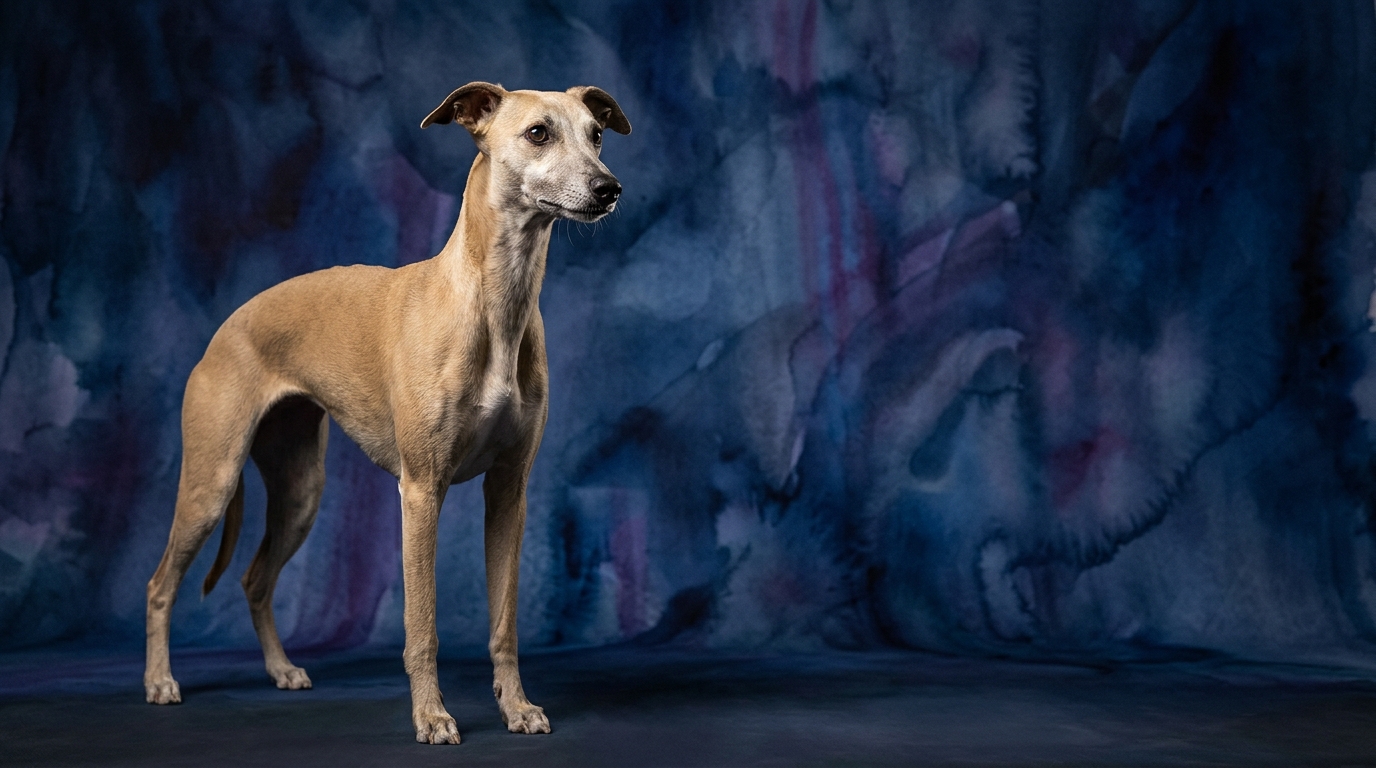

Side-by-Side IQ Profile: Whippet vs. Rat Terrier
**Whippet Cognitive Profile:** Whippets demonstrate a practical, rather than complex, approach to challenges, scoring 3/5 in Problem Solving. They are less inclined to manipulate objects or devise intricate plans, preferring direct action or finding the path of least resistance. Their cognitive strength lies more in reactive speed than in deliberate, multi-step solutions. With a Training Speed of 2/5, Whippets can exhibit an independent streak, often prioritizing immediate environmental stimuli over handler commands. Their sighthound nature means consistent, engaging, and often repetitive training is required to solidify behaviors, and recall can be compromised by a distant visual lure. In Social Intelligence, Whippets score a remarkable 4/5. These sighthounds possess a profound ability to read human emotions and social cues, often acting as deeply empathetic companions attuned to household moods and dynamics. Their Instinctive Drive is a perfect 5/5, overwhelmingly focused on the chase; their predatory sequence is almost entirely dedicated to the pursuit of moving objects, displaying incredible bursts of speed and focused determination. Whippets possess a functional Memory (3/5) for routines, familiar people, and established commands, but a strong instinctive trigger might temporarily override recently learned cues.
**Rat Terrier Cognitive Profile:** Rat Terriers exhibit a practical and persistent approach to Problem Solving, also scoring 3/5. They are resourceful in figuring out how to achieve a goal, particularly if it involves accessing something or overcoming a physical barrier, driven by their innate terrier curiosity and determination. Their Training Speed is 3/5, generally making them more eager to engage in training than Whippets. They often pick up new commands with reasonable speed, as their desire to work with their human and natural terrier enthusiasm for tasks make them responsive, though their independent spirit can sometimes emerge. In Social Intelligence, Rat Terriers score 3/5; they form strong, devoted bonds with their immediate family, demonstrating good awareness of their handler's intentions and emotions. While affectionate, their social radar is typically focused inward on their human pack rather than displaying broader environmental social awareness. The Rat Terrier's Instinctive Drive is 3/5, a versatile blend primarily focused on hunting small vermin. This manifests as determined digging, keen scent work, and quick, decisive action against perceived pests, encompassing more aspects of the predatory sequence than pure pursuit. Rat Terriers display a reliable Memory (3/5) for commands, routines, and past experiences, contributing to their adaptability and consistent performance once a behavior is learned.
Where the Whippet Wins Cognitively
The Whippet's cognitive strengths shine particularly in two distinct areas: social intelligence and specialized instinctive drive. With a 4/5 in social intelligence, Whippets demonstrate a profound capacity for empathy and reading human emotional states, intuitively understanding when comfort is needed. This nuanced perception of their environment and human well-being makes them remarkably attuned companions. Furthermore, their 5/5 instinctive drive for chasing moving objects represents a highly specialized cognitive advantage. This isn't merely being 'good at chasing'; it's a deep-seated, hardwired focus allowing incredible bursts of speed and unwavering concentration on a visual target, making them masters of lure coursing and open field pursuit.
Where the Rat Terrier Wins Cognitively
The Rat Terrier's cognitive prowess is evident in their adaptable training speed and tenacious, practical problem-solving. While both breeds score 3/5 in problem-solving, the Rat Terrier's approach is often characterized by persistent, hands-on determination, especially when motivated by a task. They will methodically work to overcome obstacles, driven by innate curiosity. Their 3/5 training speed also gives them an edge over the Whippet (2/5), as they typically exhibit greater eagerness to engage with their handler and learn new cues. This responsiveness stems from their terrier heritage, where close collaboration on pest control was paramount. Their instinctive drive, more versatile than the Whippet's, encompasses digging, scent work, and quick decision-making, showcasing a broader range of applied intelligence.
Which is Easier to Train and Why
When considering ease of training, the Rat Terrier generally presents a more straightforward experience due to its higher training speed score of 3/5 compared to the Whippet's 2/5. Rat Terriers possess an inherent eagerness to engage with their human companions, a trait stemming from their history as working dogs collaborating with farmers. They are typically more handler-focused and less prone to distraction by distant visual stimuli, making them quicker to grasp and retain commands. This often means fewer repetitions and good response to positive reinforcement. In contrast, the Whippet's independent sighthound nature means their attention can be easily diverted by movement. While intelligent, their training requires exceptional patience, high-value rewards, and creative methods to maintain engagement. Their strong chase instinct (5/5) means recall in unsecured areas demands a higher level of dedicated, consistent training for safety.
Which Suits Active Owners vs. Relaxed Owners
The suitability for active versus relaxed owners hinges on the *type* of activity and relaxation each breed prefers. Whippets, despite their incredible speed and 5/5 instinctive drive, are often described as '45 mph couch potatoes.' They thrive with owners who provide intense, short bursts of exercise—lure coursing or sprinting in a secure area. After these energy releases, they are typically content to curl up on the sofa for hours, making them surprisingly suitable for relaxed indoor living, provided exercise needs are met efficiently. Rat Terriers require a more consistent and varied approach to activity. While not demanding explosive speed, their 3/5 instinctive drive and problem-solving skills necessitate regular mental and physical engagement. Owners enjoying agility, earthdog trials, extensive walks with sniffing, or puzzle toys will find the Rat Terrier a suitable match. A purely relaxed owner might find a Rat Terrier's unfulfilled needs lead to boredom-driven behaviors.
The Verdict
If you are drawn to a deeply empathetic companion who excels in intense, brief bursts of speed and appreciates quiet leisure indoors, the Whippet will likely be your ideal match.
For those seeking a versatile, engaging partner for varied activities, who thrives on consistent interaction and exhibits tenacious problem-solving, the Rat Terrier will prove to be a rewarding choice.
🧠 Find Your Pet's IQ Score
Our Pet IQ Lab assessment covers 25+ tests across 5 cognitive dimensions — personalized to your breed.
Take the Full IQ Test →Frequently Asked Questions
Are Whippets good at learning tricks?
Whippets can learn tricks, but their training speed is moderate (2/5). They often require patient, positive reinforcement and may not have the same eagerness for repetitive trick training as some other breeds, preferring comfort and brief bursts of activity.
How do Rat Terriers use their problem-solving skills?
Rat Terriers frequently apply their 3/5 problem-solving ability to practical tasks, such as figuring out how to access a perceived 'pest' or overcoming obstacles in their environment. This often manifests as resourceful determination in achieving a goal.
Is a Whippet's high instinctive drive a challenge for owners?
A Whippet's 5/5 instinctive drive for chasing moving objects means off-leash safety is paramount in unsecured areas. While it’s a powerful natural behavior, responsible management through secure fencing and leash training mitigates challenges, allowing them to express this drive safely in appropriate settings like lure coursing.