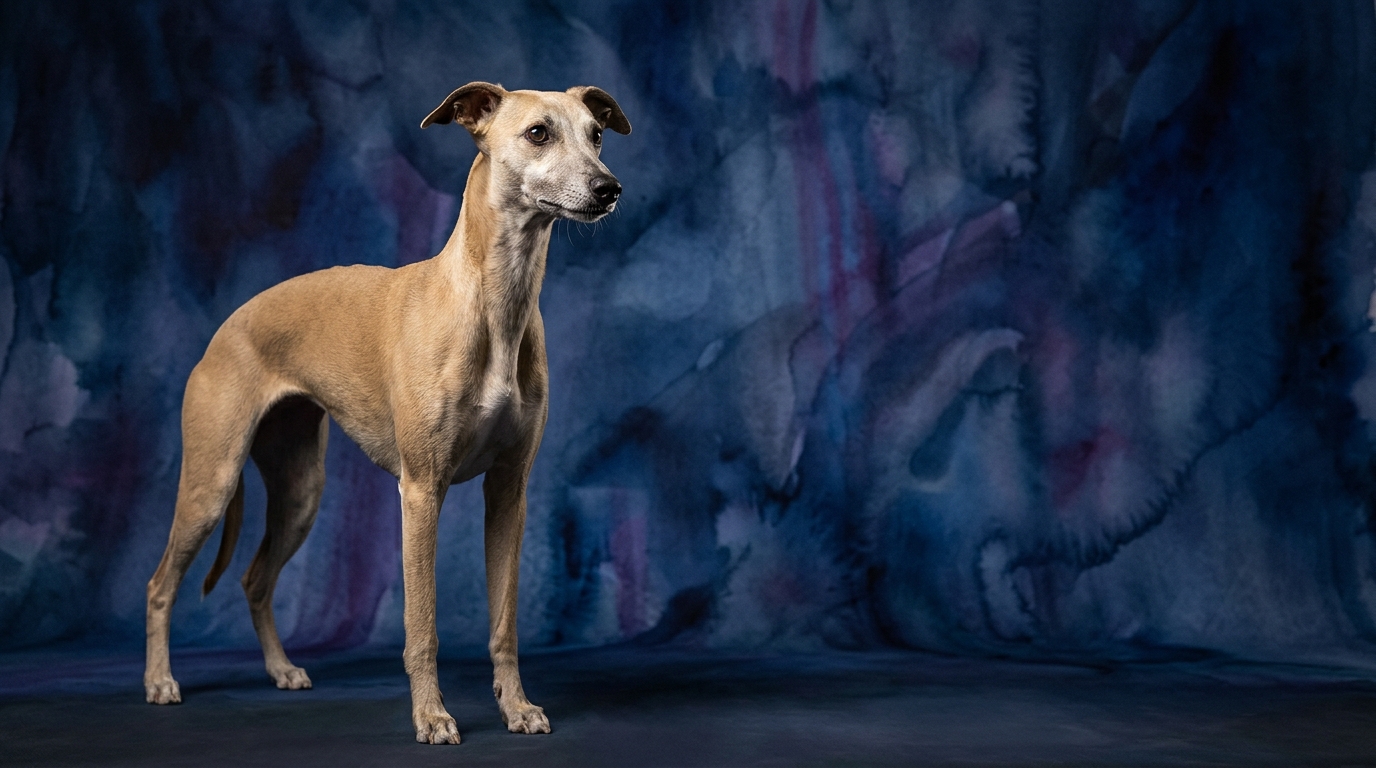

Side-by-Side IQ Profile: Whippet vs. Sussex Spaniel
At The Cosmic Pet Pet IQ Lab, we delve into five key dimensions of canine intelligence to paint a comprehensive picture of a breed's cognitive landscape. For the Whippet, a sighthound ranked #51 by Coren, its profile highlights a unique blend of attributes. Its Problem Solving score of 3/5 suggests it can navigate moderately complex situations, often relying on its innate agility and speed rather than intricate, abstract planning. Training Speed is rated 2/5, indicating that while capable of learning, Whippets typically require patience and consistent, positive reinforcement due to an independent streak. However, their Social Intelligence shines at 4/5, showing a profound attunement to human emotions and subtle social cues, fostering deep bonds. An Instinctive Drive of 5/5 underscores their powerful, inherent urge to chase, a hallmark of their sighthound heritage. Finally, their Memory at 3/5 means they can effectively recall learned behaviors and routines, though complex sequences might require regular reinforcement.
The Sussex Spaniel, a Sporting breed ranked #62 by Coren, presents a different cognitive blueprint. Its Problem Solving score, also 3/5, reflects a practical, persistent approach to challenges, often leveraging sensory information rather than rapid, visual-based decision-making. In terms of Training Speed, the Sussex Spaniel scores 3/5, suggesting a more agreeable and moderate pace of learning new commands, responding well to clear expectations. Their Social Intelligence stands at 3/5, indicating a generally amiable and responsive nature to human interaction, though perhaps less overtly expressive of emotional nuances than the Whippet. The Instinctive Drive for the Sussex Spaniel is 3/5, centered around scent work and flushing game rather than sustained, high-speed pursuit. A Memory score of 3/5 confirms a solid capacity for retaining routines and learned tasks, which is beneficial for both field work and domestic life.
Where the Whippet Excels Cognitively
The Whippet's cognitive strengths distinctly emerge in two primary areas: social intelligence and instinctive drive. With a Social Intelligence score of 4/5, the Whippet demonstrates a nuanced understanding of social dynamics, often anticipating an owner's moods or intentions through subtle body language and vocal cues. This advanced social cognition makes them exceptionally empathetic companions, capable of offering comfort or responding to complex social signals in a manner that might be less pronounced in a Sussex Spaniel. This isn't just about being friendly; it's about a sophisticated processing of interpersonal information.
Furthermore, the Whippet's outstanding Instinctive Drive, rated 5/5, reflects a specialized form of reactive intelligence. Rooted deeply in their sighthound heritage, this drive translates into an unparalleled ability to react to visual stimuli with incredible speed and focus. This isn't merely a physical attribute; it signifies a cognitive wiring for rapid decision-making and precise execution in pursuit. Whippets process visual information related to movement and distance with exceptional efficiency, allowing for swift, coordinated action, a specialized cognitive advantage for tasks demanding immediate, visually-driven responses.
Where the Sussex Spaniel Shines Cognitively
The Sussex Spaniel distinguishes itself with a slightly higher Training Speed (3/5 compared to the Whippet's 2/5), which points to a more direct and perhaps less independent approach to learning. This breed tends to be more agreeable to following instructions and performing repetitive tasks, making the foundational stages of obedience training a smoother, more predictable process. This cognitive trait suggests a greater willingness to engage in cooperative learning exercises without the strong independent streak often observed in sighthounds. Their motivation is often more aligned with pleasing their handler and earning rewards, facilitating a more consistent training experience.
While both breeds share a Problem Solving score of 3/5, the Sussex Spaniel's cognitive approach is often characterized by methodical, persistent exploration, particularly when leveraging its strong scenting abilities. This isn't about rapid problem-solving, but rather thoroughness and sustained focus on a task, especially if it involves sensory input like tracking a scent. This persistent problem-solving style, combined with its cooperative training speed, makes the Sussex Spaniel particularly adept at tasks requiring sustained attention, repetition, and a patient, investigative approach, such as intricate scent work or retrieving.
Which is Easier to Train and Why
When it comes to ease of training, the Sussex Spaniel generally holds an advantage over the Whippet, primarily due to their respective Training Speed scores and inherent motivations. The Whippet's Training Speed of 2/5 reflects an independent sighthound nature; they can be less inclined to perform repetitive tasks purely for human approval. While they grasp concepts, their motivation to execute them perfectly and repeatedly can wane, requiring trainers to be creative, keeping sessions short, engaging, and leveraging their chase drive or strong social bond. Their focus can be easily diverted by visual stimuli, making consistent attention a challenge.
In contrast, the Sussex Spaniel's Training Speed of 3/5, coupled with their generally more biddable and eager-to-please temperament, makes them more straightforward to train. Their moderate instinctive drive means they are less likely to be suddenly distracted by a strong urge to chase compared to a Whippet, allowing for greater sustained focus during training sessions. This persistence and lower distraction threshold contribute to a steadier, more predictable learning curve in obedience. They are often more motivated by food or praise and less by self-initiated activities, which simplifies the reinforcement process.
Which Suits Active Owners vs. Relaxed Owners
For owners with an active lifestyle, the Whippet is often the more suitable companion. Their Instinctive Drive of 5/5 and inherent physical prowess demand regular, appropriate outlets for their energy. While they are famously content to lounge indoors, their need for bursts of speed and engaging mental stimulation related to movement is paramount. Owners who enjoy activities like lure coursing, fast-paced games in secure, fenced areas, or long, brisk walks will find a Whippet a rewarding and enthusiastic partner. Their high social intelligence also means they thrive on interactive play with their human companions, making shared physical activities deeply fulfilling.
Conversely, the Sussex Spaniel typically suits owners with a more relaxed pace of life. While they certainly require regular exercise, their Instinctive Drive of 3/5 is more manageable and less demanding of high-velocity activities. They are generally content with moderate walks, leisurely explorations of scents in a yard or park, and consistent playtime. Their steady temperament and moderate energy levels make them excellent companions for owners who appreciate a calmer, more predictable pace and enjoy consistent, affectionate companionship without the need for intense athletic pursuits. They are less prone to sudden, explosive bursts of energy that require immediate, specialized channeling.
The Verdict
Choose a Whippet if you appreciate a highly empathetic companion with lightning-fast instincts for chase and a strong desire for close social connection, provided you can accommodate their need for safe, high-speed exercise.
Opt for a Sussex Spaniel if you desire a steady, amiable companion with a more cooperative training disposition and a methodical approach to exploration, suited for a moderately active lifestyle and a love for scent-based activities.
🧠 Find Your Pet's IQ Score
Our Pet IQ Lab assessment covers 25+ tests across 5 cognitive dimensions — personalized to your breed.
Take the Full IQ Test →Frequently Asked Questions
Are Whippets difficult to train?
Whippets are not inherently difficult, but their independent sighthound nature means they learn at a moderate pace (Training Speed 2/5) and require consistent, positive reinforcement to maintain engagement. They respond best to short, fun sessions that appeal to their natural instincts and strong social bond.
Do Sussex Spaniels have a strong prey drive?
Sussex Spaniels possess a moderate instinctive drive (3/5), primarily focused on flushing and retrieving game using scent, rather than the high-speed pursuit seen in sighthounds. This drive can be managed with training and appropriate outlets, making them less prone to chasing small, fast-moving objects indiscriminately.
Which breed is better with other pets?
Whippets, with their high instinctive drive (5/5), may pose a challenge with small, fast-moving pets unless thoroughly socialized from a young age due to their strong chase instinct. Sussex Spaniels, with their moderate drive and amiable nature, generally adapt well to other household pets, though individual temperament always plays a role.