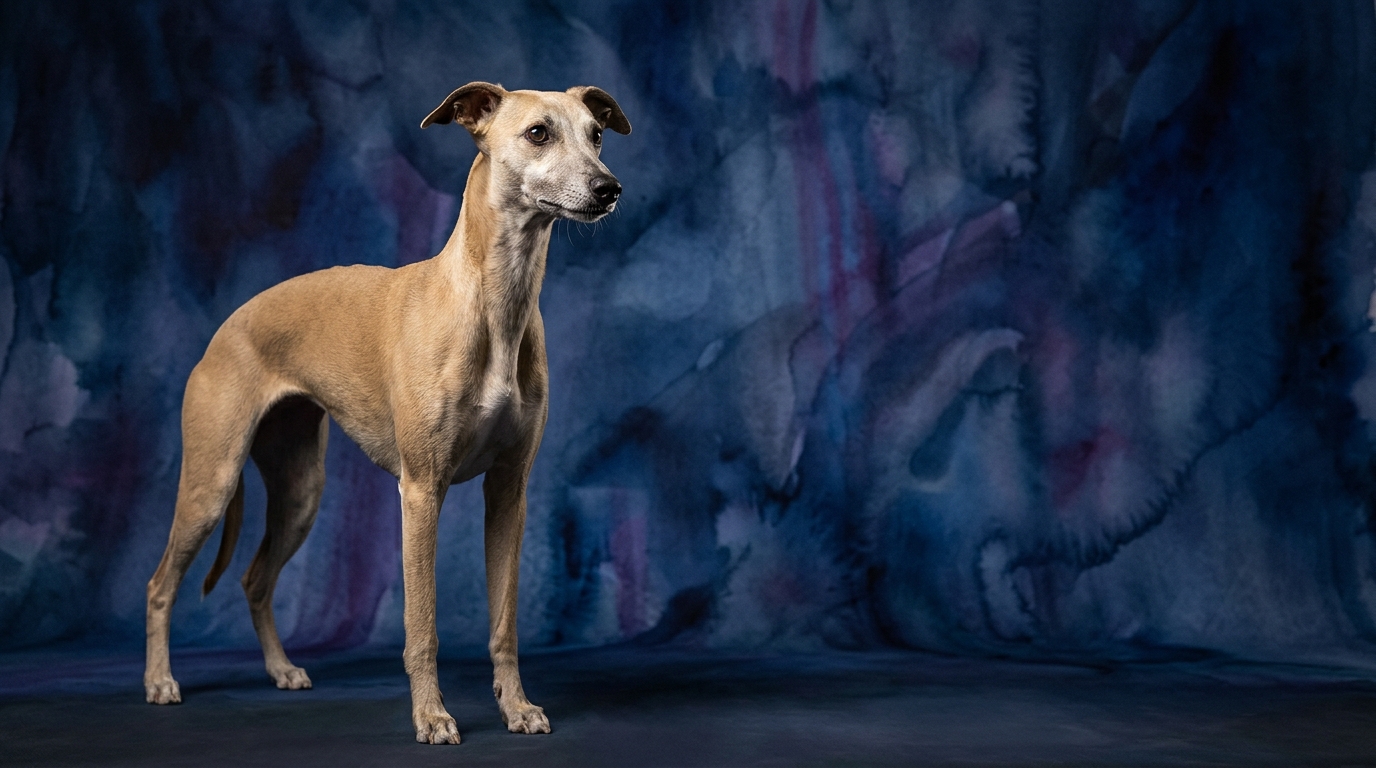

Side-by-Side Cognitive Profile: Whippet vs. West Highland White Terrier
At The Cosmic Pet Pet IQ Lab, we evaluate canine intelligence across five key dimensions. The Whippet, ranked #51 by Coren, and the West Highland White Terrier, ranked #47, offer contrasting cognitive blueprints.
**Whippet Cognitive Breakdown:** Whippets demonstrate a moderate capacity for Problem Solving (3/5), often preferring to observe or seek human guidance rather than immediately tackling complex puzzles independently; their approach tends to be more practical. Their Training Speed (2/5) is moderate to slow, as their independent nature and sighthound heritage mean they are easily distracted by movement, requiring patient and consistent methods. Whippets excel in Social Intelligence (4/5), displaying an exceptional capacity to understand and respond to human social cues, forming deep bonds and seeking harmony. Their Instinctive Drive (5/5) is paramount, characterized by an intense urge to chase and pursue moving objects, which is a powerful cognitive force. Memory (3/5) is functional for routines and familiar environments but might not retain complex or less frequently practiced commands with the same precision, often being context-dependent.
**West Highland White Terrier Cognitive Breakdown:** Westies show a moderate, often persistent, approach to Problem Solving (3/5), using determination to overcome obstacles and figure out how to get what they want. Their Training Speed (3/5) is moderate; they learn at a decent pace but their terrier stubbornness means they require clear motivation and engaging methods to stay focused. Social Intelligence (3/5) for Westies is generally good, enjoying interaction, but tempered by strong self-assurance and an independent streak, making them assertive in communication. While possessing a strong terrier drive for digging and hunting small prey, their Instinctive Drive (3/5) is typically more manageable than a sighthound's, manifesting as persistent exploration. Westies exhibit a robust Memory (4/5), particularly for routines, boundaries, and learned behaviors, recalling past experiences and adapting based on previous outcomes.
Where the Whippet Wins Cognitively
The Whippet's cognitive strengths shine particularly brightly in the realm of social intelligence and the intensity of their instinctive drive. With a remarkable 4/5 in social intelligence, Whippets display an exceptional capacity to attune to human emotions and intentions, often anticipating their owner's moods and reacting with sensitive companionship. This makes them highly responsive to subtle social cues and excellent at maintaining domestic harmony, acting as empathetic companions. Their 5/5 instinctive drive, while presenting training challenges, is a testament to their unparalleled focus and efficiency when engaged in their primary sighthound function. This means their ability to rapidly process visual stimuli and execute a chase sequence is a highly refined cognitive skill, demonstrating incredible speed of perception and reaction in their specific domain.
Where the West Highland White Terrier Wins Cognitively
The West Highland White Terrier shows a distinct cognitive edge in training speed and memory. With a 3/5 in training speed, Westies typically grasp new commands and routines more readily than Whippets, provided the training is engaging and consistent. Their terrier tenacity, while sometimes challenging, also means they are less likely to be distracted by distant movement and more focused on the task at hand during a training session. Their memory score of 4/5 is a significant advantage; Westies are adept at retaining learned behaviors, understanding complex routines, and remembering boundaries, making them reliable once a command or rule is firmly established. This strong recall allows them to build a comprehensive mental map of their environment and expectations.
Training Dynamics: Which Breed is More Amenable?
Considering their respective profiles, the West Highland White Terrier generally presents as the more amenable breed to train, largely due to its superior training speed (3/5 vs. Whippet's 2/5) and robust memory (4/5 vs. Whippet's 3/5). Westies, with their terrier determination, often approach training as a problem to solve, responding well to clear, consistent methods and positive reinforcement. While they can be opinionated, their focus is typically more directed at the trainer than a Whippet, whose potent instinctive drive (5/5) means they are constantly scanning for movement, making sustained attention during training a significant hurdle.
Whippets, being sighthounds, are wired to chase, and this powerful internal motivator can frequently override even well-established commands when a compelling visual stimulus appears. Their moderate memory also means that less frequently practiced commands might need more refreshing and consistent reinforcement to remain solid. The Westie's better memory ensures that once a behavior is learned, it tends to stick more reliably, making them more predictable in their responses to commands over time.
Matching Breed Cognition to Owner Lifestyle
The choice between these breeds often aligns with an owner's lifestyle and energy levels. Whippets, with their explosive bursts of energy and high instinctive drive, are ideally suited for owners who enjoy short, intense periods of activity, such as lure coursing, fetch in a secure area, or brisk runs, followed by extended periods of relaxed lounging. Their strong social intelligence means they thrive on close companionship, making them excellent partners for owners who appreciate a calm indoor presence but can provide dedicated outdoor exercise to satisfy their chase instincts.
Conversely, West Highland White Terriers, despite their smaller stature, are better matched with active owners who can provide consistent mental and physical engagement. Their moderate instinctive drive and persistent problem-solving nature mean they require regular walks, engaging play, and puzzle toys to prevent boredom and destructive behaviors. They enjoy exploring and "working," making them good companions for owners who enjoy structured activities and consistent interaction throughout the day rather than just short bursts of high-intensity exercise.
The Verdict
Opt for a Whippet if you seek a sensitive, affectionate companion who thrives on intense, short bursts of activity followed by long, peaceful naps, and you are prepared to manage their powerful chase instincts with secure environments.
Select a Westie if you desire a spirited, persistent companion who enjoys regular engagement, consistent training, and challenging mental activities, and you appreciate a dog with a strong, independent character.
🧠 Find Your Pet's IQ Score
Our Pet IQ Lab assessment covers 25+ tests across 5 cognitive dimensions — personalized to your breed.
Take the Full IQ Test →Frequently Asked Questions
Are Whippets difficult to train because of their low training speed score?
Whippets are not inherently difficult, but their independent nature and powerful chase drive (5/5) mean training requires more patience and consistency. Focus on positive reinforcement and make training engaging to compete with their natural distractions.
Do West Highland White Terriers bark a lot due to their terrier nature?
Westies can be prone to barking, especially if bored, under-exercised, or if they perceive intruders, as their instinctive drive includes 'sounding the alarm.' Consistent training and mental stimulation can help manage this tendency effectively.
Which breed is generally better with children?
Both breeds can be good with children, but their approaches differ. Whippets are often gentle and tolerant, though sensitive to rough play; Westies can be playful and robust, but their independent streak means they appreciate respectful interaction and might not tolerate constant handling.