
Side-by-Side IQ Profile: Yorkshire Terrier
**Problem Solving (3/5):** Yorkies exhibit a clever, often self-serving ingenuity. This manifests in their ability to navigate complex home environments, figure out how to access desired items, or cleverly manipulate situations to their advantage, such as finding the quickest route to a favorite lap or escaping a pen. Their solutions are often practical and immediate.
**Training Speed (4/5):** These small terriers generally pick up new commands and routines with impressive alacrity. Their eagerness to engage with their human companions, coupled with a keen observational capacity, allows them to form associations between actions and consequences rapidly, making them quick studies in obedience and tricks.
**Social Intelligence (4/5):** Yorkies are remarkably attuned to human emotions and social cues. They excel at reading their owners' moods, often responding with comforting cuddles or playful antics. This high social awareness makes them deeply empathetic companions, capable of forming strong, nuanced bonds within their family unit.
**Instinctive Drive (4/5):** Reflecting their terrier heritage, the Yorkshire Terrier possesses a robust instinctive drive. This includes a strong prey drive, manifesting in spirited pursuits of small critters or toys, and a pronounced territorial instinct that makes them vigilant watchdogs, quick to alert their household to perceived intrusions.
**Memory (4/5):** A Yorkie's memory is quite sharp, allowing them to retain a significant repertoire of commands, remember specific people and places, and recall past experiences, both positive and negative. This strong recall contributes to their consistent adherence to learned behaviors over time.
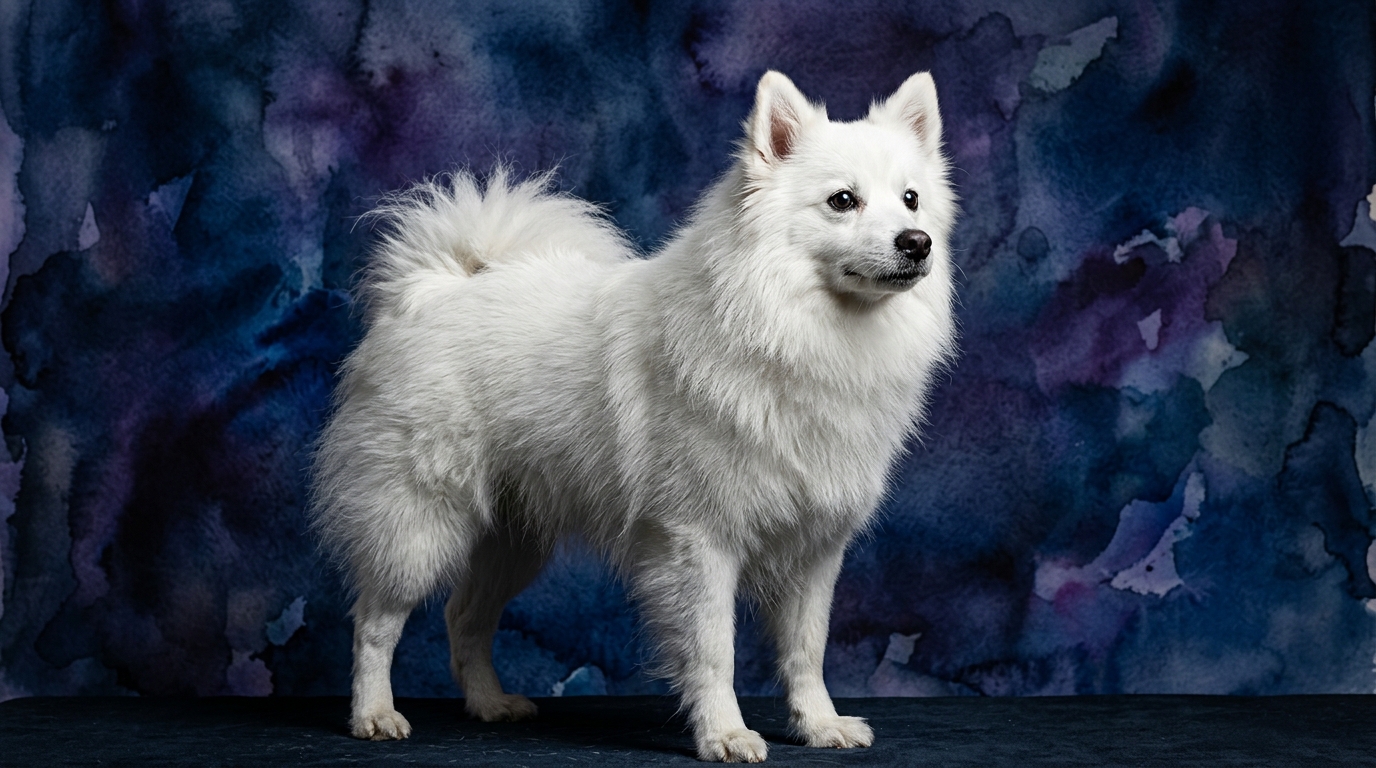
Side-by-Side IQ Profile: American Eskimo Dog
**Problem Solving (3/5):** American Eskimo Dogs demonstrate a thoughtful approach to challenges, often employing observation and trial-and-error. Their problem-solving might involve figuring out how to open gates, retrieve hidden toys, or devise clever strategies to get attention. They are resourceful and can adapt to new situations by assessing their environment.
**Training Speed (3/5):** Eskies learn at a moderate pace, requiring consistent and positive reinforcement to solidify new behaviors. While capable of mastering a wide range of commands, their independent streak means they may take longer to internalize lessons and might occasionally choose not to comply if motivation isn't strong.
**Social Intelligence (3/5):** Eskies connect well with their immediate family, showing affection and loyalty. They are generally good at understanding human intentions within their social circle, though they can be more reserved or cautious with strangers. Their social interactions are often characterized by a dignified watchfulness.
**Instinctive Drive (3/5):** The American Eskimo Dog has a moderate instinctive drive, encompassing a natural alertness and a tendency towards vocalization, stemming from their watchdog roots. While they possess a prey drive, it is typically less intense or focused than that of a terrier, often expressed through playful chasing rather than persistent hunting.
**Memory (3/5):** Eskies possess a solid memory for routines, commands, and familiar individuals. They can recall learned behaviors effectively, though like their training speed, their recall might benefit from periodic refreshers, particularly if a command isn't regularly practiced.
Where the Yorkshire Terrier Wins Cognitively
The Yorkshire Terrier's cognitive edge is particularly evident in their rapid assimilation of new information and their profound social connection. Their 4/5 training speed means they grasp commands more quickly, often requiring fewer repetitions to achieve proficiency compared to the Eskie's 3/5. This makes them exceptionally responsive to structured learning environments, allowing them to progress through training stages with impressive efficiency.
Furthermore, their superior social intelligence (4/5 vs. 3/5) allows them to more acutely interpret human emotional states and intentions. This heightened awareness fosters a deeper, more intuitive bond, making them remarkably empathetic companions who often seem to anticipate their owner's needs or moods. This subtle understanding translates into a more nuanced interaction, where a Yorkie might offer comfort or solicit play based on a delicate reading of their human's disposition.
Where the American Eskimo Dog Wins Cognitively
While not outscoring the Yorkie in any specific category, the American Eskimo Dog's cognitive profile offers a different kind of strength, particularly in their balanced application of their drives and problem-solving. Their 3/5 in instinctive drive, for instance, manifests as vigilance without the intense, singular focus often seen in terriers. This means they are alert watchdogs, quick to notice anomalies, but generally less prone to obsessive pursuit of small prey, offering a more measured response to environmental stimuli.
Their problem-solving (3/5), combined with a moderate social intelligence, often leads to a thoughtful independence. An Eskie might spend more time observing a situation before acting, devising a solution that is less about immediate gratification and more about achieving a goal through patient, calculated effort, such as figuring out a complex puzzle toy or navigating a new environment with cautious deliberation. This self-reliance can be a cognitive advantage in situations requiring independent thought rather than immediate human direction.
Which Is Easier to Train and Why
The Yorkshire Terrier generally presents as the easier dog to train, largely due to its higher scores in Training Speed (4/5) and Social Intelligence (4/5). Yorkies typically possess a strong desire to please their human companions, coupled with a quick grasp of cause and effect. They are eager participants in training sessions, quickly associating cues with desired actions, and their keen social awareness means they are highly motivated by praise and positive interaction from their owners. This responsiveness makes them agile learners, readily adapting to new commands and routines.
In contrast, the American Eskimo Dog, with its 3/5 in Training Speed and Social Intelligence, tends to be more independent-minded. While capable of learning, Eskies can exhibit a degree of stubbornness or a "what's in it for me?" attitude. Their training requires more patience, consistency, and creative motivation to maintain engagement, as they are less inherently driven by human approval alone and might question the necessity of a command if it doesn't align with their own perceived interests.
Which Suits Active Owners vs. Relaxed Owners
For active owners who relish interactive engagement and consistent mental stimulation, the Yorkshire Terrier often presents a more fitting companion. Their 4/5 instinctive drive translates into a zest for games like fetch or hide-and-seek, and their high social intelligence means they thrive on being an integral part of daily activities and problem-solving alongside their human. They flourish with owners who enjoy teaching new tricks and providing ample opportunities for shared cognitive challenges.
Conversely, the American Eskimo Dog, with its more moderate instinctive drive and social intelligence, can suit owners who appreciate a dog with a greater degree of self-sufficiency. While they certainly benefit from structured exercise and mental enrichment, an Eskie might be content with a good walk and then settling down to observe their surroundings or engage with a puzzle toy independently. They are well-suited for owners who offer consistent routines and clear boundaries, valuing a companion that is loyal and watchful but not constantly demanding high-intensity interaction.
The Verdict
Choose a Yorkshire Terrier if you seek a highly responsive, socially intuitive companion eager for interactive training and deeply involved in family life.
Opt for an American Eskimo Dog if you appreciate a thoughtful, self-reliant canine partner who thrives on consistent guidance and offers a more independent, watchful presence.
🧠 Find Your Pet's IQ Score
Our Pet IQ Lab assessment covers 25+ tests across 5 cognitive dimensions — personalized to your breed.
Take the Full IQ Test →Frequently Asked Questions
Do Yorkshire Terriers bark a lot due to their intelligence?
A Yorkshire Terrier's vocal tendencies stem more from their 4/5 instinctive drive and territorial nature rather than sheer intelligence. Their sharp social intelligence means they are quick to alert their family to perceived threats or novelties, using barking as a primary communication tool. This vigilance is a breed trait, amplified by their keen senses and desire to protect their domain.
Is the American Eskimo Dog's independence a sign of lower intelligence?
Not at all; the American Eskimo Dog's independence reflects a different cognitive style, not a deficit. Their 3/5 problem-solving and moderate social intelligence mean they are capable of self-directed thought and action, often preferring to assess situations and act on their own initiative. This self-reliance can be a strength, demonstrating a capacity for independent decision-making rather than solely relying on human cues.
How does the Coren rank for Yorkshire Terriers (27) relate to their IQ profile?
The Coren rank primarily assesses "working and obedience intelligence," focusing on training speed and command retention, which aligns with the Yorkie's 4/5 training speed and memory. While useful, it doesn't encompass the full spectrum of their IQ profile, such as their specific problem-solving approach, social acumen, or the intensity of their instinctive drives, which our Pet IQ Lab analysis details.