
Side-by-Side IQ Profile
The Yorkshire Terrier, holding a Coren rank of #27, presents a robust cognitive profile characterized by several strong dimensions. Their Problem Solving is rated at 3/5, suggesting a moderate capacity for navigating novel challenges and figuring out solutions to environmental puzzles without excessive frustration. Training Speed is a notable 4/5, indicating a quick grasp of new commands and routines, making them generally responsive learners who can pick up complex sequences efficiently. Social Intelligence also scores 4/5, reflecting a keen awareness of human cues and social dynamics, often leading to strong bonds and perceptively interactive behaviors. Their Instinctive Drive, at 4/5, speaks to a persistent, purposeful nature, often channeling their terrier heritage into focused activities like chasing or digging. Memory is equally strong at 4/5, allowing them to retain learned behaviors and social experiences over extended periods, making reinforcement more efficient.
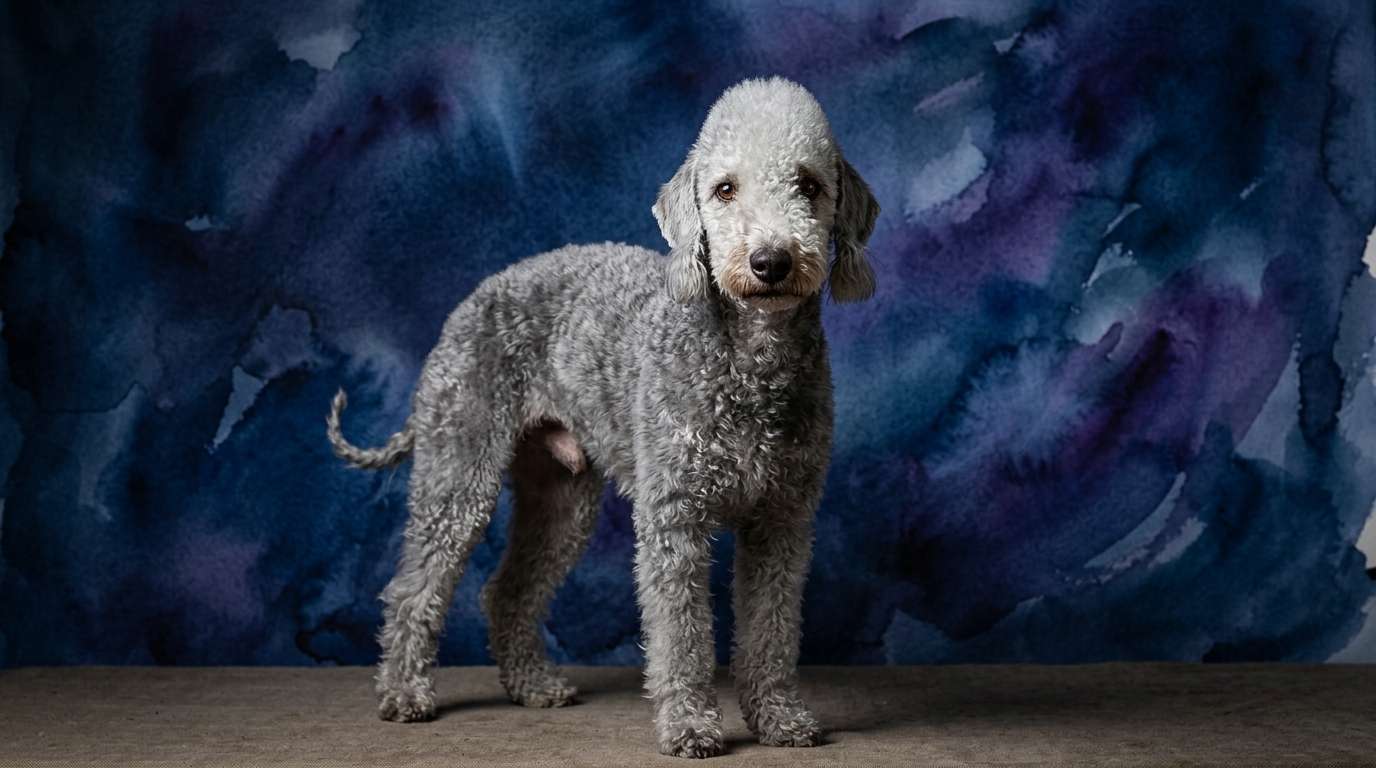
The Bedlington Terrier, while not Coren-ranked, exhibits a consistently balanced cognitive makeup, with all five dimensions rated at 3/5. Their Problem Solving at 3/5 mirrors the Yorkie's, indicating a moderate ability to tackle new situations, demonstrating a steady rather than brilliant approach to new puzzles. Training Speed is 3/5, suggesting a reliable but unhurried learning pace that requires consistent, positive reinforcement to solidify new skills and commands effectively. Social Intelligence at 3/5 means they are generally attuned to their human companions but might not display the same nuanced responsiveness or anticipation of desires as breeds with higher scores. Instinctive Drive, also 3/5, points to a moderate inherent persistence, less intense than some terriers, making their natural impulses more manageable in a domestic setting. Finally, their Memory at 3/5 indicates a solid but not exceptional retention of experiences and training, benefiting from regular reinforcement to keep skills sharp and behaviors consistent.
Where Yorkshire Terrier Wins Cognitively
The Yorkshire Terrier truly shines in areas demanding rapid assimilation and nuanced social engagement, making them highly adaptable to varied learning scenarios. Its 4/5 Training Speed means it often picks up new commands with impressive quickness, translating into faster progress in obedience or trick training compared to the Bedlington. This quickness is complemented by a 4/5 Social Intelligence, enabling them to read human moods and intentions with greater accuracy, often anticipating desires or reacting appropriately to subtle cues, fostering a deeper communicative bond. Furthermore, their 4/5 Instinctive Drive gives them a focused persistence in tasks, which, when properly channeled, allows them to excel in activities requiring sustained attention or repetitive actions, such as canine sports. The Yorkie's 4/5 Memory means skills and social lessons are retained more effectively, potentially requiring less refresher work over time, allowing for the rapid building of a behavioral repertoire.
Where Bedlington Terrier Wins Cognitively
While the Bedlington Terrier's scores are consistently moderate, this very consistency represents a unique cognitive advantage, offering a predictable and harmonious temperament. Its uniform 3/5 across Problem Solving, Training Speed, Social Intelligence, Instinctive Drive, and Memory results in a remarkably balanced cognitive profile, making them less prone to the sharp peaks of intense drive or the quick-witted social manipulation sometimes seen in breeds with higher, more varied scores. This cognitive steadiness often translates to a more even-keeled disposition, which can be a significant benefit for owners seeking a companion without extreme highs or lows in behavior. The Bedlington's moderate instinctive drive (3/5) can be a particular win for owners seeking a terrier with less intense prey drive or less persistent digging tendencies, making them potentially easier to manage in varied home environments and requiring less constant redirection of natural impulses. Their consistent moderate memory (3/5) ensures they retain information reliably, even if not with the Yorkie's rapid recall, providing a stable foundation for consistent training that yields lasting results.
Which Is Easier to Train and Why
The Yorkshire Terrier generally presents as the easier breed to train, primarily due to its superior Training Speed (4/5 versus Bedlington's 3/5) and higher Social Intelligence (4/5 versus 3/5). A Yorkie's quicker grasp of new commands means fewer repetitions are needed for them to understand and perform a desired behavior, leading to faster progression through training stages. Their enhanced social intelligence allows them to better interpret human body language and vocal tones, making them more responsive to handler cues and subtle corrections, fostering a more fluid training dialogue. Conversely, the Bedlington Terrier's moderate training speed requires a more patient and consistent approach; while they *will* learn, the process may take longer and demand more structured reinforcement sessions to solidify skills. The Bedlington's 3/5 instinctive drive, while manageable, still necessitates clear direction to prevent it from overriding training directives, whereas the Yorkie's 4/5 drive, though strong, can often be more readily channeled into structured tasks given its quicker learning curve and social perceptiveness.
Which Suits Active Owners vs. Relaxed Owners
The Yorkshire Terrier, with its 4/5 instinctive drive and keen social intelligence, often thrives with owners who enjoy engaging them in consistent activities and mental challenges. Their higher training speed and memory make them excellent candidates for agility, obedience, or trick training, appealing to active owners who want a dog to partner with in structured learning and complex tasks. While small, their energetic disposition and persistent nature mean they are not content to be mere lapdogs and significantly benefit from regular mental stimulation and purposeful interaction. The Bedlington Terrier, with its balanced 3/5 across all cognitive dimensions, is well-suited for owners seeking a more moderately paced companion. Its consistent, less intense instinctive drive (3/5) means it can adapt comfortably to a relaxed home environment without demanding constant, high-octane engagement or intricate problem-solving tasks. While still benefiting from daily walks and play, its cognitive profile suggests it will be content with regular, but not necessarily intensive, mental and physical activity, making it a good fit for owners who appreciate a steady, amiable presence without the need for constant intellectual stimulation.
The Verdict
Opt for a Yorkshire Terrier if you desire a highly responsive learner who quickly grasps new commands and enjoys engaging in structured activities, thriving on social interaction and consistent mental stimulation.
Select a Bedlington Terrier if you appreciate a consistently balanced temperament and a moderate pace in learning, seeking a companion whose steady cognitive profile translates to predictable behavior and amiable companionship.
🧠 Find Your Pet's IQ Score
Our Pet IQ Lab assessment covers 25+ tests across 5 cognitive dimensions — personalized to your breed.
Take the Full IQ Test →Frequently Asked Questions
Does the Coren ranking difference significantly impact their daily lives?
The Coren ranking offers a general indicator of a breed's working and obedience intelligence, placing the Yorkshire Terrier quite high. While the Bedlington Terrier isn't ranked, our specific IQ breakdown shows its cognitive abilities are consistently moderate, meaning owners can expect a capable but perhaps less overtly eager learner in daily interactions. The practical difference lies more in the *speed* of learning new tasks rather than an inability to learn.
How do their instinctive drives manifest differently in a home setting?
The Yorkshire Terrier's 4/5 instinctive drive often manifests as a persistent curiosity or a focused determination, which might mean a stronger propensity for chasing small critters or a tenacious approach to toys. The Bedlington Terrier's 3/5 instinctive drive is generally more moderate; while it still possesses a terrier's typical persistence, it might be less intense or more easily redirected, potentially leading to fewer challenges with prey drive or digging, making it a calmer presence.
Are Bedlington Terriers harder to train because of their lower training speed score?
"Harder" isn't the precise term; "requiring more consistency and patience" is more accurate. A Bedlington Terrier (3/5 training speed) will learn, but it may take more repetitions and a longer period to solidify commands compared to a Yorkshire Terrier (4/5 training speed). Owners should be prepared for a steady, methodical training approach rather than expecting rapid results, focusing on positive reinforcement to build strong habits.