
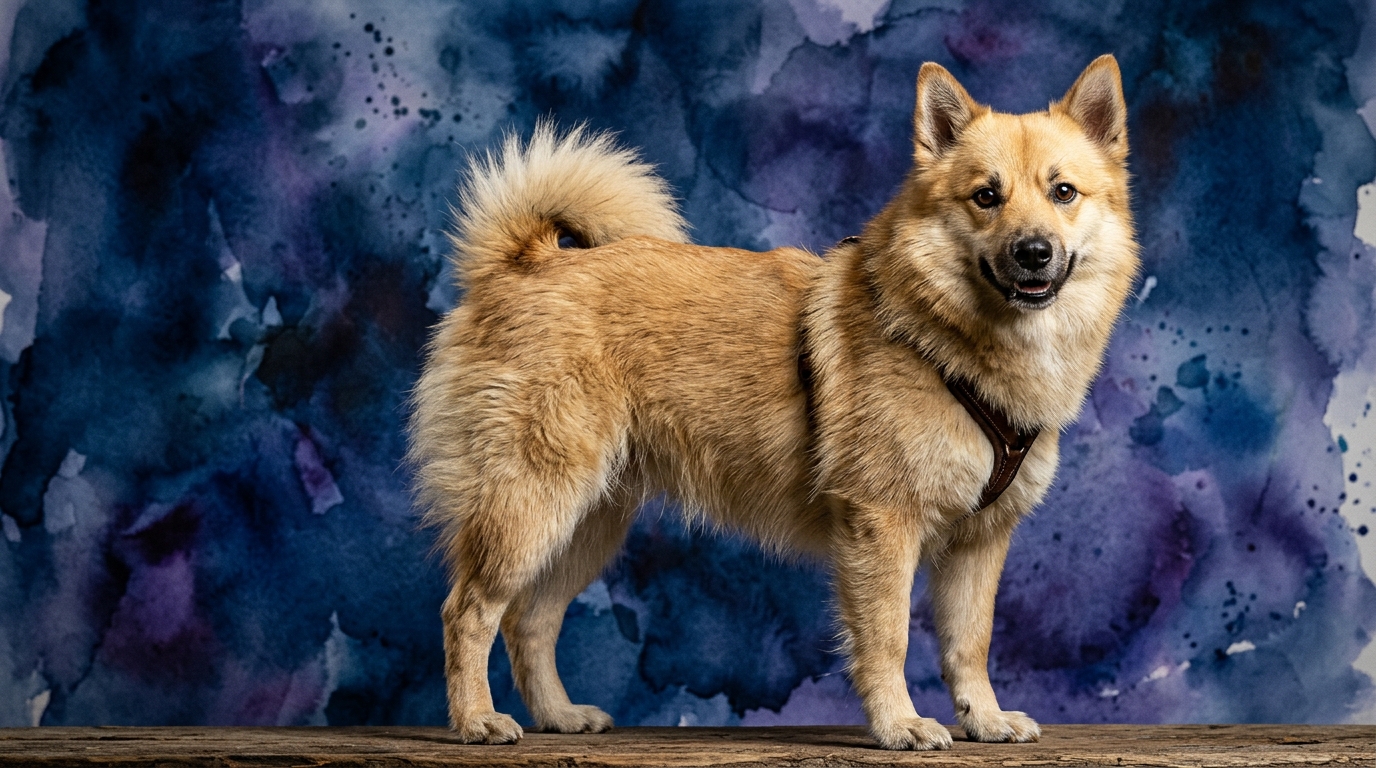
Side-by-Side IQ Profile: Yorkshire Terrier vs. Norwegian Buhund
The Cosmic Pet Pet IQ Lab employs a five-dimensional framework to assess canine intelligence, offering a nuanced look beyond simple 'smart' labels. For the Yorkshire Terrier, we observe a profile marked by quick responsiveness and keen social awareness, while the Norwegian Buhund presents a picture of balanced, practical aptitude.
**Yorkshire Terrier (Terrier Group, Coren Rank #27)**: Their cognitive makeup demonstrates a focus on interaction and rapid skill acquisition. **Problem Solving (3/5)**: Resourceful in navigating their immediate environment, often finding creative solutions to access desired items or overcome small obstacles. Their problem-solving leans towards practical, immediate gains rather than complex, multi-step tasks. **Training Speed (4/5)**: Eager to learn and quick to grasp new commands, especially when motivated by rewards and positive reinforcement. Their responsiveness makes them generally fast learners in structured training sessions. **Social Intelligence (4/5)**: Highly attuned to human emotions and social cues, capable of forming strong bonds and adapting their behavior based on handler reactions. They often excel at reading their primary caregivers' moods and intentions. **Instinctive Drive (4/5)**: Possess a robust terrier drive, including a strong prey drive and a persistent digging instinct. This translates into a tenacious focus on tasks that engage these inherent behaviors, making them determined in their pursuits. **Memory (4/5)**: Exhibit excellent retention of learned commands, routines, and experiences, remembering both positive and negative associations over long periods. This strong memory aids in consistent performance once a behavior is established.
**Norwegian Buhund (Herding Group, Not Coren-Ranked)**: This breed showcases a consistent and functional cognitive approach, rooted in its herding heritage. **Problem Solving (3/5)**: Demonstrates practical problem-solving skills, particularly in scenarios related to their herding heritage, such as navigating terrain or managing livestock. Their solutions tend to be direct and functional. **Training Speed (3/5)**: Capable learners, though they may require more repetition or varied approaches to fully internalize new commands compared to some faster-paced breeds. Consistency is key to their training progress. **Social Intelligence (3/5)**: Engages well with their human family, showing a good understanding of social dynamics and household routines. While affectionate, their social intelligence is more about cooperative interaction than nuanced emotional reading. **Instinctive Drive (3/5)**: Possesses a moderate herding drive, expressed through patrolling, gathering, and sometimes 'nosing' family members. This drive is present but typically less intense or prone to extreme expression than some other herding breeds. **Memory (3/5)**: Retains learned information and routines adequately, maintaining skills with regular reinforcement. Their memory is sufficient for daily life and basic training, though perhaps less vivid for past events than breeds with higher scores.
Where the Yorkshire Terrier Wins Cognitively
The Yorkshire Terrier's cognitive profile showcases several distinct advantages. Their **Training Speed (4/5)** means they often pick up new tricks and commands with impressive swiftness, requiring fewer repetitions to solidify a behavior. This cognitive edge makes them particularly rewarding for owners who enjoy teaching complex sequences or participating in dog sports like agility, where rapid learning is paramount.
Their superior **Social Intelligence (4/5)** allows them to read human cues and emotions with remarkable empathy. This translates to a dog that seems to 'understand' its owner's moods, offering comfort or playful distraction precisely when needed, fostering an incredibly deep and responsive bond.
While a strong drive can be challenging, the Yorkie's tenacious focus, driven by its **Instinctive Drive (4/5)**, means it approaches tasks with unwavering determination. When this drive is channeled into constructive activities like scent work or retrieving, their cognitive persistence provides a distinct advantage in achieving goals.
Furthermore, a Yorkshire Terrier's excellent **Memory (4/5)** ensures that once a lesson is learned or a routine is established, it tends to stick. This cognitive strength means less backtracking in training and a greater reliability in their learned behaviors, making them dependable companions in their daily interactions.
Where the Norwegian Buhund Wins Cognitively
While the Buhund's scores don't reach the Yorkie's peak in specific areas, its consistent 3/5 across all dimensions signifies a robust, well-rounded, and highly practical intelligence. This cognitive balance means the Buhund is less likely to be overly sensitive or intensely driven in a single problematic direction. For instance, its moderate **Instinctive Drive (3/5)** for herding, while present, is often more manageable than the extreme drives seen in some other herding breeds, allowing for easier integration into diverse family settings without constant management of intense urges.
The Norwegian Buhund's **Problem Solving (3/5)**, though rated 3/5, is specifically geared towards its herding heritage. This means it excels in situations requiring spatial awareness, independent decision-making in open environments, and the ability to manage groups, even if those 'groups' are just family members. This cognitive profile makes them highly capable in environments where they can apply their ancestral skills, such as farm work or monitoring their 'flock' (family) in a dynamic household, showing a unique type of practical intelligence for organization and oversight.
The Buhund's **Social Intelligence (3/5)** allows for cooperative interaction without the potential for over-reliance or hyper-sensitivity that can sometimes accompany higher scores. This breed forms strong, loyal bonds based on mutual respect and clear communication, rather than constantly trying to read subtle emotional shifts. This balanced approach can be a cognitive advantage for owners seeking a companion who is engaged but also possesses a healthy degree of independence.
Training Dynamics: Which is Easier to Train?
The Yorkshire Terrier generally presents as the easier breed to train, primarily due to its higher **Training Speed rating of 4/5**. They tend to grasp new commands and concepts with remarkable quickness, often requiring fewer repetitions before a behavior becomes ingrained. This rapid assimilation of information, coupled with their strong **Social Intelligence (4/5)** which makes them highly attuned to their handler's desires, means they are often eager to please and respond well to positive reinforcement. For instance, a Yorkie might learn 'sit' or 'stay' in just a few short sessions, motivated by praise or a small treat, and reliably perform it thereafter due to their excellent **Memory (4/5)**. Their quick cognitive processing and responsiveness make them feel very 'teachable'.
In contrast, the Norwegian Buhund, with a **Training Speed of 3/5**, may require a more patient and consistent approach. While certainly capable of learning, they might need more varied training methods and additional repetitions to fully internalize commands. Their independent nature, stemming from their herding background, means they can sometimes appear less immediately compliant than the Yorkie. For example, a Buhund might understand a command but choose to momentarily assess if it truly aligns with its current 'task' or interest, before complying. Owners will find success by making training engaging and ensuring their Buhund understands the 'why' behind a command, leveraging their practical problem-solving rather than just rote memorization.
Lifestyle Match: Active vs. Relaxed Owners
For active owners seeking a highly engaged and responsive companion for mentally stimulating activities, the Yorkshire Terrier often proves an exceptional match. Their robust **Instinctive Drive (4/5)** means they thrive when given tasks that engage their tenacity, such as advanced obedience, agility, or scent work. Their high **Social Intelligence (4/5)** ensures they are keen participants, constantly seeking interaction and feedback from their human partners during these energetic pursuits. They are not content to merely observe; they want to be integral to the action, making them ideal for owners who enjoy consistent, interactive engagement.
Conversely, the Norwegian Buhund, with its balanced 3/5 ratings across the board, can be a wonderful fit for owners who appreciate a companion with a steady, independent, yet affectionate nature. While they do require regular exercise to satisfy their moderate **Instinctive Drive (3/5)**, they are often content with a good daily walk or a game of fetch, followed by calm companionship. Their **Social Intelligence (3/5)** fosters a cooperative household member who respects routines but isn't constantly demanding intense emotional connection. They offer a comforting presence for those who enjoy a dog that is present and observant, but also capable of entertaining itself or relaxing quietly by their side.
The Verdict
Choose a Yorkshire Terrier if you're seeking a highly responsive, quick-learning companion eager for deep social connection and ready to excel in interactive training or dog sports. Their tenacity and sharp memory make them rewarding for owners who enjoy consistent engagement and teaching new skills.
Opt for a Norwegian Buhund if you appreciate a balanced, independently minded dog with practical intelligence and a steady temperament, ideal for owners who value a cooperative companion for outdoor activities and calm home life.
🧠 Find Your Pet's IQ Score
Our Pet IQ Lab assessment covers 25+ tests across 5 cognitive dimensions — personalized to your breed.
Take the Full IQ Test →Frequently Asked Questions
Are Yorkshire Terriers good for first-time dog owners?
A Yorkshire Terrier's high training speed and social intelligence can make them rewarding for first-time owners who are committed to consistent training and socialization. Their quick learning and eagerness to bond can simplify the initial stages of dog ownership, though their strong terrier drive requires thoughtful management.
Do Norwegian Buhunds require a lot of exercise?
Norwegian Buhunds, with their herding background and moderate instinctive drive (3/5), do require regular exercise to stay content and mentally stimulated. Daily walks, playtime, or opportunities to run in a secure area are important to channel their energy constructively, preventing boredom.
How do their problem-solving skills differ in daily life?
A Yorkshire Terrier's problem-solving (3/5) often manifests in finding creative ways to access treats or toys, using their small stature to their advantage. A Norwegian Buhund's problem-solving (3/5) might be seen in their ability to 'herd' family members or navigate complex backyard layouts, applying their practical intelligence to their environment.