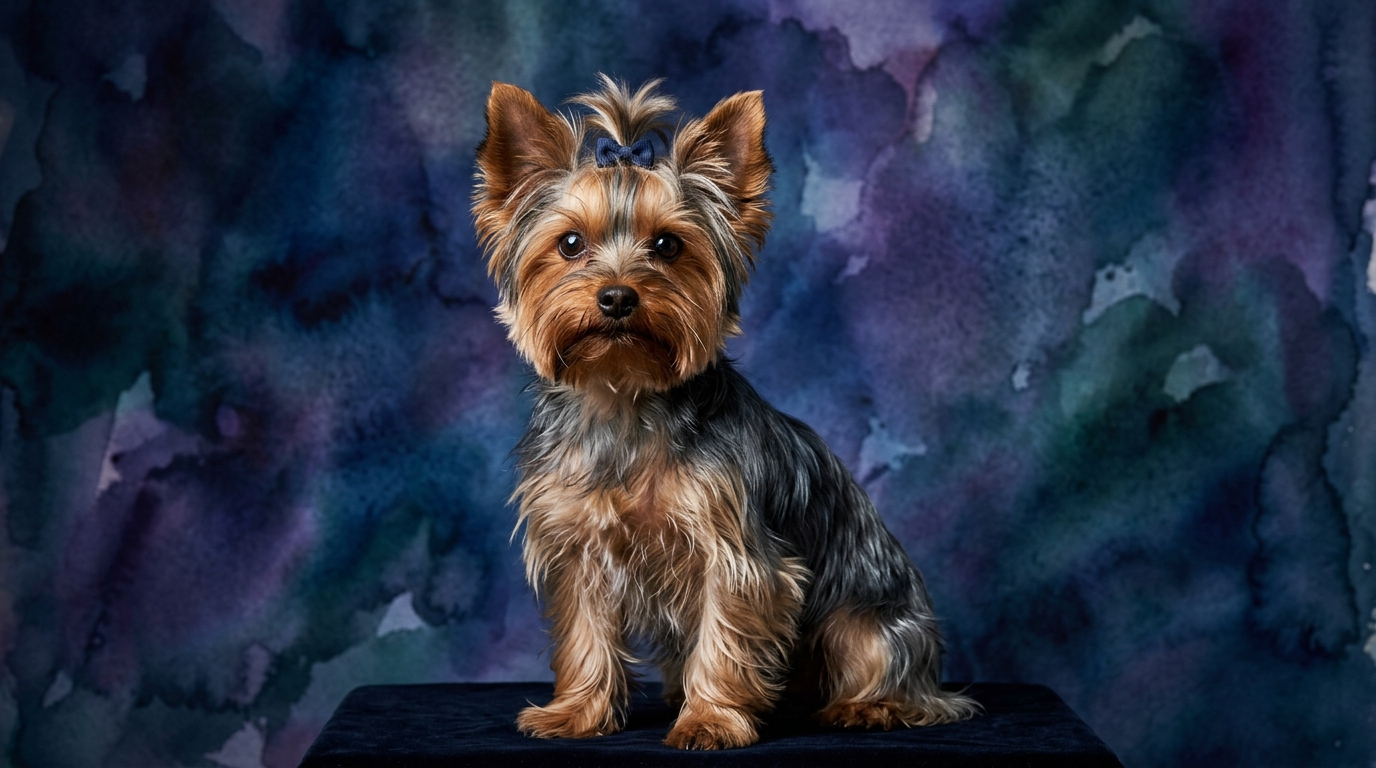
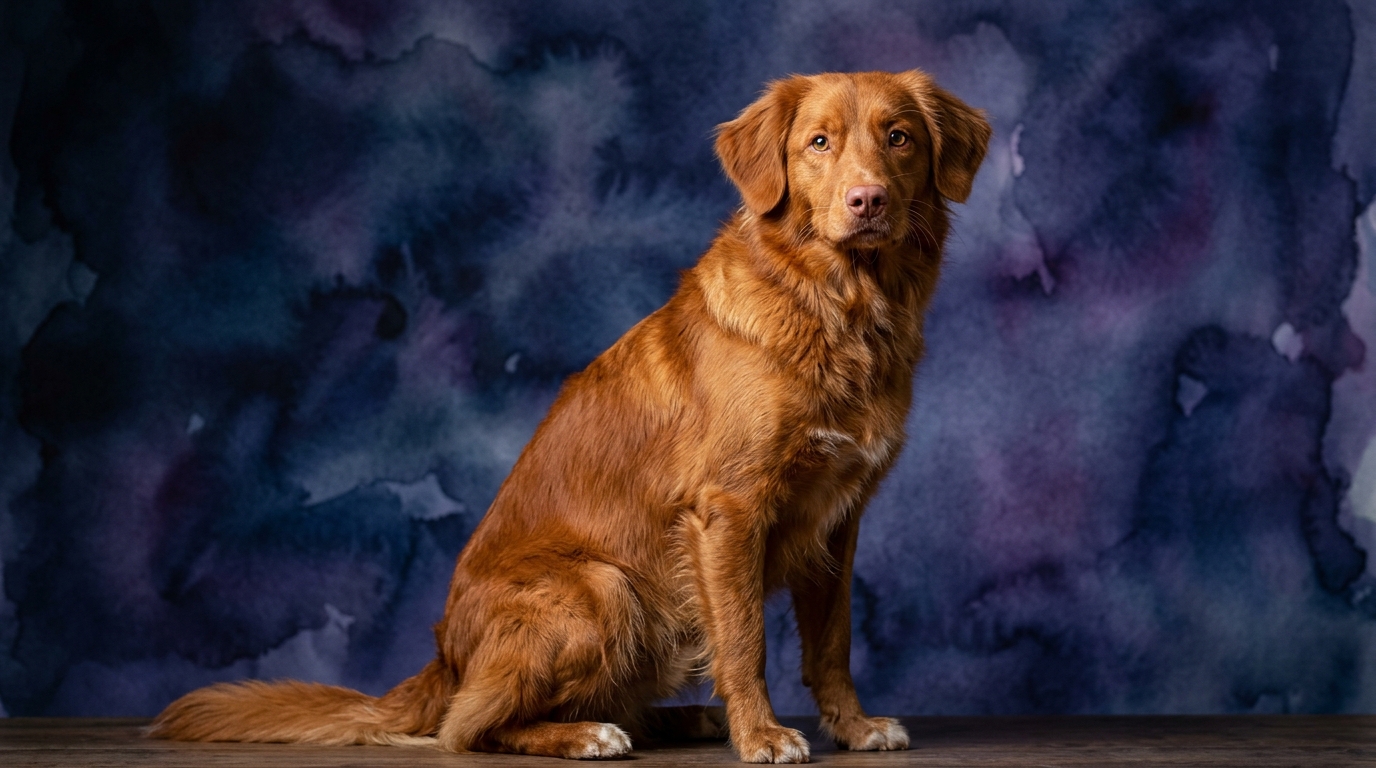
Side-by-Side Cognitive Profiles
At The Cosmic Pet Pet IQ Lab, we evaluate canine cognition across five distinct dimensions to provide a nuanced understanding of each breed's mental landscape. For the Yorkshire Terrier, a Coren-ranked #27 breed, their profile reveals a resourceful mind. Their Problem Solving is rated 3/5, indicating an ability to figure out how to achieve desired outcomes, often leveraging their compact size and tenacity. Training Speed stands at an impressive 4/5, reflecting their eagerness to learn and quick grasp of new commands. Social Intelligence is also high at 4/5, making them highly attuned to human emotions and social cues, which fosters strong relational bonds. Their Instinctive Drive, a robust 4/5, speaks to their terrier heritage, manifesting as a strong urge for chasing, digging, and exploration. Finally, their Memory is rated 4/5, demonstrating excellent retention of learned behaviors and routines.
The Nova Scotia Duck Tolling Retriever, a Sporting breed not specifically Coren-ranked, presents a profile tailored for purpose and endurance. Their Problem Solving is 3/5, signifying competence in navigating tasks, particularly those related to their retrieving work, though they may not independently seek out complex mental puzzles. Training Speed is 3/5, suggesting a responsive nature to learning, albeit potentially requiring more consistent repetition than some breeds to solidify new skills. Their Social Intelligence is 3/5, indicating strong family bonds and an understanding of social structures, yet they can be reserved with strangers, taking time to assess new interactions. The Toller’s Instinctive Drive is 3/5, primarily focused on their specialized retrieving and 'tolling' behaviors, showcasing a desire to work collaboratively in outdoor environments. Memory is also 3/5, reflecting good retention of commands and routines, particularly those relevant to their work or daily life, though perhaps not as universally sharp as the Yorkie's for varied details.
Where the Yorkshire Terrier Excels Cognitively
The Yorkshire Terrier truly shines in areas demanding quick adaptation and social astuteness. With a Training Speed of 4/5, they often absorb new commands and tricks with remarkable alacrity, making them a delight for owners interested in teaching a wide repertoire of behaviors. This rapid learning is often fueled by their 4/5 Social Intelligence, which allows them to keenly observe and respond to human cues and desires, fostering a strong partnership in training exercises. Their superior memory (4/5) further cements these learned behaviors, meaning once a Yorkie has mastered a skill, it’s likely to stick. This combination makes them particularly adept at precision tasks and responding to subtle handler signals, often outperforming many larger breeds in obedience competitions relative to their size. Their instinctive drive (4/5), though rooted in terrier tenacity, also contributes positively to their cognitive wins; this persistence means they are focused in their efforts to solve challenges or obtain rewards, which, when channeled correctly, translates into effective learning. For instance, a Yorkie might quickly learn a complex scent game if it means finding a favorite treat, demonstrating both problem-solving and memory in action.
Where the Nova Scotia Duck Tolling Retriever Excels Cognitively
While the Toller might not boast the same rapid-fire learning speed as the Yorkie across all domains, their cognitive strengths are profoundly tied to their purpose and endurance. Their Problem Solving (3/5) and Instinctive Drive (3/5) are best understood within the context of their retrieving work. Tollers excel at sustained focus and methodical execution of tasks, especially those involving scent work, water retrieval, and intricate field patterns. Their cognitive edge lies in their ability to maintain concentration over extended periods and to apply learned strategies to dynamic, real-world scenarios, such as tracking a bird or navigating varied terrain. Unlike the Yorkie's quick, often individualistic problem-solving, the Toller’s approach is typically more cooperative and goal-oriented, working in tandem with a handler to achieve a specific outcome. Their memory (3/5) is robust for sequences of actions and locations pertinent to their work, allowing them to remember where a retrieve fell or the path taken through a field. This sustained application of intelligence, rather than immediate cognitive bursts, is where the Toller's unique mental fortitude truly comes to the forefront, making them exceptional partners for specific, demanding activities.
Training Aptitude: Yorkie vs. Toller
Based on our Pet IQ Lab metrics, the Yorkshire Terrier, with a Training Speed of 4/5 compared to the Toller's 3/5, generally presents as the breed easier to train for a broad range of commands and tricks. This is largely due to their keen Social Intelligence (4/5), which makes them highly responsive to human interaction and eager to please their primary caregiver. Yorkies tend to pick up new cues quickly, often showing a rapid grasp of expectations and a willingness to perform for attention or small rewards. Their superior Memory (4/5) ensures that once a behavior is learned, it is retained effectively. For example, a Yorkie might learn to “sit” and “stay” in just a few short sessions, consistently performing these commands thereafter. Their terrier drive, while sometimes leading to independent thought, can also be channeled into persistent effort during training.
In contrast, while the Nova Scotia Duck Tolling Retriever is certainly trainable, their 3/5 Training Speed suggests they may require more consistent repetition and a patient approach to solidify new behaviors. Their Social Intelligence (3/5) is good within their family unit but might not translate to the same immediate eagerness to perform for any human, especially in novel situations. Tollers are often driven by their innate working instincts, so training that aligns with their retrieving nature tends to be more readily absorbed. While a Toller can learn complex tasks, the initial acquisition phase might be less immediate than with a Yorkie, requiring a more structured and perhaps longer-term commitment to consistent reinforcement. Their drive is more about cooperative work than independent showmanship, influencing their training style.
Matching Canine Cognition to Lifestyle
The Nova Scotia Duck Tolling Retriever is undeniably the better match for active owners. With an Instinctive Drive of 3/5 geared towards retrieving and working, Tollers thrive on consistent physical and mental engagement. They require daily outlets for their energy, such as long walks, runs, swimming, or engaging in dog sports like agility, dock diving, or obedience. An owner who enjoys spending significant time outdoors, participating in structured activities, or even hunting, will find the Toller an enthusiastic and capable companion. Their cognitive profile, while not suggesting explosive problem-solving, indicates a capacity for sustained focus in goal-oriented tasks, which aligns perfectly with an active, task-driven lifestyle. They are partners for adventure, needing a consistent purpose to feel fulfilled.
Conversely, the Yorkshire Terrier, while possessing a robust Instinctive Drive (4/5) rooted in their terrier nature, is generally more adaptable to varied activity levels. While they certainly enjoy walks and playtime, their smaller stature means their exercise requirements are less demanding than a Toller’s. A Yorkie can be content with shorter, regular bursts of activity and ample indoor play, making them suitable for owners with a more relaxed lifestyle or those living in smaller spaces. Their high social intelligence also means they thrive on companionship, which can be provided in more sedentary settings. They are excellent companions for owners who value close interaction and mental engagement through training and games that don't necessarily demand extensive physical exertion.
The Verdict
Choose a Yorkshire Terrier if you appreciate a quick-witted, highly responsive companion eager to learn new tricks and thrives on close social interaction within a less intensely active lifestyle. Their sharp memory and social acumen make them excellent for owners who enjoy consistent engagement and a dog that quickly grasps routines.
Opt for a Nova Scotia Duck Tolling Retriever if you lead an active, outdoor-oriented life and seek a dedicated working partner for activities like retrieving, hiking, or dog sports. Their sustained focus and cooperative nature make them ideal for owners committed to providing regular, purposeful physical and mental challenges.
🧠 Find Your Pet's IQ Score
Our Pet IQ Lab assessment covers 25+ tests across 5 cognitive dimensions — personalized to your breed.
Take the Full IQ Test →Frequently Asked Questions
Do Yorkshire Terriers and Nova Scotia Duck Tolling Retrievers have similar problem-solving abilities?
Both breeds rate 3/5 in problem-solving, suggesting they are capable of navigating tasks, but their approach differs. Yorkies often employ quick, opportunistic strategies to get what they want, while Tollers tend to use methodical, sustained approaches, particularly in work-related scenarios requiring cooperation.
Which breed is more adaptable to different social situations?
The Yorkshire Terrier, with a Social Intelligence of 4/5, is generally more adaptable and quickly attuned to new social dynamics, readily forming bonds and engaging with people. Nova Scotia Duck Tolling Retrievers, at 3/5, are loyal to their family but can be more reserved and take longer to warm up to strangers or novel social settings.
How do their instinctive drives manifest differently?
The Yorkie's 4/5 instinctive drive is rooted in classic terrier tenacity, manifesting as a strong urge to chase, explore, and 'hunt' small objects or perceived vermin. The Toller's 3/5 drive is primarily focused on retrieving and 'tolling' (luring waterfowl), demonstrating a more specialized, cooperative, and enduring working instinct.