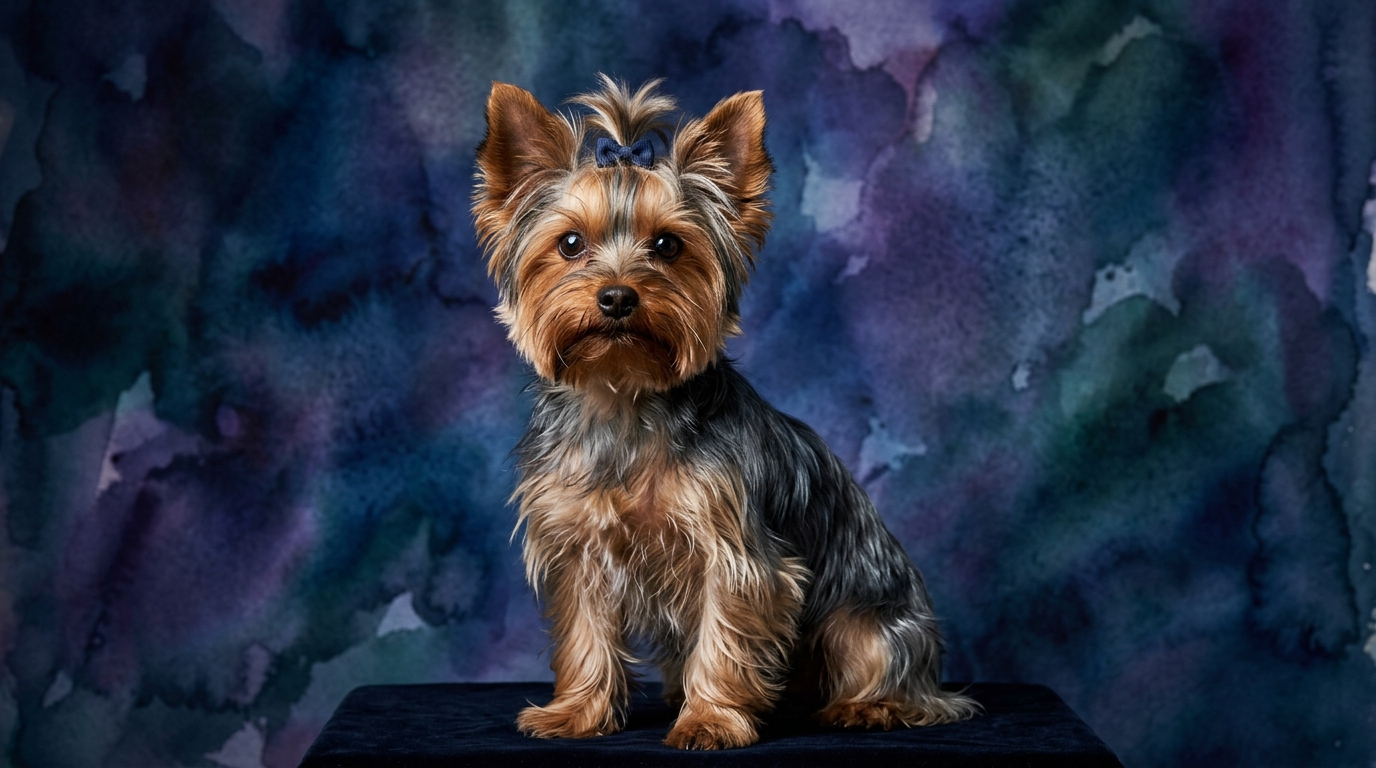
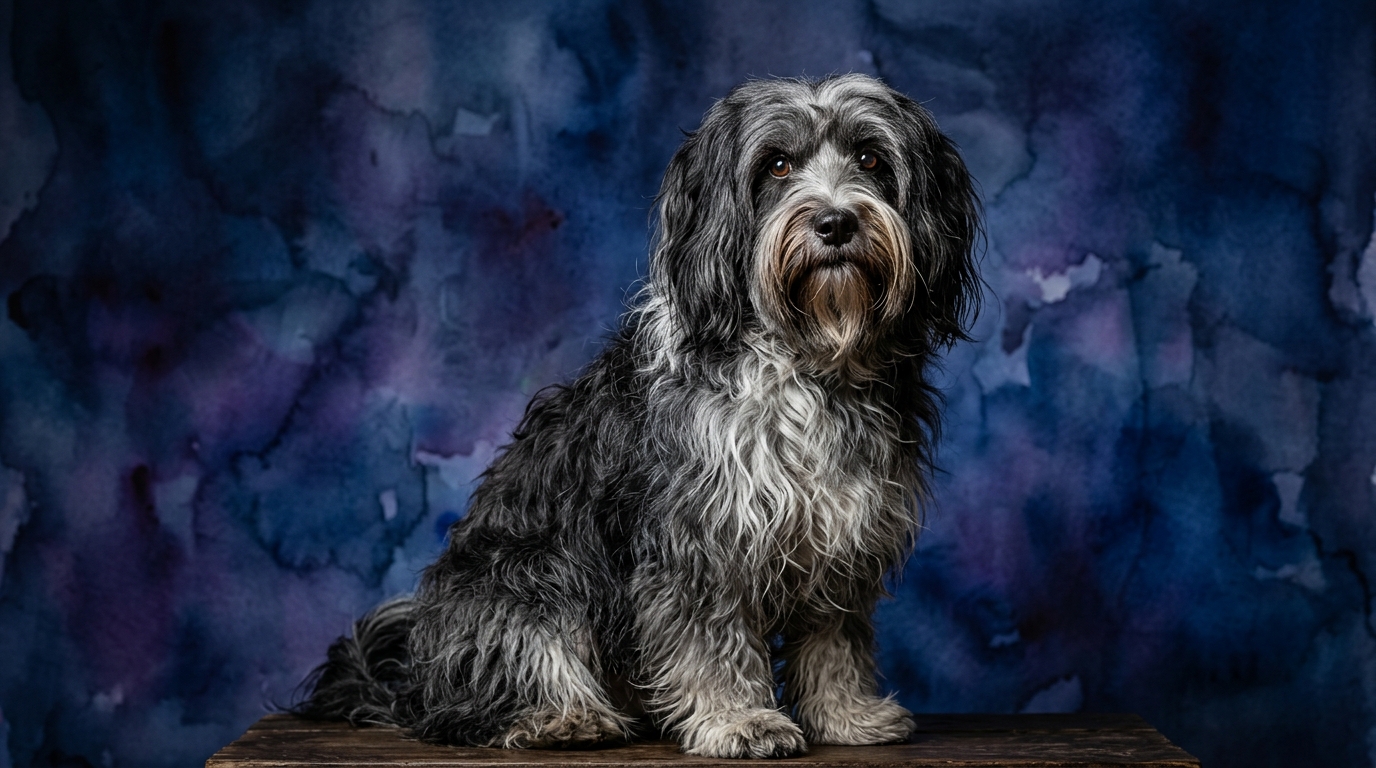
Side-by-Side IQ Profile: Yorkshire Terrier vs. Tibetan Terrier
The Cosmic Pet Pet IQ Lab provides a detailed framework for understanding canine cognition across five key dimensions. For the Yorkshire Terrier, ranked #27 by Coren, and the Tibetan Terrier, ranked #63, these metrics highlight their distinct mental aptitudes and behavioral tendencies.
The Yorkshire Terrier's profile showcases a nimble and engaged mind:
• Problem Solving (3/5): The Yorkshire Terrier demonstrates a moderate capacity for navigating novel challenges, often employing their inherent terrier tenacity to work through obstacles. They are adept at figuring out how to access desired items or bypass simple barriers, driven by curiosity and a determined spirit.
• Training Speed (4/5): Their quick uptake of new commands and routines places them among the more responsive breeds. Yorkshire Terriers typically grasp new concepts swiftly, especially when training is engaging and consistent, leveraging their desire to interact with their human companions.
• Social Intelligence (4/5): These small but mighty dogs exhibit strong abilities in reading human cues and adapting their behavior within a social context. They form deep bonds and are often attuned to their family's moods, responding with appropriate affection or seeking attention when opportunities arise.
• Instinctive Drive (4/5): True to their terrier heritage, Yorkshire Terriers possess a robust prey drive and a keen instinct for vigilance. This manifests in their readiness to chase small animals, their alert barking, and their confident, sometimes bold, approach to new stimuli.
• Memory (4/5): With a solid memory, Yorkshire Terriers retain learned behaviors, routines, and experiences effectively. This contributes to their trainability and their ability to recall past interactions, whether positive associations with rewards or past experiences with specific environments.
The Tibetan Terrier's profile reveals a thoughtful and adaptable intelligence:
• Problem Solving (3/5): The Tibetan Terrier also scores a moderate 3/5 in problem-solving, indicating a capable mind for practical challenges. They approach new situations with an intelligent, often observant, perspective, capable of finding solutions to moderate puzzles, though perhaps with less frantic energy than a terrier.
• Training Speed (3/5): While capable of learning, their training speed is rated at 3/5, suggesting they may require more repetition and patience compared to some other breeds. Their independent streak means they might consider whether a command is worth their effort, rather than simply complying instantly.
• Social Intelligence (3/5): Tibetan Terriers display a moderate level of social intelligence, forming strong bonds with their families but often maintaining a reserved demeanor with strangers. They understand social dynamics within their trusted circle but may not be as overtly expressive or quick to adapt to new social settings as some breeds.
• Instinctive Drive (3/5): Their instinctive drive is moderate, reflecting their historical role as companions and guardians rather than hunters. While they possess natural protective instincts and curiosity, their drive to chase or patrol is typically less intense and more controlled than that of a traditional terrier.
• Memory (3/5): Tibetan Terriers have a competent memory, allowing them to recall learned behaviors and routines. However, their retention might require more reinforcement over time compared to breeds with higher scores, particularly if the learned behavior isn't consistently practiced or intrinsically rewarding.
Where the Yorkshire Terrier Wins Cognitively
The Yorkshire Terrier's cognitive profile shines particularly in areas demanding quick adaptation and strong engagement. Their 4/5 rating in Training Speed means they typically pick up new commands and tricks with impressive alacrity, making early obedience and advanced skill acquisition a relatively smooth process. This swift learning is often fueled by their 4/5 Social Intelligence, enabling them to keenly observe and respond to human cues, eager to please and interact. Furthermore, their superior 4/5 Memory ensures that these learned behaviors and positive associations are retained robustly, building a solid foundation for consistent performance. This combination of rapid learning, social attunement, and strong recall positions the Yorkie as a highly responsive and engaging learner, often excelling in structured training environments or activities that require close partnership.
Where the Tibetan Terrier Wins Cognitively
While the Tibetan Terrier's scores are generally equal to or lower than the Yorkie's, their cognitive strengths present a different kind of advantage. Their 3/5 in Problem Solving, combined with a more moderate 3/5 Instinctive Drive, suggests a thoughtful rather than impulsive approach to challenges. This measured response means they are less likely to react purely on immediate instinct, instead taking a moment to assess situations before acting, which can be beneficial in complex or novel environments where a considered action is preferred over a quick, perhaps unrefined, reaction. Furthermore, their moderate Social Intelligence (3/5) fosters a more independent companionship, allowing them to entertain themselves and navigate situations with a calm, discerning intelligence, a trait appreciated by owners who value a less overtly clingy canine.
Which is Easier to Train and Why
Based on The Cosmic Pet Pet IQ Lab's metrics, the Yorkshire Terrier generally presents as the easier breed to train. Their 4/5 rating in Training Speed signifies a readiness to absorb new information quickly, translating into faster acquisition of commands and routines. This rapid learning is significantly bolstered by their 4/5 Social Intelligence, which means Yorkies are often highly attuned to their owner's intentions and emotional states, making them more cooperative and eager to engage in collaborative tasks. They thrive on positive reinforcement and the interaction it brings, often viewing training as a rewarding bonding experience.
In contrast, the Tibetan Terrier’s 3/5 in both Training Speed and Social Intelligence indicates a more deliberate, independent learner. While capable of learning anything a Yorkie can, they may require more repetition and a more patient, consistent approach. Their heritage as companion and watchdogs in monasteries fostered a degree of self-sufficiency; they were not bred to be highly biddable working dogs. This independence means a Tibetan Terrier might pause to consider the value of a command before executing it, rather than offering immediate compliance. Owners must establish clear leadership and make training sessions fun and rewarding to overcome this inherent "what's in for me?" attitude, whereas a Yorkie's natural eagerness often streamlines the process.
Suited for Active Owners vs. Relaxed Owners
The choice between these two breeds for active versus relaxed owners often comes down to the nature of the activity and the owner's desired level of canine engagement. The Yorkshire Terrier, despite its small stature, is often better suited for active owners who appreciate a dog with robust energy and a strong drive for engagement. Their 4/5 Instinctive Drive means they relish activities like brisk walks, puzzle toys, and even agility or earthdog trials where their terrier instincts can be channeled. They thrive on mental stimulation and consistent interaction, making them ideal for owners who enjoy an active partnership and can provide plenty of opportunities for their sharp minds to work. A relaxed owner might find a Yorkie's persistent need for stimulation and sometimes vocal nature a bit overwhelming if not properly managed.
The Tibetan Terrier, with its more moderate 3/5 Instinctive Drive, offers a versatile middle ground. They are adaptable and can certainly keep up with moderately active owners who enjoy regular walks, hikes, or playtime. Their energy is often described as "bursts" followed by periods of calm, making them suitable for owners who appreciate a dog that can transition from playful outdoor adventures to relaxed indoor companionship. While they enjoy activity, their need for constant high-intensity stimulation is generally lower than a Yorkie's. This makes them a good fit for owners who are active but also value a dog that is comfortable settling down for quiet evenings, offering a balanced blend of playful energy and composed tranquility.
The Verdict
Choose the Yorkshire Terrier if you seek a highly responsive, eager-to-please companion who thrives on consistent interaction and quick learning, perfect for engaging in diverse training and activities. Their sharp wits and strong memory make them excellent partners for owners who appreciate a dog that quickly adapts and builds strong, communicative bonds.
Opt for the Tibetan Terrier if you desire a thoughtful, adaptable companion with a touch of independent spirit, capable of problem-solving with a measured approach and less intense instinctive drives. They are ideal for owners who appreciate a loyal, reserved friend who enjoys moderate activity but is equally content with quiet companionship.
🧠 Find Your Pet's IQ Score
Our Pet IQ Lab assessment covers 25+ tests across 5 cognitive dimensions — personalized to your breed.
Take the Full IQ Test →Frequently Asked Questions
Are Yorkshire Terriers easy to live with for first-time dog owners?
Yorkshire Terriers can be excellent companions for first-time owners who are prepared for their spirited personalities and consistent training needs. Their high social intelligence and training speed mean they respond well to clear guidance, but their strong instinctive drive requires owners to be diligent about socialization and boundaries.
Do Tibetan Terriers bark a lot due to their watch dog history?
Tibetan Terriers were historically watchdogs, so they do possess a natural inclination to alert their families to perceived intruders or unusual sounds. While not excessive barkers, they will use their voice to communicate, a trait that can be managed with consistent training and early socialization to distinguish between genuine threats and everyday occurrences.
Which breed is more prone to separation anxiety?
Both breeds can develop separation anxiety, but their social intelligence scores offer a clue: Yorkshire Terriers, with a 4/5 social intelligence, often form very strong attachments and can be more prone to distress when left alone for extended periods. Tibetan Terriers (3/5 social intelligence) are generally more independent, which might make them slightly less susceptible, though early training is crucial for both to foster self-reliance.