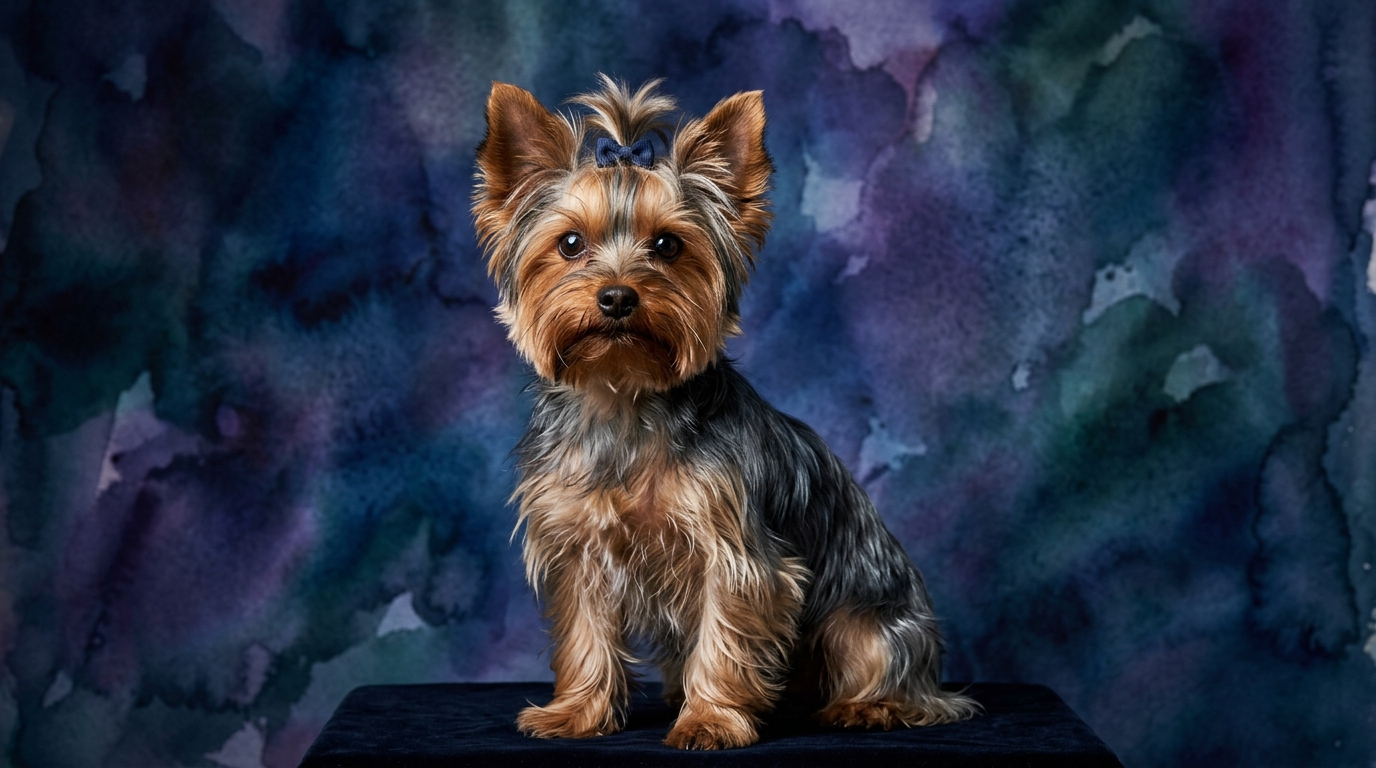
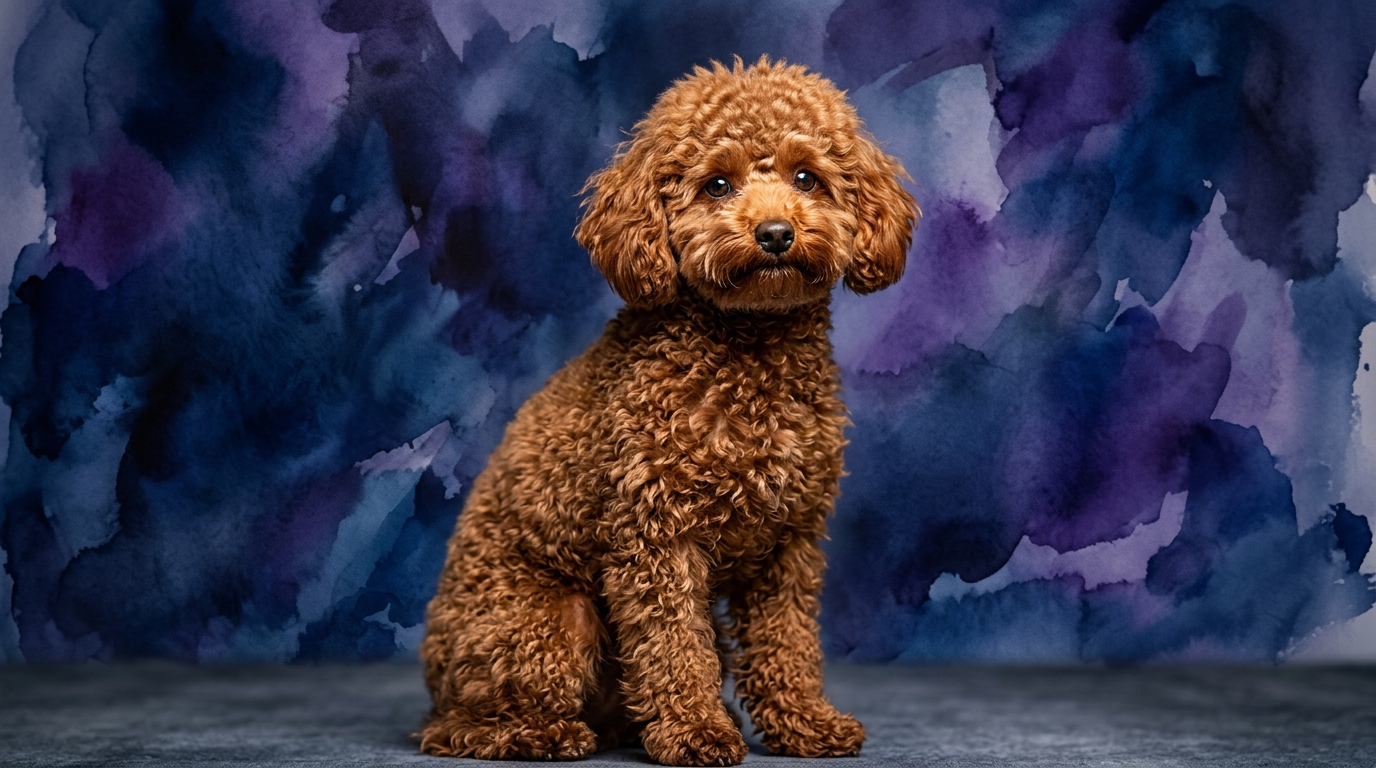
Side-by-Side IQ Profile: Yorkshire Terrier vs. Toy Poodle
The Yorkshire Terrier, holding Coren rank #27 for working and obedience intelligence, presents a balanced cognitive profile. Their Problem Solving is rated 3/5, suggesting they can navigate moderate challenges but might approach novel puzzles with less independent strategic planning. A Training Speed of 4/5 indicates a quick grasp of new commands, making them responsive learners in structured environments.
Their Social Intelligence, also 4/5, highlights an adeptness at reading human and canine cues, enabling smooth interactions within diverse social settings. An Instinctive Drive of 4/5 suggests a strong inherent motivation, often manifesting as keen curiosity or territorial vigilance, while their Memory at 4/5 ensures they retain learned behaviors and experiences effectively over time.
In contrast, the Toy Poodle stands at Coren rank #2, signaling an exceptionally high capacity for formal learning and obedience. Their Problem Solving score of 5/5 means they excel at figuring out intricate tasks and adapting strategies to overcome obstacles independently. A perfect 5/5 in Training Speed underscores their remarkable ability to absorb and execute new commands with minimal repetition.
However, their Social Intelligence is 3/5, indicating they might be more reserved or less instinctively attuned to subtle social nuances compared to the Yorkie, often focusing intensely on their primary human. An Instinctive Drive of 3/5 suggests their natural urges are less dominant or overtly expressed than in terrier breeds, and their Memory, a stellar 5/5, ensures exceptional recall and retention of information, both positive and negative.
Where the Yorkshire Terrier Wins Cognitively
The Yorkshire Terrier truly shines in areas demanding nuanced social navigation and robust innate drives. Their 4/5 Social Intelligence score positions them as more inherently perceptive of their human family's moods and the dynamics of a room. A Yorkie might be the first to notice a change in a family member's demeanor, offering a comforting nudge, or seamlessly integrating into a lively gathering without excessive shyness or overexcitement. This acute awareness allows them to navigate complex human social landscapes with an innate grace, making them excellent companions for those who appreciate a dog that 'gets' people.
This breed's 4/5 Instinctive Drive is another significant cognitive advantage, rooted deeply in their terrier heritage. While often associated with prey drive for vermin, this translates into a compelling motivation for exploration, vigilance, and even playful 'hunting' games. Their natural curiosity and persistent focus on stimuli can make them excellent at scent work or engaging in games that mimic their ancestral tasks, providing profound mental satisfaction through innate behaviors. They possess a tenacious spirit that, when appropriately channeled, drives them to pursue goals with considerable resolve, often showing remarkable persistence in exploring new smells or 'digging' at blankets.
Where the Toy Poodle Wins Cognitively
The Toy Poodle's cognitive strengths are undeniably geared towards structured learning and complex mental challenges, evidenced by their perfect 5/5 scores in Problem Solving, Training Speed, and Memory. Their exceptional Problem Solving ability means they often approach new situations with a strategic mindset, capable of deconstructing tasks and devising solutions rather than relying purely on trial and error. This manifests in their capacity to quickly understand intricate sequences, like navigating an agility course, or to independently figure out how to access a desired toy hidden within a complex puzzle. They don't just learn *what* to do; they often grasp *why* it works, allowing for flexible application of their knowledge in new scenarios.
Their unparalleled Training Speed and Memory ensure that once a concept is grasped, it's rarely forgotten and can be executed with remarkable precision. This isn't just about basic obedience; it extends to advanced trick training, dog sports like agility, or even service dog work where retaining a vast repertoire of commands and applying them flawlessly is paramount. Owners frequently report that once a Poodle learns something, it's a deeply ingrained behavior, making consistent training efforts yield lasting and impressive results, from basic manners to advanced freestyle routines. The Toy Poodle's mind thrives on consistent mental engagement, rapidly building upon learned information to master increasingly complex tasks.
Which is Easier to Train and Why
When evaluating ease of training, the Toy Poodle generally holds a distinct edge, primarily due to their superior Training Speed (5/5) and Problem Solving (5/5). They process new information with astonishing rapidity, often requiring fewer repetitions to master a command. A Toy Poodle frequently anticipates what is expected, making training sessions efficient and highly rewarding. This applies not just to formal obedience but also to house-training, where their quick understanding of boundaries and routines minimizes accidents and accelerates consistency. Their eagerness to engage intellectually with their human partners and their rapid processing power mean that training a Toy Poodle often feels like a collaborative mental exercise.
The Yorkshire Terrier, with a commendable 4/5 in Training Speed, is certainly no slow learner. They are responsive and eager to please their primary human, picking up commands quickly. However, their 3/5 Problem Solving score means they might take a bit longer to generalize commands to new environments or to independently figure out solutions to unexpected training challenges. Their stronger Instinctive Drive (4/5) can also present a different training dynamic; while a Poodle might be driven by the desire to please and solve the task, a Yorkie's natural instincts might sometimes compete with human directives, requiring more patient redirection to maintain focus during training. For instance, a Yorkie's strong prey drive might make them more easily distracted by a fluttering leaf during a 'stay' command than a Toy Poodle, and their independent streak might occasionally 'test' boundaries.
Which Suits Active Owners vs. Relaxed Owners
Understanding these cognitive profiles is key to matching a dog to an owner's lifestyle. For active owners who thrive on consistent mental engagement and enjoy structured activities, the Toy Poodle is an exceptional fit. Their high Problem Solving and Training Speed mean they excel in dog sports like agility, obedience trials, or even learning complex sequence tricks. An owner who enjoys enrolling in dog obedience classes, participating in rally obedience, or teaching a wide array of complex tricks will find the Toy Poodle an enthusiastic and highly capable student. Their mental energy demands an owner who is ready to be a dedicated teacher and consistent cognitive partner, as a bored Poodle can quickly become a destructive one.
Conversely, the Yorkshire Terrier, with its balanced cognitive profile, often suits owners who appreciate a companion capable of both learning and independent social adaptation, perhaps with less emphasis on formal, competitive training. Their 4/5 Social Intelligence makes them wonderful companions in varied social settings, happy to tag along on errands or social visits, adapting readily to new people and environments. For an owner who prefers a dog that is a charming and adaptable presence without the intense demand for formal 'work,' the Yorkshire Terrier is a compelling choice. Their cognitive needs are well-met through daily walks where they can explore scents, interactive play that mimics their natural instincts, and being an integral part of family life, where their social intelligence can truly shine.
The Verdict: Aligning Canine Cognition with Lifestyle
The Cosmic Pet's IQ Lab data reveals that while both Yorkshire Terriers and Toy Poodles are highly capable companions, their cognitive strengths are distinct and cater to different ownership experiences. The Toy Poodle embodies a structured, academic brilliance, excelling in rapid learning, complex problem-solving, and precise execution of commands. Their mind is a sponge, eager to absorb and apply information, making them ideal partners for those who enjoy the journey of formal training and mental athleticism.
The Yorkshire Terrier, on the other hand, presents a different kind of mental prowess. Their intelligence leans towards social acumen, instinctive drive, and a robust memory, equipping them to navigate the world with a keen awareness of their surroundings and social cues. They offer a lively, adaptable companionship, thriving in environments where their innate curiosity and social perceptiveness are valued and engaged. Choosing between them isn't about superiority, but about aligning a dog's inherent cognitive wiring with an owner's lifestyle and training aspirations. For those who envision a partnership built on intricate communication, rapid learning, and the joy of seeing a dog master increasingly complex intellectual tasks, the Toy Poodle offers a profound and deeply rewarding cognitive connection. If your ideal companion is one that navigates social landscapes with intuitive grace, possesses a spirited curiosity, and offers a lively, observant presence, the Yorkshire Terrier's unique blend of social and instinctive intelligence will resonate deeply with your lifestyle.
The Verdict
Choose a Yorkshire Terrier if you value a socially adaptable companion with strong natural instincts for vigilance and playful exploration, who learns quickly and integrates smoothly into varied social dynamics.
Opt for a Toy Poodle if you seek a dog that thrives on advanced problem-solving, masters complex commands with incredible speed, and excels in structured learning environments like dog sports or trick training.
🧠 Find Your Pet's IQ Score
Our Pet IQ Lab assessment covers 25+ tests across 5 cognitive dimensions — personalized to your breed.
Take the Full IQ Test →Frequently Asked Questions
Do Yorkshire Terriers and Toy Poodles need similar amounts of mental stimulation?
While both breeds require mental engagement to prevent boredom, the type of stimulation differs. Toy Poodles thrive on complex problem-solving and learning new, multi-step commands, needing consistent, structured mental work. Yorkshire Terriers benefit from interactive play, scent games, and opportunities to observe and adapt socially, leveraging their instinctive drives and social intelligence.
How does the 'Instinctive Drive' score impact daily life for these breeds?
A Yorkshire Terrier's 4/5 Instinctive Drive means they might exhibit stronger prey drive, vigilance, or territorial behaviors, requiring management and redirection. A Toy Poodle's 3/5 Instinctive Drive suggests these natural urges are less pronounced, making them generally less distracted by environmental stimuli like small critters, which can simplify walks and outdoor training.
Can a Yorkshire Terrier excel in dog sports like agility, given the Toy Poodle's higher scores?
Absolutely! While Toy Poodles might have a natural advantage in speed of learning and problem-solving for agility courses, a Yorkshire Terrier's 4/5 Training Speed and 4/5 Memory mean they can certainly excel. Their instinctive drive and social intelligence can also make them keen and motivated participants, especially with consistent, positive reinforcement from an owner who understands their terrier spirit.