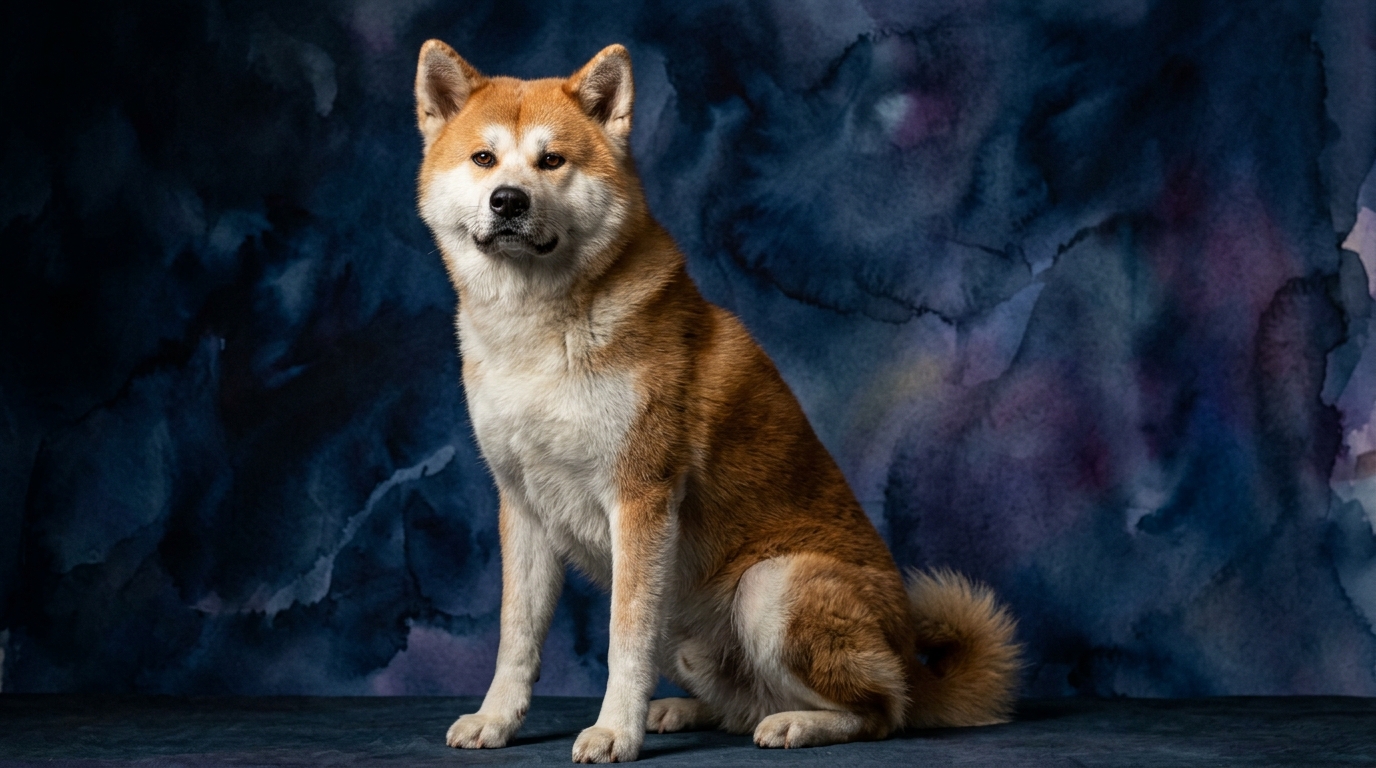
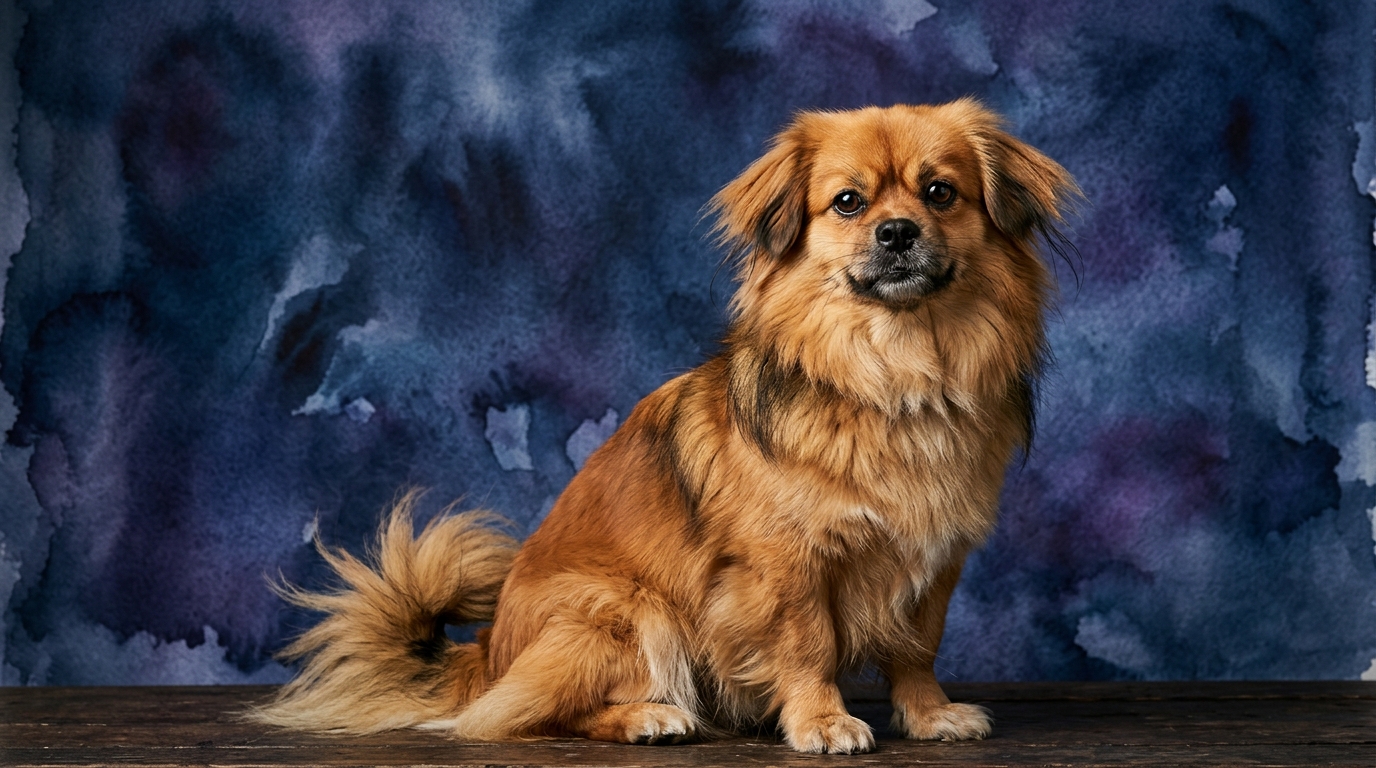
Side-by-Side Cognitive Profiles: Akita vs. Tibetan Spaniel
The Akita, a robust working breed ranked #54 by Coren for obedience and working intelligence, presents a compelling cognitive profile. Its Problem Solving is rated 3/5, indicating an aptitude for independent thought and finding solutions, often on its own terms. Training Speed, however, stands at 2/5, suggesting a need for patience and consistent, experienced guidance due to its strong-willed nature. Social Intelligence is 3/5, reflecting a discerning loyalty, deeply bonded with its family but typically reserved or aloof with strangers. The Akita's Instinctive Drive is exceptionally high at 5/5, manifesting as powerful protective instincts, territorial awareness, and a significant prey drive. Memory is a strong 4/5, meaning it retains learned behaviors, routines, and experiences, both positive and negative, over long periods.
In contrast, the Tibetan Spaniel, a charming companion from the Non-Sporting group and not Coren-ranked, offers a different intellectual blueprint. Its Problem Solving also scores 3/5, often applied to understanding household dynamics or subtly influencing human behavior for attention rather than tackling complex tasks independently. Training Speed is a moderate 3/5, indicating a more amenable student than the Akita, responsive to positive reinforcement and consistency. Social Intelligence matches the Akita at 3/5, but its manifestation is typically more universally friendly and adaptable, though they can be discerning about who they fully trust. Instinctive Drive is 3/5, a balanced level that includes a keen watchdog ability and curiosity without the intense prey or guarding drives of a working breed. Memory is 3/5, suggesting a solid capacity for recalling commands and experiences, benefiting from regular reinforcement to keep lessons fresh.
Where the Akita Demonstrates Cognitive Prowess
The Akita's cognitive advantages particularly shine in areas requiring strong independent judgment and unwavering commitment to its perceived role. Its exceptional Instinctive Drive (5/5) is a cornerstone of its intellect, manifesting as a profound ability to assess threats and protect its territory and family. This isn't just brute force; it's a sophisticated application of situational awareness and a deep-seated understanding of its environment. When a new person or animal approaches, an Akita's cognitive process quickly evaluates intent and potential risk, making autonomous decisions based on its innate protective programming. This drive, combined with its strong Memory (4/5), enables it to learn and retain complex environmental cues and routines vital for guardianship, such as patrolling patterns or identifying regular visitors versus anomalies. An Akita remembers who belongs and who doesn't, and this retention informs its protective responses. While its Problem Solving is rated 3/5, this often translates into finding its own solutions to perceived challenges, such as how to secure a perimeter or manage a perceived threat, rather than waiting for human instruction. This independent problem-solving, coupled with its memory, makes the Akita a formidable and self-reliant presence, capable of complex decision-making in its domain.
Where the Tibetan Spaniel Exhibits Cognitive Strengths
The Tibetan Spaniel's cognitive strengths lie in its adaptability and its nuanced approach to social engagement. While its Problem Solving is also 3/5, it often manifests in more subtle, socially-oriented ways, such as figuring out how to gain maximum human attention or navigating household dynamics with charm. They are adept at reading human moods and adjusting their behavior accordingly, a key aspect of their social intelligence. The Tibetan Spaniel's Training Speed (3/5) is notably higher than the Akita's, indicating a greater willingness and capacity to absorb new commands and behaviors from humans more readily. This faster learning curve means they pick up tricks and house rules with comparative ease, making them more pliable students. Their moderate Instinctive Drive (3/5) means they are less burdened by overwhelming primal urges, allowing their cognitive resources to be directed towards companionship and social interaction. This balance allows them to be alert watchdogs without the intense territoriality or prey drive that can complicate living with other animals or in busy environments. Their social intelligence, while scoring 3/5 like the Akita, tends to be more outwardly expressive and less reserved, making them more universally engaging and easier to integrate into diverse social settings.
Training Dynamics: Akita vs. Tibetan Spaniel
When it comes to ease of training, the Tibetan Spaniel generally presents a smoother path for owners. Its Training Speed of 3/5 signifies a greater readiness to learn and a natural inclination to cooperate with human instruction. They respond well to positive reinforcement methods, eagerly working for praise, treats, and attention. Their social intelligence, focused on companionship, means they often seek to please their humans, which significantly aids the training process. They are less likely to question commands or assert their own agenda, making consistency more effective. Behavioral differences include their adaptability; they are generally more flexible in new environments and with new people, which simplifies socialization and exposure training.
The Akita, with a Training Speed of 2/5, demands a far more dedicated and experienced approach. Their strong independent nature and high Instinctive Drive (5/5) mean they are often less inclined to blindly follow commands, preferring to assess situations and make their own decisions. Training an Akita requires immense patience, consistency, and a firm, fair hand that establishes clear leadership without resorting to harsh methods. They will test boundaries repeatedly, and their powerful memory (4/5) means they will remember inconsistencies. Real behavioral differences include their tendency towards stubbornness and a discerning nature; an Akita will decide if a command is worth obeying, especially if it conflicts with their own judgment or protective instincts. Successful Akita training relies on building a strong bond of respect and trust, often taking longer and requiring more nuanced understanding of canine psychology.
Matching Breeds to Lifestyles: Active vs. Relaxed Owners
The Akita is best suited for experienced, active owners who can meet its significant physical and mental exercise requirements and provide consistent, confident leadership. Their high Instinctive Drive (5/5) means they thrive with structured activities that engage their protective instincts and physical prowess, such as advanced obedience, tracking, or even carefully managed protection work. Owners must be prepared for rigorous daily exercise and ongoing mental stimulation to prevent boredom and channel their independent problem-solving (3/5) constructively. This breed requires an owner who understands and respects its discerning social intelligence (3/5) and is committed to extensive, early socialization to manage its reserved nature towards strangers and potential dog-dog aggression. An Akita's owner should be comfortable with a powerful, self-assured companion who requires a deep understanding of canine behavior.
Conversely, the Tibetan Spaniel is an excellent match for more relaxed owners seeking an engaging yet adaptable companion. While they enjoy walks and playtime, their moderate Instinctive Drive (3/5) means they don't demand the same intensity or volume of activity as an Akita. They are content with shorter, regular walks and indoor play, making them suitable for apartment living or owners with less time for strenuous outdoor adventures. Their higher Training Speed (3/5) and adaptable social intelligence (3/5) make them easier to integrate into various family dynamics and social situations. They thrive on companionship and being involved in daily household activities, often perching to observe their surroundings, a manifestation of their problem-solving and social awareness. Owners who appreciate a playful, alert, and affectionate dog that can also enjoy quiet evenings will find the Tibetan Spaniel a delightful fit.
The Verdict
Choose an Akita if you are an experienced dog owner seeking a powerful, independent guardian with exceptional loyalty and are prepared for intensive training and socialization. Their profound protective instincts and memory make them formidable companions for a dedicated leader.
Opt for a Tibetan Spaniel if you desire an adaptable, charming, and moderately active companion who is more amenable to training and thrives on close family interaction. Their balanced drive and social adaptability make them a delightful addition to a range of lifestyles.
🧠 Find Your Pet's IQ Score
Our Pet IQ Lab assessment covers 25+ tests across 5 cognitive dimensions — personalized to your breed.
Take the Full IQ Test →Frequently Asked Questions
Is the Akita truly harder to train than other dogs?
Yes, compared to many breeds, the Akita's independent nature and strong will (Training Speed 2/5) make training more challenging. They require an owner who can be consistently firm, patient, and understanding of their unique cognitive processes and protective instincts.
Do Tibetan Spaniels make good watchdogs despite their smaller size?
Absolutely. With an Instinctive Drive of 3/5, Tibetan Spaniels possess a keen awareness of their surroundings and are quick to alert their owners to anything unusual. While they won't deter intruders with size, their vocal alerts are effective at signaling perceived changes in their environment.
How does 'Problem Solving' differ between these two breeds?
Both score 3/5, but their application varies. An Akita's problem-solving often involves independent decision-making in protective or territorial contexts, while a Tibetan Spaniel might use its problem-solving to navigate social situations, manipulate for attention, or figure out puzzle toys.