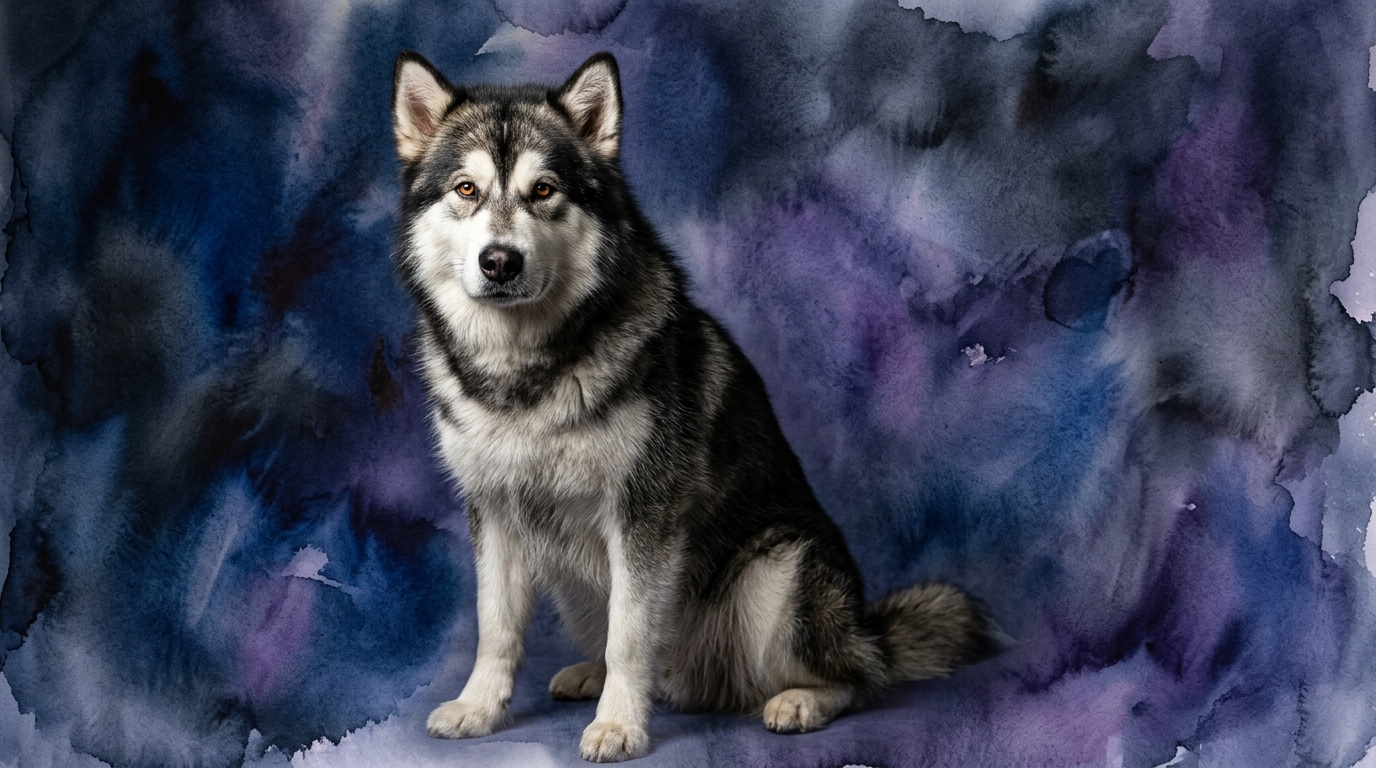
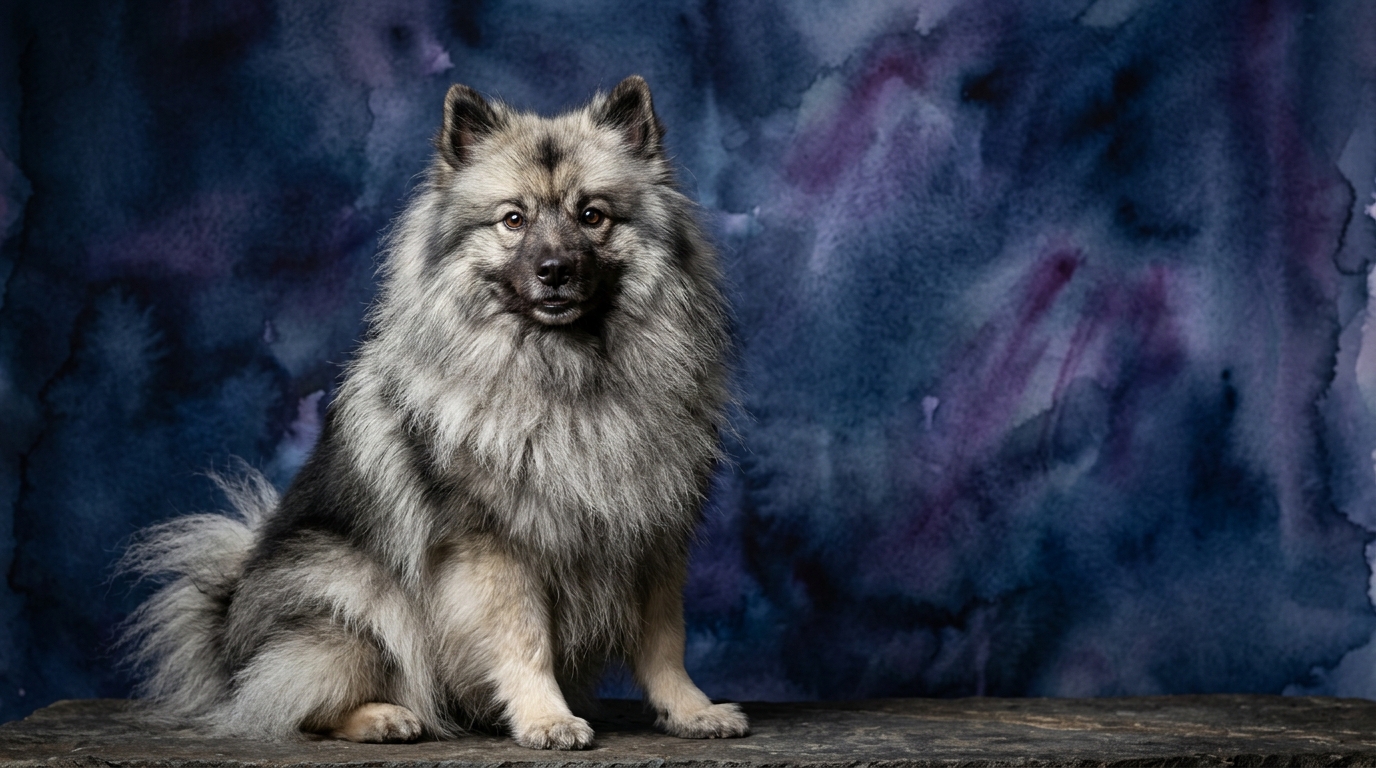
Side-by-Side Cognitive Profiles: Malamute vs. Keeshond
The Cosmic Pet Pet IQ Lab provides a nuanced lens through which to examine the cognitive makeup of these two breeds, revealing both shared aptitudes and striking differences. The Alaskan Malamute, a powerful working dog, registers a Coren rank of #50, while the Keeshond, a charming non-sporting breed, sits significantly higher at #16, hinting at divergent learning styles and applications of their mental faculties.
Delving into the specific IQ dimensions for the Alaskan Malamute, we observe a Problem Solving score of 4/5, indicating a strong capacity for independent thought and navigating complex situations. Its Training Speed, however, is rated 2/5, suggesting a more deliberate or perhaps independent approach to learning human commands. Social Intelligence stands at 3/5, reflecting a balanced ability to interact, while an Instinctive Drive of 5/5 highlights its deep-seated urges for physical activity and purpose. Finally, its Memory is a robust 4/5, allowing it to retain learned experiences and navigational cues effectively.
The Keeshond presents a different cognitive signature, starting with an identical Problem Solving score of 4/5, demonstrating similar analytical capabilities, though likely applied in different contexts. Its Training Speed shines at 4/5, promising a more responsive and eager learner. Social Intelligence mirrors the Malamute at 3/5, indicating a comparable adaptability in social settings. Where it diverges significantly is its Instinctive Drive, rated 3/5, suggesting a more moderate internal impetus for primal tasks. A standout feature is its Memory, scoring an impressive 5/5, pointing to an exceptional ability to recall information, routines, and experiences with precision.
Where the Alaskan Malamute's Cognition Excels
The Alaskan Malamute's cognitive strengths are deeply rooted in its heritage as a heavy-duty sled dog, where self-reliance and tenacity were paramount for survival. Its Instinctive Drive, rated a perfect 5/5, is a dominant cognitive force, manifesting as an unparalleled desire for physical work, exploration, and purposeful activity. This isn't just about raw energy; it's a cognitive drive to engage with the world through physical challenges, making them exceptional at endurance tasks and navigating demanding terrains.
Coupled with its 4/5 Problem Solving ability, the Malamute demonstrates a remarkable capacity for independent decision-making in real-world scenarios. This translates into resourcefulness when faced with obstacles, whether it's finding the best path through snow or figuring out how to achieve a desired outcome without direct human instruction. They are adept at assessing situations and acting autonomously, a trait that was crucial for their survival and success in harsh environments, often requiring them to make critical choices when human guidance was limited or impossible.
Where the Keeshond's Cognition Shines Brightest
The Keeshond's cognitive advantages are geared towards responsiveness, precision, and retention, reflecting its historical role as a companion and vigilant watchdog. Its standout Memory score of 5/5 is a significant asset, enabling the Keeshond to quickly and accurately recall a vast array of commands, routines, and social cues over extended periods. This exceptional recall makes them particularly adept at learning complex sequences and remembering specific rules or boundaries within a household.
Furthermore, the Keeshond's Training Speed, rated 4/5, underscores its eagerness and ability to grasp new concepts and commands efficiently. This isn't merely about obedience; it's a cognitive predisposition to engage with human instruction and integrate new information rapidly. Their problem-solving (4/5) is often applied to understanding human expectations and finding the quickest, most effective way to comply or communicate, rather than the independent, environmental problem-solving seen in the Malamute. They excel at pattern recognition and adapting their behavior based on past successful interactions.
Training Dynamics: Malamute's Independence vs. Keeshond's Eagerness
When it comes to ease of training, the Keeshond generally presents a more straightforward path due to its superior Training Speed (4/5) and excellent Memory (5/5). They are typically eager to please, absorb new commands quickly, and retain them reliably, making them responsive to positive reinforcement and consistent methods. Their moderate Instinctive Drive (3/5) means they are less likely to be distracted by deeply ingrained primal urges, allowing for a more focused learning experience within a structured environment. Real behavioral differences include their tendency to maintain eye contact and actively seek guidance, often performing tasks with a visible desire for approval.
The Alaskan Malamute, with its Training Speed of 2/5, offers a more challenging training experience, often requiring significant patience and a deep understanding of canine motivation. Their powerful Instinctive Drive (5/5), which includes strong pulling urges and a desire for independence, can make them less inclined to follow commands if they don't perceive a clear purpose or if it conflicts with their own agenda. They are not necessarily disobedient but are highly self-directed; their problem-solving (4/5) might be applied to figuring out how to get what they want without necessarily adhering to a given command. This independent streak means training often feels like a negotiation, demanding firm, consistent, and engaging techniques to capture their attention and cooperation.
Matching Canine Cognition to Owner Lifestyles
The Alaskan Malamute’s cognitive profile aligns best with active owners who are prepared for a life of adventure and physical engagement. Their profound Instinctive Drive (5/5) demands an outlet for their physical and mental energy, thriving on activities like hiking, sledding, or long walks. Owners who enjoy exploring the outdoors, can provide a structured environment, and appreciate a companion with a strong sense of self will find the Malamute a fulfilling partner. Their problem-solving skills are best utilized when given a 'job' or a purpose, such as navigating a new trail or participating in endurance events, allowing them to apply their independent thinking.
Conversely, the Keeshond’s cognitive strengths make it an ideal fit for owners who prefer a more relaxed yet still engaging lifestyle. Their higher Training Speed (4/5) and exceptional Memory (5/5) mean they excel in obedience and enjoy learning tricks or participating in canine sports that emphasize precision and responsiveness, like agility or rally. While they enjoy activity, their moderate Instinctive Drive (3/5) translates to more manageable exercise requirements compared to the Malamute. Owners seeking a highly companionable, responsive dog who thrives on positive interaction and mental stimulation through learning will find the Keeshond a delightful addition to their home.
The Verdict
Choose an Alaskan Malamute if you are an adventurous, experienced owner capable of providing consistent leadership and ample opportunities for strenuous physical activity and independent problem-solving.
Opt for a Keeshond if you seek a highly trainable, responsive companion who thrives on learning, enjoys moderate activity, and fits seamlessly into a family-oriented lifestyle with consistent positive reinforcement.
🧠 Find Your Pet's IQ Score
Our Pet IQ Lab assessment covers 25+ tests across 5 cognitive dimensions — personalized to your breed.
Take the Full IQ Test →Frequently Asked Questions
Are Alaskan Malamutes considered difficult to train?
Based on their Training Speed of 2/5 and high Instinctive Drive of 5/5, Alaskan Malamutes are often perceived as challenging to train. They possess an independent nature and strong will, requiring patient, consistent, and highly motivating training methods from experienced owners.
Do Keeshonds require a lot of mental stimulation?
Yes, Keeshonds, with their 4/5 Problem Solving and 5/5 Memory scores, thrive on mental engagement. While their physical exercise needs are moderate, they benefit greatly from training, puzzle toys, and interactive games to keep their minds sharp and prevent boredom.
How do their social needs compare, given both have 3/5 social intelligence?
While both breeds have a 3/5 Social Intelligence, their expression differs; Malamutes are generally amiable but can be reserved and have a strong pack dynamic, while Keeshonds are typically more outgoing and thrive on being central to family activities. Both benefit from early socialization, but the Keeshond's lower instinctive drive may make them more adaptable to varied social settings.