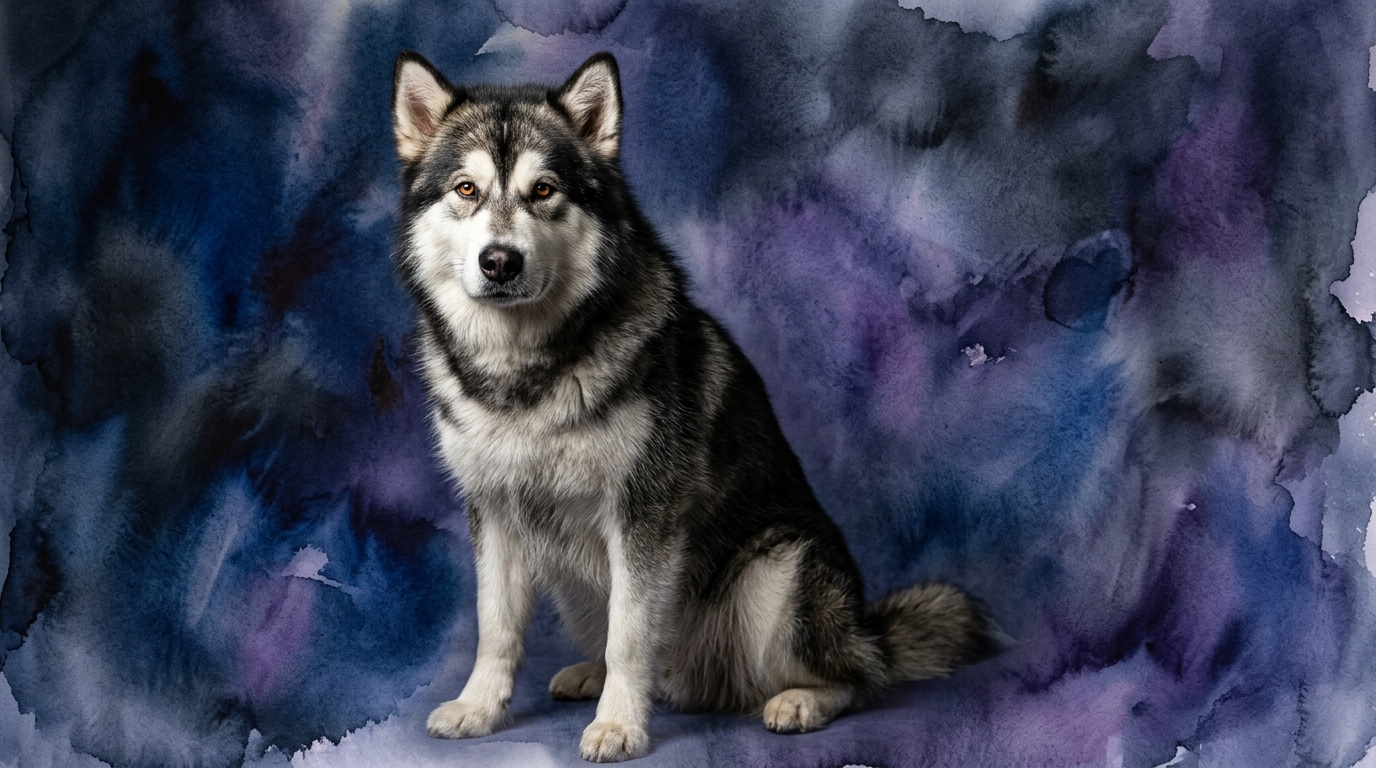
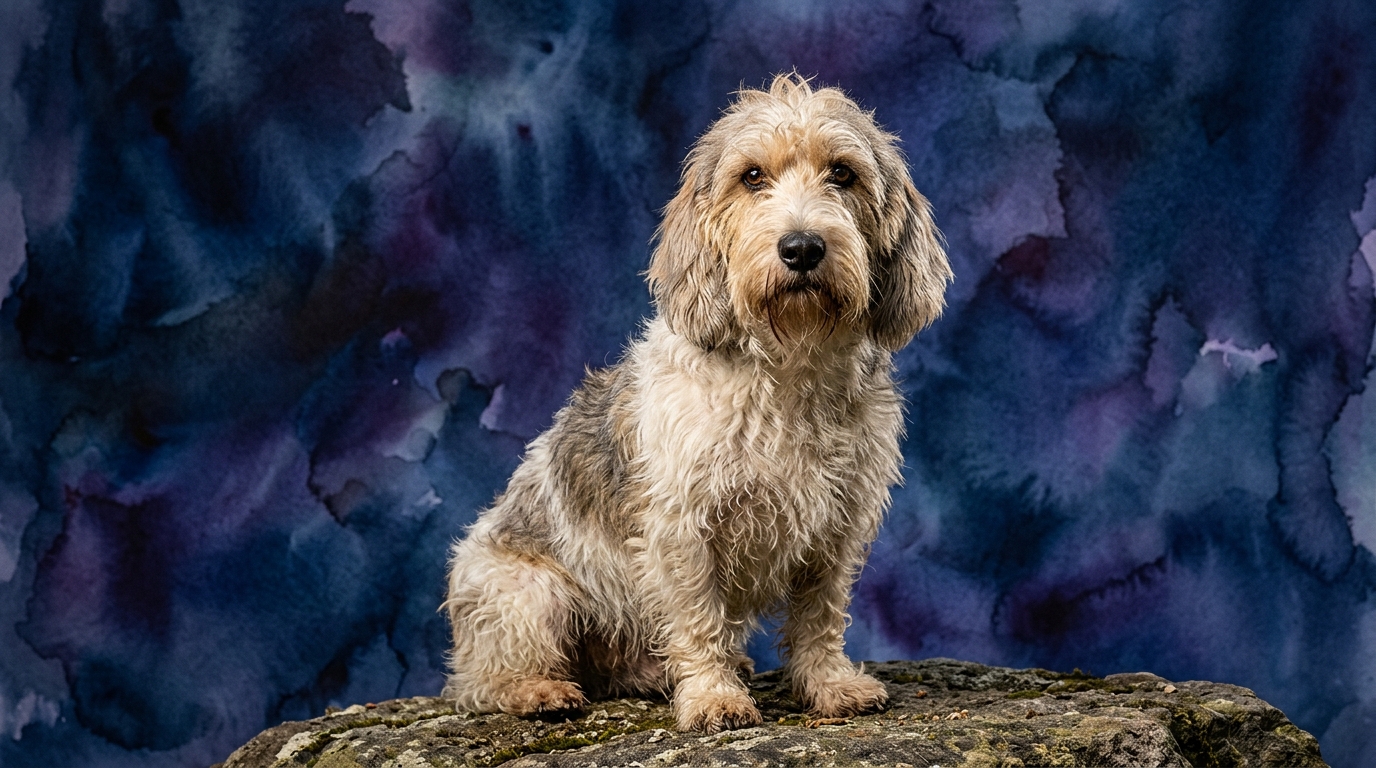
Side-by-Side IQ Profile: Alaskan Malamute vs. Petit Basset Griffon Vendéen
The Cosmic Pet Pet IQ Lab's assessment provides a granular look at the distinct cognitive strengths of these two breeds. The Alaskan Malamute, classified as a Working breed and holding a Coren rank of #50, demonstrates a formidable intellect honed for demanding physical and mental tasks. Their Problem Solving is rated at 4/5, indicating a strong capacity for independent thought and navigating complex situations. However, their Training Speed is 2/5, reflecting a self-assured nature that prioritizes their own agenda. Social Intelligence stands at 3/5, typically reserved for their inner circle. Their Instinctive Drive is a powerful 5/5, underpinning their heritage as sled dogs, while Memory is a solid 4/5, allowing them to retain learned behaviors and environmental details.
In contrast, the Petit Basset Griffon Vendéen (PBGV), a Hound breed not ranked by Coren, showcases a different set of cognitive aptitudes, primarily focused on scent work and companionship. Their Problem Solving ability is 3/5, adequate for tracking and navigating scent trails. Training Speed is 3/5, suggesting a moderate willingness to learn, though often influenced by environmental distractions. Social Intelligence matches the Malamute at 3/5, reflecting a generally friendly and outgoing disposition. Their Instinctive Drive is 3/5, specifically geared towards scent pursuit rather than sustained physical labor, and their Memory is also 3/5, sufficient for remembering routines and scent patterns but potentially less robust in general recall than the Malamute's.
Where the Alaskan Malamute Excels Cognitively
The Alaskan Malamute's cognitive strengths are deeply rooted in their history as a powerful working dog in challenging environments. Their 4/5 Problem Solving score translates into a remarkable ability to figure out practical challenges, whether it's unlatching gates, strategically planning escape routes from enclosures, or navigating complex terrains during sledding. This isn't just about following commands; it's about independent thought and finding solutions to obstacles, a trait vital for survival and success in their traditional roles. This problem-solving prowess is often perceived as 'stubbornness' in training, but it's fundamentally a demonstration of their capacity for autonomous decision-making.
Furthermore, the Malamute's 5/5 Instinctive Drive is a specialized cognitive advantage. This isn't merely a physical attribute; it's a deep-seated mental compulsion to pull, work, and endure. Their minds are wired for sustained effort and understanding the dynamics of a team or a task requiring immense stamina. Coupled with their 4/5 Memory, they excel at recalling complex routes, remembering the sequence of a task, or understanding the parameters of their 'job,' making them highly effective in roles requiring consistency over long periods and distances. Their Coren ranking at #50 further underscores their general working intelligence, indicating a capacity for understanding and executing commands more readily than many other breeds.
Where the Petit Basset Griffon Vendéen Shines Cognitively
While the PBGV's general Problem Solving is rated 3/5, their specialized intelligence in scent-related tasks is where they truly excel. Their ability to intricately follow, differentiate, and interpret complex scent trails is a highly refined cognitive skill, far surpassing many other breeds. This isn't about brute strength or solving a physical puzzle, but rather a mental puzzle of odors and environmental cues, allowing them to navigate and track with precision. This specialized problem-solving through olfaction is a unique cognitive victory for the breed, directly tied to their heritage as tenacious hunters.
The PBGV's 3/5 Social Intelligence, though matching the Malamute's, manifests differently. They are often described as more universally outgoing and adaptable in varied social settings, readily engaging with new people and other dogs with a generally cheerful disposition. This contrasts with the Malamute's more reserved, pack-centric social approach. The PBGV's jovial nature and adaptability can make them more amenable to novel social situations, reflecting a different facet of social cognition that prioritizes broad interaction over deep, narrow bonds. Their moderate Instinctive Drive (3/5) also contributes to their adaptability; while they possess a strong scent drive, it's typically less intense and all-consuming than a Malamute's work drive, allowing them to switch between focused tracking and relaxed companionship more readily.
Which is Easier to Train and Why
When it comes to trainability, the Petit Basset Griffon Vendéen generally presents a more accessible experience for the average owner, though not without its own challenges. With a Training Speed of 3/5, PBGVs are often eager to please and can grasp basic commands fairly quickly, especially when positive reinforcement and engaging methods are used. However, their potent scent drive is a significant behavioral factor; once a compelling scent is detected, their focus can completely shift, making recall or adherence to commands incredibly difficult. Training a PBGV requires immense patience, consistency, and a willingness to work with, rather than against, their natural instincts, often incorporating scent games into their learning.
The Alaskan Malamute, with a Training Speed of 2/5, presents a steeper challenge. Their strong independent problem-solving skills and formidable will mean they quickly understand what you want, but they will often weigh whether it aligns with their own interests before complying. They are not inherently 'eager to please' in the traditional sense; rather, they are motivated by partnership, clear communication, and rewards they value. Inconsistent training or a lack of mental stimulation will be quickly exploited. Their 4/5 Memory means they remember every inconsistency, making it harder to correct bad habits. Training a Malamute demands an experienced hand, creative motivation, and an understanding that you are guiding a partner, not simply issuing commands.
Suitability for Active vs. Relaxed Owners
The Alaskan Malamute is unequivocally suited for highly active and experienced owners. Their extreme 5/5 Instinctive Drive for work and endurance necessitates extensive daily physical activity, such as long hikes, jogging, or opportunities for pulling. Beyond physical exertion, their 4/5 Problem Solving and 4/5 Memory demand consistent mental stimulation through advanced training, puzzle toys, and engaging 'jobs' that challenge their intellect. A Malamute thrives when given a purpose and will become destructive or bored if their cognitive and physical needs are neglected. They are not a breed for relaxed owners seeking a low-maintenance companion.
The Petit Basset Griffon Vendéen, while possessing an active 3/5 Instinctive Drive for scent work, strikes a more balanced chord between activity and relaxation. They require daily exercise, including opportunities for supervised off-leash sniffing or engaging in scent games to satisfy their natural instincts. However, they are also generally content to relax indoors with their family once their needs are met. This makes them suitable for moderately active owners who enjoy engaging their dog's nose and providing consistent, positive training, but who do not require the same intensity or duration of physical exertion as a Malamute. They can adapt to a more relaxed home environment, provided their scenting needs are addressed creatively.
The Verdict: When to Choose Each Companion
The Verdict
Choose the Alaskan Malamute if you are an experienced, highly active individual or family prepared for a strong-willed, independent companion who thrives on intense physical work and consistent, engaging mental challenges.
Opt for the Petit Basset Griffon Vendéen if you appreciate a cheerful, scent-driven companion, enjoy engaging their natural tracking instincts, and can provide patient, consistent training despite their potential for scent-related distractions.
🧠 Find Your Pet's IQ Score
Our Pet IQ Lab assessment covers 25+ tests across 5 cognitive dimensions — personalized to your breed.
Take the Full IQ Test →Frequently Asked Questions
Is the Alaskan Malamute genuinely stubborn, or is it a misunderstanding of their intelligence?
Their 'stubbornness' is often a reflection of their independent problem-solving and strong will, rather than a lack of understanding; they comprehend commands but may choose not to comply if motivation is low or they perceive a better alternative.
How does a PBGV's strong scent drive impact their trainability compared to a Malamute's work drive?
A PBGV's scent drive can make them highly distractible, requiring patience and creative training methods to maintain focus, whereas a Malamute's work drive, while powerful, can be harnessed more directly for tasks they perceive as valuable and meaningful.
Are these breeds suitable for first-time dog owners?
Neither breed is typically recommended for first-time owners due to their strong drives and independent natures; both require owners experienced in positive reinforcement, understanding breed-specific motivations, and providing consistent structure.