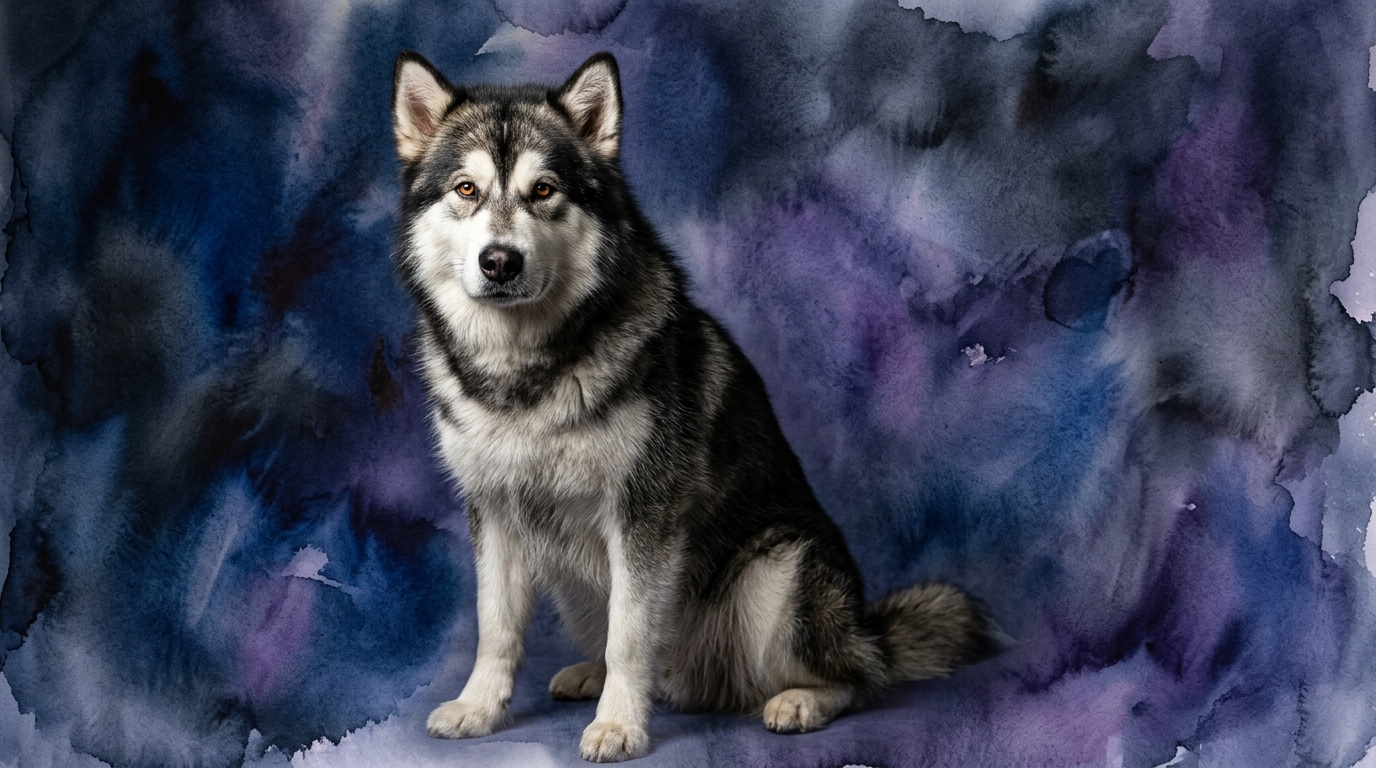
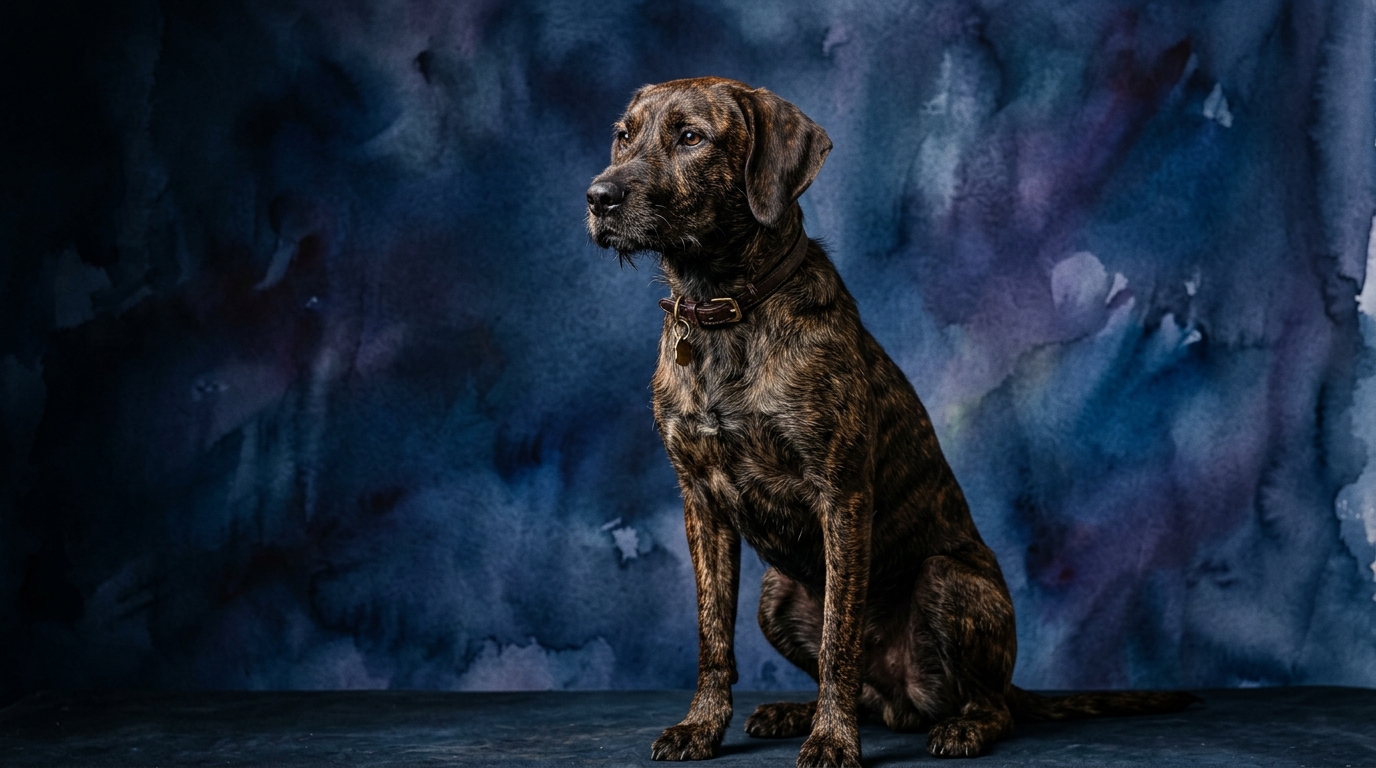
Side-by-Side Cognitive Profiles: Malamute vs. Plott Hound
At The Cosmic Pet Pet IQ Lab, we evaluate canine intelligence across five key dimensions to provide a nuanced understanding of each breed’s cognitive strengths. For the Alaskan Malamute, a Working breed ranked #50 by Coren, its profile highlights a robust intellect shaped by demanding historical roles. Its Problem Solving is rated 4/5, indicating a strong capacity for independent strategic thought and finding solutions to complex environmental challenges. Training Speed is 2/5, reflecting a self-reliant nature that often prioritizes its own agenda. Social Intelligence stands at 3/5, suggesting a balanced ability to interact within a pack, human or canine. A commanding Instinctive Drive of 5/5 underscores its powerful urges for endurance, pulling, and exploration. Finally, its Memory is 4/5, indicating a solid retention of spatial information and experiences.
The Plott Hound, a Hound breed not Coren-ranked, presents a more balanced, task-oriented cognitive profile. Its Problem Solving is 3/5, demonstrating practical intelligence primarily focused on tracking and navigating scent trails. Training Speed is 3/5, showing a moderate amenability to learning commands, often eager to please but with a strong independent streak when on a scent. Social Intelligence is 3/5, indicating good cooperative abilities within its family and pack. Its Instinctive Drive is 3/5, significant yet more specifically channeled towards hunting and pursuit. The Plott Hound's Memory is also 3/5, suggesting a reliable recall for scent patterns, routines, and relevant tasks.
Where the Alaskan Malamute Cognitively Excels
The Alaskan Malamute’s cognitive profile clearly demonstrates superiority in specific domains, particularly its impressive Problem Solving (4/5) and profound Instinctive Drive (5/5), complemented by a strong Memory (4/5). Their historical role as Arctic sled dogs demanded a breed capable of independent thought, making critical decisions on treacherous trails without constant human direction. This translates into a remarkable ability to assess complex situations and devise solutions, whether it's finding a way around an obstacle or figuring out how to access a desired item. Their problem-solving isn't just about simple tasks; it’s about strategic thinking for survival and task completion, a deep-seated mental resilience.
Furthermore, their superior instinctive drive means they possess an unparalleled internal motivation for physical endurance, pulling, and exploring. This isn't merely a physical attribute but a deeply ingrained cognitive engine that fuels their determination and focus on large-scale, long-duration tasks, making them relentless in their pursuits. Their robust memory further supports these strengths, allowing them to recall intricate routes, past experiences with different terrains, and learned strategies for overcoming challenges, contributing significantly to their overall cognitive resilience and adaptability in varied environments.
Where the Plott Hound Cognitively Shines
While the Plott Hound doesn't boast higher individual scores in every cognitive dimension compared to the Malamute, its balanced profile, particularly in Training Speed (3/5) and Social Intelligence (3/5), offers distinct advantages in specific contexts. The Plott Hound's moderate training speed means they are generally more receptive and quicker to grasp new commands and routines than the Malamute. This willingness to learn and adapt to human instruction makes them more amenable to structured training environments and a broader range of activities beyond their primary instinctive drives, offering a more immediate return on training investment.
Their social intelligence, while equally rated, often manifests as a more handler-focused cooperation, especially when not actively tracking a scent. This allows them to integrate more seamlessly into family life, making them responsive to human cues and desires for interaction, fostering a strong partnership. Their cognitive strengths are geared towards collaborative work in a hunting team, where understanding human direction and communicating within the pack is crucial, providing a different kind of operational intelligence focused on partnership and shared goals rather than extreme independence.
Training Dynamics: Which Breed is More Amenable?
When it comes to ease of training, the Plott Hound generally presents a more straightforward path than the Alaskan Malamute. The Plott Hound’s training speed is rated at 3/5, indicating a moderate willingness and capacity to learn new commands and routines efficiently. They often possess a keen desire to please their handler, which, when combined with their focus on scent work, can be channeled into productive training sessions. While their powerful scent drive can be a distraction, a well-structured training program that incorporates their natural instincts can yield a responsive and cooperative companion, especially with positive reinforcement.
In contrast, the Alaskan Malamute’s training speed is rated lower at 2/5. This is largely due to their profound independence and strong self-will. Malamutes were bred to make their own decisions in challenging environments, and this cognitive trait means they often require more persuasion and a stronger 'what's in it for me?' attitude during training. They aren't inherently disobedient, but they are thinkers who will weigh a command against their own perceived interests or their strong instinctive drives. Consistent, positive reinforcement, coupled with a deep understanding of their working dog mentality, is essential to overcome their natural inclination towards autonomy and achieve reliable obedience.
Lifestyle Match: Active vs. Relaxed Owners
For truly active owners seeking a canine partner for demanding physical and mental pursuits, the Alaskan Malamute is generally the more suitable choice. Their exceptional instinctive drive (5/5) for endurance, pulling, and exploration means they thrive on consistent, vigorous activity. Owners who enjoy long hikes, cani-cross, skijoring, or other forms of sustained outdoor adventure will find a Malamute to be an enthusiastic and capable companion, constantly seeking new challenges. Their robust problem-solving skills also mean they benefit immensely from mental challenges that go beyond simple obedience, such as complex scent work or advanced training tasks that engage their strategic thinking.
Conversely, neither breed is truly suited for 'relaxed' owners in the sense of minimal activity or mental engagement. However, if forced to choose for a slightly less extreme activity level, the Plott Hound might be marginally more adaptable, though still demanding. Plott Hounds, with their instinctive drive for tracking (3/5), require regular, stimulating exercise, including opportunities to use their nose. They need daily walks, runs, or secure off-leash areas to burn off energy and satisfy their natural urges. An owner who enjoys daily jogs, long walks in varied environments, or scent games would find a Plott Hound fulfilling, but a truly relaxed owner would likely struggle with the energy and cognitive needs of both breeds.
The Verdict
The Alaskan Malamute is the ideal choice for experienced owners who embrace an active, adventurous lifestyle and appreciate a dog with profound independence and strategic problem-solving abilities, willing to invest significant time into engaging their unique cognitive and physical needs.
Opt for the Plott Hound if you seek a loyal, energetic companion for outdoor activities, particularly those involving scent work, and value a dog with a more balanced training speed and cooperative nature, provided you can meet its consistent exercise requirements.
🧠 Find Your Pet's IQ Score
Our Pet IQ Lab assessment covers 25+ tests across 5 cognitive dimensions — personalized to your breed.
Take the Full IQ Test →Frequently Asked Questions
Are Alaskan Malamutes particularly stubborn during training?
Alaskan Malamutes aren't stubborn in a malicious sense, but their strong independence and problem-solving skills mean they often prioritize their own agenda or perceived interests over immediate compliance. Their training speed (2/5) reflects this need for patient, consistent, and highly motivating methods that appeal to their working dog intellect.
Do Plott Hounds require extensive daily exercise?
Yes, Plott Hounds, as a hound breed with a significant instinctive drive (3/5) for tracking, require consistent and stimulating exercise daily. Long walks, runs, secure off-leash playtime, and opportunities for scent work are crucial to keep them physically and mentally content and prevent boredom-related behaviors.
How do these breeds typically interact with children?
Both breeds can be good with children when properly socialized and supervised, though their approaches differ. The Alaskan Malamute, with its pack-oriented social intelligence (3/5), can be gentle but might be too boisterous for very young children. The Plott Hound, also with balanced social intelligence (3/5), is often affectionate and tolerant but can be energetic, so interactions should always be supervised.