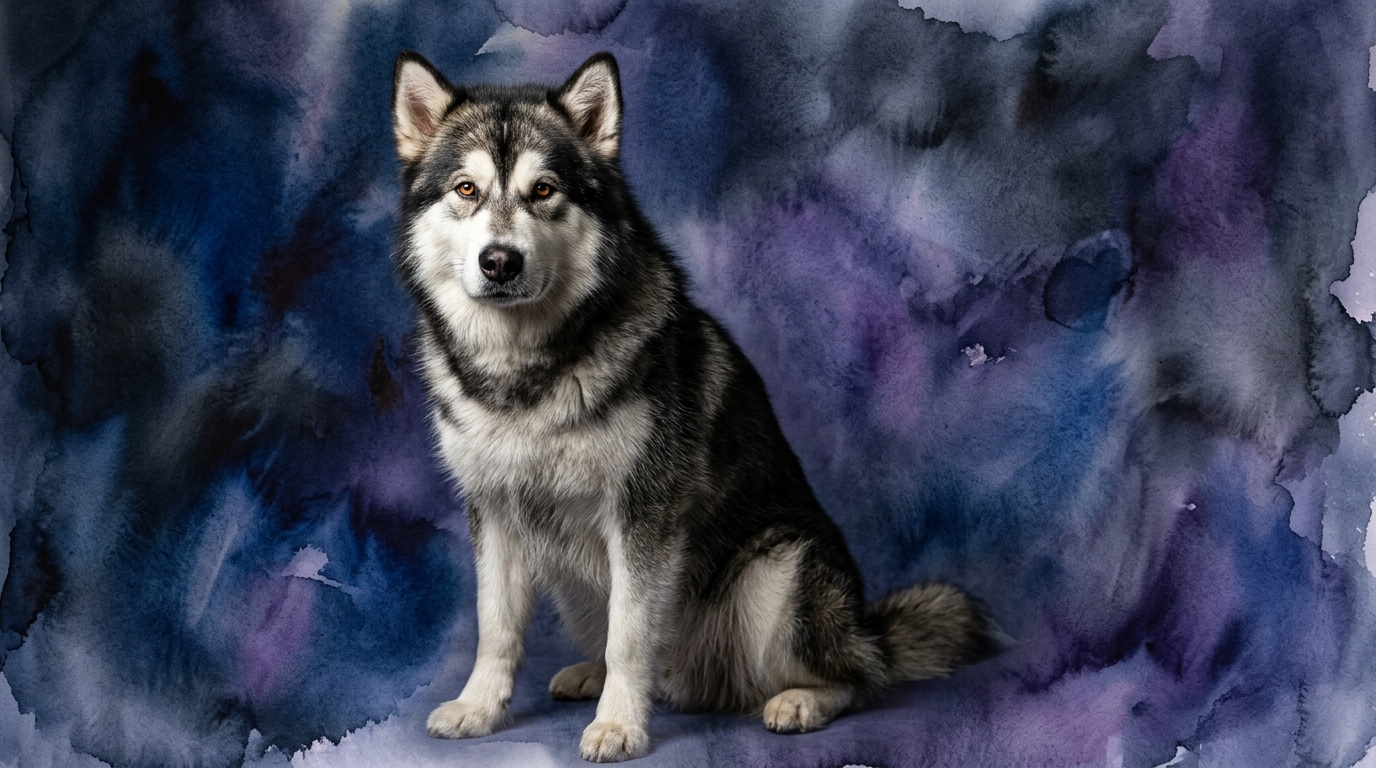
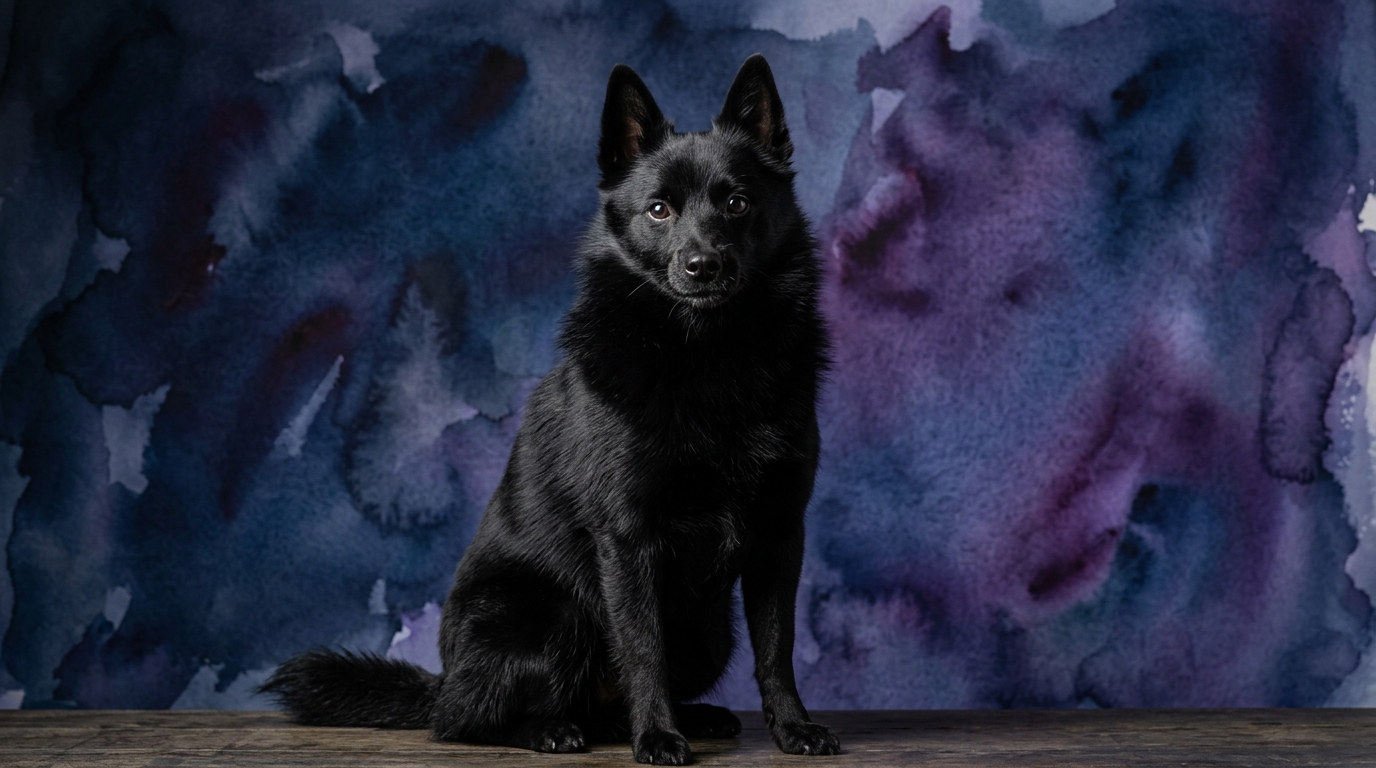
Side-by-Side IQ Profile: Alaskan Malamute vs. Schipperke
The Cosmic Pet Pet IQ Lab's framework provides a detailed lens through which to examine the distinct cognitive strengths of these two breeds, highlighting how their historical roles have shaped their mental aptitudes. Understanding these dimensions helps prospective owners align their expectations with a dog's inherent cognitive wiring.
For the **Alaskan Malamute (Coren Rank #50)**, a powerful working dog, their cognitive profile is deeply rooted in their heritage:
**Problem Solving (4/5):** The Malamute's problem-solving aptitude is rooted in its working heritage. These dogs demonstrate strong practical intelligence, excelling at navigating complex terrain, finding pathways, and overcoming physical obstacles in pursuit of a goal, such as pulling a sled or locating resources. Their solutions are often robust and persistent, driven by physical capabilities rather than abstract conceptualization. They are adept at trial-and-error learning in real-world scenarios, particularly when the task aligns with their inherent drives.
**Training Speed (2/5):** Malamutes exhibit a deliberate pace when it comes to acquiring new commands or behaviors. Their independent nature and strong will mean they often require significant repetition, patience, and highly motivating rewards. They are not quick to comply with arbitrary instructions, preferring to understand the 'why' or to be convinced of the task's value. This slower training speed doesn't indicate a lack of comprehension, but rather a selective engagement, prioritizing their own judgment.
**Social Intelligence (3/5):** Malamutes possess a moderate level of social intelligence, primarily focused on their pack. They form deep bonds with their human family and can be quite adept at reading subtle cues within their immediate social circle. However, their social acumen often doesn't extend to widespread appeasement or complex social manipulation beyond their core group. They understand hierarchy and roles within their pack, but their interaction with strangers or new social dynamics can be more reserved and less immediately adaptable.
**Instinctive Drive (5/5):** This is where the Malamute truly shines. Their instinctive drives are exceptionally powerful, encompassing a strong prey drive, an urge to pull and work, and a profound need for physical activity and exploration. These drives are not merely urges but ingrained behavioral patterns that dictate much of their cognitive focus and motivation. Their ability to persist in challenging conditions, driven by an innate purpose, is a testament to this highly developed cognitive dimension.
**Memory (4/5):** Malamutes possess a robust memory, particularly for spatial layouts, routines, and experiences that hold significant emotional or practical weight. They remember routes, safe places, and past events with remarkable clarity, which is crucial for a working dog navigating vast landscapes. Once a lesson or experience is ingrained, it tends to be retained for a very long time, whether it's a learned task or a perceived injustice.
For the **Schipperke (Coren Rank #15)**, a spirited non-sporting dog, their cognitive profile reflects a different kind of sharpness:
**Problem Solving (5/5):** The Schipperke demonstrates an exceptional capacity for problem-solving, often approaching new challenges with a keen, analytical mind. They are quick to assess situations, devise novel strategies, and adapt their approach when initial attempts fail. Their problem-solving isn't just practical; it often involves abstract reasoning, such as figuring out how to open complex latches. They thrive on mental puzzles and will actively seek out opportunities to engage their sharp intellect.
**Training Speed (5/5):** Schipperkes are renowned for their lightning-fast training speed. They grasp new commands and concepts with remarkable quickness, often requiring only a few repetitions to solidify a behavior. Their eagerness to learn and their desire to engage with their human companions make them highly receptive students. This rapid acquisition of knowledge allows them to master a vast repertoire of commands and tricks, making them stars in obedience and agility sports.
**Social Intelligence (3/5):** Similar to the Malamute, the Schipperke exhibits a moderate level of social intelligence. They are attentive to their primary caregivers and can certainly read human emotions and intentions within their close family. However, their social interactions can be selective; they are often wary of strangers and tend to be quite independent in their social dynamics, preferring to observe before engaging. While they understand social cues, their instinct is not always to conform broadly, but rather to protect their immediate circle.
**Instinctive Drive (3/5):** While the Schipperke possesses a strong 'little black devil' personality, their instinctive drives are more moderate compared to a working breed like the Malamute. They have a pronounced prey drive, particularly for small vermin, reflecting their historical role as barge dogs. However, their drive for sustained physical work or exploration over vast distances is less intense. Their instincts are primarily focused on vigilance, guarding, and opportunistic hunting within their immediate environment.
**Memory (5/5):** Schipperkes boast an outstanding memory. They retain learned behaviors, routines, and even specific events over extended periods. This exceptional memory contributes significantly to their rapid training speed, as they rarely forget a command once it's established. They also remember people, places, and experiences with remarkable clarity, often demonstrating long-term recall for both positive and negative associations.
Where the Alaskan Malamute Excels Cognitively
The Alaskan Malamute's cognitive superiority lies distinctly in its formidable instinctive drive and its application to real-world problem-solving in demanding environments. While the Schipperke might outthink a puzzle, the Malamute's genius is in enduring and overcoming physical challenges. Their 5/5 instinctive drive isn't just about raw power; it represents a deep-seated cognitive program for sustained effort, navigation, and survival in harsh conditions. For instance, a Malamute can instinctively assess snow conditions, find efficient paths through drifts, or conserve energy during a long trek, demonstrating a form of practical, embodied cognition. This drive fuels their ability to persistently work towards a goal, even when faced with significant discomfort or fatigue, a cognitive trait crucial for their historical purpose. Their problem-solving (4/5) is less about abstract thought and more about finding effective, often physically demanding, solutions to tangible obstacles, such as pulling a heavy load through deep snow or figuring out how to access a food source despite barriers.
Where the Schipperke Shows Cognitive Prowess
The Schipperke's cognitive strengths are profoundly rooted in its exceptional training speed and problem-solving acumen, complemented by a remarkable memory. At a 5/5 for both training speed and memory, the Schipperke processes and retains information with astonishing efficiency. This isn't merely about rote learning; it signifies a keen ability to quickly generalize concepts and apply learned behaviors to novel situations. For example, a Schipperke can pick up complex agility sequences after minimal repetition, or rapidly learn nuanced commands requiring abstract understanding. Their 5/5 problem-solving skill manifests in their capacity for strategic thinking, such as figuring out how to manipulate objects to open a door or devising elaborate schemes to get attention. This cognitive agility allows them to adapt swiftly to new rules or environments, making them adept at navigating the complexities of human households and excelling in competitive dog sports where rapid learning and recall are paramount.
Training Dynamics: Malamute's Deliberation vs. Schipperke's Dexterity
When evaluating ease of training, the Schipperke undoubtedly presents a more straightforward path. Their 5/5 training speed means they absorb new commands almost instantly, often after just a few repetitions. This rapid learning curve stems from their eagerness to engage mentally and keen focus, translating into quick comprehension and execution. A Schipperke often enjoys the mental challenge of learning and performing, making them highly responsive to positive reinforcement and clear instructions. Their exceptional memory (5/5) ensures that once a behavior is learned, it is retained long-term, requiring minimal refreshers.
In contrast, the Alaskan Malamute's 2/5 training speed signals a more deliberate and often challenging training journey. Their independent nature means they are less inclined to blindly follow commands and more likely to question the purpose of an exercise. Training a Malamute requires immense patience, consistency, and a deep understanding of their motivations. They respond best when tasks are presented as collaborative efforts or when the reward is genuinely compelling and aligns with their powerful drives. While they possess a good memory (4/5), their initial reluctance means solidifying behaviors takes considerably more time and reinforcement. Their strong instinctive drive (5/5) can also be a double-edged sword; if not channeled appropriately, it can lead to stubbornness or distraction, making consistent compliance more difficult to achieve compared to the highly receptive Schipperke.
Matching Cognitive Profiles to Owner Lifestyles
The distinct cognitive profiles of the Alaskan Malamute and Schipperke dictate their suitability for different owner lifestyles. The Malamute, with its unparalleled instinctive drive (5/5) and practical problem-solving (4/5), thrives with highly active, outdoors-oriented owners who can provide ample opportunities for physical exertion and purposeful work. These dogs are at their happiest when engaged in activities that mimic their historical roles, such as long hikes, pulling sports, or exploring expansive natural environments. An owner who understands their independent nature and invests significant time in consistent, patient training will find a loyal, capable companion. They are not suited for a relaxed, sedentary lifestyle, as their powerful drives, if unfulfilled, can lead to frustration and destructive behaviors stemming from boredom.
Conversely, the Schipperke, with its exceptional training speed (5/5) and problem-solving (5/5) abilities, is a better fit for owners who enjoy engaging in mental stimulation and structured activities, even if their physical activity is moderate. While they are energetic and enjoy play, their cognitive fulfillment often comes from learning new tricks, participating in dog sports like agility or obedience, or solving interactive puzzles. Their quick wit and adaptability mean they can thrive in various home environments, provided they receive consistent mental challenges. They can be active companions for walks and adventures but also content with engaging in indoor brain games. Owners who appreciate a quick-learning dog eager to participate in daily routines, and who can channel their sharp intellect, will find the Schipperke a rewarding, albeit sometimes mischievous, companion.
The Verdict
Choose the Alaskan Malamute if you are an experienced, highly active owner seeking a resilient, independent companion for demanding outdoor adventures and appreciate a dog whose intelligence is rooted in instinct and endurance.
Opt for the Schipperke if you desire a quick-witted, highly trainable dog that excels in mental challenges and enjoys learning new commands, ideal for an owner who appreciates a sharp, adaptable, and engaging companion.
🧠 Find Your Pet's IQ Score
Our Pet IQ Lab assessment covers 25+ tests across 5 cognitive dimensions — personalized to your breed.
Take the Full IQ Test →Frequently Asked Questions
Is the Alaskan Malamute difficult to train?
While not inherently difficult, the Alaskan Malamute's independent nature and lower training speed (2/5) mean they require significant patience, consistency, and motivating rewards. They respond best to positive reinforcement and clear boundaries, taking longer to solidify commands than some other breeds.
Do Schipperkes need a lot of exercise?
Schipperkes are energetic and benefit from regular exercise, but their needs are more moderate than a working dog like the Malamute. They thrive on a combination of physical activity, such as walks and play, alongside ample mental stimulation through training and puzzle toys.
Which breed is better with children?
Both breeds can be good with children when properly socialized and raised, but their temperaments differ. Malamutes are generally gentle but can be boisterous due to their size, requiring supervision. Schipperkes, while smaller, can be less tolerant of rough play and may prefer older, respectful children due to their guarding instincts.