Side-by-Side Cognitive Profiles
The Cosmic Pet Pet IQ Lab employs five crucial dimensions to map a breed's cognitive landscape: Problem Solving, Training Speed, Social Intelligence, Instinctive Drive, and Memory. Examining these metrics for the Alaskan Malamute and the Tibetan Terrier illuminates their unique mental architectures.
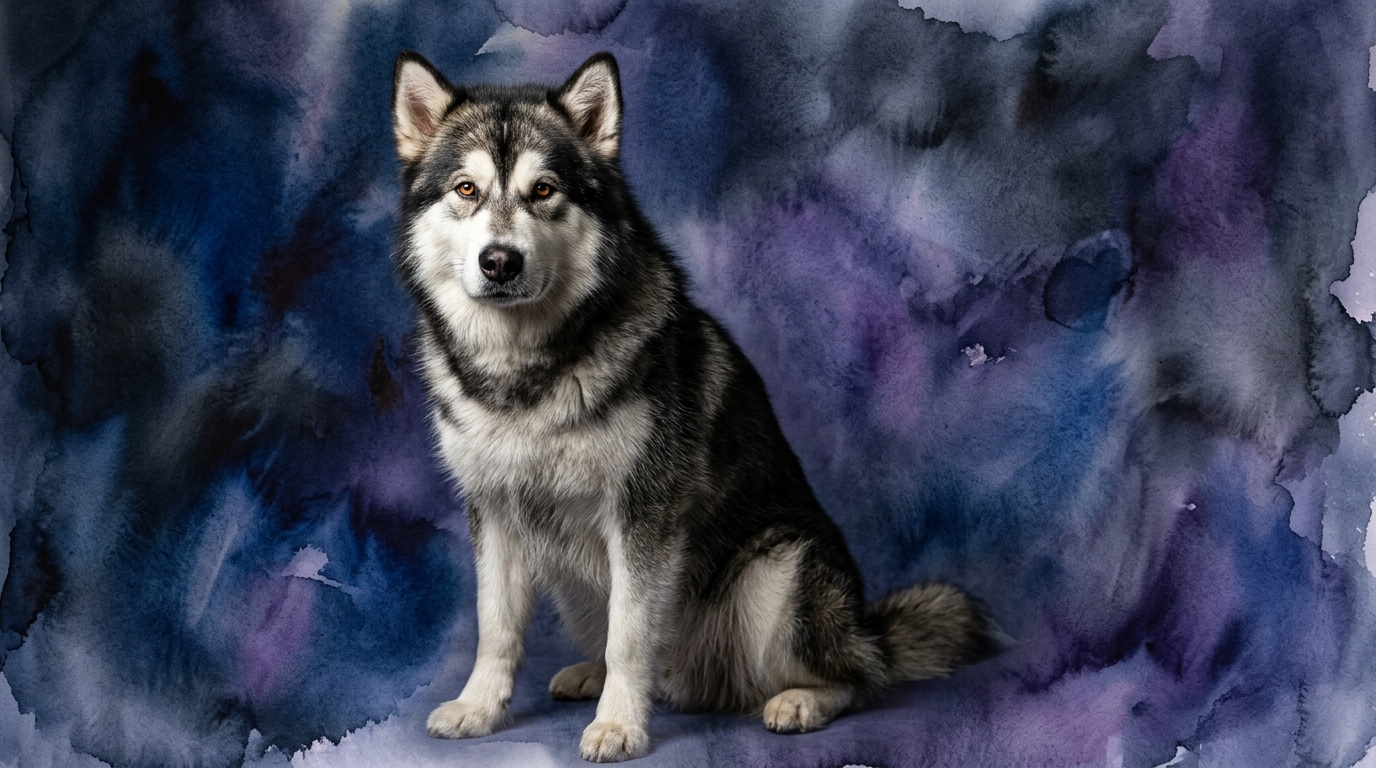
The Alaskan Malamute, a Working breed with a Coren rank of #50, demonstrates a formidable intellect tailored for survival and strenuous tasks. Its Problem Solving is rated at 4/5, indicating a strong capacity for independent thought and devising solutions to complex environmental challenges. Training Speed stands at 2/5, reflecting a breed that processes commands deliberately and often requires convincing. Social Intelligence is 3/5, showing a nuanced understanding of pack dynamics within its trusted circle, yet often reserved with outsiders. Instinctive Drive is an impressive 5/5, signifying an immense internal motivation for purposeful work, often manifesting as a powerful desire to pull or explore. Finally, its Memory is 4/5, suggesting a robust ability to retain complex information like routes, routines, and past interactions over extended periods.
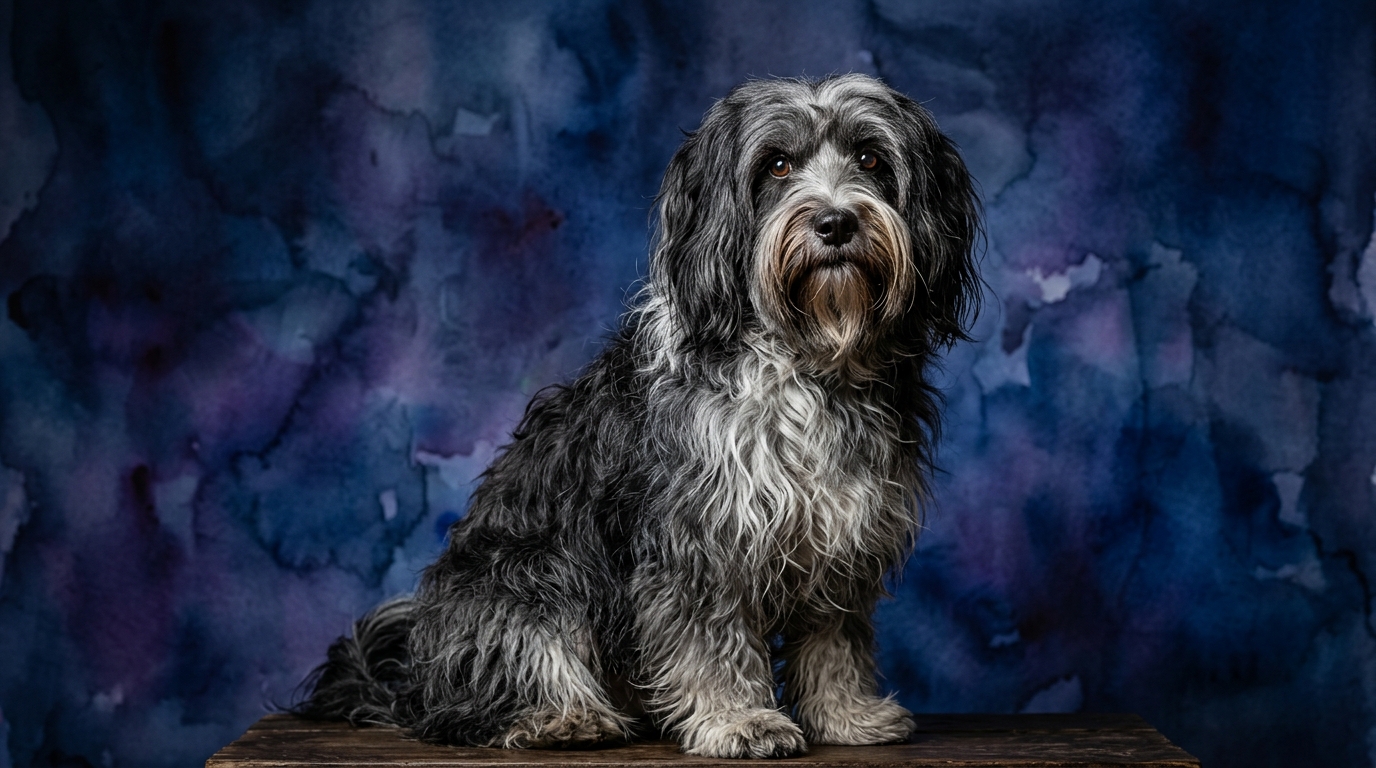
In contrast, the Tibetan Terrier, a Non-Sporting breed with a Coren rank of #63, presents a cognitive profile more aligned with companionship and adaptability. Its Problem Solving is 3/5, indicating a practical intelligence capable of navigating everyday puzzles and adapting to new situations. Training Speed is 3/5, suggesting a moderate pace of learning, generally receptive to instruction when properly motivated. Social Intelligence also scores 3/5, highlighting a balanced capacity for forming strong bonds and interpreting human emotions, while maintaining a discerning nature. Instinctive Drive is 3/5, pointing to a moderate internal motivation primarily focused on guarding and companionship, rather than intense physical labor. Its Memory is 3/5, reflecting a reasonable ability to recall faces, places, and established household rules without the same depth as the Malamute.
Where the Alaskan Malamute’s Cognition Shines
The Alaskan Malamute’s cognitive strengths truly shine in areas demanding self-reliance and enduring purpose, rooted deeply in their history as arctic sled dogs. Their Problem Solving score of 4/5, significantly higher than the Tibetan Terrier's 3/5, reflects an exceptional ability to independently assess and overcome environmental obstacles. For instance, a Malamute might meticulously study a fence line to identify the weakest point for escape or logically deduce how to retrieve a toy caught in a difficult spot, often constructing a solution without direct human guidance. This isn't merely curiosity; it's a strategic approach to achieving a desired outcome.
Furthermore, the Malamute’s formidable Instinctive Drive, rated at 5/5 compared to the Tibetan Terrier's 3/5, translates into a relentless focus and endurance when engaged in tasks they deem meaningful. This isn't just about physical strength; it's a cognitive trait that allows them to sustain effort and concentration over long periods, making them excellent partners for demanding outdoor activities like hiking or sledding. Their deep-seated drive ensures they are purpose-driven animals, often seeking out 'work' if not provided with structured engagement. Coupled with their 4/5 Memory, Malamutes can recall intricate routes and complex sequences of actions, making them highly effective in roles requiring spatial awareness and procedural retention, such as navigating familiar trails or remembering intricate routines within their environment. This combination of robust problem-solving, profound drive, and strong memory equips them for challenges where independent decision-making and sustained effort are paramount.
Where the Tibetan Terrier Offers Distinct Cognitive Advantages
While the Alaskan Malamute excels in raw, independent drive, the Tibetan Terrier demonstrates its own distinct cognitive advantages, particularly in areas fostering harmonious domestic integration. Their Training Speed, rated at 3/5 compared to the Malamute's 2/5, immediately signals a greater receptiveness to human instruction. This means a Tibetan Terrier is generally more inclined to quickly associate commands with actions and retain those lessons, often requiring fewer repetitions to master a new skill. This isn't to say they are always perfectly compliant, but their inherent desire for connection often translates into a willingness to engage in structured learning, making the initial stages of training notably smoother. They tend to process and accept directives with less internal debate than their more independent Malamute counterparts.
Moreover, the Tibetan Terrier's moderate scores across the board, particularly in Instinctive Drive (3/5), suggest a more adaptable and less single-minded cognitive profile. They are less likely to be overwhelmed by a singular, intense internal drive, making them more pliable in a varied domestic setting. Their balanced Social Intelligence (3/5), matching the Malamute, combined with their practical Problem Solving (3/5), allows them to navigate complex household dynamics and adapt to various social situations with a degree of grace that might challenge a more driven, independent Malamute. They are adept at understanding social cues and fitting into family routines without the same level of independent questioning or strong self-directed agenda, making them more generally agreeable companions in diverse living arrangements.
Ease of Training: Behavioral Realities
When evaluating ease of training, the distinction between these two breeds becomes particularly clear, largely due to their differing motivations and cognitive styles. The Tibetan Terrier, with its Training Speed of 3/5, generally presents a more straightforward training experience. They possess a balanced temperament and a natural inclination to be part of the family unit, which often translates into a desire to please and cooperate. This means they are typically more responsive to positive reinforcement methods and will often pick up new commands with moderate repetition. Their moderate instinctive drive (3/5) also means fewer competing internal urges pulling them away from the training task. For example, a Tibetan Terrier is less likely to suddenly abandon a 'sit' command because a distant scent has captured their attention, compared to a Malamute.
The Alaskan Malamute, conversely, with its Training Speed of 2/5, demands immense patience, consistency, and a profound understanding from its owner. Their strong Problem Solving (4/5) and formidable Instinctive Drive (5/5) mean they often weigh commands against their own perceived goals and internal motivations. They are not necessarily defiant, but rather pragmatic and independent thinkers who need to understand the 'why' behind a command or be highly motivated by a compelling reward. Behavioral differences are stark: Malamutes might exhibit 'selective deafness' when a more appealing activity presents itself, or use their problem-solving acumen to find loopholes in rules, such as figuring out how to open a specific cabinet despite repeated deterrence. They thrive on collaboration and mutual respect, rather than unquestioning obedience, requiring an owner who can engage their intellect and channel their drive effectively, transforming training into a shared problem-solving endeavor.
Matching Breeds to Lifestyles: Active vs. Relaxed Owners
The cognitive profiles of the Alaskan Malamute and Tibetan Terrier offer clear guidance for matching them with suitable owner lifestyles. For highly active owners, the Alaskan Malamute is a compelling choice. Their 5/5 Instinctive Drive and historical role as working sled dogs demand significant physical and mental engagement. These dogs need extensive daily exercise, often requiring several hours of vigorous activity, beyond simple walks. Opportunities for 'work,' such as pulling carts, participating in dog sports like canicross, or extensive hiking, are crucial to satisfy their profound drive and problem-solving intellect. An owner who doesn't provide sufficient outlets for this energy and ingenuity might find their Malamute resorting to destructive behaviors born of boredom or frustration, like excavating the yard or redesigning furniture. They thrive with owners who embrace their independent, adventurous spirit and are prepared for a committed, active partnership.
The Tibetan Terrier, on the other hand, with its moderate Instinctive Drive (3/5) and companion background, is far more adaptable to a range of owner activity levels. While not sedentary, they can thrive with both moderately active and somewhat relaxed owners. They enjoy regular walks, engaging playtime, and mental stimulation through puzzles or training sessions, but they are also content to relax indoors with their family. Their cognitive make-up allows them to be more flexible in their energy output, equally happy on a brisk hike or curled up on the couch. This makes them suitable for individuals or families who appreciate activity but do not necessarily require a partner for extreme endurance sports. They need mental engagement and companionship, but not the same rigorous, purpose-driven challenges that are essential for the Malamute's well-being, making them a more versatile choice for varied household dynamics.
The Verdict
Choose an Alaskan Malamute if you are an experienced, active owner seeking a powerful, independent partner for extensive outdoor adventures and purposeful work, valuing their ingenuity and unwavering drive.
Choose a Tibetan Terrier if you desire an adaptable, moderately active companion who is receptive to training and enjoys both engaging play and relaxed family time within a harmonious domestic setting.
🧠 Find Your Pet's IQ Score
Our Pet IQ Lab assessment covers 25+ tests across 5 cognitive dimensions — personalized to your breed.
Take the Full IQ Test →Frequently Asked Questions
Are Alaskan Malamutes difficult to live with due to their strong drive?
Their 5/5 instinctive drive means Malamutes require consistent physical and mental engagement to thrive. Without sufficient outlets for their energy and problem-solving abilities, they can become bored or destructive, necessitating an owner committed to their specific needs.
Do Tibetan Terriers need extensive grooming because of their coat?
Yes, Tibetan Terriers do require regular grooming to maintain their long, shaggy double coat. Daily brushing helps prevent mats and tangles, ensuring their comfort and keeping their distinctive appearance in good condition.
Can an Alaskan Malamute live in a warm climate?
Alaskan Malamutes, with their thick double coats, are primarily suited for colder climates. While they can adapt to warmer areas, it requires careful management to prevent overheating, including access to air conditioning and limiting outdoor activity during peak heat.