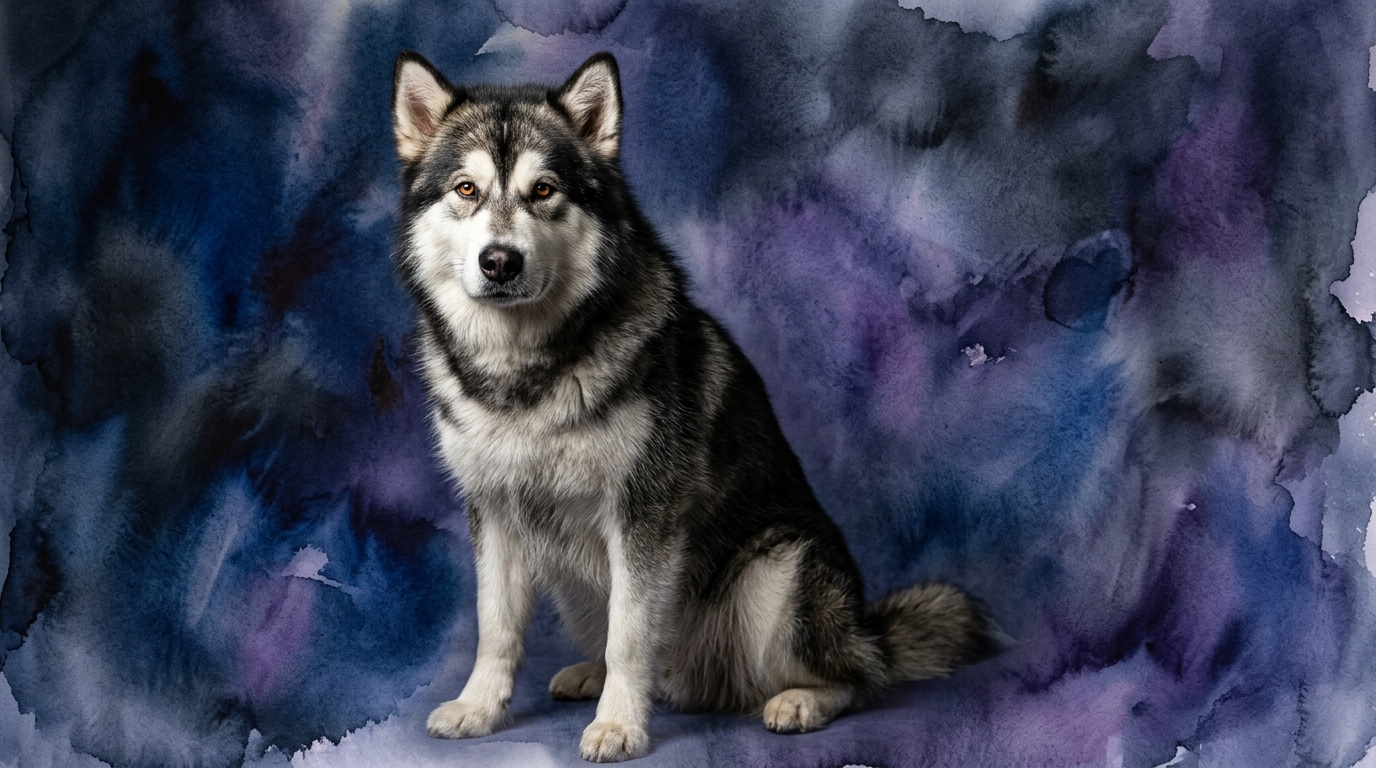
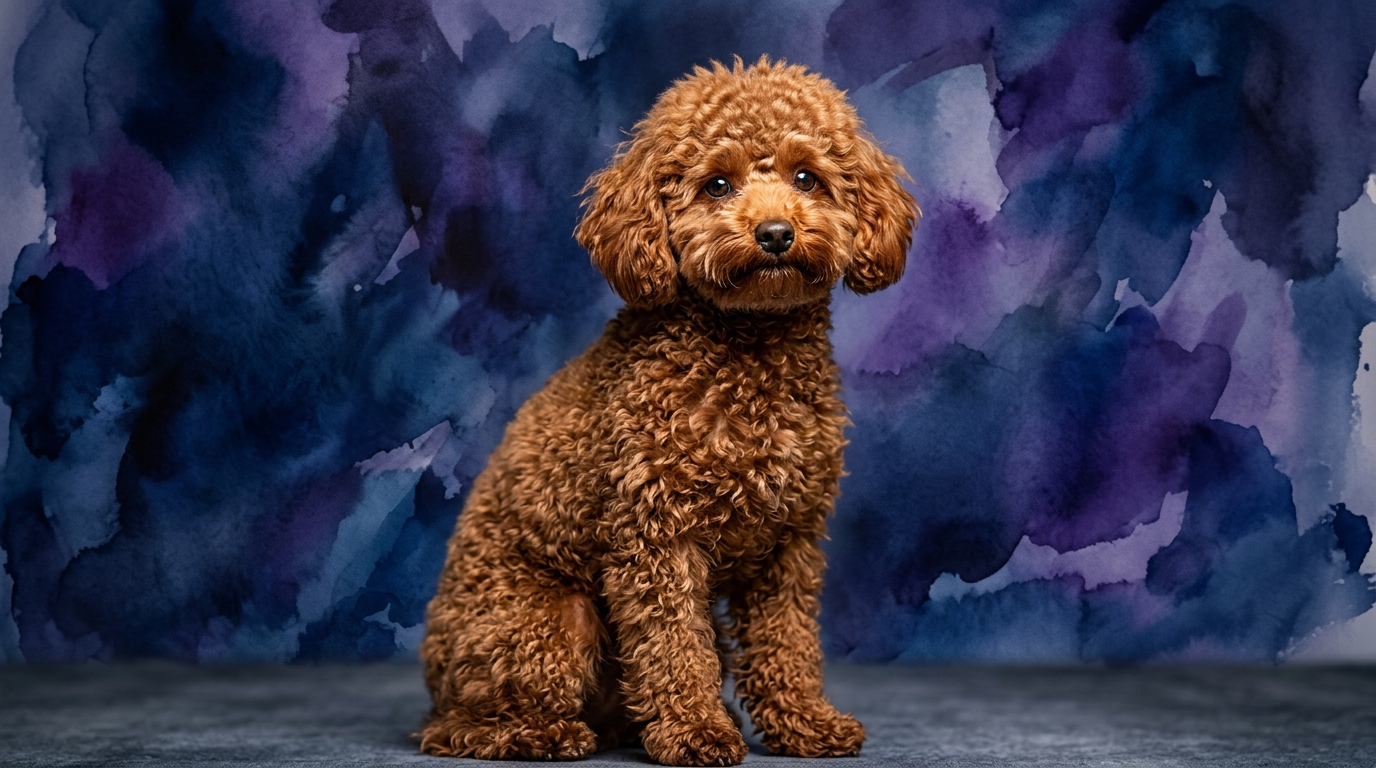
Side-by-Side IQ Profile: Alaskan Malamute vs. Toy Poodle
The Cosmic Pet Pet IQ Lab employs a multi-dimensional approach to assess canine cognition, moving beyond simplistic 'intelligence' labels to evaluate specific strengths. For the Alaskan Malamute, a breed ranked #50 by Coren, its profile highlights a unique set of skills tailored for its historical role. Its Problem Solving score of 4/5 reflects an ability to navigate complex physical environments and overcome obstacles, a necessity for a sled dog. Training Speed, however, is rated 2/5, indicating a more independent learning curve. Social Intelligence stands at 3/5, suggesting a capacity for cooperative interaction but often with a strong sense of self-direction. A dominant trait is its Instinctive Drive at 5/5, signifying powerful innate behaviors for tasks like pulling and scenting. Memory is solid at 4/5, allowing it to retain learned routes and patterns.
In stark contrast, the Toy Poodle, holding an impressive Coren rank of #2, showcases a cognitive profile geared towards adaptability and quick learning. Its Problem Solving score is a perfect 5/5, demonstrating exceptional aptitude for novel tasks and abstract challenges. Training Speed also achieves a 5/5, meaning these dogs grasp new commands and routines with remarkable efficiency. Social Intelligence is 3/5, similar to the Malamute, indicating a capacity for connection though perhaps less pronounced than their trainability. Instinctive Drive is moderate at 3/5, leaning more towards companion-oriented behaviors than intense working drives. Memory is equally exceptional at 5/5, allowing for rapid retention and recall of complex sequences and social cues.
Where the Alaskan Malamute Wins Cognitively
The Alaskan Malamute's cognitive strengths are profoundly rooted in its heritage as a powerful sled dog, excelling in areas demanding self-reliance and physical acumen. Its 4/5 Problem Solving score shines brightest in practical, environmental challenges. This isn't about solving puzzle toys with finesse; it's about figuring out how to navigate deep snow, find the safest path across varied terrain, or strategically pull a heavy load. Their impressive 5/5 Instinctive Drive means they possess an unparalleled, intrinsic motivation for physical tasks, endurance, and scent work, making them relentless and focused in activities requiring sustained effort and determination. This drive translates into an innate understanding of their environment and a profound ability to use their physical capabilities to achieve goals, whether it’s finding a way through a fence or remembering a trail through dense woods (Memory 4/5).
While they may not be the quickest to pick up abstract commands, their cognitive architecture is optimized for real-world application and survival. Their memory, rated 4/5, is particularly adept at recalling sequences of events or geographical layouts crucial for their working roles, enabling them to remember complex routes or the location of resources. This practical intelligence, combined with their powerful drive, allows them to independently assess situations and act decisively, making them formidable in tasks that require grit and an understanding of their physical surroundings rather than strict obedience to human directives.
Where the Toy Poodle Wins Cognitively
The Toy Poodle's cognitive prowess is a masterclass in adaptability, rapid acquisition of information, and abstract reasoning, earning its high Coren ranking. Its perfect 5/5 in Problem Solving signifies an exceptional capacity to understand and manipulate complex concepts, often demonstrating foresight and strategic thinking in novel situations. This isn't just about learning tricks; it’s about figuring out how to open latches, understand multi-step commands, or even anticipate human actions. Their superior 5/5 Training Speed is a testament to their cognitive flexibility and eagerness to engage with human instruction, allowing them to absorb and execute new commands with remarkable efficiency, making them highly responsive companions.
Furthermore, the Toy Poodle's 5/5 Memory is a significant asset, enabling them to retain a vast repertoire of commands, routines, and social cues over long periods. This robust memory underpins their rapid training speed and complex problem-solving abilities, allowing them to build upon past experiences and learn intricate sequences. While their Instinctive Drive is a moderate 3/5, it means they are less driven by primal urges and more amenable to channeling their mental energy into human-directed tasks, making them highly trainable for sophisticated activities like agility, obedience, and even service work where intricate understanding and recall are paramount.
Which is Easier to Train and Why
Without question, the Toy Poodle is significantly easier to train than the Alaskan Malamute, a distinction clearly highlighted by their respective Training Speed scores of 5/5 for the Poodle and 2/5 for the Malamute. The Toy Poodle's rapid learning curve stems from a combination of high problem-solving abilities and an eagerness to please, allowing them to quickly understand and execute new commands with minimal repetition. Their focus is often directed towards their human companions, making them highly receptive to positive reinforcement and structured lessons. They thrive on mental engagement and find joy in mastering new skills, translating into a highly compliant and adaptable training partner.
Conversely, the Alaskan Malamute's lower training speed is not an indicator of a lack of intelligence, but rather a reflection of their independent and strong-willed nature. Their cognitive design prioritizes self-sufficiency and intrinsic motivation for tasks like pulling or exploring over strict obedience to human directives. They learn, but often at their own pace and if they perceive value in the command; rote repetition for its own sake is less appealing. Training a Malamute requires patience, creativity, and a deep understanding of their motivations, often needing to convince them that a command is worth their effort, rather than simply showing them how to do it. Their strong instinctive drives can also periodically override learned behaviors if not consistently reinforced within their independent framework.
Which Suits Active Owners vs. Relaxed Owners
The Alaskan Malamute is unequivocally suited for active owners who understand and embrace their powerful physical and cognitive needs. Their 5/5 Instinctive Drive means they require substantial physical exertion and mentally stimulating 'work' to be content. This isn't just about a daily walk; it's about engaging in activities that mimic their ancestral roles, such as extended hikes, sledding, cani-cross, or weight pulling. Owners must be prepared for consistent, patient training to channel their problem-solving skills and independent nature into constructive outlets. A Malamute thrives with owners who are committed to providing daily, vigorous exercise and mental challenges that respect their ingenuity and strong will, preventing boredom that can lead to destructive behaviors. They are not for the faint of heart or those seeking a low-maintenance companion.
The Toy Poodle, while adaptable, also benefits from active engagement, but their needs are often more focused on mental activity and companionship. Their high problem-solving and training speed mean they excel in dog sports like agility, obedience, or rally, which provide ample mental stimulation without requiring the same level of raw physical endurance as a Malamute. While they enjoy walks and playtime, their primary requirement is consistent mental challenge and interaction with their owners. A Toy Poodle can adapt to a more relaxed owner if provided with regular mental games, puzzle toys, and consistent training sessions that keep their sharp minds engaged. They are excellent companions for individuals or families who appreciate a dog that is eager to learn, responsive, and thrives on intellectual partnership, making them suitable for active yet not necessarily extreme lifestyles.
The Verdict
Choose the Alaskan Malamute if you are an experienced, highly active owner who values an independent, resilient companion with powerful physical drives and a practical problem-solving mindset, capable of thriving in demanding outdoor activities.
Choose the Toy Poodle if you seek a highly trainable, mentally agile companion eager to learn and engage in complex tasks, thriving on intellectual challenges and close partnership, adaptable to various lifestyles with consistent mental stimulation.
🧠 Find Your Pet's IQ Score
Our Pet IQ Lab assessment covers 25+ tests across 5 cognitive dimensions — personalized to your breed.
Take the Full IQ Test →Frequently Asked Questions
Do Alaskan Malamutes need a lot of mental stimulation?
Yes, Alaskan Malamutes absolutely require significant mental stimulation to prevent boredom and destructive behaviors. Their strong problem-solving ability and independent nature mean they need challenges that engage their minds, such as puzzle toys, scent work, and varied training routines, alongside their extensive physical exercise requirements.
Are Toy Poodles good for first-time dog owners?
Toy Poodles can be excellent for first-time dog owners due to their high trainability and eagerness to please. Their quick learning and adaptability make them responsive to consistent positive reinforcement, though their need for mental engagement means owners must commit to regular training and interactive play to keep them happy and well-behaved.
Can a Toy Poodle keep up with an active lifestyle?
Yes, a Toy Poodle can certainly keep up with an active lifestyle, especially one focused on mental and moderate physical activities. They excel in dog sports like agility and obedience, enjoy brisk walks, and thrive on consistent engagement, making them suitable companions for active owners who enjoy incorporating their dog into daily routines.