Side-by-Side IQ Profile: Herding Precision vs. Hound Persistence
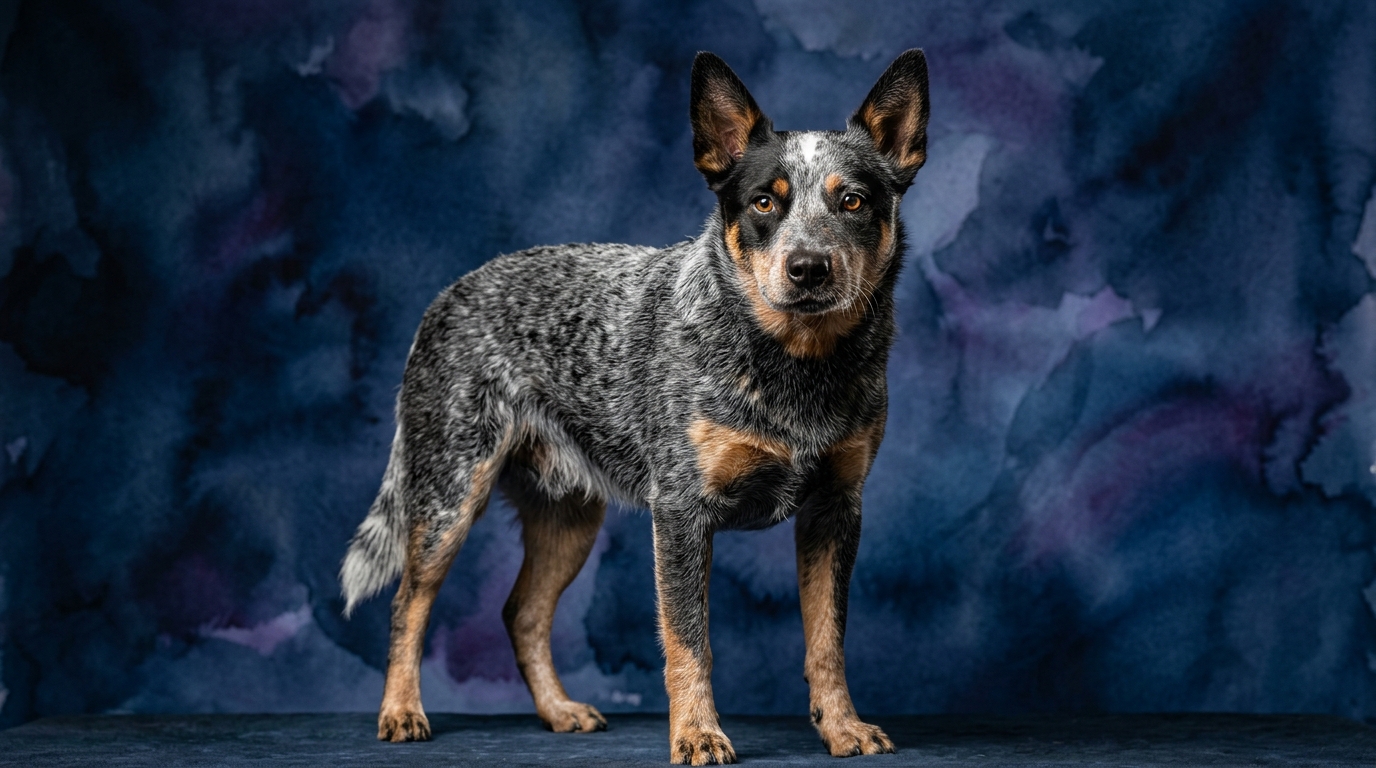
The Cosmic Pet Pet IQ Lab assesses canine intelligence across five critical dimensions, providing a nuanced view beyond simple obedience scores. For the Australian Cattle Dog, a breed consistently ranked among the top working dogs (Coren Rank #10), its profile paints a picture of exceptional cognitive prowess: Problem Solving 5/5, Training Speed 5/5, Social Intelligence 3/5, Instinctive Drive 5/5, and Memory 5/5. This combination underscores a dog built for intricate, demanding tasks.
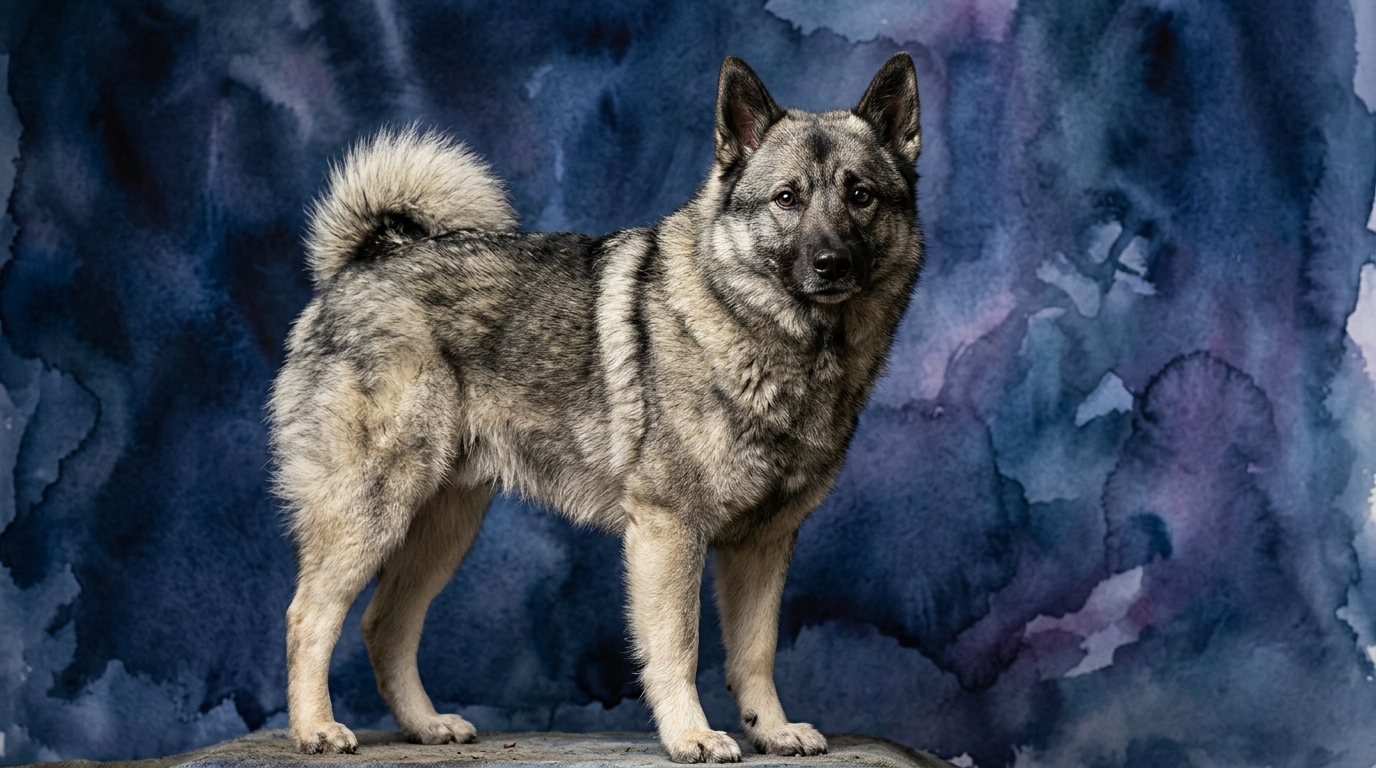
In contrast, the Norwegian Elkhound, a resilient northern hound (Coren Rank #36), presents a profile reflecting its independent hunting heritage: Problem Solving 4/5, Training Speed 4/5, Social Intelligence 3/5, Instinctive Drive 3/5, and Memory 4/5. While still a capable and adaptable companion, its scores suggest a different cognitive emphasis compared to the precise, handler-focused herder.
Delving into the Australian Cattle Dog's scores, its 5/5 in Problem Solving signifies an exceptional capacity to analyze situations, devise effective strategies, and adapt to changing conditions, often anticipating needs or obstacles. A 5/5 Training Speed means they grasp new commands and complex sequences with minimal repetition, eager to learn and execute. While their Social Intelligence stands at 3/5, indicating they understand human cues and form strong bonds, they may exhibit a more independent streak rather than an overt desire to please. The 5/5 Instinctive Drive highlights their powerful, inherent herding behaviors and intense focus on a task, an unwavering commitment to their job. Finally, a 5/5 Memory ensures they retain vast amounts of information, from commands to routines and environmental details, over long periods.
The Norwegian Elkhound's scores, starting with 4/5 in Problem Solving, denote a resourceful and capable thinker, adept at navigating challenges independently, particularly in pursuit of a scent or navigating varied terrain. Their 4/5 Training Speed indicates they are willing learners who can acquire new skills efficiently, though perhaps requiring slightly more consistency or motivation than a 5/5 counterpart. Sharing a 3/5 in Social Intelligence with the ACD, Elkhounds are affectionate with their families but maintain a certain self-reliance. Their 3/5 Instinctive Drive reflects a strong, deep-seated hunting and tracking instinct, which, while potent, might be less directed by human command and more by their own sensory input, such as scent. A 4/5 Memory means they remember commands and experiences well, crucial for navigating familiar territories or remembering successful hunting strategies, though perhaps not with the granular detail of a 5/5 memory score.
Where the Australian Cattle Dog Wins Cognitively
The Australian Cattle Dog excels in areas demanding structured, high-precision cognitive application. Their 5/5 Problem Solving combined with a 5/5 Training Speed and 5/5 Memory makes them unparalleled in learning and executing complex, multi-step commands and routines. For instance, an ACD can quickly learn to differentiate between multiple livestock types, execute intricate herding patterns, or master advanced obedience sequences involving numerous steps and variations. They process information rapidly, form strong associations between commands and actions, and retain this knowledge with remarkable fidelity, making them ideal for competitive dog sports like agility, obedience, and herding trials where precision and speed are paramount.
Furthermore, their 5/5 Instinctive Drive, specifically geared towards collaboration and control over livestock, translates into an intense focus on their handler's directives. This cognitive strength allows them to filter out distractions more effectively when engaged in a directed task, making them exceptionally responsive to cues. They don't just solve problems; they solve them *with* their human partner, maintaining a tight feedback loop that optimizes performance in working scenarios. This capacity for sustained, directed mental effort is a significant cognitive advantage for tasks requiring consistent, error-free execution.
Where the Norwegian Elkhound Wins Cognitively
The Norwegian Elkhound's cognitive strengths shine in environments demanding independent decision-making, resilience, and sustained focus on sensory information. Their 4/5 Problem Solving, paired with a 3/5 Instinctive Drive heavily focused on scent and tracking, means they are adept at navigating complex natural environments and pursuing a goal autonomously. An Elkhound excels at tasks requiring prolonged investigation, such as following a faint scent trail over varied terrain for hours, making independent decisions about the path forward, and exhibiting remarkable stamina in their mental and physical pursuit.
While their training speed is slightly lower than the ACD, their cognitive prowess lies in their ability to endure and persist in challenging conditions, often without constant human direction. They possess a deep-seated capacity for self-sufficiency, using their memory (4/5) to recall successful routes or hunting strategies. This makes them particularly effective in tasks like search and rescue, where their ability to work methodically and independently, driven by scent, is invaluable. Their cognitive wins are less about rapid, precise obedience and more about sustained, self-directed exploration and problem-solving in natural, often unpredictable, settings.
Which is Easier to Train and Why
The Australian Cattle Dog is generally easier to train for obedience and structured tasks due to its 5/5 Training Speed and 5/5 Instinctive Drive. Their herding background has ingrained a strong desire to work closely with a human partner, responding quickly to commands and eager to perform a job. Behavioral differences manifest in their biddability; an ACD often seeks direction and thrives on having a purpose, making them highly receptive to learning and repeating tasks. They require fewer repetitions to solidify a command and are inherently motivated by the opportunity to engage their minds in productive activity with their handler.
Conversely, the Norwegian Elkhound, with a 4/5 Training Speed and a 3/5 Instinctive Drive, presents a different training dynamic. While capable learners, their independent hunting heritage means they can be more self-directed and less inherently driven by handler-focused cooperation. An Elkhound might learn a command efficiently, but their strong scent drive means they can be easily distracted by environmental stimuli, prioritizing an interesting smell over a recall command. Training requires more patience, consistent positive reinforcement, and a deep understanding of their hound nature to channel their natural drives effectively, rather than expecting immediate, unwavering compliance. Their independence means they might question the 'why' of a command more often, or simply prioritize their own nose.
Which Suits Active Owners vs. Relaxed Owners
The Australian Cattle Dog unequivocally suits active owners who are prepared for a dog with substantial mental and physical needs. Their 5/5 Instinctive Drive demands a consistent outlet for their herding energy and problem-solving acumen. Owners best suited for an ACD are those who enjoy engaging in dog sports, long hikes, structured training sessions, or even actual farm work. A relaxed owner who cannot provide daily mental stimulation and rigorous exercise will likely find an ACD to be a challenging companion, as their unspent energy and cognitive capacity can lead to destructive behaviors or excessive 'herding' of family members and pets.
The Norwegian Elkhound also requires active owners, but their activity profile differs. While they need substantial exercise to satisfy their endurance and exploring instincts, their mental needs are often met through less structured activities like long walks where they can follow scents, or backcountry hiking. They are excellent companions for owners who enjoy consistent outdoor adventures, but perhaps less intense, precision-based training. A relaxed owner might struggle with an Elkhound's need for daily physical output and mental engagement through exploration, but they are generally less demanding in terms of constant, structured 'work' compared to an ACD. They are not content to be couch potatoes but might be more forgiving of a day without intense mental puzzle-solving.
The Verdict: Choosing Your Canine Companion
The Verdict
Choose an Australian Cattle Dog if you are an active, experienced owner seeking a highly biddable, intelligent partner for advanced obedience, dog sports, or a working role. You must be prepared to provide extensive mental stimulation and physical exercise daily, channeling their intense drive and problem-solving abilities into productive outlets.
Opt for a Norwegian Elkhound if you are an active individual or family who enjoys independent, outdoor adventures like hiking or tracking, and appreciates a dog with a self-sufficient, resilient spirit. Be ready to manage their strong scent drive and independent streak with consistent, positive training that respects their hound nature.
🧠 Find Your Pet's IQ Score
Our Pet IQ Lab assessment covers 25+ tests across 5 cognitive dimensions — personalized to your breed.
Take the Full IQ Test →Frequently Asked Questions
Do Australian Cattle Dogs bark a lot?
Australian Cattle Dogs can be vocal, often using barks to communicate or express excitement, especially when herding or alerting. Consistent training and providing sufficient mental and physical outlets can help manage excessive barking, as boredom or lack of purpose can exacerbate this behavior.
Are Norwegian Elkhounds good with children?
Norwegian Elkhounds can be good family dogs and are generally patient and protective with children they are raised with. Their independent nature means they might not tolerate rough play as readily as some breeds, so supervision and teaching children how to interact respectfully are always important.
What kind of exercise do Australian Cattle Dogs need?
Australian Cattle Dogs require vigorous, daily exercise that challenges both their bodies and minds. This can include long runs, intense games of fetch, agility training, herding practice, or extensive walks that incorporate mental tasks like finding hidden toys. Simply letting them out in a yard is insufficient.