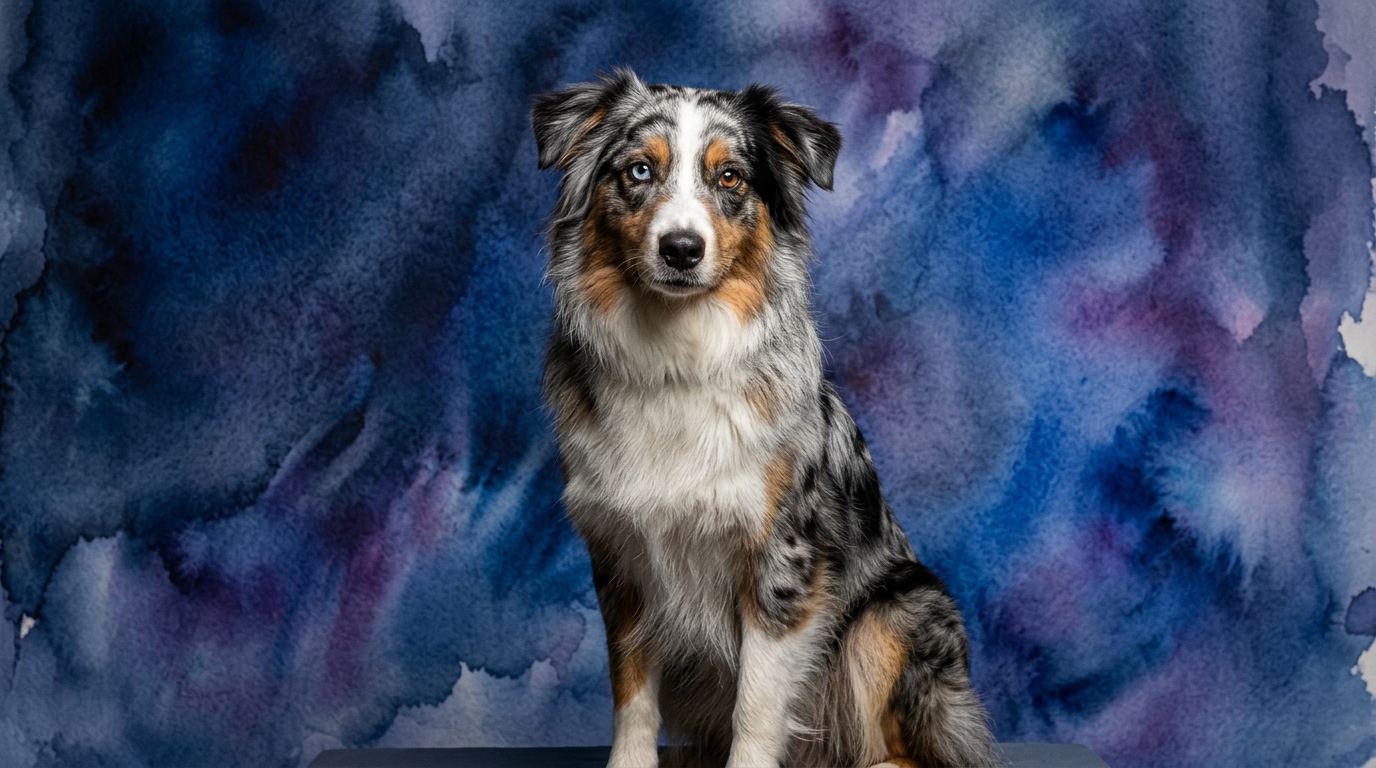
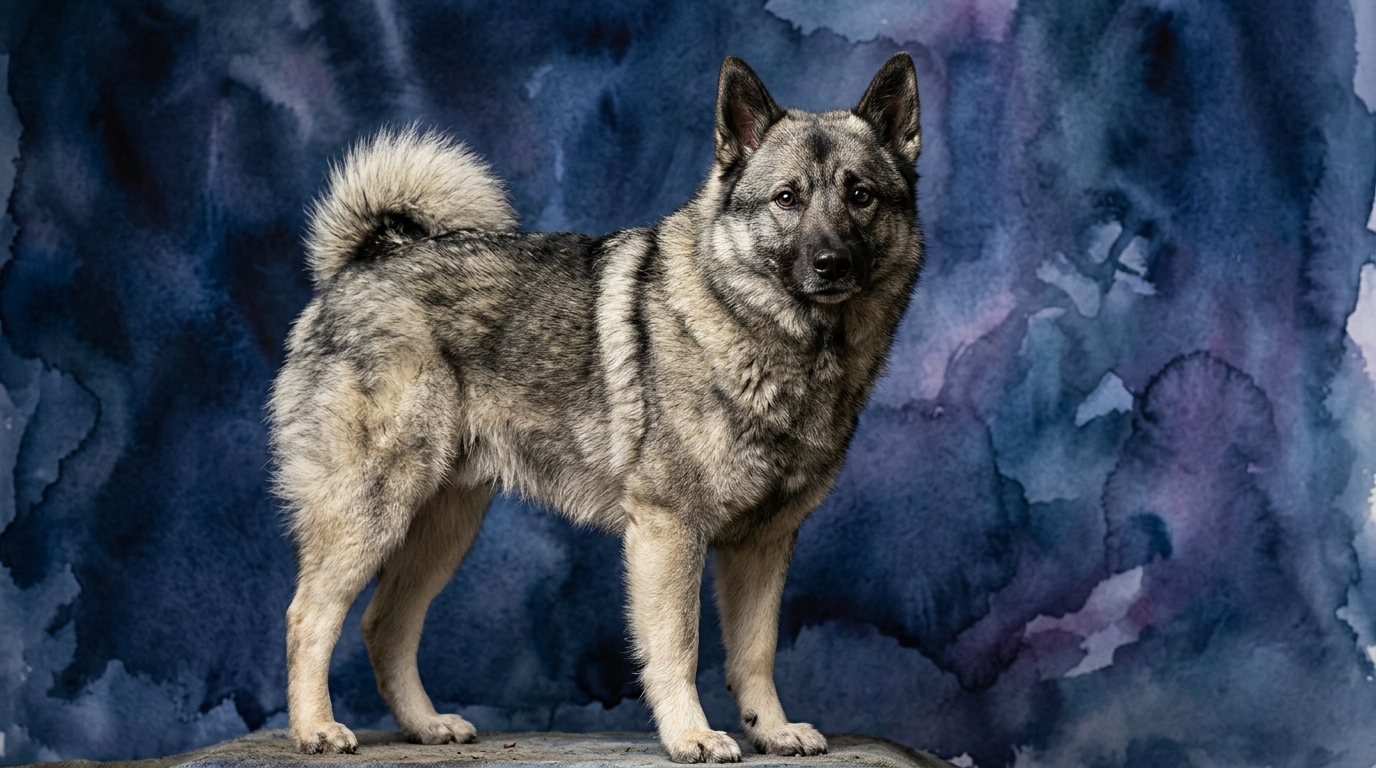
Side-by-Side IQ Profile: Aussie vs. Elkhound
The Cosmic Pet Pet IQ Lab's framework allows us to dissect the distinct cognitive strengths of these two breeds across five crucial dimensions. For the Australian Shepherd, a breed originating from a demanding herding lineage, cognitive scores consistently reflect a mind built for complex tasks and rapid adaptation. They achieve a perfect 5/5 in Problem Solving, indicating an exceptional capacity to navigate novel situations and devise solutions, whether it's outsmarting livestock or figuring out a new puzzle toy. Their Training Speed also rates 5/5, suggesting a remarkable eagerness to learn and retain commands with minimal repetition, making them highly receptive students. Social Intelligence stands at a strong 4/5, demonstrating their adeptness at reading human cues and interacting appropriately within a social structure, though perhaps with a touch more independence than some companion breeds. An Instinctive Drive of 5/5 highlights their powerful inherent motivation to work, control, and manage, often expressed as a need for a 'job' or purpose. Finally, their Memory is rated 5/5, reinforcing their ability to recall complex sequences, past experiences, and learned behaviors over extended periods, crucial for intricate herding patterns.
In contrast, the Norwegian Elkhound, rooted in ancient hunting traditions, presents a cognitive profile optimized for endurance, independence, and sensory tracking. Their Problem Solving capability is rated 4/5, indicating a solid ability to tackle challenges, often through persistent focus rather than rapid strategic shifts. Training Speed for the Elkhound is 4/5, suggesting they are capable learners, though they may require more consistent motivation and patience compared to the highly biddable Australian Shepherd. Social Intelligence scores 3/5, which points to a more self-reliant nature; while they form strong bonds, they might not be as overtly tuned into human social nuances or as overtly people-pleasing as some breeds. Their Instinctive Drive is 3/5, representing a strong, focused drive for tasks like tracking and scenting, but perhaps less generalized 'work ethic' than a herding dog. Lastly, their Memory is 4/5, showing a robust capacity for retaining information, particularly regarding routes, scents, and learned hunting strategies, though perhaps not the same breadth of complex, multi-step recall seen in herding breeds.
Where the Australian Shepherd Excels Cognitively
The Australian Shepherd's cognitive supremacy truly shines in areas demanding dynamic, real-time problem-solving and intricate communication. Their 5/5 Problem Solving score translates into an impressive ability to analyze situations and adapt strategies on the fly, a trait honed by generations of managing unpredictable livestock. For instance, an Aussie might independently figure out how to open a child-proof gate or devise a novel way to retrieve a toy stuck under furniture, exhibiting genuine ingenuity rather than brute force. This breed's 5/5 Training Speed is directly linked to their innate desire for engagement and a remarkable aptitude for pattern recognition. They absorb new commands, tricks, and complex sequences with astounding speed, often anticipating the next step in a routine, making them stars in obedience, agility, and competitive dog sports. Their high Social Intelligence, at 4/5, combined with their profound Memory (5/5), allows them to form deep understandings of their human companions, remembering preferences, routines, and even subtle emotional cues. This enables them to anticipate needs and react appropriately, making them highly intuitive partners in work and life. The Aussie's powerful Instinctive Drive (5/5) isn't just about raw energy; it's a directed intelligence that compels them to organize, manage, and engage with their environment, constantly seeking purpose and mental stimulation.
Where the Norwegian Elkhound Stands Out Cognitively
While the Norwegian Elkhound's overall scores might appear lower, their cognitive strengths are uniquely adapted to their historical role as a steadfast hunter, particularly in harsh Nordic environments. Their 4/5 in Problem Solving often manifests as enduring determination rather than rapid-fire strategy. An Elkhound might not quickly devise a novel solution to a complex puzzle, but once committed to a task, such as locating a hidden scent, they will apply relentless focus and methodical persistence until the objective is achieved, demonstrating a different kind of cognitive resilience. The Elkhound's Instinctive Drive, rated 3/5, is specifically geared towards scent work and tracking. This isn't a general 'need to work' but a profound, almost meditative, focus on following a trail, often for extended periods over challenging terrain. This specialized drive showcases a deep cognitive ability to process and interpret olfactory information, filtering out distractions to remain locked onto a target scent, a skill that many other breeds lack. Their 4/5 Memory is particularly strong for spatial recall and scent association, allowing them to navigate complex environments and remember the locations of past finds or successful hunting grounds. While their Social Intelligence is 3/5, it reflects an independent spirit rather than a lack of affection; they are capable of forming strong, loyal bonds but often prefer to make their own decisions rather than constantly seeking human direction. This self-reliance is a cognitive asset in situations where a dog must operate autonomously, far from its handler.
Training Dynamics: Which is Easier and Why?
Based on their cognitive profiles, the Australian Shepherd is generally easier to train than the Norwegian Elkhound, primarily due to their superior Training Speed (5/5 vs. 4/5) and higher Social Intelligence (4/5 vs. 3/5). Australian Shepherds possess an inherent biddability and an intense desire to engage with their handlers, often anticipating commands and thriving on the mental challenge of learning. Their perfect score in Training Speed means they pick up new cues and behaviors rapidly, often requiring fewer repetitions and responding eagerly to positive reinforcement. This responsiveness stems from their herding background, where quick comprehension and precise execution of commands were critical for managing livestock. Their problem-solving abilities also contribute, as they can often generalize learned behaviors to new contexts more readily.
The Norwegian Elkhound, while trainable, presents a different set of challenges. Their 4/5 Training Speed indicates they can learn, but their independent nature and lower Social Intelligence mean they may not always prioritize human directives over their own instincts. An Elkhound's powerful scent drive, for example, can be a significant distraction during training, making them less inclined to focus on a handler when a compelling scent is present. Their problem-solving often leans towards independent investigation, which can translate into a charming stubbornness when asked to perform a task they deem less interesting than their own pursuits. Training an Elkhound requires more patience, consistency, and a deep understanding of their hound mentality, leveraging their natural drives rather than fighting against them. They respond best to positive, reward-based methods that make training feel like a partnership rather than a command-and-obey dynamic.
Suitability for Active vs. Relaxed Owners
When considering lifestyle compatibility, the Australian Shepherd unequivocally suits highly active and engaged owners who are prepared to provide substantial mental and physical stimulation. Their 5/5 Problem Solving, 5/5 Instinctive Drive, and overall high cognitive activity mean they require constant engagement to prevent boredom and destructive behaviors. An Aussie thrives on having a 'job,' whether it's participating in agility, obedience, herding trials, or even complex puzzle games and extended training sessions. Owners who enjoy long hikes, running, or dog sports will find an Australian Shepherd an unparalleled partner. A relaxed owner, or one unable to commit to several hours of stimulating activity daily, would likely find an Aussie overwhelming, as their unmet cognitive and physical needs can manifest as excessive barking, nipping, or furniture destruction.
The Norwegian Elkhound, while certainly an active breed, offers a slightly different profile that might appeal to owners who are active but perhaps less inclined towards constant, structured mental tasks. Their 3/5 Instinctive Drive is focused more on endurance and scent work than on intricate problem-solving or constant human direction. An Elkhound enjoys long walks or hikes, especially those that involve exploring new scents and environments, making them suitable for owners who appreciate outdoor adventures. They are not typically as demanding for constant 'work' or complex mental puzzles as an Aussie, though they still require regular exercise to stay healthy and happy. A moderately active owner who enjoys consistent outdoor activity and can provide opportunities for independent scent exploration would find an Elkhound a rewarding companion. They appreciate a balance of activity and quiet companionship, often content to relax after a good outing, making them a better fit for owners who might describe themselves as 'active but chill' rather than 'intensely driven'.
The Verdict
Choose the Australian Shepherd if you are an experienced, highly active owner eager for a deeply engaged canine partner who thrives on complex mental challenges and consistent physical activity. This breed excels in learning, problem-solving, and forming intuitive bonds, making them ideal for competitive dog sports or a busy, stimulating household.
Opt for the Norwegian Elkhound if you appreciate an independent, resilient companion for outdoor adventures and possess the patience for a dog with a strong, focused scent drive. This breed suits moderately active owners who enjoy exploring new trails and value a loyal, self-reliant partner more than constant biddability or intricate training.
🧠 Find Your Pet's IQ Score
Our Pet IQ Lab assessment covers 25+ tests across 5 cognitive dimensions — personalized to your breed.
Take the Full IQ Test →Frequently Asked Questions
Do Australian Shepherds bark a lot?
Australian Shepherds can be quite vocal, often using barking as a communication tool, especially when bored or under-stimulated. Their high instinctive drive and social intelligence mean they will alert to perceived threats or try to 'herd' family members, making consistent training crucial to manage their vocal tendencies.
Are Norwegian Elkhounds good with children?
Norwegian Elkhounds are generally good with children, especially if raised with them and properly socialized. Their independent nature means they may not be as overtly playful or tolerant as some breeds, so supervision is always recommended, and children should be taught to respect the dog's space.
What kind of exercise do Norwegian Elkhounds need?
Norwegian Elkhounds require consistent daily exercise, ideally including long walks, hikes, or opportunities for off-leash running in a secure area. They particularly enjoy activities that engage their powerful sense of smell, such as scent games or exploring new trails, which satisfies both their physical and mental needs.