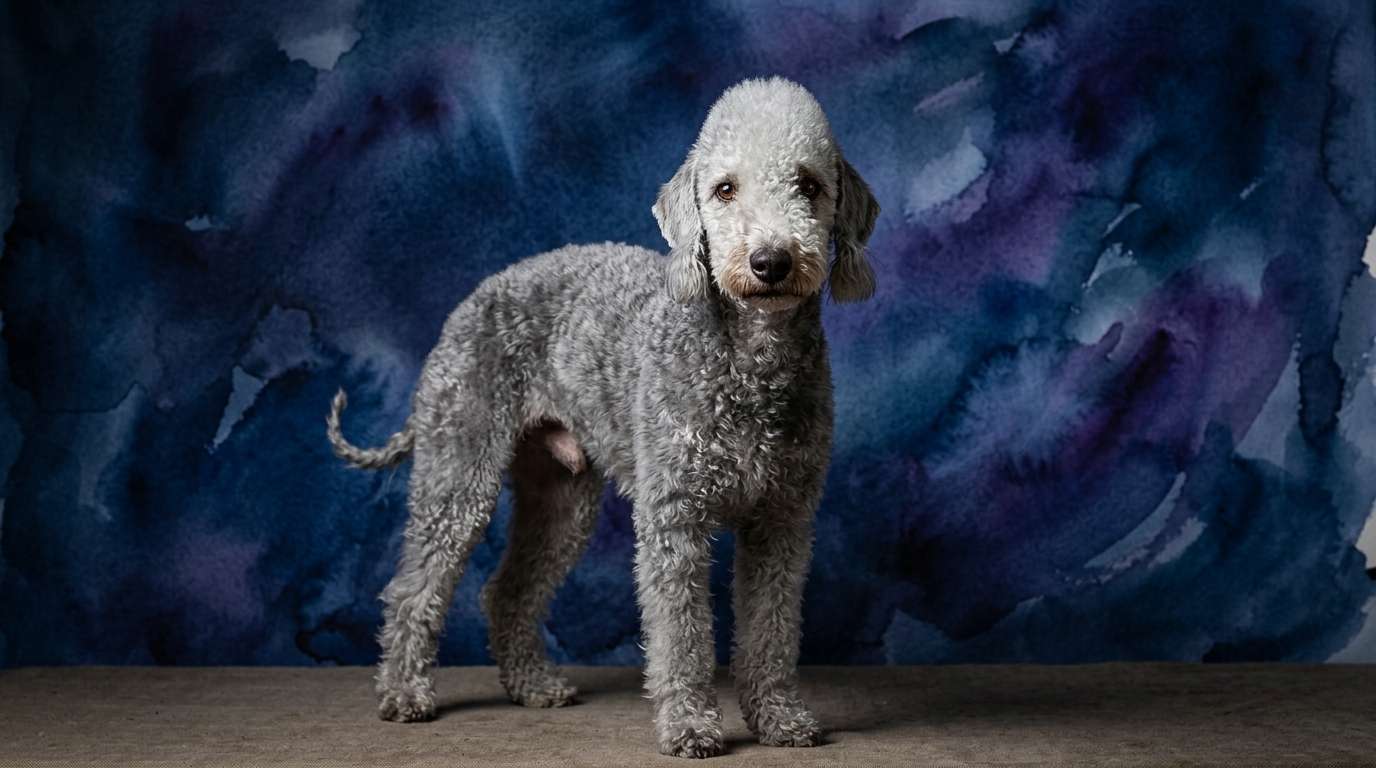
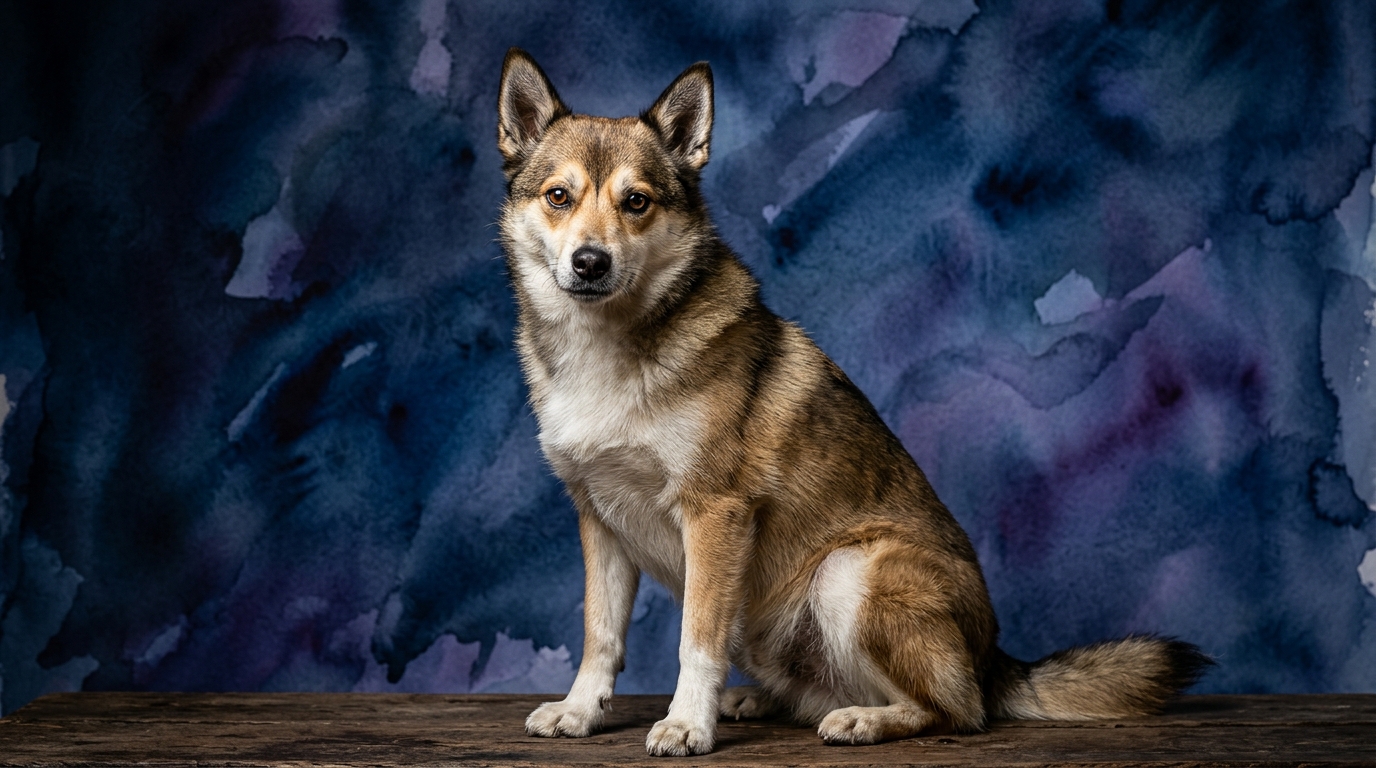
Side-by-Side Cognitive Profiles
While both the Bedlington Terrier and Norwegian Lundehund register a balanced 3/5 across our intelligence metrics, their historical roles and physical adaptations sculpt how these cognitive attributes present in daily life. Understanding these nuances moves beyond mere numbers, revealing the specific flavor of their respective intellects.
For the Bedlington Terrier, a breed originally honed for hunting vermin, a Problem Solving score of 3/5 translates to a focused tenacity in unraveling puzzles related to pursuit and capture, often involving spatial reasoning to navigate burrows or outmaneuver prey. Their Training Speed, also 3/5, indicates a capacity to learn new commands at a moderate pace, often requiring consistent, positive reinforcement to overcome their inherent Terrier independence. Social Intelligence at 3/5 reflects a deep bond with their primary family unit, often keenly attuned to their owners' moods and intentions, though they can be reserved with strangers. An Instinctive Drive of 3/5 manifests as a pronounced prey drive, a persistent urge to dig, and a watchful territoriality, all rooted in their vermin-hunting heritage. Finally, their Memory, scoring 3/5, allows them to recall routines, learned behaviors, and the locations of favored hunting grounds or hidden toys with reliable consistency.
The Norwegian Lundehund, a specialist breed developed for puffin hunting in treacherous coastal environments, expresses its 3/5 Problem Solving in truly unique ways, demonstrating exceptional bodily awareness and flexibility to navigate tight crevices and scale slippery cliffs. Their 3/5 Training Speed indicates an adaptable learner, though their independent nature means they thrive with engagement-based training that respects their self-sufficient working history. Lundehunds exhibit a 3/5 in Social Intelligence, generally friendly and adaptable in various social settings, capable of reading both human and canine cues effectively, yet maintaining a degree of self-reliance. Their Instinctive Drive, also 3/5, is specifically geared towards exploration, climbing, and an agile pursuit of small prey, rather than territorial guarding. A Memory score of 3/5 enables them to retain complex navigational routes, remember specific climbing techniques, and recall the locations of hidden resources or past successes in their environment.
Where the Bedlington Terrier Excels Cognitively
The Bedlington Terrier's cognitive strengths distinctly shine in scenarios demanding persistent, goal-oriented problem-solving, particularly when a clear 'target' is involved. Their 3/5 Problem Solving, combined with their 3/5 Instinctive Drive, means they are adept at deciphering complex sequences to reach a desired outcome, such as meticulously working through a puzzle toy to extract a treat or systematically 'clearing' a yard of perceived pests. This breed's memory (3/5) supports their hunting methodology, enabling them to recall effective strategies for past successes and apply them to new, similar challenges. They demonstrate a keen ability to learn and adapt if the task aligns with their innate drives, making them particularly effective in activities like Earthdog trials or advanced scent work where tracking and locating are paramount. Their focused determination, a hallmark of the Terrier group, allows them to maintain concentration on a task until completion, even if it requires repeated effort or overcoming minor obstacles.
Where the Norwegian Lundehund Excels Cognitively
The Norwegian Lundehund's cognitive prowess is most evident in its unparalleled physical problem-solving and environmental adaptability. Their 3/5 Problem Solving score is amplified by extraordinary anatomical flexibility, allowing them to contort their bodies to navigate tight spaces or scale vertical surfaces with remarkable ingenuity. This breed excels at spatial reasoning in three dimensions, remembering intricate paths through rugged terrain and devising novel ways to overcome physical barriers, skills honed by generations of puffin hunting on cliffs. Their 3/5 Instinctive Drive fuels a profound curiosity and exploratory nature, making them exceptional at mapping new environments mentally and physically. The Lundehund's memory (3/5) is particularly strong for spatial recall and motor learning, enabling them to perfect complex physical maneuvers and retain knowledge of safe and efficient routes, making them superb companions for hiking or agility courses that emphasize varied obstacles.
Training Dynamics: Bedlington Terrier vs. Norwegian Lundehund
When considering trainability, both breeds present unique considerations given their 3/5 Training Speed, meaning neither is inherently 'easy' but both are capable with the right approach. The Bedlington Terrier, with its strong Terrier independence and selective hearing when distracted by prey, often requires consistent, patient, and highly motivating training sessions. They respond best to positive reinforcement that makes training feel like a game or a rewarding challenge, particularly if it taps into their natural drives like chasing or 'finding.' Their tendency to form strong bonds (3/5 Social Intelligence) means they generally want to please their chosen people, but their inherent stubbornness can make them question commands if they don't perceive an immediate benefit or if their instincts are urging them elsewhere. Successful training with a Bedlington often involves channeling their innate energy and focus into constructive activities like agility or rally obedience, where their quickness and determination can be celebrated.
The Norwegian Lundehund, while also scoring 3/5 in Training Speed, approaches learning with a different cognitive framework. Their history as independent puffin hunters means they are less inclined to blindly follow commands and more likely to assess the utility of a task before committing. They are highly adaptable and can learn a vast array of commands and tricks, especially those that engage their unique physical capabilities and problem-solving skills, like climbing or navigating obstacle courses. However, their 3/5 Instinctive Drive for exploration means they can be easily distracted by novel environments or scents, requiring trainers to maintain high engagement and make training sessions dynamic and interesting. Their 3/5 Social Intelligence helps them understand human intentions, but their self-sufficient nature means they excel with trainers who respect their independence and use positive, reward-based methods to build a cooperative partnership rather than demanding strict obedience. Both breeds benefit immensely from early socialization and consistent training to shape their natural inclinations into desirable behaviors.
Ideal Lifestyles: Active vs. Relaxed Owners
For owners seeking a moderately active companion, the Bedlington Terrier typically aligns well with those who enjoy regular, engaging outdoor activities that provide mental and physical stimulation. Their 3/5 Instinctive Drive for pursuit and digging means they thrive with structured exercise like brisk walks, playful romps in a secure yard, or participation in dog sports such as lure coursing or earthdog trials that satisfy their natural inclinations. They are not content to be couch potatoes and require daily outlets for their energy and sharp minds, making them suitable for active individuals or families who can integrate them into their routines. While they appreciate downtime with their family, their cognitive profile suggests they need consistent mental engagement to prevent boredom-induced behaviors, making them a good fit for owners who can provide varied enrichment.
The Norwegian Lundehund, conversely, suits owners who are active in a different, often more physically demanding, way, valuing exploration and unique physical challenges. With their 3/5 Instinctive Drive for climbing and navigating complex terrains, Lundehunds are ideal for owners who enjoy hiking, trail running, or exploring varied outdoor environments where their agility and physical problem-solving skills can be utilized. They are incredibly adaptable but need opportunities to engage their bodies and minds in novel ways, rather than just repetitive exercise. While they can enjoy quiet time indoors, their cognitive makeup suggests a need for environmental enrichment that allows them to use their extraordinary flexibility and balance. Therefore, they are best suited for owners who appreciate a dog's independent spirit and are prepared to facilitate unique physical and mental adventures, rather than simply providing a standard daily walk.
The Verdict
Choose the Bedlington Terrier if you appreciate a tenacious, focused companion for activities like scent work or agility, and can provide consistent, engaging training to channel their strong terrier drive into constructive endeavors.
Opt for the Norwegian Lundehund if you are drawn to a uniquely agile, physically adaptable dog that excels in navigating complex environments and you seek a partner for adventurous hikes or specialized agility challenges.
🧠 Find Your Pet's IQ Score
Our Pet IQ Lab assessment covers 25+ tests across 5 cognitive dimensions — personalized to your breed.
Take the Full IQ Test →Frequently Asked Questions
Do Bedlington Terriers and Norwegian Lundehunds have similar temperaments due to their identical IQ scores?
While both breeds share a balanced 3/5 across our IQ dimensions, their temperaments differ significantly due to their distinct histories and physical traits. Bedlington Terriers exhibit a classic Terrier tenacity and strong family loyalty, while Norwegian Lundehunds are more independent, adaptable, and known for their unique physical agility and curiosity.
Which breed is better for a first-time dog owner?
Neither breed is typically recommended for novice owners without significant preparation, as both require consistent training and understanding of their specific needs. The Bedlington Terrier's independent streak and the Lundehund's unique physical requirements demand owners who are committed to structured engagement and can adapt to their distinct cognitive and behavioral profiles.
How can I best engage the problem-solving abilities of these breeds?
For a Bedlington Terrier, engage their 3/5 problem-solving with puzzle toys that require manipulation, scent games, or structured training that challenges their focus and persistence. For a Norwegian Lundehund, provide opportunities for physical problem-solving like climbing on safe structures, navigating obstacle courses, or exploring varied terrains that utilize their unique agility and environmental awareness.