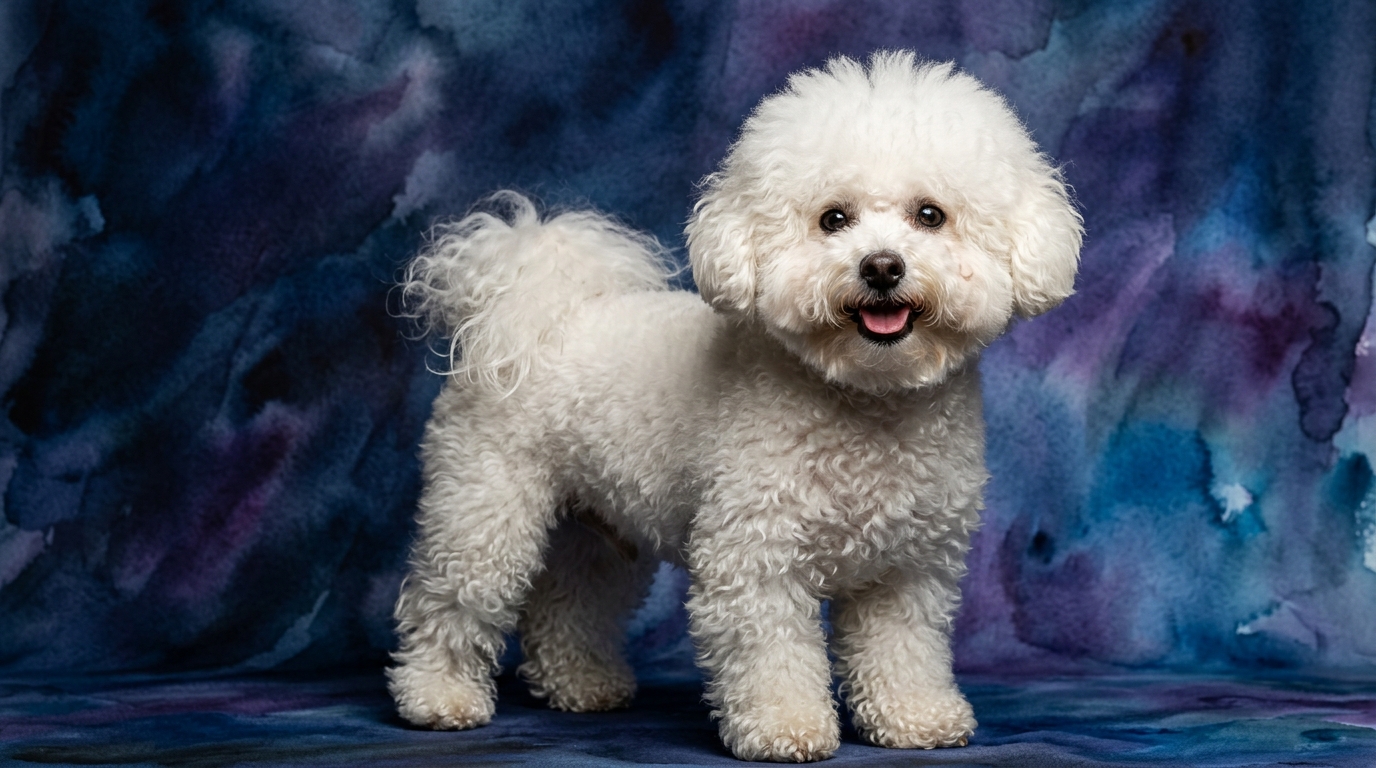
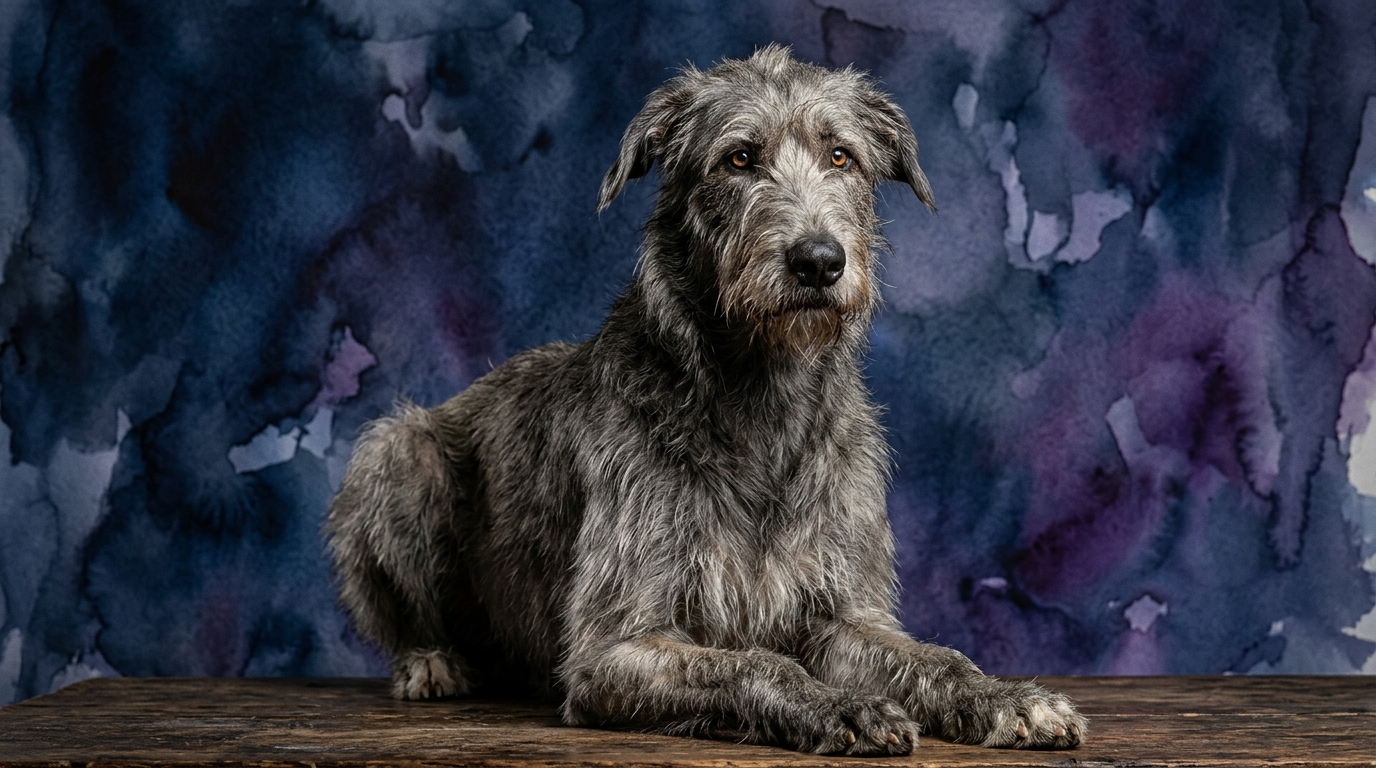
Side-by-Side IQ Profile: Bichon Frisé vs. Irish Wolfhound
The Cosmic Pet Pet IQ Lab employs a five-dimensional framework to assess canine cognition, offering a granular view of how different breeds process information and interact with their environment. Examining the Bichon Frisé and Irish Wolfhound through this lens reveals both surprising similarities and distinct differences in their cognitive makeup.
For Problem Solving, both breeds register a moderate 3 out of 5. This score indicates that both the Bichon Frisé and the Irish Wolfhound possess a reasonable capacity for navigating novel situations or figuring out how to achieve a desired outcome, such as manipulating a toy to retrieve a treat or finding a preferred resting spot. Neither breed is predisposed to complex strategic thinking, but they are capable of learning through trial and error and adapting to changing circumstances with some guidance.
In terms of Training Speed, both breeds again share a rating of 3 out of 5. This suggests that the Bichon Frisé and Irish Wolfhound are moderately receptive to new commands and routines, grasping concepts at a reasonable pace. They are not the quickest learners, requiring consistent, patient, and positive reinforcement to solidify new behaviors, but they are certainly capable of mastering a wide range of commands and household etiquette.
Social Intelligence is where a significant divergence appears, with the Bichon Frisé scoring an exceptional 5 out of 5 compared to the Irish Wolfhound's moderate 3 out of 5. The Bichon’s top-tier rating signifies an outstanding ability to interpret human emotions, body language, and vocal cues, fostering deep, intuitive bonds and adapting seamlessly to social dynamics. This breed often anticipates owner needs and responds with remarkable empathy. The Irish Wolfhound, while certainly amiable and gentle, connects reliably but may not display the same nuanced understanding of complex human emotional states or subtle social signals.
Regarding Instinctive Drive, the Bichon Frisé scores a low 2 out of 5, while the Irish Wolfhound registers a moderate 3 out of 5. The Bichon's lower score means its behaviors are less dominated by primal urges like hunting, guarding, or herding, making them highly adaptable to domestic life with fewer inherent predispositions to manage. The Irish Wolfhound, as a sighthound, retains a discernible instinctive drive, particularly concerning its prey drive, which, while not overtly aggressive, can manifest as a strong inclination to chase moving objects or animals, a remnant of its historical purpose.
Finally, for Memory, both breeds are rated at 3 out of 5. This moderate capacity enables both the Bichon Frisé and Irish Wolfhound to retain learned commands, routines, and experiences over time. They are capable of recalling past interactions and associating them with specific outcomes, which supports their training and integration into a household without demonstrating exceptional recall of intricate details or long-past events.
Where the Bichon Frisé Wins Cognitively
The Bichon Frisé’s most pronounced cognitive advantage lies in its exceptional Social Intelligence, scoring a perfect 5 out of 5. This breed possesses an innate ability to read and respond to human emotions with remarkable sensitivity. A Bichon can often sense an owner’s mood, offering comfort during distress or mirroring joy during happiness, creating incredibly strong emotional bonds. This high social aptitude also means they typically integrate smoothly into diverse family structures, understanding social hierarchies and adapting their behavior to fit various social contexts.
Beyond emotional attunement, their superior social intelligence contributes to their adaptability in varied living situations. They are generally eager to please and thrive on interaction, making them highly responsive to praise and social reinforcement. This cognitive strength allows them to become highly attuned companions, capable of subtle communication and fostering a deep, almost symbiotic relationship with their human counterparts, often appearing to understand unspoken cues.
Where the Irish Wolfhound Wins Cognitively
The Irish Wolfhound's cognitive edge, while subtle, is rooted in its slightly higher Instinctive Drive, rated at 3 out of 5 compared to the Bichon's 2 out of 5. This isn't about aggression, but rather a deeper connection to their ancestral purpose and a more pronounced environmental awareness. As a sighthound, the Wolfhound possesses an inherent drive to observe, track, and react to moving stimuli, a behavioral remnant of their historical role in hunting large game. This manifests as an attentive awareness of their surroundings and a responsiveness to visual changes in their environment.
This moderate instinctive drive also contributes to a certain independent thinking, allowing them to assess situations and make decisions based on their sensory input, rather than solely relying on human direction. While not a dominant trait, it suggests a capacity for self-preservation and a more robust connection to the natural world, which can be an asset in situations requiring independent judgment or environmental navigation.
Which is Easier to Train and Why
While both the Bichon Frisé and Irish Wolfhound share an identical Training Speed score of 3 out of 5, the Bichon Frisé often presents as 'easier' to train in a practical, day-to-day sense due to its superior Social Intelligence (5/5). A Bichon's profound desire to connect with and please its human companions means it is highly motivated by social rewards like praise, attention, and physical affection. This intrinsic drive to maintain positive human interaction makes them exceptionally attentive during training sessions, eager to understand and comply with commands to foster that bond.
In contrast, the Irish Wolfhound, despite its equal training speed, might require a different approach. Its moderate social intelligence and slightly higher instinctive drive mean it may be less singularly focused on human approval and more susceptible to environmental distractions. While capable of learning at the same pace, trainers might need to work harder to maintain the Wolfhound's engagement against its natural inclinations or environmental stimuli, making the overall training experience feel less fluid than with a highly socially driven Bichon.
Which Suits Active Owners vs. Relaxed Owners
For owners seeking a companion that can seamlessly integrate into a more relaxed lifestyle, the Bichon Frisé often proves to be an excellent match. Its lower instinctive drive (2/5) means it has fewer inherent urges to chase or roam, translating to a generally calmer demeanor indoors once its moderate exercise needs are met. Coupled with its high social intelligence (5/5), the Bichon thrives on companionship and adapts well to being a house dog, content with indoor play, short walks, and extensive cuddle time, making it suitable for owners who prefer a less physically demanding canine partner.
The Irish Wolfhound, despite its often placid and gentle nature indoors, requires an owner capable of providing for its unique needs as a giant sighthound. Its moderate instinctive drive (3/5) and immense size necessitate significant outdoor exercise, preferably in a securely fenced area where it can stretch its long legs at a gallop. While not hyperactive, these dogs need consistent, vigorous activity to maintain physical and mental well-being. Therefore, the Irish Wolfhound is better suited for active owners or those with ample space and a commitment to regular outdoor adventures, even if their indoor temperament is calm and relaxed.
The Verdict
Choose the Bichon Frisé if you prioritize an exceptionally socially attuned companion eager to please and integrate seamlessly into a family's emotional landscape, adapting well to varied domestic settings.
Opt for the Irish Wolfhound if you appreciate a gentle giant with a moderate independent streak and are prepared to accommodate its substantial exercise needs, offering a majestic presence and a calm, loyal demeanor.
🧠 Find Your Pet's IQ Score
Our Pet IQ Lab assessment covers 25+ tests across 5 cognitive dimensions — personalized to your breed.
Take the Full IQ Test →Frequently Asked Questions
Does the Bichon Frisé make a good family pet?
Yes, the Bichon Frisé's exceptional social intelligence makes them outstanding family pets. They bond deeply with all family members, adapt well to children, and thrive on being part of household activities, often anticipating emotional needs.
Are Irish Wolfhounds difficult to train due to their size?
Irish Wolfhounds are moderately receptive to training, similar to Bichons, but their size means early and consistent training is critical for managing their strength. Their moderate instinctive drive may require more effort to maintain focus amidst distractions.
Which breed requires more exercise?
The Irish Wolfhound definitely requires more exercise than the Bichon Frisé. While both need daily activity, the Wolfhound's large size and sighthound heritage necessitate vigorous runs in a secure area, whereas the Bichon is content with moderate walks and indoor play.