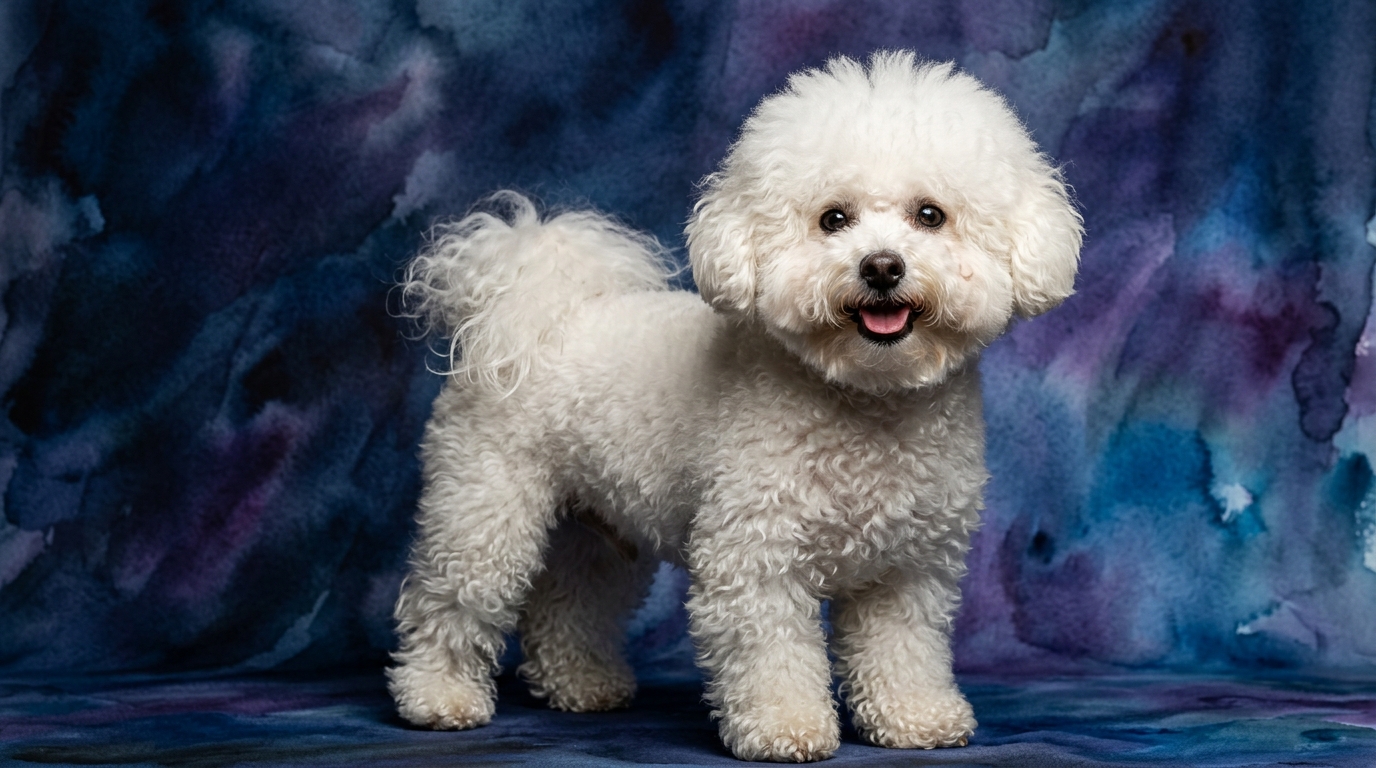
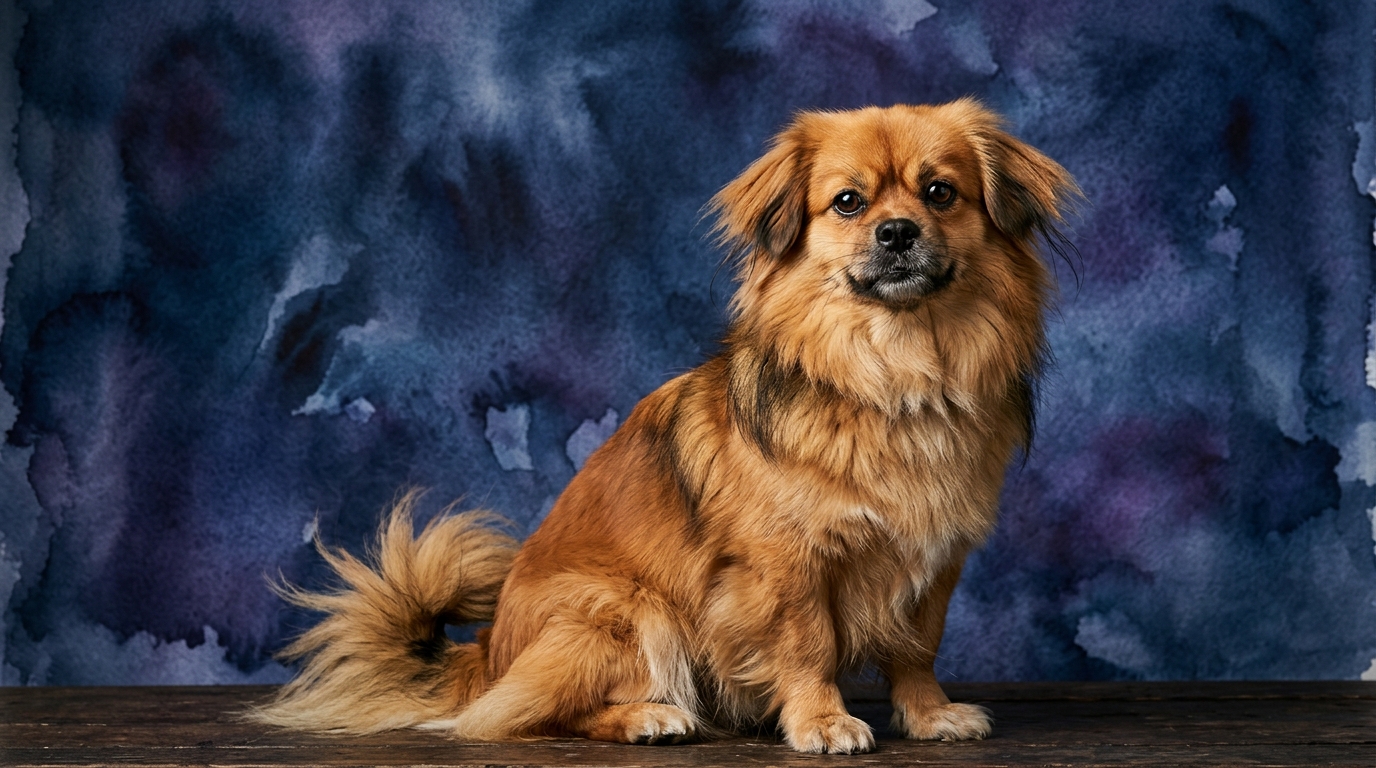
Side-by-Side Cognitive Profiles: Bichon Frisé vs. Tibetan Spaniel
The Cosmic Pet Pet IQ Lab employs a five-dimensional framework to assess canine intelligence: Problem Solving, Training Speed, Social Intelligence, Instinctive Drive, and Memory. This detailed approach moves beyond simple obedience, offering a holistic view of a dog's cognitive capabilities and how they interact with their world.
The Bichon Frisé, ranked #45 by Coren for working and obedience intelligence, presents a profile marked by exceptional social acumen. Their Problem Solving and Training Speed both register at 3/5, indicating an average capacity for learning new tasks and navigating novel challenges. Where the Bichon truly distinguishes itself is in Social Intelligence, scoring a remarkable 5/5, reflecting their profound ability to understand and respond to human cues and social dynamics. Their Instinctive Drive is lower at 2/5, suggesting less inclination for independent pursuits like hunting or guarding, while their Memory stands at a solid 3/5.
The Tibetan Spaniel, though not Coren-ranked, showcases a more balanced cognitive distribution across the board. They match the Bichon Frisé with a 3/5 in both Problem Solving and Training Speed, indicating a similar learning aptitude. Their Social Intelligence is rated at 3/5, which points to a discerning rather than overtly effusive social nature. Importantly, their Instinctive Drive is also 3/5, suggesting a moderate level of intrinsic motivation for exploration, observation, and perhaps a degree of independence. Their Memory, like the Bichon's, is assessed at 3/5, allowing them to retain learned information effectively.
Where the Bichon Frisé Shines Cognitively
The Bichon Frisé's standout cognitive strength lies in their extraordinary Social Intelligence, scoring a perfect 5/5. This dimension reflects a deep capacity to read human emotions, understand subtle social signals, and adapt their behavior to fit various social contexts. A Bichon is inherently wired to connect with people, making them exceptionally responsive to their family's moods and capable of forming very strong, empathetic bonds. This high social attunement often translates into a dog that feels intuitively integrated into the family unit, anticipating needs and offering comfort.
Another area where the Bichon's profile offers a distinct advantage, depending on an owner's lifestyle, is their lower Instinctive Drive (2/5). This lower drive means they are generally less prone to independent behaviors like chasing small animals, extensive digging, or wandering off to explore. Their focus is predominantly on human interaction and companionship, making them typically easier to manage in varied home environments and less inclined to seek out autonomous adventures. This contributes to their reputation as adaptable and content indoor companions, preferring the company of their people over solitary pursuits.
Where the Tibetan Spaniel Exhibits Distinct Cognitive Strengths
The Tibetan Spaniel's cognitive profile showcases a more evenly distributed set of capabilities, with a particular strength in their balanced Instinctive Drive (3/5). Unlike the Bichon's lower drive, the Tibetan Spaniel possesses a moderate innate curiosity and a greater inclination for independent observation and activity. This isn't about being disengaged, but rather a capacity for self-amusement and a watchful demeanor that aligns with their historical role as companion and 'little lion' watchdogs in monasteries. They are more likely to survey their surroundings with interest and engage with their environment on their own terms, offering a different kind of companionship.
While their Problem Solving and Training Speed are similar to the Bichon's at 3/5, the Tibetan Spaniel's Social Intelligence at 3/5 suggests a more discerning and less universally effusive social approach. This means they are capable of forming strong bonds but might not seek constant, intense interaction in the same way a Bichon does. This discerning nature, combined with their moderate Instinctive Drive, allows them to be observant and alert without being overly demanding. They appreciate companionship but also value their own space and quiet contemplation, making them adept at adapting to various household rhythms without constant need for engagement.
Training Dynamics: Which Breed Learns More Readily?
When comparing the training dynamics of the Bichon Frisé and the Tibetan Spaniel, their identical Training Speed scores of 3/5 are a crucial starting point. This indicates that both breeds possess an average capacity to learn and retain new commands and routines. Neither breed is inherently quicker or slower to grasp new concepts, meaning consistent, clear, and positive reinforcement methods will be effective for both.
However, the practical experience of training can feel quite different due to their divergent Social Intelligence and Instinctive Drive scores. The Bichon Frisé's exceptional Social Intelligence (5/5) means they are profoundly motivated by human attention, praise, and interaction. They thrive on being engaged with their owner and often view training as a fun, bonding activity. This eagerness to please and strong desire for social connection can make them appear to learn more readily, as they are highly attuned to their owner's cues and actively seek to cooperate to earn approval.
Conversely, the Tibetan Spaniel's Social Intelligence (3/5) and Instinctive Drive (3/5) suggest a more independent and perhaps discerning approach to training. While perfectly capable of learning, they might not possess the same inherent drive to constantly seek human validation during training sessions. They may respond better to methods that respect their independent spirit, focusing on clear communication and rewarding them for their cooperation rather than relying solely on effusive praise. They might require a bit more patience and creativity from the trainer to maintain engagement, as their motivations could be less purely social and more about understanding the task itself or satisfying their own curiosity. Both are trainable, but the Bichon's social wiring often makes the process feel more intuitive and immediately rewarding for the owner.
Matching Lifestyles: Active vs. Relaxed Owners
For owners who envision a companion deeply embedded in every aspect of their daily life, the Bichon Frisé is an excellent match. Their unparalleled Social Intelligence (5/5) means they thrive on constant human interaction and are happiest when they are the center of family activity. They are not demanding in terms of extensive outdoor exercise, their lower Instinctive Drive (2/5) contributing to their contentment with indoor play and moderate walks. This makes them ideal for relaxed owners who prioritize snuggles on the couch, interactive games, and a dog that is always eager to participate in indoor routines. They require significant emotional engagement and will flourish in homes where they receive ample attention and companionship.
The Tibetan Spaniel, with its more balanced cognitive profile (Social Intelligence 3/5, Instinctive Drive 3/5), suits owners who appreciate a dog with a blend of affection and self-sufficiency. While they certainly enjoy companionship, they also possess a greater capacity for independent engagement and observation. Owners who enjoy moderate walks, appreciate a dog that can entertain itself for periods, and value a watchful, discerning presence will find a Tibetan Spaniel a fulfilling companion. They are adaptable to various living situations but might prefer a home environment that allows for quiet contemplation and a bit of independent exploration, rather than constant, intense social demands.
The Verdict
For owners who cherish a highly interactive, socially attuned companion that thrives on being an integral part of family life and seeks constant engagement, the Bichon Frisé is an exceptional choice. Their cognitive strengths align perfectly with a desire for deep social bonding and a relatively low-maintenance outdoor routine.
For individuals seeking a companion with a nuanced blend of independence and affection, one that values both human connection and a degree of self-sufficiency, the Tibetan Spaniel presents a compelling option. Their cognitive makeup suits owners who appreciate a watchful, discerning friend capable of moderate exploration and less intense social demands.
🧠 Find Your Pet's IQ Score
Our Pet IQ Lab assessment covers 25+ tests across 5 cognitive dimensions — personalized to your breed.
Take the Full IQ Test →Frequently Asked Questions
Do Bichon Frisés learn tricks easily?
With a Training Speed of 3/5, Bichons learn at an average pace. However, their exceptional Social Intelligence (5/5) means they are highly motivated by human praise and interaction, which often makes them appear to learn readily and enthusiastically, especially when positive reinforcement is used.
Are Tibetan Spaniels good watchdogs?
Yes, Tibetan Spaniels possess an Instinctive Drive of 3/5, coupled with a more discerning Social Intelligence (3/5), which contributes to their historical role as watchdogs. They are typically alert to their surroundings and will often signal the presence of strangers or unusual events, though they are not overly aggressive.
Which breed requires more mental stimulation?
Both breeds have a Problem Solving score of 3/5 and Memory of 3/5, suggesting similar needs for moderate mental engagement. The Bichon's high Social Intelligence means their stimulation often comes from interactive play with owners, while the Tibetan Spaniel's slightly higher Instinctive Drive might lead them to enjoy more independent exploration and observation as part of their mental enrichment.