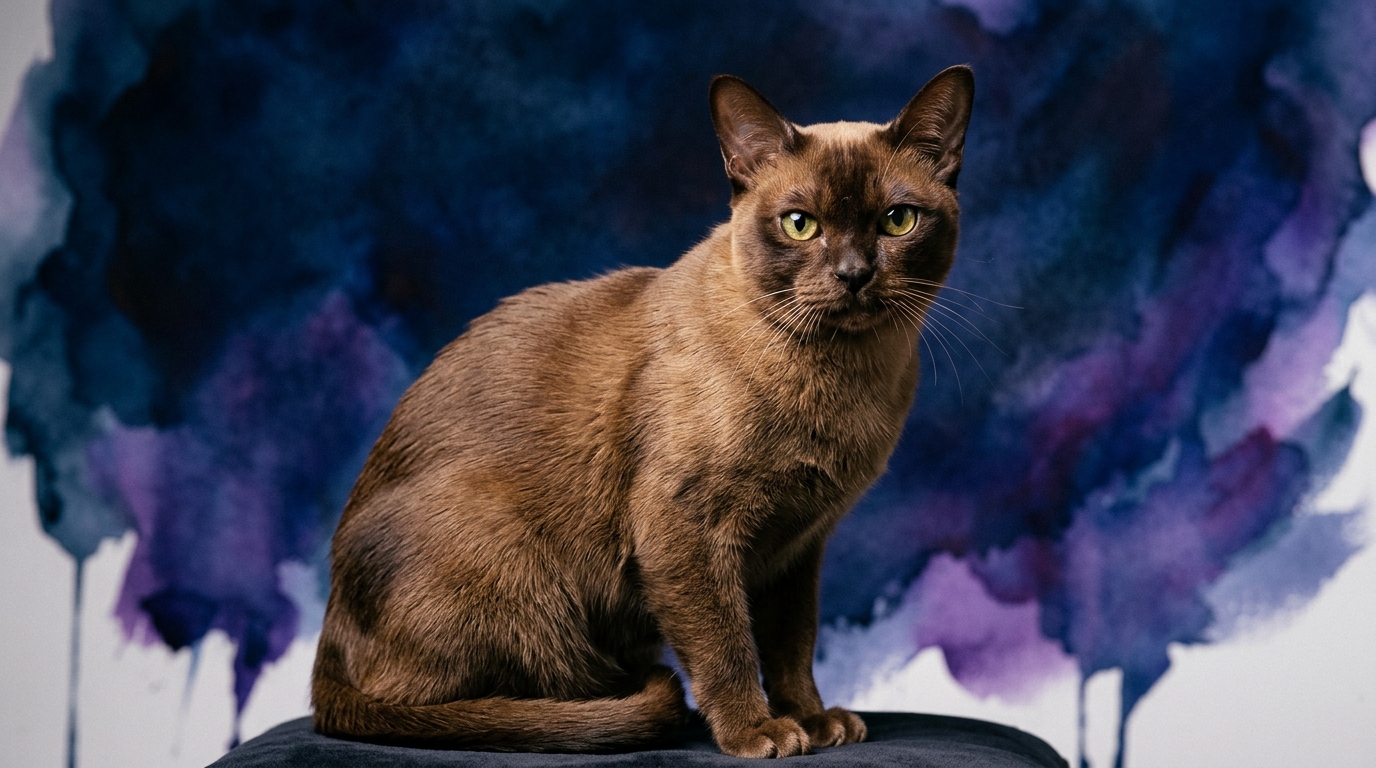
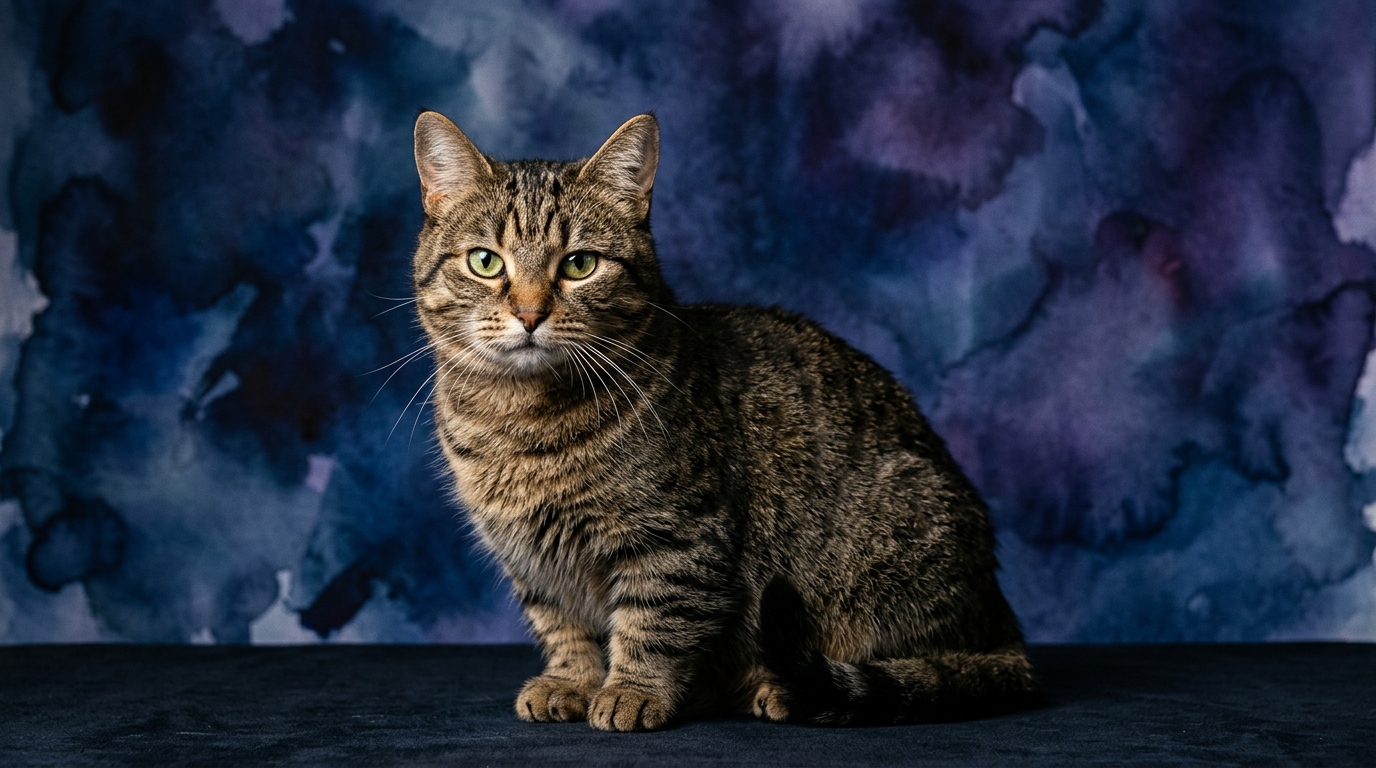
The Cognitive Landscape: Burmese vs. Munchkin IQ Profile
At The Cosmic Pet Pet IQ Lab, we analyze feline intelligence across five key dimensions, providing a granular view of each breed's cognitive aptitudes. For the Burmese, a breed celebrated for its engaging personality, our data reveals a robust intellectual capacity. They score an impressive 4/5 in Problem Solving, indicating a strong ability to navigate novel situations and devise solutions. Their Training Speed is exceptional at 5/5, suggesting a quick grasp of commands and routines. Social Intelligence also stands at a remarkable 5/5, highlighting their profound understanding of human cues and complex social dynamics. Instinctive Drive, which encompasses natural hunting and territorial behaviors, is a moderate 3/5, while Memory is strong at 4/5, enabling them to retain experiences and learned behaviors effectively.
In contrast, the Munchkin, often noted for its charming and playful demeanor, presents a more consistent, albeit slightly less elevated, cognitive profile. Across the board, the Munchkin scores 3/5 in Problem Solving, Training Speed, Social Intelligence, and Memory. This indicates a steady and competent level of cognitive function in these areas, without the peaks observed in the Burmese. Their Instinctive Drive matches the Burmese at 3/5. These scores suggest that while Munchkins are certainly capable and engaging companions, their approach to learning, problem-solving, and social interaction may be more straightforward and require a different level of engagement compared to their Burmese counterparts.
Where the Burmese Excels Cognitively
The Burmese cat demonstrates a clear cognitive advantage in several key areas, making them particularly engaging companions for those who appreciate a highly interactive and responsive feline. Their 4/5 Problem Solving score means they are adept at figuring things out, whether it's opening a child-proof cabinet, manipulating puzzle toys to extract treats, or even devising strategies to access forbidden areas. This isn't just about mischief; it reflects a genuine curiosity and persistence in exploring their environment and overcoming obstacles.
Perhaps their most striking cognitive strength lies in their Training Speed, rated at an outstanding 5/5. This indicates an almost unparalleled ability to quickly associate commands with actions, learn complex tricks, and adapt to new routines with minimal repetition. Owners often report Burmese cats picking up leash training, 'sit,' 'stay,' or even fetching games with remarkable rapidity. This fast learning is often coupled with their 5/5 Social Intelligence, which allows them to keenly observe and interpret human emotions and intentions. A Burmese might comfort a distressed owner, respond to subtle vocal inflections, or seem to anticipate their human's next move, demonstrating a deep empathetic connection and understanding of social cues. Their 4/5 Memory further reinforces these strengths, enabling them to recall past interactions, learned behaviors, and even specific people or places over long periods, contributing to their reputation as highly interactive and emotionally perceptive companions.
Cognitive Strengths of the Munchkin
While the Munchkin's cognitive scores are generally a consistent 3/5 across most dimensions, this profile translates into a unique set of strengths that can be highly appealing to certain owners. Their 3/5 in Problem Solving suggests a practical, rather than overly complex, approach to their environment. This means they are less likely to spend hours plotting an escape from a secure enclosure or meticulously dismantling household items purely out of intellectual challenge. For owners who prefer a less 'scheming' feline, this moderate problem-solving ability can be a definite advantage, leading to fewer unexpected household adventures or intricate puzzles to outwit their clever companion.
Similarly, the Munchkin's 3/5 Social Intelligence, while not as pronounced as the Burmese, indicates a solid capacity for companionship without the intense demand for constant, deep emotional engagement. They are affectionate and enjoy interaction, but may be more content with quiet presence or simpler forms of play, making them excellent companions for those seeking a loving pet that isn't overly dependent on complex social cues or constant interactive games. Their consistent 3/5 in Training Speed and Memory means they are perfectly capable of learning basic commands and routines; it simply requires a bit more patience and consistent positive reinforcement from their human. This steady, reliable cognitive pattern makes the Munchkin a predictable and charming companion, free from the more demanding intellectual challenges that higher-scoring breeds might present, which can be a 'win' for owners desiring a more straightforward and relaxed companionship.
Ease of Training: Burmese vs. Munchkin
When it comes to training, the differences between the Burmese and the Munchkin are quite pronounced, stemming directly from their respective IQ profiles. The Burmese, with its exceptional 5/5 Training Speed and 5/5 Social Intelligence, is often described as a dream to train. Their rapid ability to form associations means they grasp new commands, tricks, and routines with remarkable efficiency. For instance, a Burmese might learn to fetch a specific toy after just a few repetitions, or quickly understand complex sequences of actions, like navigating an agility course. Their high social intelligence means they are highly attuned to their owner's feedback, eager to please, and responsive to verbal cues and body language, making the training process a collaborative and rewarding experience. This breed often thrives on mental stimulation and enjoys the challenge of learning, which further fuels their training enthusiasm.
The Munchkin, in contrast, with its 3/5 Training Speed, requires a more patient and persistent approach. While certainly trainable, they may take longer to connect actions with rewards or commands, necessitating more repetitions and consistent reinforcement. For example, teaching a Munchkin to 'stay' might involve shorter sessions, more frequent treats, and a slower progression of difficulty compared to a Burmese. Their 3/5 Social Intelligence means they are affectionate and responsive, but perhaps less intensely focused on interpreting every nuance of human instruction, preferring a clearer, more direct training style. Owners should prepare for a steady, incremental training journey, focusing on positive reinforcement and short, engaging sessions to maintain their interest. The Munchkin's capacity for learning is present, but their cognitive pace is simply more moderate, making patience the key to success.
Ideal Owners: Active Engagement vs. Relaxed Companionship
The distinct cognitive profiles of the Burmese and Munchkin naturally lend themselves to different owner lifestyles and expectations. The Burmese, with its high scores in Problem Solving (4/5), Training Speed (5/5), Social Intelligence (5/5), and Memory (4/5), is an ideal match for active owners who relish deep engagement with their pets. These cats thrive on mental stimulation, enjoying interactive puzzle toys, learning new tricks, and participating in games that challenge their intellect. Owners who enjoy teaching their cats, engaging in extended play sessions, and having a pet that is deeply integrated into the family's social dynamics will find the Burmese to be an incredibly rewarding companion. They often seek out interaction and can become bored or mischievous if not provided with sufficient mental and physical outlets, making them perfect for a home where their cognitive needs are met with enthusiasm and consistency.
Conversely, the Munchkin's consistent 3/5 scores across most cognitive dimensions suggest they are better suited for owners seeking a more relaxed and straightforward companion. While they are affectionate and playful, their moderate problem-solving and social intelligence mean they may not demand the same intensity of intellectual engagement as a Burmese. Owners who prefer a charming and loving pet that is content with simpler routines, comfortable with less complex interactive play, and perhaps less prone to challenging household boundaries will find the Munchkin a delightful fit. They are excellent companions for quieter households, individuals who enjoy a relaxed pace, or those who appreciate a cat that is less likely to outsmart intricate enclosures or require constant cognitive stimulation. The Munchkin offers a steady, affectionate presence without the higher demands for mental gymnastics that a Burmese might present, making them ideal for owners who value consistent companionship over intense intellectual interaction.
The Verdict
Choose the Burmese if you are an active owner seeking a highly interactive, quick-to-learn feline companion that thrives on mental challenges and deep social engagement.
Opt for the Munchkin if you prefer a charming, affectionate cat with a more relaxed cognitive profile, content with simpler routines and less demanding interactive play.
🧠 Find Your Pet's IQ Score
Our Pet IQ Lab assessment covers 25+ tests across 5 cognitive dimensions — personalized to your breed.
Take the Full IQ Test →Frequently Asked Questions
Are Burmese cats difficult to keep entertained due to their intelligence?
Burmese cats do require regular mental stimulation to prevent boredom, which can manifest as mischief. Providing puzzle toys, consistent interactive play, and opportunities for learning new tricks will keep their sharp minds engaged and satisfied.
Do Munchkin cats understand human emotions?
Yes, Munchkin cats, with a 3/5 Social Intelligence score, are capable of understanding basic human emotions and cues. They are affectionate and will bond closely with their owners, responding to warmth and consistent interaction, though perhaps not with the same depth of interpretation as a Burmese.
Can Munchkin cats be taught tricks despite their average training speed?
Absolutely! Munchkin cats can certainly be taught a variety of tricks and commands. Their 3/5 Training Speed means it may take more patience and repetition compared to a Burmese, but with consistent positive reinforcement and engaging sessions, they are very capable learners.