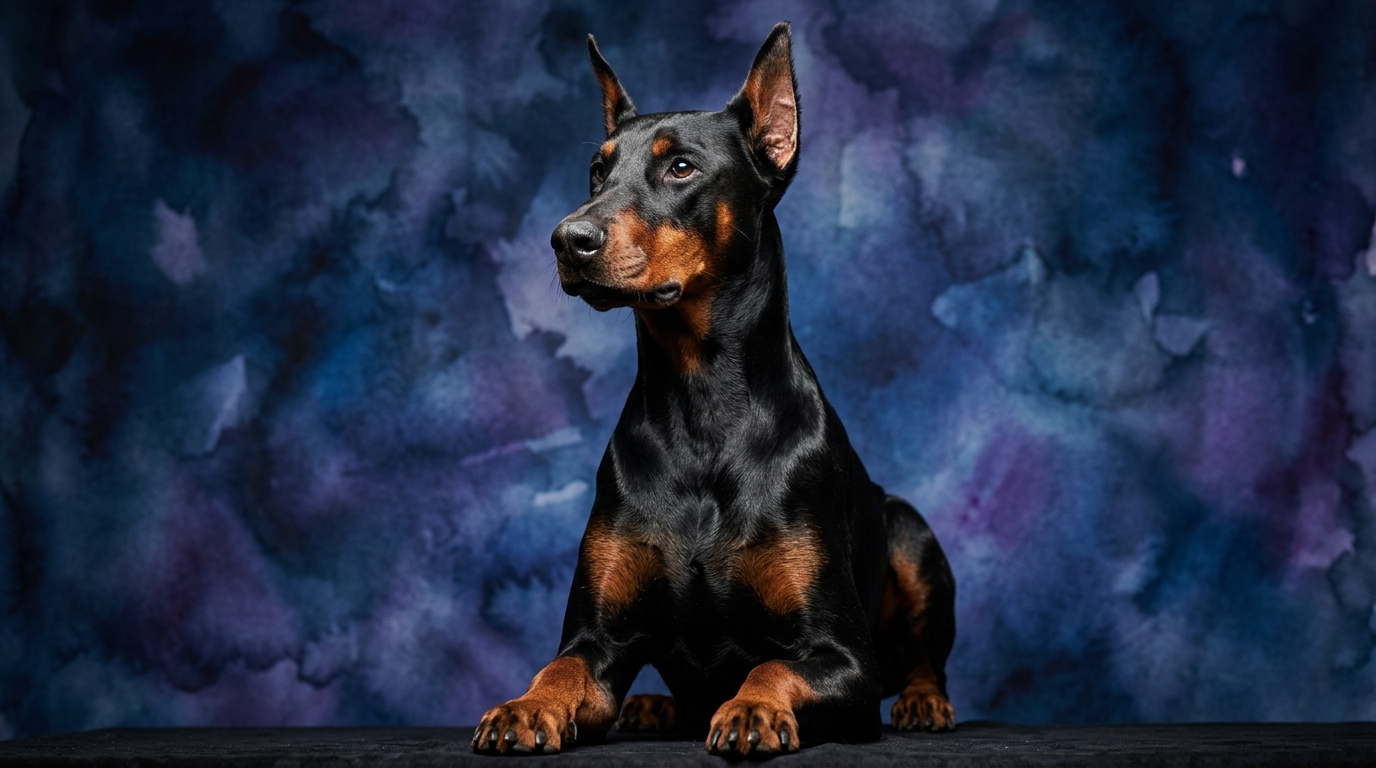
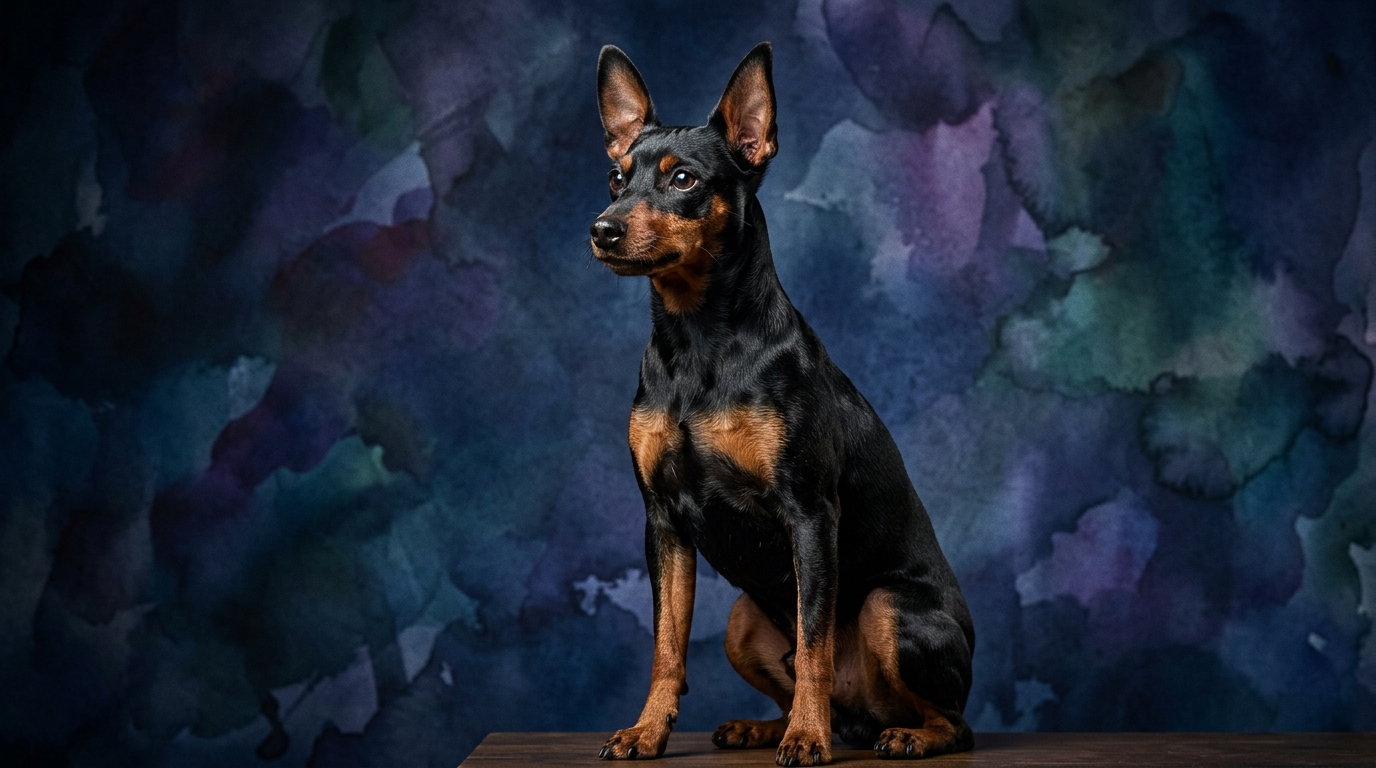
Side-by-Side IQ Profile: Doberman Pinscher vs. Miniature Pinscher
The Cosmic Pet Pet IQ Lab provides a unique lens through which to examine breed intelligence, assessing five key dimensions. The Doberman Pinscher, a distinguished member of the Working group and Coren-ranked #5, demonstrates a remarkable cognitive prowess. Its Problem Solving ability is rated at a maximum 5/5, indicating a strong capacity for independent thought and navigating complex situations. Training Speed also scores 5/5, reflecting an exceptional eagerness and aptitude for learning new commands and routines with minimal repetition. Social Intelligence stands at 4/5, suggesting a keen awareness of human cues and social dynamics, while Instinctive Drive, crucial for its traditional roles, is a commanding 5/5. Rounding out its profile, Memory is also rated 5/5, highlighting its ability to retain learned behaviors and experiences over extended periods.
In contrast, the Miniature Pinscher, a lively Toy breed not featured on Coren's rankings, presents a different cognitive blueprint. Its Problem Solving ability is rated 3/5, indicating a capacity to figure out immediate challenges, though perhaps with less abstract reasoning than its larger cousin. Training Speed also scores 3/5, meaning they can learn, but may require more consistent effort and patience from their handlers. Social Intelligence is rated 3/5, showing a general awareness of social interactions but potentially less nuanced interpretation of complex human emotions or group dynamics. Its Instinctive Drive, while present, is rated 3/5, often directed towards chasing small objects or guarding its immediate territory. Finally, Memory for the Miniature Pinscher is also 3/5, suggesting a moderate ability to recall past events and training, but perhaps not with the same depth or longevity as the Doberman.
Where the Doberman Pinscher Wins Cognitively
The Doberman Pinscher’s cognitive strengths are evident across the board, particularly in areas requiring advanced processing and application. Its 5/5 Problem Solving capacity means it can quickly assess a novel situation, like figuring out how to open a complex gate or retrieve a hidden object, often with minimal human intervention. This isn't just about brute force; it involves a sophisticated understanding of cause and effect. The perfect 5/5 in Training Speed translates into an ability to absorb multi-step commands rapidly, making them exceptionally adept at advanced obedience, protection work, or intricate canine sports. They don't just learn; they internalize and apply. Their 5/5 Memory further solidifies this, allowing them to recall vast repertoires of commands and experiences, even after long breaks, which is invaluable for working roles requiring consistent performance over time.
Furthermore, the Doberman's potent 5/5 Instinctive Drive, coupled with its 4/5 Social Intelligence, allows for a powerful synergy in tasks requiring both independent action and responsiveness to human direction. This breed can be directed to perform complex protection routines or search and rescue tasks, leveraging their drive to achieve a goal while remaining attuned to their handler's subtle cues. They exhibit a profound capacity for understanding and anticipating human intentions, making them highly effective partners in structured activities. This combination of drive, learning speed, and memory creates a canine capable of sophisticated operational tasks, far beyond basic pet companionship.
Where the Miniature Pinscher's Cognitive Profile Shines
While the Miniature Pinscher’s IQ scores may be lower than the Doberman's, their cognitive profile is uniquely suited for specific contexts, particularly those demanding keen observation and tenacious pursuit within a smaller package. Their 3/5 Problem Solving, for instance, often manifests as clever resourcefulness in navigating a home environment, finding dropped crumbs, or figuring out how to get attention. It's a practical, immediate form of problem-solving, focused on their immediate wants and needs, rather than abstract challenges. Their 3/5 Instinctive Drive, though less intense than a Doberman's, is highly focused on prey drive, making them exceptionally alert to small movements and sounds. This translates to an uncanny ability to detect even the slightest disturbance, a trait that made them effective ratters in their historical role.
The Miniature Pinscher’s 3/5 Social Intelligence, combined with their strong personality, enables them to form deep, albeit sometimes demanding, bonds with their immediate family. They are adept at discerning the moods and routines of their primary caregivers, often using this understanding to manipulate for treats or playtime. Their memory (3/5) allows them to consistently recall household rules and routines, particularly those that benefit them directly. While not excelling in complex multi-step tasks, their cognitive makeup is perfectly adapted for a vigilant, lively companion role, where alertness and a spirited personality are paramount, and where their smaller size allows them to navigate and exploit opportunities in ways a larger dog cannot.
Which is Easier to Train and Why
Based on their IQ profiles, the Doberman Pinscher is unequivocally easier to train, primarily due to its 5/5 Training Speed and 5/5 Memory. These dogs possess an innate eagerness to learn and please, absorbing new commands with remarkable efficiency. Their high Social Intelligence (4/5) means they are highly attuned to their handler's intentions and corrections, making communication during training exceptionally smooth. Real behavioral differences include the Doberman's strong desire for structure and purpose; they thrive on having a job and respond positively to consistent, clear direction. Their attention span for training is typically robust, allowing for longer, more productive sessions without significant mental fatigue.
The Miniature Pinscher, with its 3/5 Training Speed and 3/5 Memory, requires a different approach and more patience. While capable of learning, they can be more easily distracted and may display a stubborn streak rooted in their independent nature and instinctive drives (3/5). Their training often needs to be broken into shorter, more engaging sessions, relying heavily on positive reinforcement and high-value rewards to maintain focus. Unlike the Doberman, who often learns for the sake of working with their handler, the Miniature Pinscher needs a clearer incentive and may test boundaries more frequently. Their training success hinges on consistency and making it a fun, rewarding experience to counteract their inclination towards self-directed activities.
Which Suits Active Owners vs. Relaxed Owners
The Doberman Pinscher is an ideal match for active owners who relish engaging with their dog in mentally and physically demanding ways. Their 5/5 Instinctive Drive and 5/5 Problem Solving mean they require consistent mental stimulation through training, puzzle toys, and structured activities like agility, obedience trials, or protection sports. A Doberman without sufficient engagement can become bored and potentially destructive, channeling their immense cognitive and physical energy into less desirable behaviors. Owners who are committed to providing daily exercise, ongoing training, and a clear leadership structure will find the Doberman to be a highly rewarding and devoted companion, thriving on the partnership and purpose they are given.
Conversely, while energetic, the Miniature Pinscher's cognitive and physical needs are generally more manageable for owners seeking a lively but less intensely demanding companion. Their 3/5 Instinctive Drive means they enjoy bursts of activity like chasing toys or short walks, but don't typically require the same level of structured 'work' as a Doberman. They can adapt well to apartment living provided they receive regular, moderate exercise and mental enrichment through interactive play and occasional training sessions. Relaxed owners who appreciate a dog with a spirited personality, a watchful eye, and a desire to be the center of attention, without the need for advanced canine sports or complex tasks, will find the Miniature Pinscher a suitable and entertaining addition to their household. They excel as vigilant companions who enjoy being part of daily routines rather than needing to lead them.
The Verdict
Choose the Doberman Pinscher if you are an experienced owner seeking a highly trainable, purpose-driven canine partner for advanced obedience, protection, or demanding canine sports, and are prepared to provide extensive mental and physical engagement. Their exceptional cognitive abilities thrive on challenge and consistent interaction.
Opt for the Miniature Pinscher if you desire a spirited, independent, and watchful companion for a moderately active household, appreciating a dog that is clever and tenacious in its own right, without the intensive training demands of a working breed. Their unique cognitive strengths shine in a role as an alert and affectionate family member.
🧠 Find Your Pet's IQ Score
Our Pet IQ Lab assessment covers 25+ tests across 5 cognitive dimensions — personalized to your breed.
Take the Full IQ Test →Frequently Asked Questions
Do Doberman Pinschers get bored easily?
Yes, Doberman Pinschers, with their 5/5 Problem Solving and 5/5 Instinctive Drive, require significant mental and physical stimulation to prevent boredom. Without adequate engagement, they may develop undesirable behaviors as they seek to entertain themselves.
Are Miniature Pinschers good for first-time dog owners?
Miniature Pinschers can be a handful for first-time owners due to their independent nature and 3/5 Training Speed. While affectionate, they require consistent, positive reinforcement training and clear boundaries to manage their spirited personality effectively.
Which breed is better for a family with young children?
The Doberman Pinscher, with its higher Social Intelligence (4/5) and trainability, can be excellent with children when properly socialized and trained. The Miniature Pinscher, while loyal, may be less tolerant of rough play due to its smaller size and independent nature, requiring careful supervision around very young children.