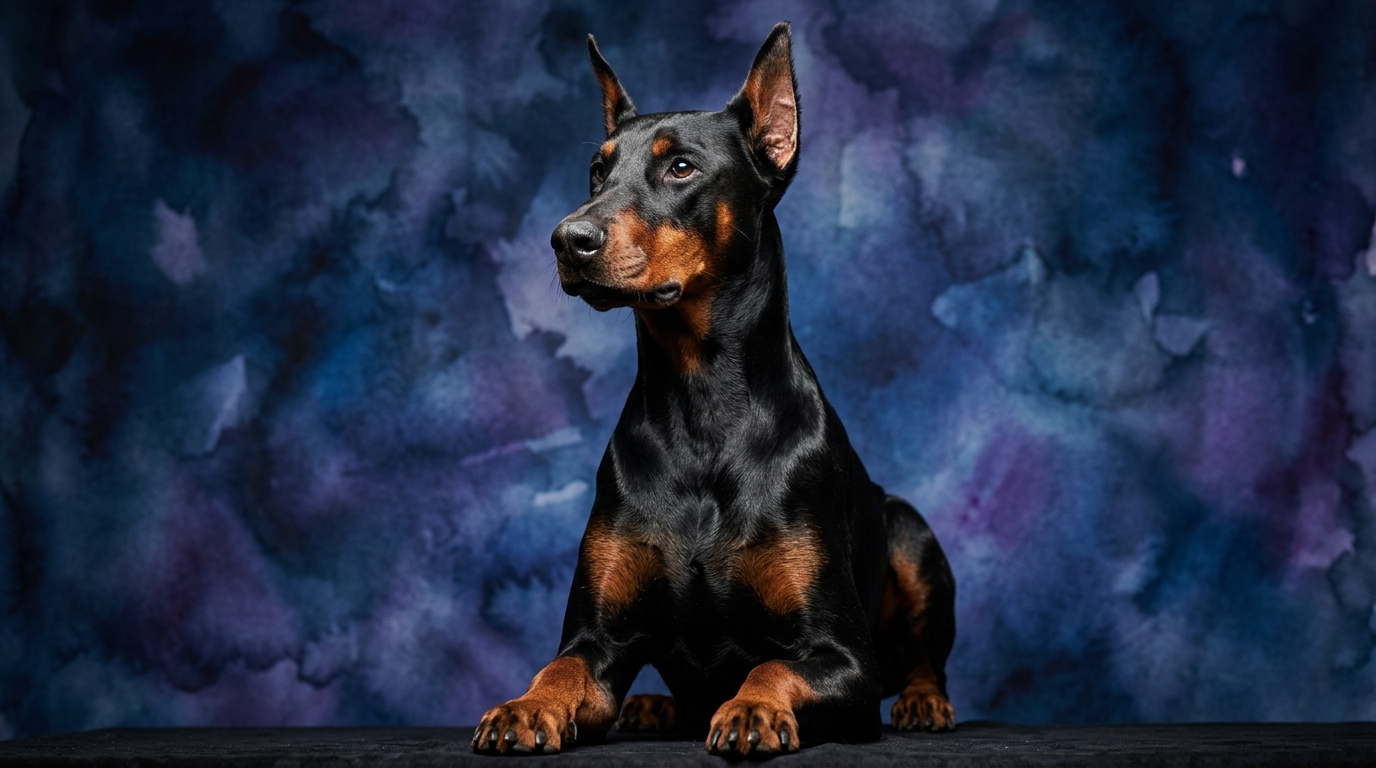
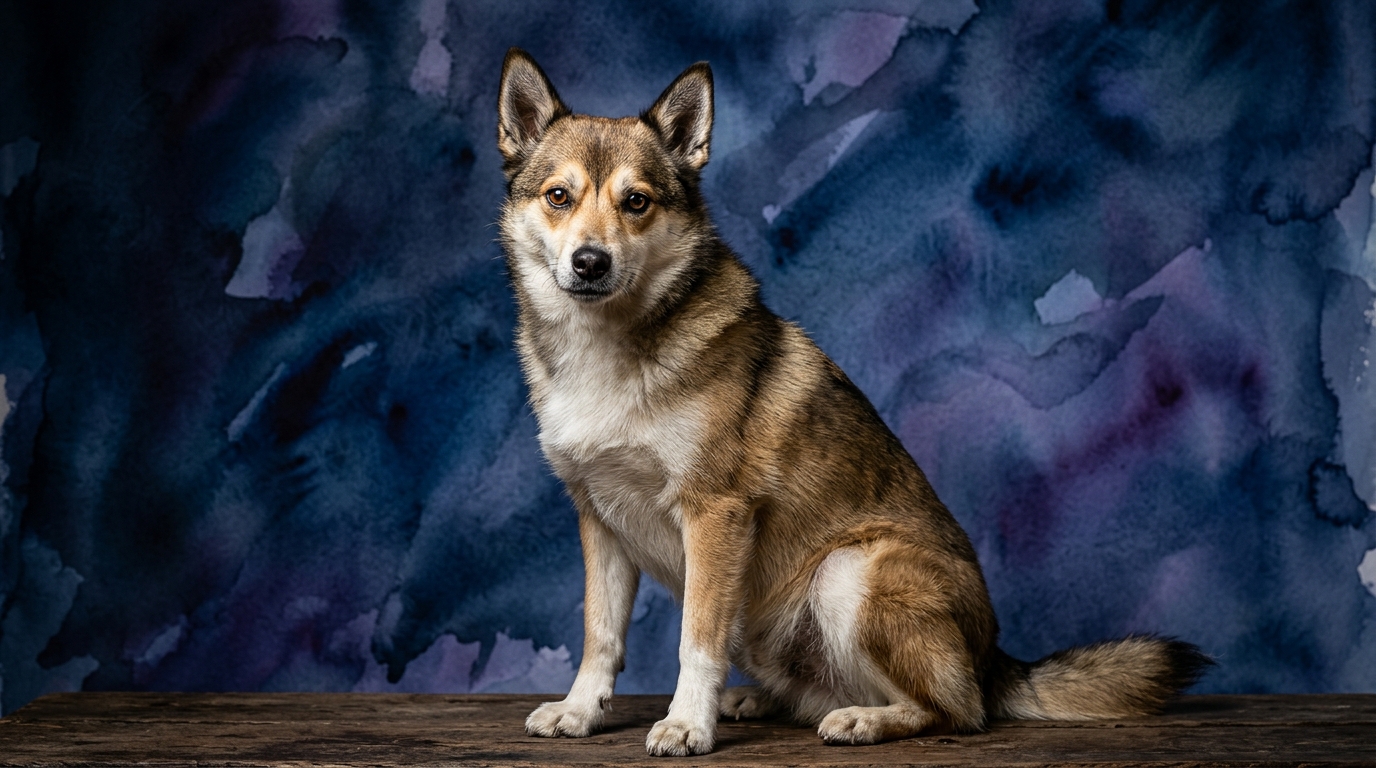
Side-by-Side Cognitive Profile: The Cosmic Pet Pet IQ Lab
The Cosmic Pet Pet IQ Lab employs five key dimensions to assess canine intelligence, providing a nuanced understanding beyond simple obedience. These metrics illuminate a breed's innate aptitudes and predispositions, guiding prospective owners toward a companion that aligns with their lifestyle and expectations.
For the Doberman Pinscher, a breed from the Working group, the scores paint a picture of exceptional cognitive prowess. They achieve a perfect 5/5 in Problem Solving, Training Speed, Instinctive Drive, and Memory, with a robust 4/5 in Social Intelligence. This profile suggests a dog engineered for complex tasks, rapid learning, and purposeful engagement, capable of intricate thought and deep recall.
In contrast, the Norwegian Lundehund, a Non-Sporting breed, exhibits a more specialized cognitive architecture. Across all five dimensions—Problem Solving, Training Speed, Social Intelligence, Instinctive Drive, and Memory—they consistently score a 3/5. This does not imply a lack of intelligence, but rather a distinct pattern of cognitive strengths tailored to their unique evolutionary history and ancestral role, valuing independence and specialized physical aptitude over broad, human-directed tasks.
Where the Doberman Pinscher Shines Cognitively
The Doberman Pinscher's cognitive strengths are evident across nearly all metrics, making them a standout in the realm of canine intellect. Their 5/5 Problem Solving capability means they excel at understanding multi-step commands, navigating complex environments, and even deciphering advanced puzzle toys. This isn't just about repetition; it's about a dog that can strategize, adapt, and apply learned concepts to novel situations, demonstrating a profound capacity for abstract thought.
Complementing their problem-solving, the Doberman's 5/5 Training Speed and 5/5 Memory translate into remarkable learning efficiency. They acquire new commands with minimal repetitions and retain that information over extended periods, making them exceptionally reliable for intricate routines, advanced obedience, or specialized working roles. Their ability to remember complex sequences and cues means they are always ready to engage and perform.
Furthermore, their 5/5 Instinctive Drive is a powerful asset. This drive isn't merely about chasing; it's a deep-seated desire for purpose and engagement, often channeled into protection, agility, or service work. When provided with a 'job,' Dobermans exhibit unwavering focus and dedication, driven by an innate eagerness to fulfill their perceived role, making them exceptionally motivated partners in any endeavor.
Unique Cognitive Strengths of the Norwegian Lundehund
While the Norwegian Lundehund's scores of 3/5 across the board might seem modest compared to the Doberman, they represent a highly specialized and effective cognitive design. Their 3/5 Problem Solving isn't about abstract reasoning for human tasks, but rather an exceptional aptitude for their ancestral role: navigating treacherous cliff faces and extracting puffins from narrow crevices. This requires unique spatial awareness, physical dexterity, and an independent, persistent approach to obstacles that would stump many other breeds.
Their 3/5 Instinctive Drive is similarly specialized, manifesting as a strong self-reliance and an insatiable curiosity for exploration. Lundehunds are driven by an innate desire to investigate their surroundings, using their unique flexibility to climb, contort, and explore in ways few other dogs can. This drive, while not always directed by human command, is a cognitive advantage in scenarios demanding autonomous decision-making and survival in challenging environments.
The Lundehund's 3/5 Social Intelligence, while less broadly adaptable than a Doberman's, is deeply tuned to their immediate family unit. They form incredibly strong, loyal bonds with their core human companions, displaying a nuanced understanding of their familiar pack's moods and routines. This reserved approach to outsiders is a hallmark of their independent nature, ensuring their social energy is focused on those they trust most deeply, fostering a unique and profound connection within their chosen circle.
Which is Easier to Train and Why?
When it comes to ease of training, the Doberman Pinscher clearly holds the advantage. Their 5/5 Training Speed and 5/5 Memory mean they grasp new commands rapidly, often with just a few repetitions, and retain that knowledge for life. Their high Problem Solving allows them to generalize learned behaviors, applying them effectively in new contexts. For example, a Doberman can master a complex agility course or a multi-step protection routine with remarkable efficiency, thriving on consistent direction and mental challenges.
Conversely, the Norwegian Lundehund, with a 3/5 in Training Speed and Memory, presents a more significant training challenge. They require substantial patience, more frequent repetitions, and highly engaging, reward-based methods to maintain focus. Their Problem Solving, geared towards independent, self-directed tasks, means they may question the utility of human-imposed commands or become easily distracted if the training isn't immediately rewarding. A Lundehund might take many more sessions to reliably learn a simple 'stay' command, especially if their independent exploratory drive is more compelling than the lesson at hand. Training must be approached as a collaborative puzzle, not a directive, to engage their unique cognitive style effectively.
Suitability for Active vs. Relaxed Owners
The Doberman Pinscher is unequivocally suited for active owners who can provide consistent, structured mental and physical engagement. Their 5/5 Problem Solving, Instinctive Drive, and Memory demand a 'job' to prevent boredom, which can manifest as destructive behaviors. Owners should be prepared for activities like advanced obedience, protection sports, agility, or working roles. A Doberman thrives when integrated into an active family that values a highly responsive, purpose-driven companion and can dedicate time to channeling their profound cognitive and physical energies.
The Norwegian Lundehund, while not requiring the same intense, human-directed structured activity as a Doberman, is not a breed for purely relaxed owners either. Their unique 3/5 Problem Solving and Instinctive Drive for exploration mean they need opportunities to investigate, climb, and use their specialized physical abilities in secure environments. They suit owners who appreciate an independent thinker and can provide safe outlets for their curiosity, perhaps involving long walks in varied terrain or puzzle-solving games that cater to their unique physical dexterity. They may not demand constant human interaction for tasks, but they require owners who understand and cater to their innate drive for self-directed investigation and independence.
The Verdict
Choose the Doberman Pinscher if you seek a highly trainable, purpose-driven companion eager for complex tasks and consistent mental engagement within a structured environment. Their exceptional cognitive abilities make them ideal for advanced training, working roles, or an active family that values a deeply bonded, responsive partner.
Opt for the Norwegian Lundehund if you appreciate a unique, independent thinker with specialized problem-solving skills, thriving on self-directed exploration and a strong bond with their immediate family. They are best suited for patient owners who can provide secure environments for their curiosity and value a companion with a distinctly original approach to life.
🧠 Find Your Pet's IQ Score
Our Pet IQ Lab assessment covers 25+ tests across 5 cognitive dimensions — personalized to your breed.
Take the Full IQ Test →Frequently Asked Questions
Can a Norwegian Lundehund be trained for complex tasks like a Doberman?
While Lundehunds can learn, their 3/5 training speed and problem-solving mean complex tasks will require significantly more patience, repetition, and creative motivation than for a Doberman. Their cognitive strengths lie in independent, specialized actions rather than broad, human-directed complexity.
Are Doberman Pinschers good family dogs despite their strong protective instincts?
Yes, Doberman Pinschers, with their 4/5 social intelligence, can be excellent family dogs when properly socialized and trained from a young age. Their protective instincts, combined with their loyalty and memory, mean they form strong bonds and are devoted guardians to their immediate family unit.
How does the 'Instinctive Drive' differ between these breeds?
The Doberman's 5/5 Instinctive Drive is typically channeled into human-directed work like guarding or obedience, seeking purpose from their handler. The Lundehund's 3/5 drive is more self-directed, focused on independent exploration and specialized behaviors like climbing, stemming from their historical hunting role in challenging terrains.