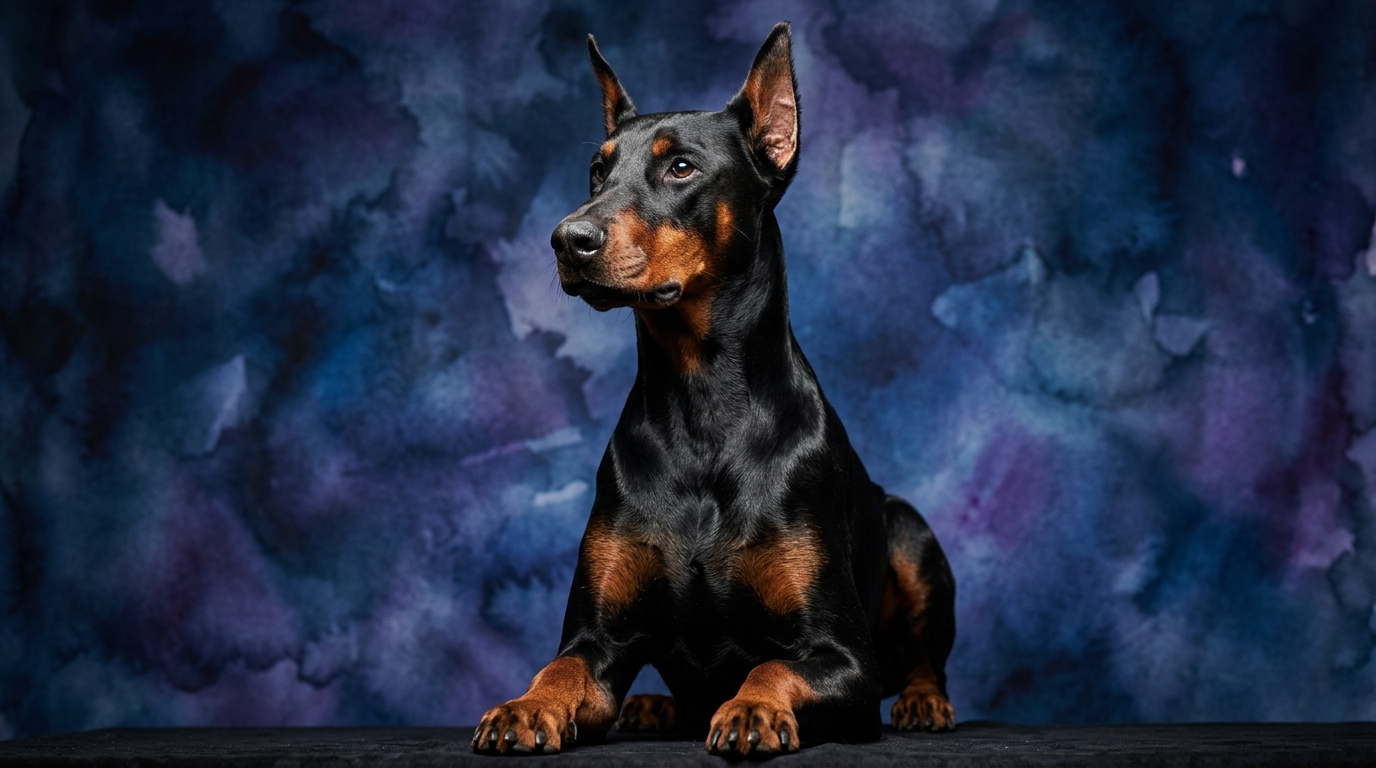
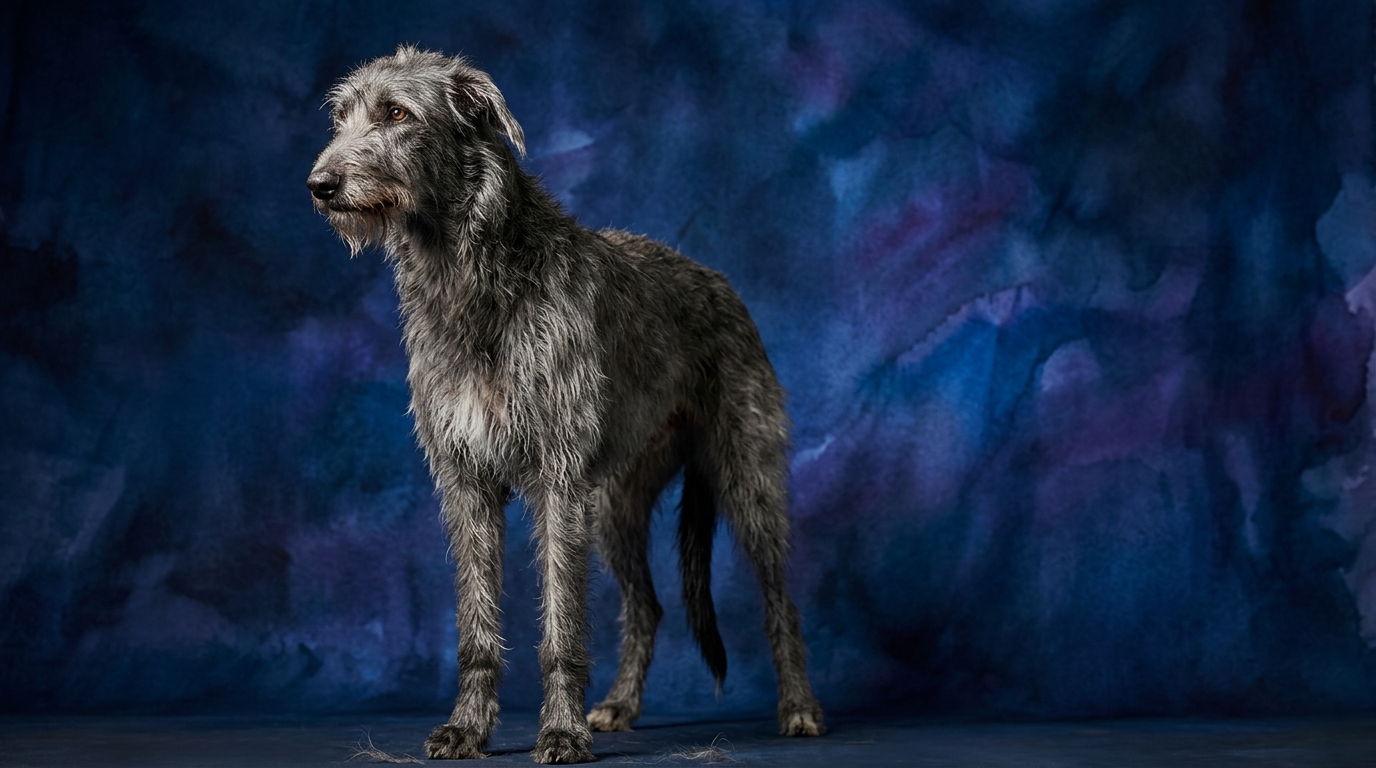
Side-by-Side Cognitive Profile: Doberman Pinscher vs. Scottish Deerhound
The Doberman Pinscher, a Working breed ranked #5 by Coren, presents a profile of sharpened cognitive capabilities, reflecting its demanding roles. Its Problem Solving is rated 5/5, indicating an exceptional capacity to analyze and resolve new challenges. Training Speed also stands at 5/5, showcasing its quick grasp of new commands and routines. Social Intelligence is strong at 4/5, demonstrating a nuanced understanding of human cues and family dynamics. An Instinctive Drive of 5/5 underscores its deep motivation for purposeful activity and protection, while its Memory, also 5/5, ensures long-term retention of learned behaviors and experiences.
In contrast, the Scottish Deerhound, a Hound breed not Coren-ranked, possesses a cognitive makeup tailored to its sighthound heritage. Its Problem Solving is rated 3/5, suggesting a moderate ability to adapt to novel situations, often preferring familiar patterns. Training Speed is 3/5, indicating a more deliberate learning pace and a need for patient, engaging instruction. Social Intelligence is 3/5, reflecting a gentle, somewhat independent nature focused on quiet companionship rather than intense social interpretation. Its Instinctive Drive, also 3/5, is highly specialized, primarily centered on the powerful impulse to chase. Finally, its Memory at 3/5 allows for effective recall of routines, though less complex information may require refreshers.
Where the Doberman Pinscher Excels Cognitively
The Doberman Pinscher's cognitive architecture clearly positions it as a master of practical application and rapid assimilation. Its 5/5 in Problem Solving means it excels at decoding environmental cues and formulating effective responses, such as quickly learning to open various types of gates or disarming complicated puzzle toys with minimal trial and error. This breed's 5/5 Training Speed and 5/5 Memory synergize, allowing for the swift and permanent embedding of complex command sequences, making them exceptional candidates for advanced obedience, protection work, or service roles where precision and reliability are paramount. Their 4/5 Social Intelligence ensures they are highly receptive to human direction, often anticipating intentions before a command is even fully articulated.
Where the Scottish Deerhound Finds Its Cognitive Niche
While the Scottish Deerhound's cognitive profile differs significantly from the Doberman, its strengths lie in specialized areas, particularly those rooted in its sighthound heritage. Its 3/5 Instinctive Drive, though lower overall, is intensely focused on the pursuit, demonstrating a profound, almost singular, cognitive dedication to tracking and chasing moving objects over vast distances. This breed's quiet 3/5 Social Intelligence allows for a calm, unobtrusive presence, making them adept at blending into a relaxed household environment without demanding constant interaction or seeking to manipulate complex social situations. Their moderate Memory and Problem Solving, both 3/5, mean they excel in predictable routines and environments where their innate gentleness and specialized drive can flourish without the pressure of constant novel problem-solving or rapid-fire command execution.
Training Dynamics: Doberman Pinscher vs. Scottish Deerhound
Comparing training ease, the Doberman Pinscher is unequivocally the simpler breed to guide through formal instruction. Its 5/5 Training Speed means new commands are absorbed with minimal repetition, driven by a strong desire to please and a keen focus on its handler. Coupled with a 5/5 in Memory, once a Doberman learns a behavior, it’s typically ingrained for life, making advanced training and consistent performance a relatively smooth process. Their strong 5/5 Instinctive Drive means they are often eager to engage in structured activities.
In contrast, the Scottish Deerhound’s 3/5 Training Speed suggests a more deliberate learning pace. Their independent sighthound nature means they are less inherently motivated by human direction unless it aligns with their own interests, often requiring patient, positive reinforcement and a clear understanding of what benefits them. While capable of learning, their training demands a more nuanced approach, acknowledging their lower general instinctive drive and their propensity to follow their nose or sight rather than human commands when distracted.
Lifestyle Match: Active vs. Relaxed Owners
For active owners seeking a canine partner for demanding activities, the Doberman Pinscher is an ideal match. Its 5/5 Instinctive Drive and 5/5 Problem Solving equip it for high-energy pursuits like agility, Schutzhund, or extensive hiking, where its quick thinking and robust work ethic can be fully utilized. This breed thrives on having a purpose and requires consistent mental and physical engagement to prevent boredom and channel its considerable energy constructively, making it suitable for a hands-on, active household.
Conversely, the Scottish Deerhound is better suited for relaxed owners who appreciate a calm, gentle companion. While they benefit from regular, free-running exercise in a secure area to satisfy their sighthound instincts, their overall 3/5 Instinctive Drive outside of the chase means they are content with long periods of rest indoors, preferring a peaceful home environment over constant stimulation or rigorous training regimens. They are not demanding in terms of constant activity, making them excellent companions for those who enjoy quiet companionship and serene living.
The Verdict
Choose a Doberman Pinscher if you seek a highly trainable, purpose-driven companion for advanced obedience, protection, or an active lifestyle that provides consistent mental and physical challenges. This breed thrives with owners who can harness its formidable cognitive abilities and unwavering drive.
Opt for a Scottish Deerhound if you desire a gentle, calm, and independent companion primarily for quiet companionship, provided you can offer secure, expansive spaces for their essential, instinct-driven sprints. They suit owners who appreciate a less demanding training journey and a serene home life.
🧠 Find Your Pet's IQ Score
Our Pet IQ Lab assessment covers 25+ tests across 5 cognitive dimensions — personalized to your breed.
Take the Full IQ Test →Frequently Asked Questions
Can a Scottish Deerhound be trained for complex tasks like a Doberman Pinscher?
While a Scottish Deerhound can certainly learn, their 3/5 in Training Speed and Problem Solving means they will require significantly more patience and repetition than a Doberman Pinscher. They are less inclined to engage in tasks that don't align with their natural sighthound instincts, making complex, non-chase related training a more challenging endeavor.
How does the Doberman Pinscher's social intelligence impact its family life?
The Doberman Pinscher's 4/5 Social Intelligence means they are highly attuned to their immediate family, often forming strong, protective bonds and understanding subtle human cues. They thrive on close interaction and can be very responsive to their owners' needs, making them dedicated and communicative family members.
What kind of exercise best suits a Scottish Deerhound's instinctive drive?
A Scottish Deerhound's 3/5 Instinctive Drive is primarily focused on the chase, so regular opportunities for safe, off-leash running in a securely fenced area are paramount. While they enjoy walks, these intense bursts of speed are crucial for fulfilling their sighthound heritage and maintaining their physical and mental well-being.