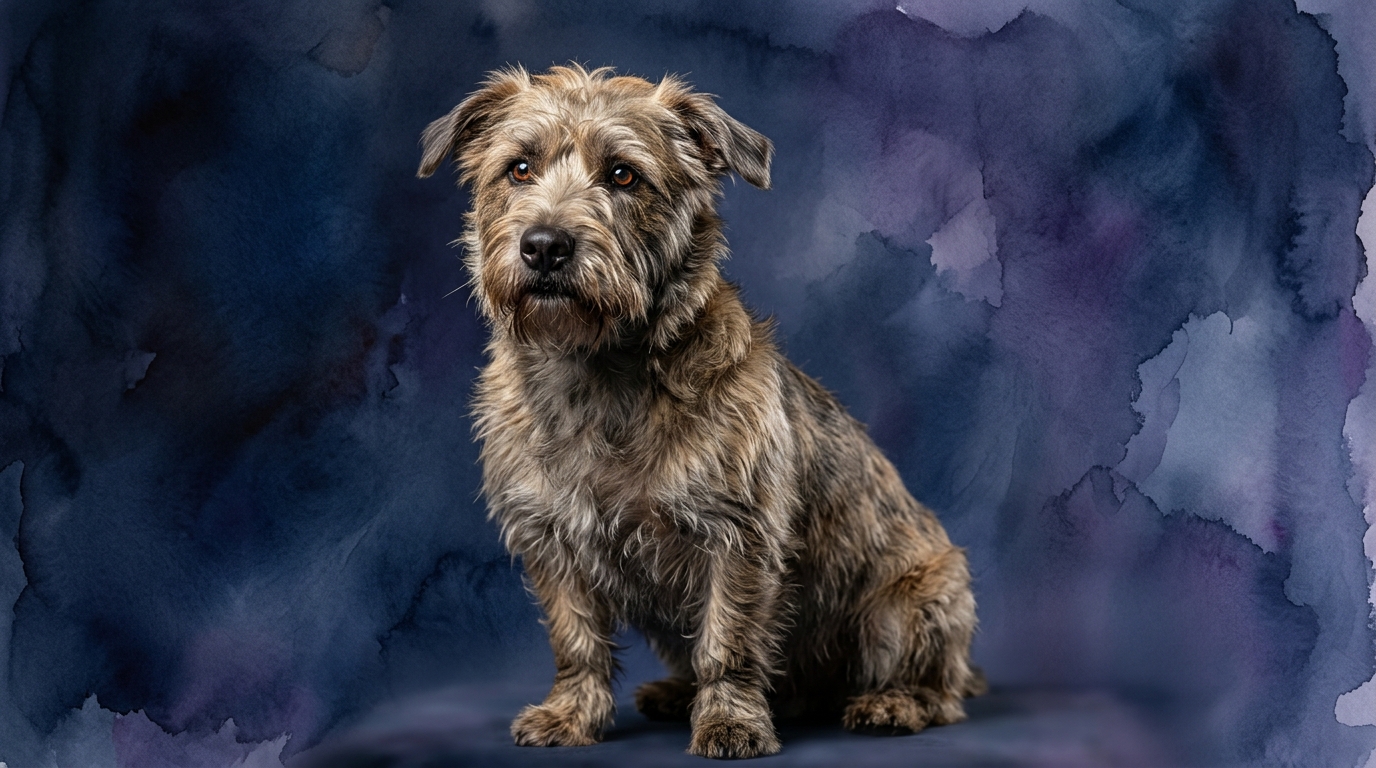
Side-by-Side IQ Profile: Glen of Imaal Terrier
The Glen of Imaal Terrier presents a cognitive profile reflective of its earthdog heritage. Its Problem Solving (3/5) indicates an aptitude for direct, independent solutions, especially for quarry, rather than complex, multi-stage human-directed tasks. Training Speed (3/5) means consistent, patient repetition is needed due to its independent spirit. Social Intelligence (3/5) suggests awareness of humans but with a discerning, self-reliant perspective. Its Instinctive Drive (3/5) is focused, purposeful, likely geared towards badger and fox hunting, not broad tracking. Memory (3/5) allows recall of behaviors, though perhaps not with the immediate, flawless retention of some obedience breeds.
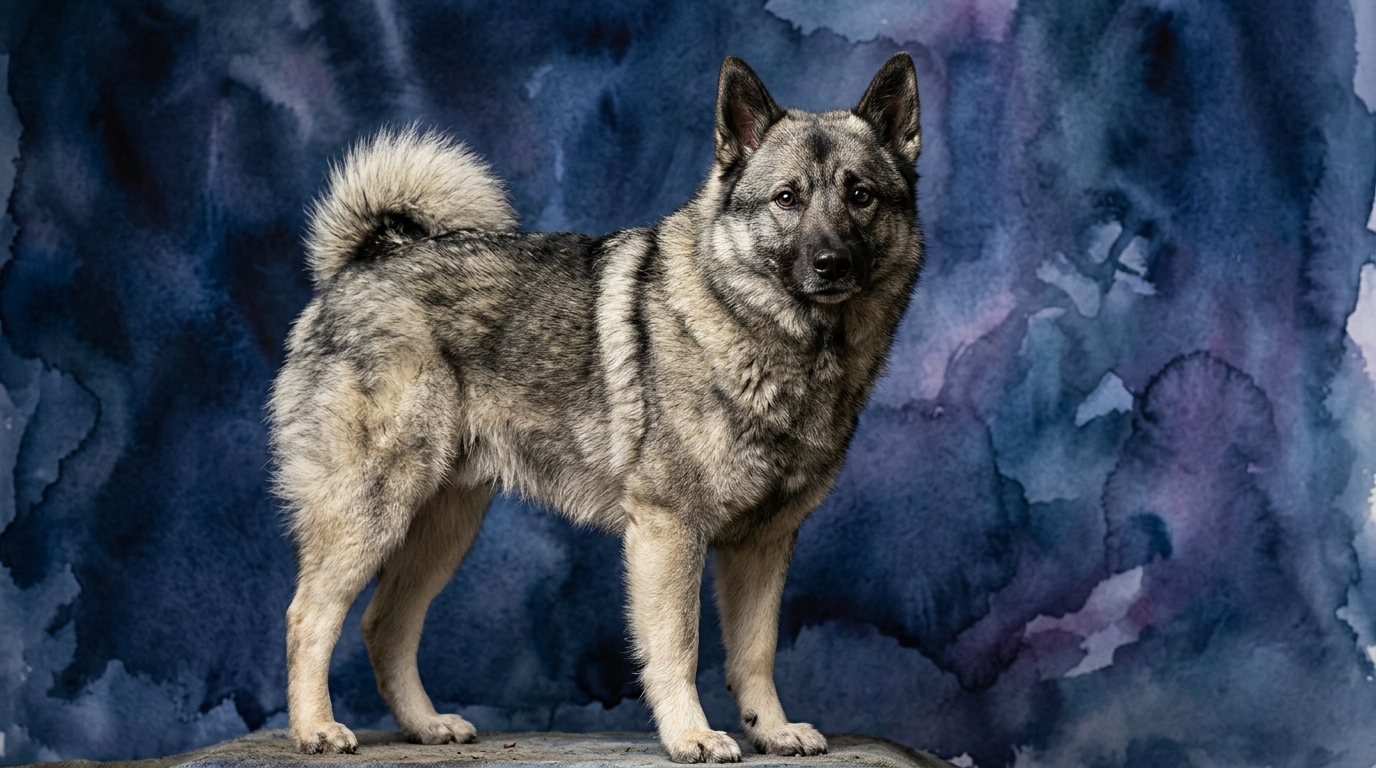
Side-by-Side IQ Profile: Norwegian Elkhound
The Norwegian Elkhound, assisting hunters in rugged Scandinavian wilderness, shows a different cognitive emphasis. Its Problem Solving (4/5) reflects independent decision-making while tracking game, adapting to varied terrain. Training Speed (4/5) indicates quicker grasp of commands and willingness to learn, though hound independence persists. Social Intelligence (3/5) means it understands human cues but maintains a dignified, sometimes reserved, demeanor. The Elkhound’s Instinctive Drive (3/5) is powerfully directed towards tracking and baying large game, demonstrating sustained focus. Memory (4/5) underpins its ability to recall complex scent trails, commands, and geographical layouts, crucial for its demanding tasks.
Where the Glen of Imaal Terrier Wins Cognitively
The Glen of Imaal Terrier excels in a distinct cognitive niche shaped by its specific working history. Its 3/5 Problem Solving, though not highest, is suited to tasks requiring tenacity and independent decision-making in confined spaces. A Glen is adept at figuring out how to navigate tight burrows or extract a hidden toy, relying on its own persistent ingenuity rather than waiting for human direction. This breed’s cognitive strength lies in its focused, determined approach to a singular objective, often involving digging or exploring. Its moderate Instinctive Drive (3/5) means this drive is often channeled into specific, close-quarters tasks, making it less broadly distracted than a wide-ranging hound. This allows for concentrated application of its cognitive resources to the task at hand, whether a puzzle toy or an imagined quarry. Owners often find their Glens possess a cleverness manifesting as an independent thought process, leading to unconventional yet effective solutions in their immediate environment.
Where the Norwegian Elkhound Wins Cognitively
The Norwegian Elkhound's cognitive strengths are evident in its higher ratings for Problem Solving (4/5), Training Speed (4/5), and Memory (4/5), reflecting its Coren rank of #36. This breed’s hunting heritage demands a dog capable of complex decision-making in dynamic environments, such as navigating varied terrain while tracking, assessing wind, and holding game without direct human intervention. Their superior problem-solving enables quick adaptation and effective strategizing during extended tasks. The Elkhound's quicker Training Speed means it generally grasps new concepts with fewer repetitions, making it a more responsive partner in various activities, from obedience to canine sports. This responsiveness is bolstered by its strong Memory, allowing it to retain a vast repertoire of learned behaviors, complex routes, and intricate scent patterns over long periods. This capacity for sustained learning and recall makes the Elkhound particularly adept at tasks requiring sequential actions or remembering specific cues in different contexts.
Which Is Easier to Train and Why
Evaluating ease of training requires understanding each breed's inherent cognitive wiring and historical purpose. The Norwegian Elkhound, with its 4/5 rating in Training Speed and Memory, coupled with its Coren rank of #36, generally proves to be the more straightforward of the two to train. Elkhounds were developed to work in tandem with hunters, requiring them to learn and execute commands reliably in challenging conditions. They often possess a keen desire to engage with their human companions, making them receptive to instruction, and their superior memory aids retention. While they maintain a degree of hound independence, their biddability for a working breed is notable. In contrast, the Glen of Imaal Terrier, with 3/5 ratings in both Training Speed and Memory, presents a different training landscape. Glens were bred for independent work, often out of sight, fostering a strong-willed, tenacious temperament. This can translate into perceived stubbornness during training. They certainly can learn, but often require more patience, creativity, and consistency. A Glen might question a command or prefer its own method, making training an exercise in persuasive leadership rather than simple instruction; for example, an Elkhound might quickly master 'stay', while a Glen might prioritize an interesting scent, requiring more effort for impulse control.
Which Suits Active Owners vs. Relaxed Owners
Both breeds require regular mental and physical stimulation, so neither suits a truly sedentary lifestyle. However, their activity needs differ. The Norwegian Elkhound is an ideal match for truly active owners who relish outdoor adventures. With its history of tracking big game, the Elkhound possesses stamina, endurance, and a drive for sustained physical exertion. Owners enjoying long hikes, running, or demanding dog sports will find the Elkhound a willing partner. Its robust problem-solving and memory also make it suitable for advanced training. The Glen of Imaal Terrier, while active, might be a better fit for owners who prefer focused bursts of activity rather than extreme endurance. Its terrier nature means it enjoys vigorous play, digging, and puzzle toys stimulating independent problem-solving. Daily walks and safe exploration are essential, but a Glen might be content with shorter, intense play followed by mental enrichment indoors, rather than multi-hour treks. These owners must still engage their Glen’s mind with training games and provide outlets for its digging instincts.
The Verdict
Choose the Glen of Imaal Terrier if you are drawn to a tenacious, independent-thinking companion who excels at focused, self-directed problem-solving and you are prepared for patient, consistent training to channel its unique terrier drive.
Opt for the Norwegian Elkhound if you seek a resilient, adaptable, and generally biddable partner for extensive outdoor adventures, who learns readily and possesses a strong memory for complex tasks, making it a responsive participant in varied activities.
🧠 Find Your Pet's IQ Score
Our Pet IQ Lab assessment covers 25+ tests across 5 cognitive dimensions — personalized to your breed.
Take the Full IQ Test →Frequently Asked Questions
Are Glen of Imaal Terriers difficult to train?
While not difficult in the sense of inability, Glens possess a strong independent streak, reflecting their history of working alone. They require consistent, patient training methods and positive reinforcement to channel their tenacity effectively, often thriving on puzzle-solving tasks.
Do Norwegian Elkhounds bark excessively?
Norwegian Elkhounds were bred to bay game, meaning they have a natural inclination to be vocal. While not always excessive, their barks are often deep and resonant, and owners should be prepared to manage this trait through training and adequate stimulation to prevent nuisance barking.
Which breed is better for first-time dog owners?
The Norwegian Elkhound, with its generally higher training speed and biddability, might be slightly more forgiving for a first-time owner committed to consistent training and exercise. The Glen of Imaal Terrier's independent nature and strong will might present more challenges for someone new to dog ownership, requiring a deeper understanding of terrier behavior.