Side-by-Side Cognitive Profiles
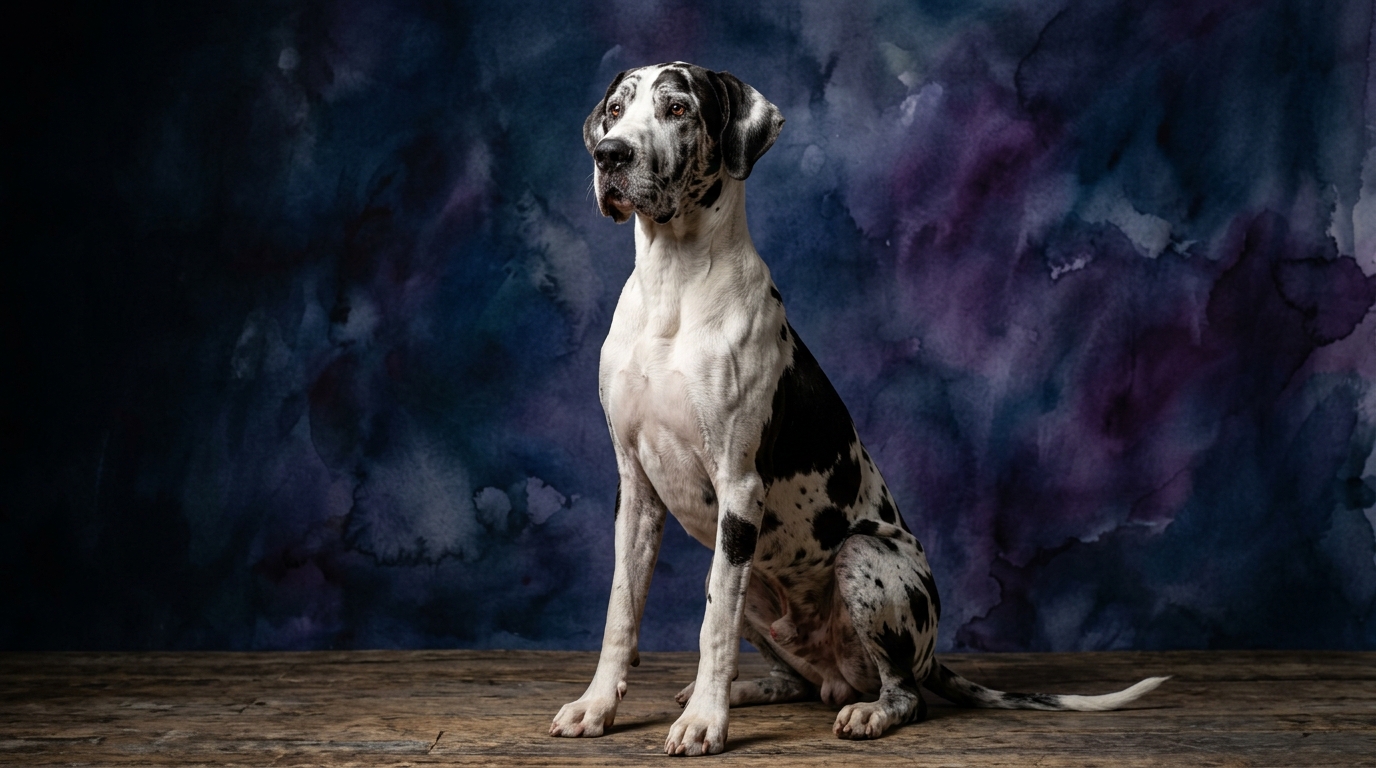
The Cosmic Pet Pet IQ Lab assesses canine intelligence across five key dimensions, providing a granular view beyond traditional 'smartness' labels. For the Great Dane, ranked #48 by Coren, its profile highlights a balance of moderate cognitive skills with a strong social inclination. Their problem Solving scores 3/5, indicating a capacity for navigating everyday challenges and learning routines, but perhaps not excelling in complex, novel tasks without guidance. Training Speed is also 3/5, suggesting they absorb commands at an average pace, responsive to consistent methods. Where the Great Dane truly shines is in social Intelligence, scoring 4/5, reflecting their deep empathy, attunement to human emotions, and desire for companionship. Their instinctive Drive is 3/5, meaning they possess natural dog behaviors but aren't overwhelmingly driven by primal urges, while their memory is a solid 3/5, allowing them to retain learned behaviors and experiences effectively.
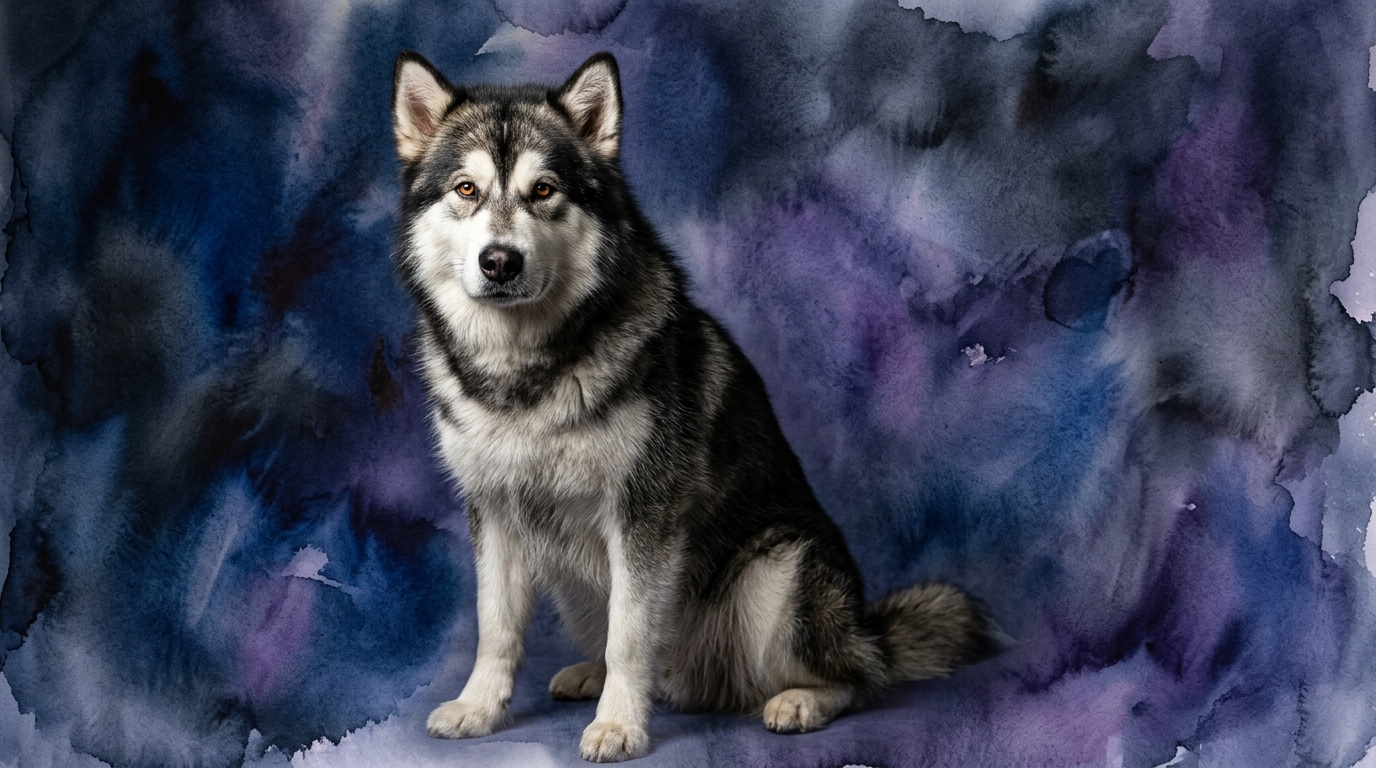
In contrast, the Alaskan Malamute, holding Coren rank #50, presents a profile geared towards endurance and independent decision-making in demanding environments. Their problem Solving is a notable 4/5, showcasing a strong capacity for independent thought and finding solutions, often without direct human prompting, a trait vital for their historical role. However, their training Speed is 2/5, indicating a more deliberate and sometimes stubborn learning process, requiring patience and creative approaches. Social Intelligence sits at 3/5; while friendly, they tend to be more independent than the Great Dane, valuing their own space and tasks. The Malamute's most defining cognitive trait is its instinctive Drive, scoring an impressive 5/5. This reflects their powerful prey drive, strong will, and innate desire to pull, dig, and explore. Finally, their memory is 4/5, allowing them to recall complex routes, tasks, and past experiences with impressive accuracy.
Where the Great Dane Cognitively Excels
The Great Dane's cognitive strengths primarily lie in their advanced social intelligence and balanced temperament, making them exceptional family companions. Their 4/5 social intelligence means they are remarkably attuned to human emotions and household dynamics, often anticipating needs or offering comfort without explicit cues. This manifests as a desire to be involved in family activities, a gentle demeanor with children, and an ability to form deep, empathetic bonds. While their problem-solving and training speed are moderate, their social acumen often compensates, as they are motivated by pleasing their human counterparts and thrive on positive interaction. They excel in environments where their role is that of a devoted, integrated family member, easily adapting to household routines and social cues, making them intuitive partners in daily life.
Where the Alaskan Malamute Cognitively Excels
The Alaskan Malamute's cognitive prowess is deeply rooted in its heritage as a powerful sled dog, excelling in areas vital for survival and work in harsh conditions. Their 4/5 problem-solving ability means they are adept at independent thought, capable of figuring out how to overcome obstacles or achieve goals, such as finding a way to reach a desired location or opening a gate. This isn't necessarily about obedience to human commands but about intrinsic capability. Coupled with a 5/5 instinctive drive, they possess an unwavering determination for tasks like pulling, exploring, and enduring, making them exceptional for physically demanding activities. Their 4/5 memory is also a significant asset, allowing them to remember complex routes, learned behaviors, and even specific locations over long periods, crucial for navigation and repetitive tasks.
Training Dynamics: Great Dane vs. Alaskan Malamute
When it comes to training, the Great Dane generally presents a more straightforward path for the average owner due to their balanced cognitive profile and strong desire for social connection. Their 3/5 training speed, combined with a 4/5 social intelligence, means they are typically eager to please and respond well to positive reinforcement, seeking human approval. They are more likely to comply with commands and integrate into structured training quickly, provided consistency is maintained. Behavioral differences often include a greater willingness to follow cues and a less independent streak, making them amenable to learning complex routines within a family setting.
The Alaskan Malamute, conversely, offers a more challenging training experience, largely due to their specific cognitive makeup. Their 2/5 training speed signifies a need for exceptional patience and creative methods; they learn at their own pace and are less inclined to simply 'obey' if they don't see the purpose. This is compounded by their 5/5 instinctive drive and 4/5 problem-solving, which often translates into an independent, strong-willed nature. They are prone to testing boundaries, can be easily distracted by their environment (especially scents or potential 'prey'), and require a trainer who understands their innate desire to work *with* you, not just *for* you. Training must be engaging, consistent, and respectful of their independent spirit, focusing on channeling their drives rather than suppressing them.
Owner Suitability: Active vs. Relaxed Lifestyles
The cognitive profiles of these breeds distinctly align with different owner lifestyles. The Great Dane, with its higher social intelligence and moderate instinctive drive, is an excellent fit for more relaxed owners or families seeking a gentle, devoted companion. They thrive on companionship and integration into daily home life, content with moderate exercise and ample cuddle time. Their cognitive makeup means they are generally less demanding in terms of constant mental stimulation from challenging tasks, preferring instead to engage socially with their human family. They adapt well to quieter households where their primary role is that of a loving, watchful presence.
The Alaskan Malamute, however, is unequivocally suited for active, experienced owners who can meet their intense physical and mental needs. Their high problem-solving ability and exceptional instinctive drive demand consistent engagement in activities that challenge both their bodies and minds. This breed excels with owners who enjoy long hikes, cani-cross, sledding, or other working dog sports, and who can provide ample opportunities for exploration and 'work.' A relaxed owner might find themselves overwhelmed by the Malamute's independent nature, strong will, and need for purpose-driven activity, which can manifest as destructive behaviors if unfulfilled.
The Verdict
Choose a Great Dane if you seek an empathetic, socially intelligent companion eager to integrate into a family, thriving on affection and moderate activity.
Opt for an Alaskan Malamute if you are an active, experienced owner ready to channel a powerful, independent mind into challenging physical and mental pursuits.
🧠 Find Your Pet's IQ Score
Our Pet IQ Lab assessment covers 25+ tests across 5 cognitive dimensions — personalized to your breed.
Take the Full IQ Test →Frequently Asked Questions
Are Great Danes easy to train for first-time dog owners?
Great Danes, with their moderate training speed and strong social intelligence, are generally more amenable to training for first-time owners than many other breeds. They are eager to please and respond well to positive reinforcement, though their sheer size requires early and consistent training to manage properly.
Do Alaskan Malamutes require a lot of mental stimulation?
Yes, Alaskan Malamutes absolutely require significant mental stimulation due to their high problem-solving ability and strong instinctive drive. Without engaging tasks, puzzles, or purposeful activities, they can become bored and may resort to destructive behaviors like digging or chewing, making mental exercise as crucial as physical activity.
Which breed is better with children, based on their cognitive profiles?
Based on their cognitive profiles, the Great Dane's higher social intelligence (4/5) generally makes them more intuitive and gentle with children, often forming deep, empathetic bonds. While Malamutes can be good family dogs, their more independent nature and high instinctive drive (5/5) means they might be less tolerant of boisterous play and require more supervision around very young children.