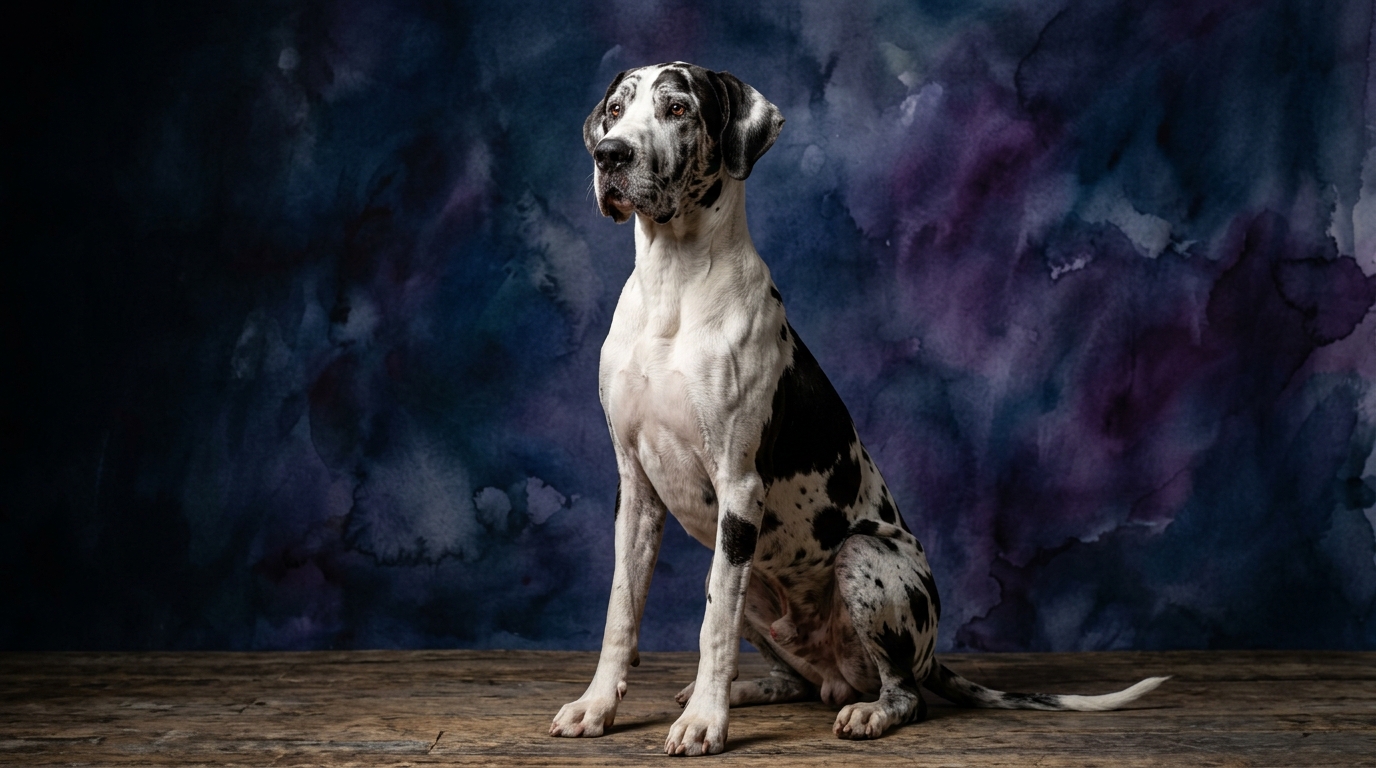
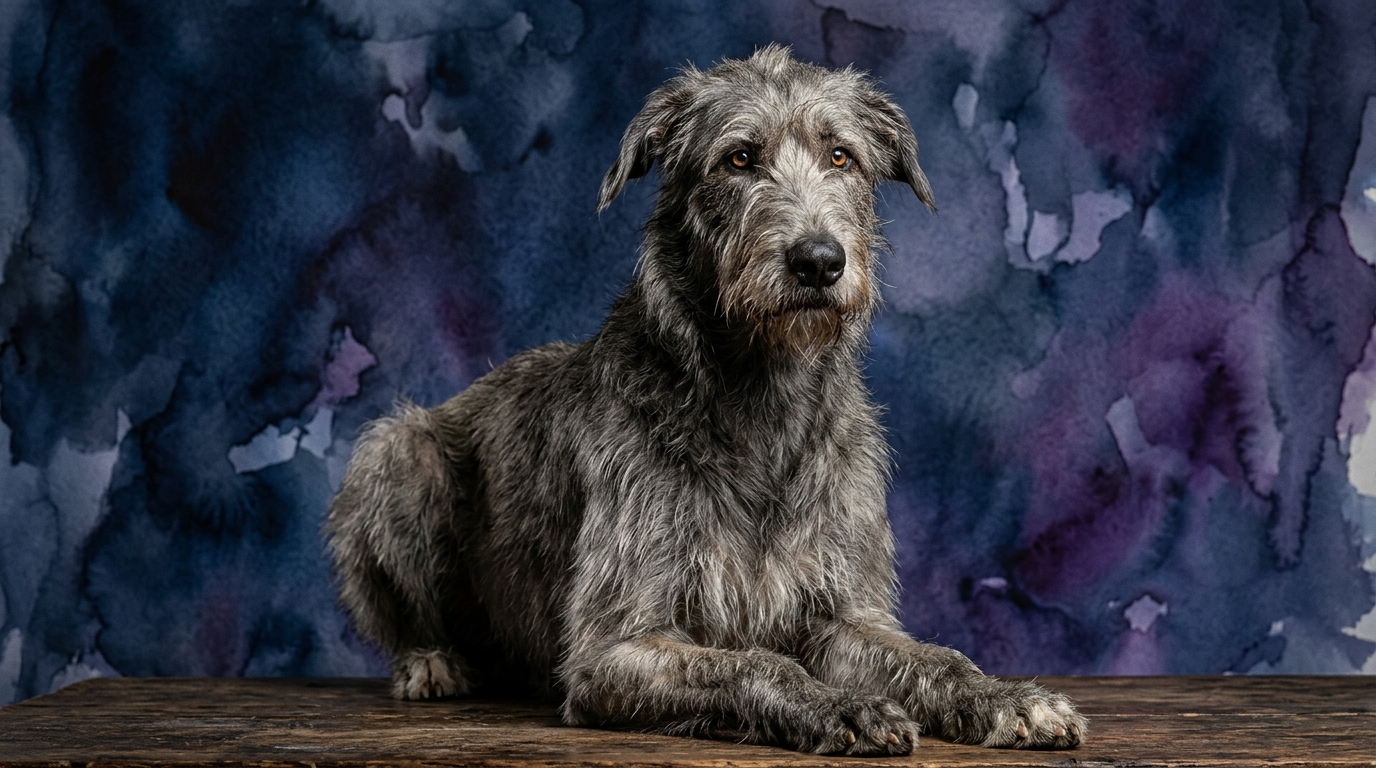
Side-by-Side IQ Profile: Great Dane vs. Irish Wolfhound
At The Cosmic Pet Pet IQ Lab, we evaluate canine cognition across five key dimensions. The Great Dane, a Working breed, holds a Coren rank of #48, suggesting a solid capacity for obedience and adaptive learning. The Irish Wolfhound, a dignified Hound, does not have an official Coren ranking, which often reflects a different set of cognitive priorities inherent to sighthound breeds rather than a deficit in mental capacity. Despite the ranking difference, a closer look at their individual IQ dimensions reveals intriguing parallels and subtle distinctions.
For Problem Solving, both the Great Dane and the Irish Wolfhound score 3/5. This indicates a moderate ability to navigate novel situations or figure out how to achieve a desired outcome, such as opening a gate or retrieving a hidden toy. They are capable of learning through trial and error and can adapt to new challenges, though they may not be the quickest to devise complex solutions independently. Their approach to problems is typically methodical rather than spontaneously brilliant, often relying on learned associations.
In terms of Training Speed, both breeds also receive a 3/5. This suggests they can learn new commands and routines at a moderate pace. Neither breed is known for instant mastery, requiring consistent, positive reinforcement and patience from their trainers. They are receptive to guidance but may take several repetitions to solidify a behavior, indicating a steady rather than rapid acquisition of new skills. This score implies they are trainable but benefit immensely from a structured and engaging learning environment.
Social Intelligence is where we observe the primary numerical difference: the Great Dane scores 4/5, while the Irish Wolfhound scores 3/5. The Great Dane's higher score reflects a greater attunement to human emotions, social cues, and family dynamics. They often display a deep desire to be part of the family unit, understanding subtle shifts in mood and responding with empathy. The Irish Wolfhound, with a 3/5, is certainly capable of forming profound bonds and reading their owners, but their social interactions might be slightly more reserved or less overtly expressive compared to the Great Dane, maintaining a degree of independent thought even within the family structure.
Instinctive Drive for both breeds is rated at 3/5. For the Great Dane, this drive often manifests as a protective instinct for their family and home, along with a natural inclination for companionship. For the Irish Wolfhound, as a sighthound, their instinctive drive is deeply rooted in their historical purpose of hunting large game, involving keen visual tracking and independent pursuit. While both score the same, the *nature* of that drive differs significantly; the Wolfhound's drive is more geared towards self-reliant action in the field, whereas the Dane's is more focused on social bonding and guarding.
Finally, Memory for both the Great Dane and the Irish Wolfhound is rated 3/5. This score indicates a solid capacity to recall learned commands, routines, and experiences over time. They can remember people, places, and past training sessions effectively, which is crucial for building a stable and predictable relationship with their human companions. While not exceptional, their memory is certainly sufficient for typical household life and ongoing training.
Where the Great Dane Wins Cognitively
The Great Dane's cognitive edge primarily lies in its superior Social Intelligence (4/5). This breed excels at integrating into family life, often demonstrating a profound sensitivity to human emotions and social cues. A Great Dane is more likely to mirror a family's mood, offering comfort when sensing distress or engaging playfully when spirits are high. Their keen awareness of their human companions' emotional states makes them exceptionally empathetic companions, often seeking to be physically close and involved in household activities. This heightened social awareness contributes to their adaptability in various family settings, making them adept at understanding household routines and expectations with minimal explicit teaching. Their Coren ranking also suggests a slightly higher overall capacity for working and obedience intelligence in a structured environment.
Where the Irish Wolfhound Wins Cognitively
While sharing many cognitive scores, the Irish Wolfhound's unique strength stems from the context of its Instinctive Drive (3/5) as a sighthound. This isn't just a protective instinct; it's a deep-seated capacity for independent thought and perseverance rooted in their historical role of hunting large, dangerous prey. This drive translates into a robust mental fortitude and an ability to focus intently on a task, particularly those involving visual tracking or endurance. While Great Danes are socially attuned, the Wolfhound might display a more self-reliant problem-solving approach when faced with environmental challenges, relying on their keen senses and inherent determination. They possess a quiet dignity that hints at a mind capable of deep, focused engagement, particularly when their natural instincts are engaged in appropriate outlets like lure coursing or extensive walks where they can survey their surroundings.
Which is Easier to Train and Why
When comparing trainability, both breeds score 3/5 for Training Speed, indicating a moderate learning pace. However, the Great Dane's higher Social Intelligence (4/5) often gives it a slight advantage in the ease of training within a typical household setting. A Great Dane's strong desire to please and its attunement to human cues can make it more responsive to positive reinforcement and more eager to engage in cooperative learning. They often derive satisfaction from human approval, which can accelerate the learning process for basic obedience and house manners. Their inclination to integrate closely with the family means they are generally more inclined to follow human direction.
The Irish Wolfhound, with its 3/5 Social Intelligence and strong hound instincts, might present a different training dynamic. While equally capable of learning, their independent nature can mean they might be less motivated by human approval alone and more by what *they* find rewarding, such as exploration or the chase. Training an Irish Wolfhound often requires greater patience, creativity, and a deep understanding of their sighthound motivations to make training engaging and meaningful for them. They are not stubborn, but their focus can be more internally driven, requiring trainers to be consistent and to make commands highly reinforcing within their world.
Which Suits Active Owners vs. Relaxed Owners
For owners with a more relaxed lifestyle, or those seeking a highly integrated family companion, the Great Dane often presents a more suitable choice. Their high Social Intelligence means they thrive on close companionship and are generally content to be near their people, whether lounging on the couch or going for a leisurely stroll. While they do require regular exercise to maintain health, their cognitive profile suggests they are less prone to restlessness if their primary need for social interaction is met. They are often described as 'leaners' who enjoy physical proximity and being a central part of family life, making them excellent companions for those who value a constant, empathetic presence.
Conversely, the Irish Wolfhound, while calm indoors, might be a better match for owners who appreciate a dog with a more independent streak and who can provide consistent, moderate activity that engages their inherent drives. Their 3/5 Instinctive Drive as a sighthound means they benefit from opportunities to stretch their legs in a safe, fenced area, or engage in activities that tap into their tracking or pursuit instincts. While they form deep bonds, they often maintain a quiet dignity and a sense of self-possession that can appeal to owners who appreciate a dog that is affectionate but not constantly 'in their face.' They require owners who understand and respect their heritage and provide outlets for their unique mental and physical needs.
The Verdict
Choose the Great Dane if you prioritize a deeply empathetic, socially attuned companion who thrives on close family integration and is generally eager to please in training.
Opt for the Irish Wolfhound if you appreciate a noble, independent spirit with a quiet dignity, and are prepared to engage their unique sighthound instincts with consistent, patient guidance.
🧠 Find Your Pet's IQ Score
Our Pet IQ Lab assessment covers 25+ tests across 5 cognitive dimensions — personalized to your breed.
Take the Full IQ Test →Frequently Asked Questions
Are Great Danes good problem solvers?
Great Danes score 3/5 in problem-solving, indicating a moderate ability to navigate new situations. They can learn to overcome obstacles and figure out simple puzzles, typically through observation and learned associations rather than complex abstract reasoning.
Do Irish Wolfhounds have good memory?
Yes, Irish Wolfhounds score 3/5 for memory, meaning they have a solid capacity to recall commands, routines, and past experiences. This allows them to retain training over time and remember familiar people and places effectively.
Which breed is more sensitive to human emotions?
The Great Dane, with a Social Intelligence score of 4/5, is generally more sensitive and attuned to human emotions and social cues. They often display a deep empathy and desire to connect on an emotional level with their family members.