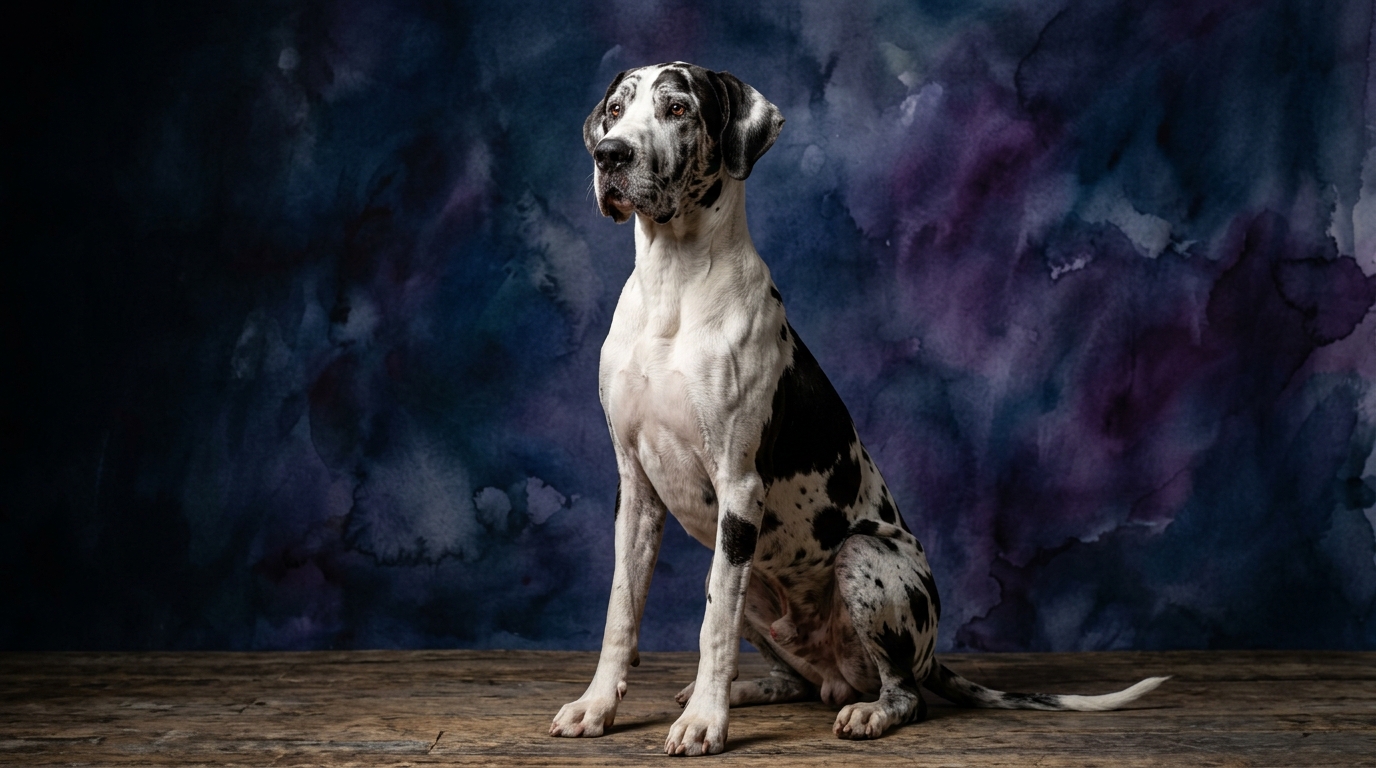
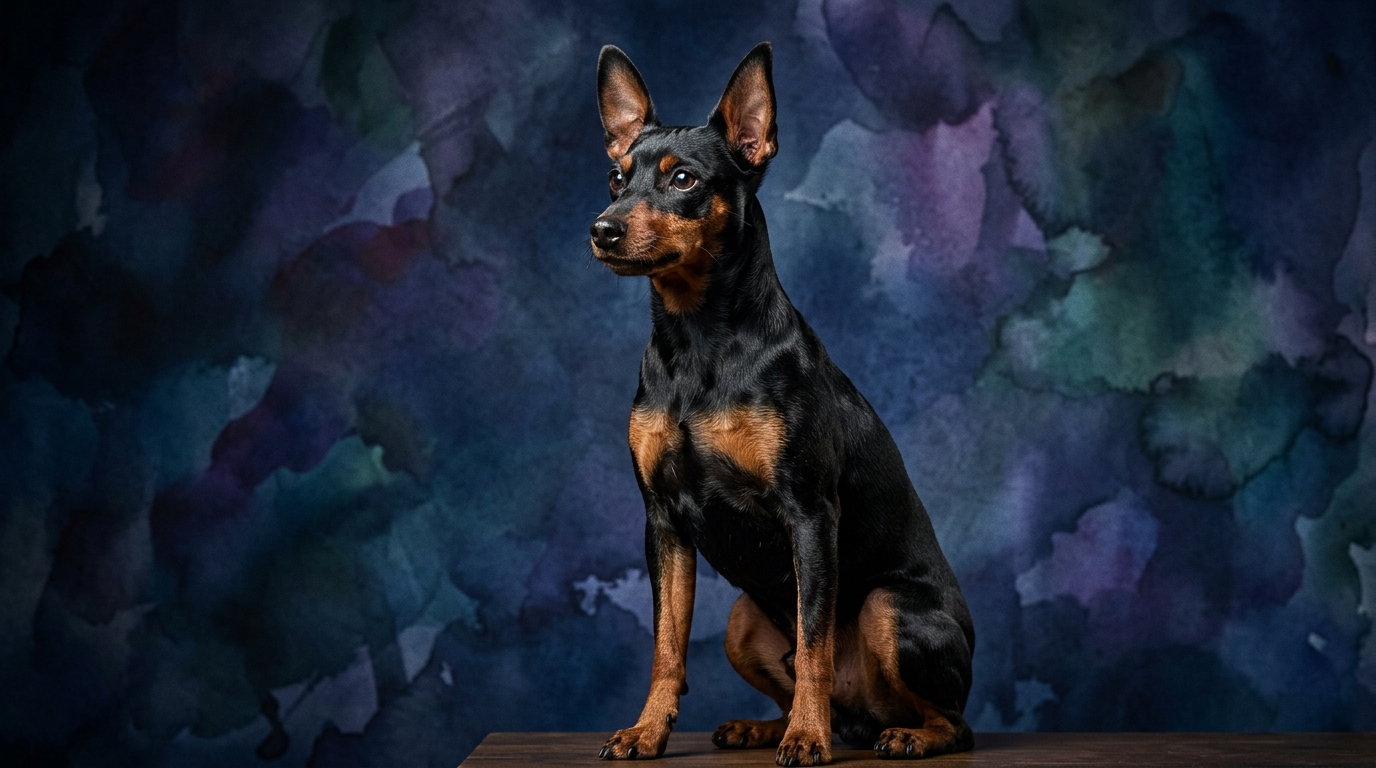
Side-by-Side IQ Profile: Great Dane vs. Miniature Pinscher
The Cosmic Pet Pet IQ Lab's assessment offers a granular view of each breed's cognitive landscape. The Great Dane, a Working group member and Coren rank #48, displays a balanced intellectual profile. Their Problem Solving is rated 3/5, indicating a capacity for practical solutions but perhaps not complex, abstract thought without guidance. Training Speed also scores 3/5, suggesting they absorb commands at a moderate pace, requiring consistent reinforcement. Where the Great Dane truly shines is in Social Intelligence, earning a 4/5; this reflects a deep understanding of human cues, social dynamics, and a strong desire to interact cooperatively. Their Instinctive Drive is 3/5, representing a moderate level of inherent breed behaviors, while Memory stands at 3/5, indicating a solid ability to recall learned information and experiences over time.
In contrast, the Miniature Pinscher, a feisty Toy group member and not Coren-ranked, presents a remarkably similar cognitive blueprint across many dimensions. Like the Great Dane, their Problem Solving is 3/5, suggesting they are capable of figuring out everyday challenges, often with a clever, independent streak. Their Training Speed also scores 3/5, implying a similar rate of learning new commands, though their application might differ due to their spirited nature. Social Intelligence for the Miniature Pinscher is 3/5, indicating a good understanding of social interactions, albeit perhaps with a more selective or assertive approach compared to the Dane's broad affability. Instinctive Drive is 3/5, reflecting strong prey drive and territorial instincts typical of their 'King of Toys' moniker, and their Memory is also 3/5, allowing them to retain training and experiences effectively.
Where the Great Dane Wins Cognitively
Based on the Cosmic Pet IQ Lab metrics, the Great Dane unequivocally demonstrates a cognitive edge in Social Intelligence, scoring 4/5 compared to the Miniature Pinscher's 3/5. This higher score translates into a profound capacity for understanding and responding to human emotions, intentions, and social cues. A Great Dane often displays a remarkable sensitivity to their family's moods, offering comforting nudges or gentle presence when sensing distress. Their cognitive processing in social situations allows them to integrate seamlessly into complex household dynamics, often becoming intuitive companions who anticipate needs rather than merely reacting to commands. This superior social acumen also contributes to their reputation as gentle giants, as they are adept at navigating interactions with children and other animals with a measured, empathetic approach. Their ability to read and adapt to social contexts makes them exceptional therapy or emotional support animals, where nuanced understanding of human states is paramount. This cognitive strength isn't just about being friendly; it's about a sophisticated processing of social information that allows for deeper, more harmonious interspecies relationships.
Where the Miniature Pinscher's Cognitive Profile Excels
While the raw numerical scores for the Miniature Pinscher largely parallel those of the Great Dane across problem solving, training speed, instinctive drive, and memory, their cognitive profile is exceptionally well-suited to their unique physical attributes and historical roles, allowing them to excel in specific contexts. For instance, their Problem Solving (3/5) and Instinctive Drive (3/5) scores, identical to the Great Dane's, manifest in a vastly different operational context. A Miniature Pinscher's problem-solving might involve navigating complex small spaces, outsmarting perceived threats, or figuring out how to access forbidden areas with agility and quick thinking, an application distinct from a Great Dane's approach to challenges. Their instinctive drive, often directed towards alert barking, territorial vigilance, and chasing small critters, is a formidable cognitive strength for a watch dog. This requires acute sensory processing, rapid decision-making, and quick physical responses within their smaller frame. Their cognitive system efficiently processes environmental stimuli to identify potential intruders or prey, triggering immediate, decisive action. This effective application of their cognitive scores within their specific niche – demanding quick, often independent, and self-preserving actions – can be seen as a form of cognitive 'win' in practical, breed-specific terms, where their intellect is perfectly honed for their function as a vigilant, assertive companion.
Which is Easier to Train and Why
Both the Great Dane and the Miniature Pinscher share a Training Speed score of 3/5, suggesting neither breed is a prodigy nor particularly resistant to learning. However, the practical experience of training these two breeds can differ significantly due to their inherent behavioral tendencies and physical attributes. The Great Dane's superior Social Intelligence (4/5) often makes them eager to please and highly attuned to their owner's wishes. This strong social bond and desire for cooperation can translate into a more willing and less challenging training experience, despite their moderate learning speed. They respond well to positive reinforcement, thriving on praise and gentle guidance, and their sheer size necessitates early and consistent training for safety and manners. Their training challenges often revolve around managing their physical presence and ensuring they understand their boundaries, rather than a lack of cognitive capacity to learn.
The Miniature Pinscher, while equally capable of learning at a moderate pace (Training Speed 3/5), often brings a more independent and spirited personality to the training arena. Their assertive nature and strong instinctive drive (3/5) can sometimes be perceived as stubbornness. They are clever and can quickly learn what benefits them, which means owners must be consistent, engaging, and make training sessions rewarding to hold their attention. Their training challenges often involve channeling their high energy and prey drive, and ensuring they don't develop 'small dog syndrome' by allowing undesirable behaviors. While both breeds require patience and consistency, the Great Dane’s inherent social cooperativeness often makes the process feel smoother, whereas the Miniature Pinscher demands a trainer who can match their wit and harness their independent spirit effectively.
Cognitive Suitability: Active vs. Relaxed Owners
Considering their cognitive profiles and associated behavioral traits, the Great Dane often aligns well with a spectrum of owners, including those who appreciate a more relaxed pace but desire a deeply connected companion. Their moderate Instinctive Drive (3/5) combined with high Social Intelligence (4/5) means they are generally content with regular, but not necessarily intense, exercise and thrive on companionship and social interaction. They are not typically driven by an incessant need for complex tasks or extreme physical exertion, making them suitable for owners who enjoy a leisurely walk and ample cuddle time on the couch. Their cognitive strength lies in their ability to be a calm, understanding presence, making them ideal for individuals or families seeking a gentle, emotionally responsive giant.
The Miniature Pinscher, despite similar numerical scores in problem-solving and instinctive drive, presents a different energy dynamic. Their spirited nature and sharp cognitive application in a small package make them better suited for active owners or those who enjoy engaging in various dog sports or activities. Their 3/5 Instinctive Drive fuels a desire for action and exploration, while their Problem Solving (3/5) can be directed towards agility, obedience, or scent work. They require owners who are prepared to provide mental stimulation and consistent training to channel their cognitive energy constructively. A relaxed owner might find the Min Pin's persistent curiosity and independent streak overwhelming, whereas an active owner will appreciate their zest for life and readiness for adventure, making them excellent partners for an engaging, dynamic lifestyle.
The Verdict
Choose a Great Dane if you seek a deeply empathetic, socially attuned companion who thrives on gentle interaction and offers a calm, understanding presence.
Opt for a Miniature Pinscher if you desire a spirited, assertive partner whose quick wit and independent drive are best channeled through active engagement and consistent, stimulating training.
🧠 Find Your Pet's IQ Score
Our Pet IQ Lab assessment covers 25+ tests across 5 cognitive dimensions — personalized to your breed.
Take the Full IQ Test →Frequently Asked Questions
Do Great Danes or Miniature Pinschers learn commands faster?
Both breeds score 3/5 for Training Speed, suggesting they learn at a moderate, comparable pace. However, a Great Dane's higher social intelligence might make them more eager to cooperate during training, while a Miniature Pinscher's independence requires more engaging and consistent methods.
Which breed is better at understanding human emotions?
The Great Dane, with a Social Intelligence score of 4/5, excels at understanding human emotions and social cues. They are highly attuned to their family's moods and often respond with comforting and empathetic behaviors, surpassing the Miniature Pinscher's 3/5 in this specific cognitive dimension.
Are Miniature Pinschers good problem solvers despite their size?
Yes, Miniature Pinschers score 3/5 in Problem Solving, matching the Great Dane. Their problem-solving skills are often applied to navigating their environment cleverly, outwitting perceived challenges, or finding ways to achieve their goals, demonstrating robust cognitive function for their breed type.