Side-by-Side Cognitive Profiles
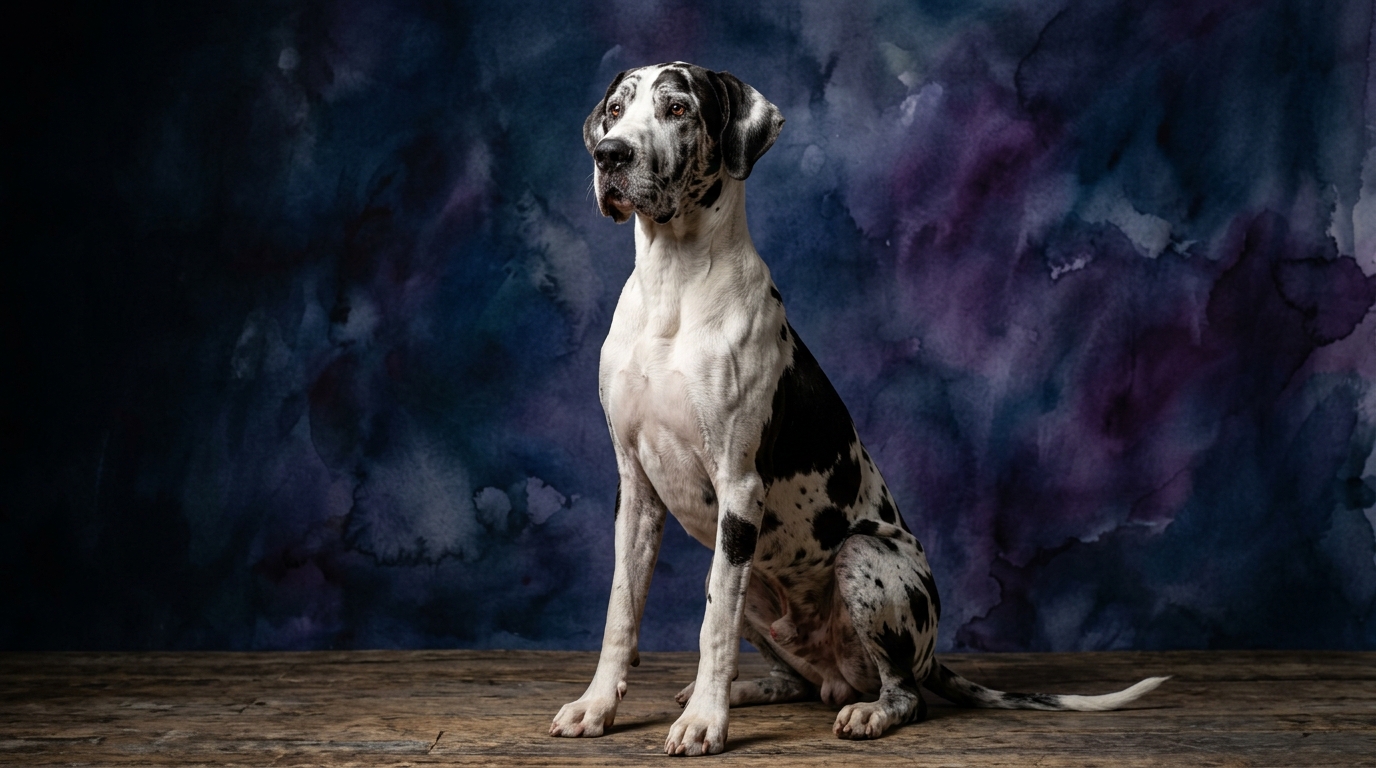
The Great Dane, often dubbed a 'gentle giant,' holds a Coren rank of #48, positioning them as solid, reliable learners rather than rapid-fire savants. Their problem-solving capacity, rated at 3/5, indicates they can methodically work through moderately complex tasks, often relying on learned patterns or their impressive physical presence to achieve goals, rather than intricate, spontaneous strategizing. Training speed is also 3/5, suggesting they learn new commands at a consistent, steady pace, thriving on patient, positive reinforcement and clear communication. Where they truly shine is social intelligence, scoring 4/5; this reflects a profound attunement to human emotions and the subtle dynamics of family life, making them exceptional emotional barometers. Their instinctive drive is 3/5, a balanced level that allows them to be alert guardians without being overly reactive or prey-driven. Finally, their memory, rated at 3/5, is sufficient for retaining learned behaviors, routines, and the faces of beloved family members over long periods.
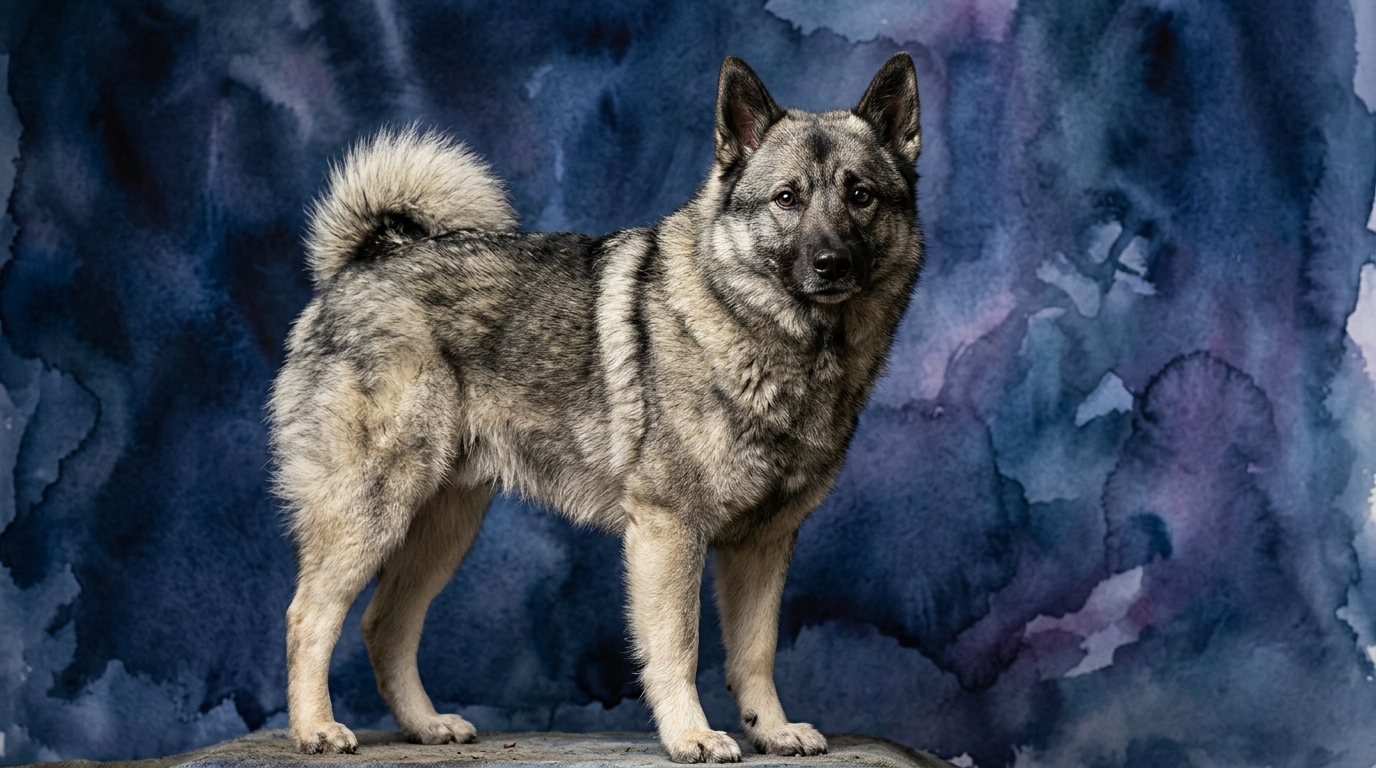
In stark contrast, the Norwegian Elkhound, an ancient Nordic hunting breed, ranks higher at #36 on Coren's scale, signaling a more agile and task-oriented mental architecture. Their problem-solving ability is rated 4/5, demonstrating a keen aptitude for independently assessing situations, figuring out puzzles, and navigating challenging environments—a trait meticulously honed by their historical role in tracking big game through dense forests. Training speed is also 4/5, meaning they typically grasp new commands and routines more quickly than the Great Dane, often requiring fewer repetitions to achieve mastery. Social intelligence is 3/5; while affectionate and loyal to their families, they tend to be more independent in their interactions, less overtly focused on human emotional states and more on their own objectives. Their instinctive drive stands at 3/5, appropriate for a hunting dog that needs focus and determination but not aggression. Their memory is 4/5, enabling them to recall complex scent trails, intricate learned sequences, and past experiences with remarkable precision, which is invaluable for their working heritage.
Where the Great Dane Wins Cognitively
The Great Dane's cognitive strengths distinctly lie in their exceptional social intelligence, where they achieve a 4/5 rating. This isn't merely about displaying affection; it signifies a deep, nuanced capacity for understanding and responding to human emotional cues, body language, and the intricate social structures within a household. A Great Dane often demonstrates an uncanny ability to sense distress, anxiety, or joy in their family members, frequently offering comfort through a gentle nudge or sharing in excitement with a wagging tail, often without any explicit command. They excel at integrating into complex family dynamics, understanding subtle shifts in household routines, and adapting their colossal presence to maintain harmony and avoid disrupting the peace. This advanced social cognition makes them remarkably perceptive and empathetic companions, often anticipating needs or reacting to subtle shifts in mood, fostering an exceptionally strong, almost intuitive bond that extends far beyond simple obedience or learned behaviors.
Where the Norwegian Elkhound Wins Cognitively
The Norwegian Elkhound's cognitive profile showcases a clear advantage in areas demanding independent thought, rapid learning, and efficient recall. Their 4/5 rating in problem-solving reflects a breed that can independently assess novel situations and devise effective solutions, a critical trait for a dog historically tasked with tracking elusive game through varied and often challenging terrain. This means an Elkhound is often adept at navigating physical obstacles, figuring out how to open a child-proof gate, or even strategically working to retrieve a favored toy from a difficult spot. This innate resourcefulness is coupled with a 4/5 training speed, indicating that Elkhounds tend to pick up new commands, complex sequences, and advanced tricks with fewer repetitions than many other breeds, making them efficient and rewarding students for those who enjoy structured training. Their superior memory (4/5) further enhances this, allowing them to retain vast amounts of information—from intricate scent trails and geographical landmarks to multi-step routines and long chains of commands—with impressive long-term recall, making them excellent candidates for advanced dog sports or working roles where precision and retention are key.
Which is Easier to Train and Why
When evaluating the relative ease of training, the Norwegian Elkhound generally presents a swifter and more efficient learning curve compared to the Great Dane. The Elkhound's 4/5 training speed indicates they grasp new commands more rapidly and require fewer repetitions to solidify a behavior. This efficiency is further bolstered by their 4/5 problem-solving ability and strong memory, meaning they can not only learn commands quickly but also understand the underlying context and retain them over extended periods. For instance, an Elkhound might more readily generalize the concept of 'stay' to varying environments and distractions after fewer dedicated sessions, connecting the command to the desired outcome more efficiently. Their independent nature, while sometimes perceived as stubbornness, can actually be a training advantage; they are often driven to figure things out for themselves, which can be harnessed through engaging, reward-based methods that encourage discovery and active participation in the learning process. They thrive on mental challenge and excel when presented with opportunities to use their sharp minds.
In contrast, the Great Dane, with a 3/5 training speed and problem-solving ability, typically requires more consistent, patient, and repetitive training sessions. While they are perfectly capable of learning and retaining a wide range of commands, they may take longer to internalize new concepts and might require more direct guidance through complex tasks. Their strong social intelligence, however, can be a valuable asset in training; they are inherently eager to please their human companions and respond exceptionally well to positive reinforcement rooted in affection, connection, and clear communication. A Great Dane might take more time to master a complex agility course or a multi-step retrieve, but their desire to engage with their owner and their deep bond ensures they remain receptive and willing participants. The fundamental difference lies in the Elkhound's innate efficiency in processing and retaining information independently, versus the Dane's need for more structured, relationship-centric guidance and patience to build those neural pathways.
Which Suits Active Owners vs. Relaxed Owners
For active owners seeking a canine partner for outdoor adventures, structured mental engagement, and consistent physical activity, the Norwegian Elkhound often proves to be an ideal match. Their historical role as a robust hunting dog has endowed them with substantial stamina, a keen desire for exploration, and a cognitive profile that thrives on challenges. Their superior problem-solving and memory skills mean they excel in activities like advanced obedience, tracking, agility, or even search and rescue, where independent thought, quick learning, and sustained focus are paramount. Elkhounds need regular, vigorous exercise—more than just a casual stroll—and significant mental stimulation to prevent boredom and channel their natural drive, making them perfect for individuals who enjoy hiking, running, competitive dog sports, or simply spending extensive time outdoors. They are not content to be couch potatoes and require an owner willing to consistently meet their physical and intellectual needs.
Conversely, the Great Dane typically aligns better with relaxed owners or those seeking a devoted, less intensely demanding companion who integrates seamlessly into a calm household rhythm. While they still require daily exercise for their physical health and to manage their considerable size, their energy levels are generally lower than an Elkhound's once they mature past the boisterous puppy stage. Their high social intelligence and profound desire for companionship mean they thrive on being an integral, often central, part of family life, content with moderate walks, backyard play, and ample couch time spent in close proximity to their humans. They are less driven by independent exploration or complex tasks and more by emotional connection and a peaceful presence in the home, making them excellent choices for owners who prioritize comfort, emotional reciprocity, and a calm, gentle giant over high-octane activities or intense training regimens. Their cognitive strengths are best utilized in understanding and adapting to the household's social rhythm, rather than conquering highly demanding physical or intellectual challenges.
The Verdict
Choose the Great Dane if your priority is a deeply socially intelligent companion who thrives on emotional connection and a calm, integrated family life, appreciating their steady learning pace.
Opt for the Norwegian Elkhound if you desire a quick-learning, problem-solving partner for active pursuits and enjoy engaging a dog with a sharp memory and independent mind.
🧠 Find Your Pet's IQ Score
Our Pet IQ Lab assessment covers 25+ tests across 5 cognitive dimensions — personalized to your breed.
Take the Full IQ Test →Frequently Asked Questions
Do Great Danes respond well to positive reinforcement?
Absolutely. Great Danes, with their high social intelligence, respond exceptionally well to positive reinforcement methods. Their desire to please and strong bond with their human family makes praise, treats, and affection highly motivating tools in training.
Are Norwegian Elkhounds easy to housetrain?
Norwegian Elkhounds, thanks to their good memory and quick training speed, are generally easy to housetrain with consistency. Establishing a routine and rewarding appropriate elimination quickly reinforces the desired behavior.
Which breed is better for a first-time dog owner?
For a first-time owner, the Great Dane might be slightly more forgiving due to their lower maintenance exercise needs and strong desire to please, though their size demands proper handling. The Elkhound's independent streak and higher exercise requirements might be more challenging for novices.