Side-by-Side Cognitive Profiles
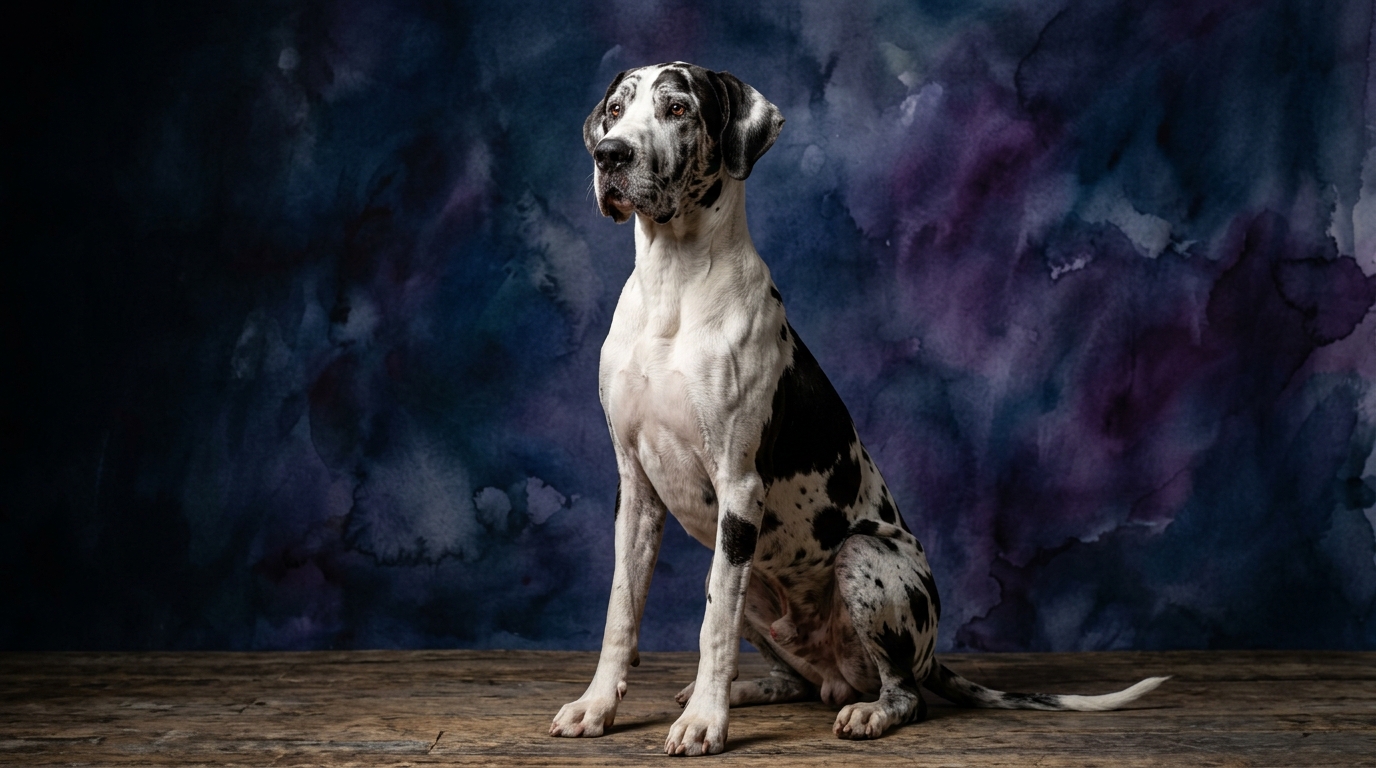
**Great Dane:** With a Coren rank of #48, the Great Dane demonstrates a solid capacity for learning and understanding, placing them comfortably within the "average working/obedience intelligence" category. Their Problem Solving is rated 3/5, indicating an ability to navigate moderately complex situations, such as figuring out how to manipulate a latch on a gate, or devising a strategy to retrieve a favorite toy from under furniture, often through a combination of observation and persistent effort. Training Speed also sits at 3/5, suggesting they grasp new commands and routines with a reasonable number of repetitions, typically responding enthusiastically to consistent, positive reinforcement methods. A standout is their Social Intelligence at 4/5, reflecting a deep attunement to human emotions, subtle body language, and the intricate dynamics of a household, making them exceptionally empathetic and responsive companions who often anticipate human needs. Their Instinctive Drive is 3/5, encompassing moderate protective instincts primarily focused on their family unit, coupled with a strong desire for close companionship. Memory at 3/5 means they retain learned behaviors, recognize people and places, and recall routines over extended periods with good consistency.
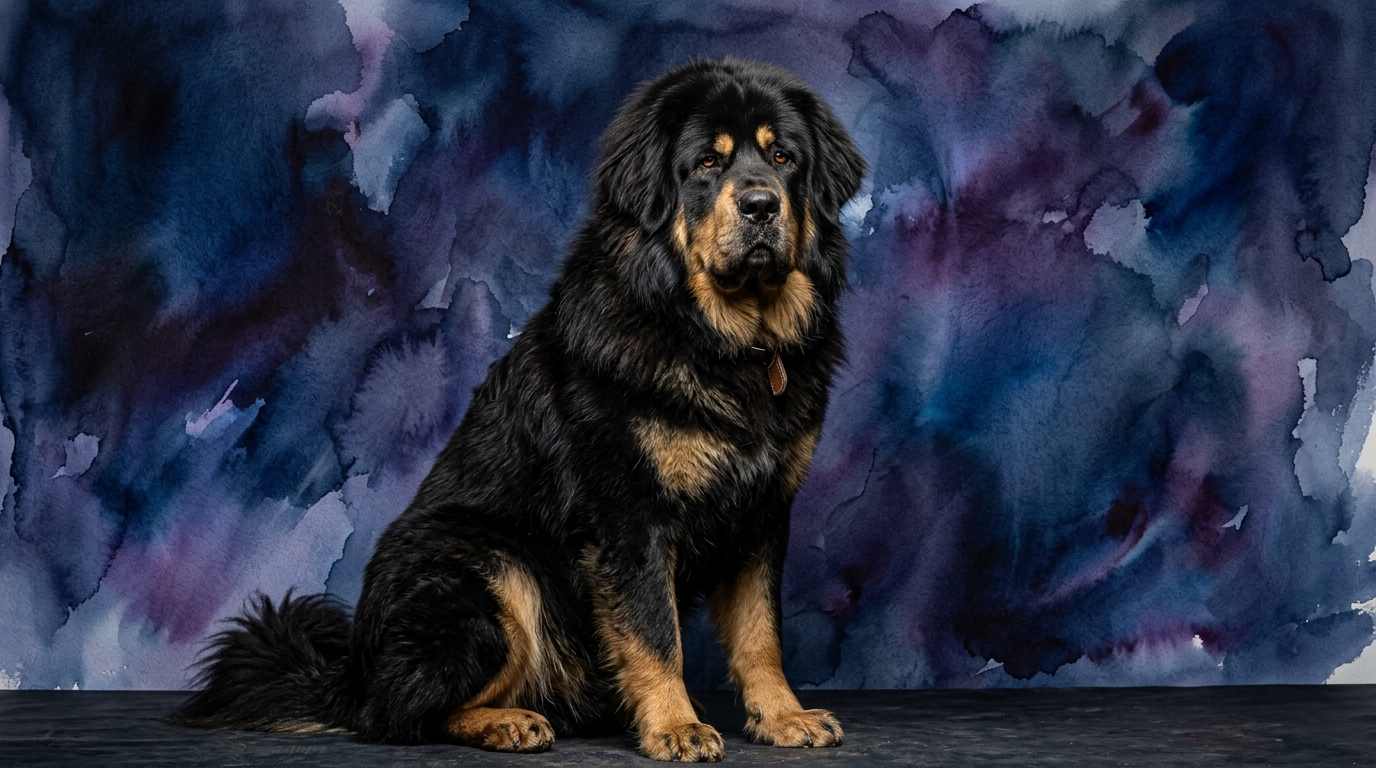
**Tibetan Mastiff:** The Tibetan Mastiff, though not included in Coren's standardized ranking system due to their distinct working heritage, presents a unique and compelling cognitive makeup. Their Problem Solving is also 3/5, but this often manifests in a highly self-reliant and strategic manner, such as assessing environmental threats, identifying optimal vantage points for observation, or independently deciding the most effective way to deter an intruder, reflecting their ancient role as solitary guardians. Training Speed is 3/5, meaning they are capable of learning a wide array of commands, but their strong will, independent nature, and inherent skepticism often require more patience, persuasive motivation, and a deep understanding of their specific cognitive drivers rather than simple rote repetition. Social Intelligence is 3/5; while they form profoundly deep and unwavering bonds with their immediate families, their social radar is less about universal affability and more about discerning trustworthiness and potential threats, making them discerning and reserved rather than overtly outgoing. Instinctive Drive at 3/5 is prominently and powerfully focused on territorial guarding and protection, a deeply ingrained and non-negotiable trait that shapes much of their cognitive output. Their Memory at 3/5 supports their exceptional ability to recall threats, safe individuals, and patterns within their perceived domain over significant durations.
Where the Great Dane Excels Cognitively
The Great Dane's cognitive edge shines brightest in the realm of social intelligence, scoring a notable 4/5 compared to the Tibetan Mastiff's 3/5. This higher rating signifies a greater capacity for understanding and responding to human emotional states, subtle body language, and complex social cues within a family environment. A Great Dane is more likely to intuitively offer comfort when its owner is distressed, pick up on the nuanced rhythm of household routines, or modify its behavior based on a slight shift in tone of voice or facial expression. Their inherent desire for close companionship and their strong drive to connect with their humans fuel this exceptional responsiveness, making them extraordinarily attuned to their human family's needs and moods. This social dexterity also plays a significant role in their Coren ranking, highlighting a greater innate inclination to work cooperatively with humans in an obedience or task-oriented context, processing social information more rapidly and integrating it into their decision-making.
Where the Tibetan Mastiff Shows Unique Strengths
While the Tibetan Mastiff matches the Great Dane in Problem Solving (3/5), their application of this ability is uniquely tailored and profound, deeply rooted in their historical role as independent guardians. Their cognitive strength lies not in collaborative problem-solving with humans, but in a self-directed, methodical assessment of their environment and an unwavering, autonomous commitment to their perceived duties, often without human instruction. For instance, a Tibetan Mastiff might independently strategize the most effective patrol route for their extensive territory, or discern with remarkable accuracy between a genuine, subtle threat and a harmless passerby, making critical decisions on their own. Their instinctive drive, also rated 3/5, is profoundly and singularly channeled into territorial protection and vigilance, manifesting as a deep-seated, often silent, watchfulness and an unwavering resolve to safeguard their family and property. This isn't about quick obedience to human commands, but about a profound, self-motivated cognitive process geared towards assessing, managing, and responding to perceived risks, a distinct kind of practical intelligence honed over centuries of solitary responsibility.
Training Dynamics: Which is Easier and Why
When it comes to the practicalities of training, the Great Dane generally presents a more straightforward and often more rewarding path for the average owner. Their superior Social Intelligence (4/5) means they are inherently more eager to please their human companions and significantly more receptive to instruction and feedback. They quickly form associations between verbal commands, hand signals, and desired actions, often thriving on positive reinforcement and the opportunity to engage collaboratively with their owner in a learning context. Their Coren rank of #48 further underscores their capacity for obedience training, indicating a breed that typically requires fewer repetitions to learn new tasks and retains them more reliably over time. In stark contrast, the Tibetan Mastiff, with its 3/5 Social Intelligence and powerful independent streak, approaches training with a different and often more challenging mindset. While undoubtedly capable of learning (3/5 Training Speed), they often require exceptional patience, unwavering consistency, and a deeper understanding of their specific motivations. A Tibetan Mastiff needs to be convinced that a command is worthwhile, logical, or aligns with their own cognitive framework, rather than simply complying out of a generalized desire to please. Their deeply ingrained guarding instincts can also readily override a desire to follow commands if they perceive a threat, making impulse control and off-leash reliability significant, long-term training endeavors.
Active Owners vs. Relaxed Owners
For owners seeking a more relaxed, yet deeply engaged and socially responsive companion, the Great Dane often proves an excellent match. While they appreciate regular, moderate exercise such as daily walks and playtime, their primary need is for constant companionship and full inclusion in family life. Their "gentle giant" temperament means they are often content to lounge gracefully alongside their humans, provided they receive sufficient social interaction, mental stimulation, and affection. They thrive on being an integral part of the domestic rhythm, adapting well to varied activity levels as long as their profound need for connection and belonging is consistently met. Conversely, the Tibetan Mastiff, despite their calm and watchful demeanor indoors, is unequivocally better suited for owners who deeply understand, respect, and can accommodate their intensely ingrained working heritage. These dogs require owners who can provide a secure, appropriately sized territory to guard, and who are prepared for their independent, often aloof nature. While not typically requiring intense physical exertion like some high-drive sporting breeds, they need significant mental engagement related to their protective instincts, which might involve structured patrol time, monitoring their domain, or engaging in scent work. They are not typically suited for owners desiring a "go-anywhere" dog, preferring instead to observe and protect their established home base.
The Verdict
Choose a Great Dane if you seek a deeply empathetic, socially attuned companion who thrives on human connection and will readily integrate into family routines with a cooperative spirit.
Choose a Tibetan Mastiff if you appreciate an independent, discerning guardian with a profound sense of duty, and are prepared to provide a structured environment that honors their ancient protective instincts.
🧠 Find Your Pet's IQ Score
Our Pet IQ Lab assessment covers 25+ tests across 5 cognitive dimensions — personalized to your breed.
Take the Full IQ Test →Frequently Asked Questions
Do Great Danes bark a lot?
Great Danes are not typically excessive barkers, but they will vocalize to alert their families to strangers or unusual occurrences, fitting their moderate instinctive drive. Their social intelligence means they often learn quickly when barking is appropriate.
Are Tibetan Mastiffs good with children?
Tibetan Mastiffs can be excellent with children within their own family, often showing a gentle protectiveness once they recognize them as part of their "pack." However, their discerning social intelligence and guarding instincts mean they require careful supervision with unfamiliar children.
How much exercise do these large breeds need?
Both breeds benefit from moderate, consistent exercise. Great Danes need daily walks and playtime to maintain physical and mental well-being, while Tibetan Mastiffs, though not needing intense cardio, require ample space to patrol and mentally engage with their environment.