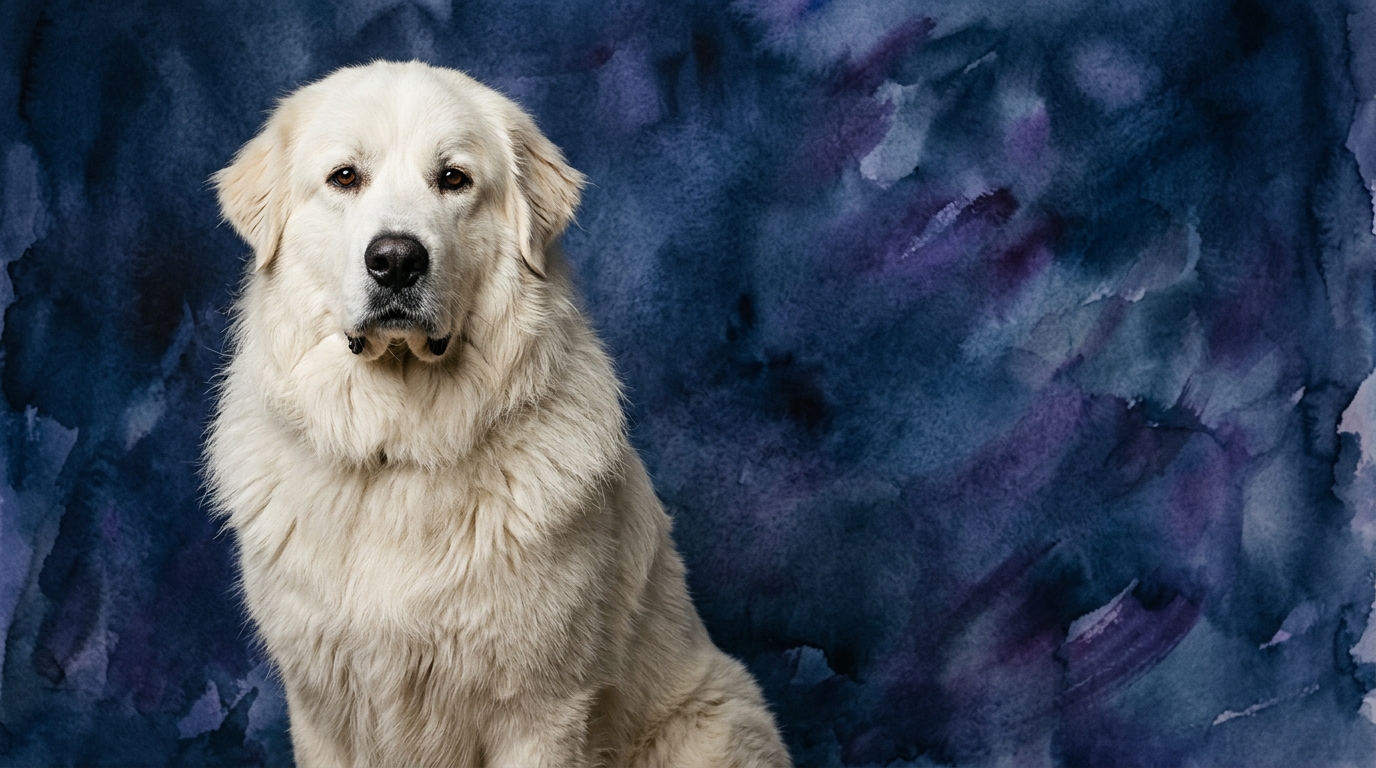
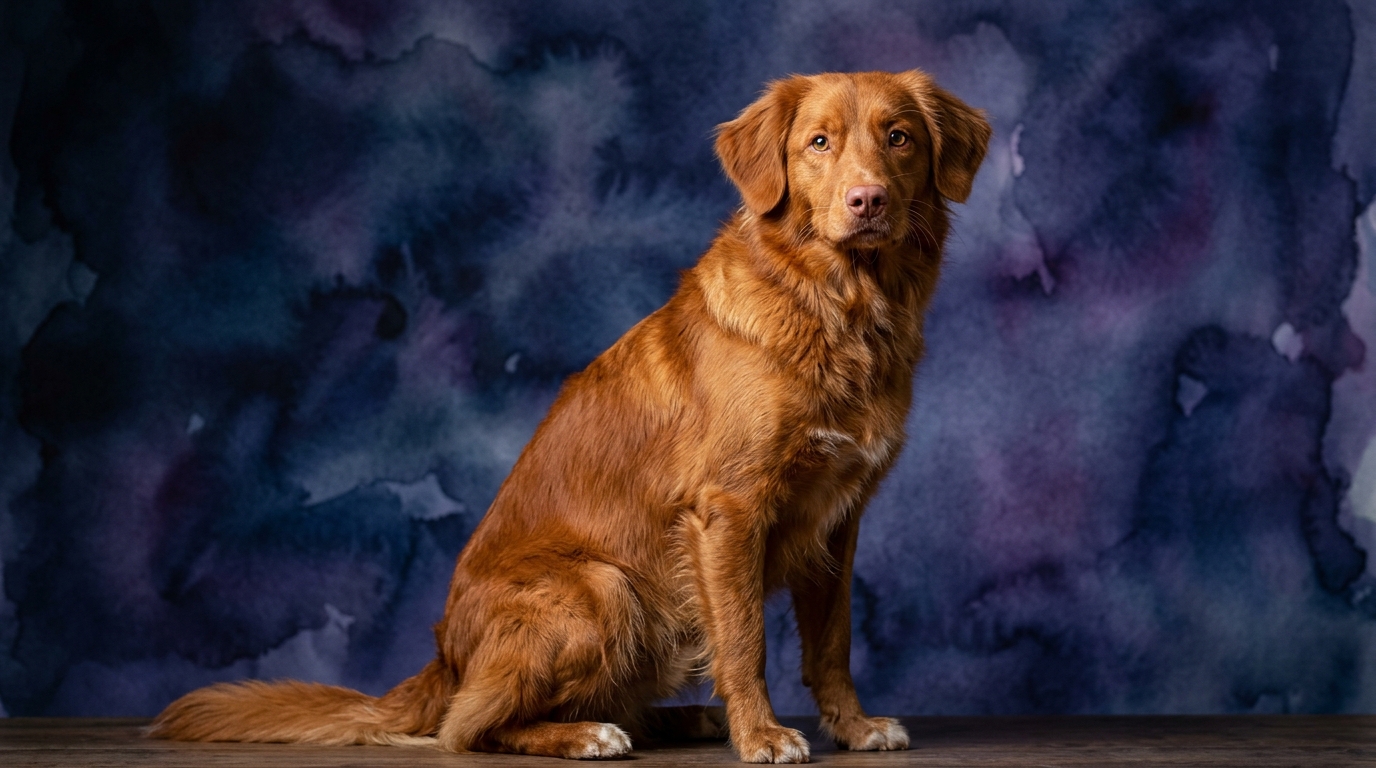
Side-by-Side IQ Profile: Great Pyrenees vs. Nova Scotia Duck Tolling Retriever
Delving into the cognitive makeup of the Great Pyrenees and the Nova Scotia Duck Tolling Retriever reveals how their shared 3/5 rating across five key intelligence dimensions manifests uniquely due to their breed histories and purposes. Both breeds possess capable minds, but their cognitive strengths are channeled into different expressions of canine brilliance.
**Great Pyrenees (Working Group, Coren Rank #64):** Originating as independent livestock guardians, the Pyrenees' intelligence is deeply rooted in autonomy and protection. Their **Problem Solving (3/5)** isn't about puzzles, but about autonomously assessing environmental threats and strategizing to deter predators from their flock, often without human direction. **Training Speed (3/5)** reflects their capacity to learn, yet their independent nature means they often weigh commands against their own judgment of duty; consistency and patience are paramount. Their **Social Intelligence (3/5)** is finely tuned to their immediate family and flock, discerning friend from perceived foe and understanding group dynamics, though they typically remain reserved with strangers. The Pyrenees' **Instinctive Drive (3/5)** is overwhelmingly focused on guarding—patrolling, vigilance, and territorial protection are their intrinsic motivations. Finally, their **Memory (3/5)** excels at retaining vital information for their role: territory layouts, the specific individuals within their charge, and patterns of potential dangers, rather than a vast repertoire of tricks.
**Nova Scotia Duck Tolling Retriever (Sporting Group, Not Coren-Ranked):** The Toller’s intelligence is sculpted by its role as an active hunting companion, requiring cooperative problem-solving and high energy. Their **Problem Solving (3/5)** is pragmatic and task-oriented, involving navigating complex terrain and water to efficiently retrieve downed fowl, making quick, adaptive decisions in dynamic environments. **Training Speed (3/5)** highlights their eagerness to learn and work collaboratively with their handler, quickly grasping new commands and routines, especially when training is engaging and rewarding. Tollers exhibit a **Social Intelligence (3/5)** characterized by strong bonds with their human companions and an adaptability in social settings, often reading human cues to anticipate play or training. Their **Instinctive Drive (3/5)** is powered by their retrieving and “tolling” behaviors, an innate desire to entice waterfowl and retrieve, showcasing a pronounced prey drive and affinity for water. The Toller’s **Memory (3/5)** is sharp for retaining specific training sequences, the precise location of hidden objects or retrieved game, and the patterns of interactive games, making them reliable partners in repeated tasks.
Where the Great Pyrenees Wins Cognitively
The Great Pyrenees excels in cognitive domains demanding independent judgment and unwavering vigilance. Their superior ability to operate autonomously without constant human instruction is a significant cognitive advantage. While many breeds rely on a handler for direction, the Pyrenees’ historical role required them to make life-or-death decisions for their flock, fostering a unique form of self-sufficiency. This manifests as an exceptional capacity for nuanced threat assessment, where they calmly evaluate situations and decide on the most appropriate, often non-confrontational, deterrent. Their long-term memory for territory boundaries, flock members, and environmental changes also surpasses breeds that don't share this guardianship heritage, allowing them to maintain consistent protection over extended periods. This patient observation and calculated response to their environment are distinct cognitive strengths.
Where the Nova Scotia Duck Tolling Retriever Wins Cognitively
The Nova Scotia Duck Tolling Retriever shines in cognitive areas emphasizing cooperative problem-solving, rapid adaptability, and task-oriented drive. Their intelligence is particularly suited to dynamic, fast-paced environments where quick decisions are necessary to achieve a shared goal with their human partner. Tollers demonstrate a distinct edge in physical problem-solving related to their retrieving work, such as navigating complex cover or water currents to locate game efficiently. Their intrinsic motivation for cooperative learning, driven by a desire to engage and please, makes them exceptionally receptive to intricate training sequences and multi-step commands. Furthermore, their creative "tolling" behavior, a unique form of problem-solving to entice waterfowl, highlights an inventive cognitive flexibility not commonly seen in other breeds. This combination of drive, adaptability, and cooperative spirit sets them apart.
Which Is Easier to Train and Why?
When considering ease of training, the Nova Scotia Duck Tolling Retriever generally presents a more straightforward path for most owners. Their 3/5 training speed, combined with a strong desire to work collaboratively and engage with their human companion, means they are often eager to please and respond well to positive reinforcement. Tollers thrive on mental stimulation and view training as an exciting, shared activity, making them quick to pick up new skills and commands. Their natural retrieving drive further enhances their trainability for tasks involving fetch or scent work, as these align with their instinctive motivations.
The Great Pyrenees, while capable of learning, can be more challenging to train due to their inherent independence. Their 3/5 training speed is often tempered by their self-reliant nature; they learn commands but may choose to comply only if they perceive a valid reason or if it aligns with their guardian instincts. This means that consistent recall or automatic obedience can require significant patience and understanding of their unique thought process. Training a Pyrenees demands establishing clear boundaries and demonstrating leadership, as they are not inherently inclined to follow every human directive without question.
Which Suits Active Owners vs. Relaxed Owners?
For owners with an active lifestyle, the Nova Scotia Duck Tolling Retriever is an ideal match. These dogs possess substantial energy reserves and a keen mind that thrives on consistent physical exercise and mental engagement. Tollers excel in dog sports like agility, flyball, and obedience, and they absolutely adore activities such as swimming, hiking, and extensive games of fetch. An owner who can commit to daily rigorous activity, structured training, and varied outdoor adventures will find the Toller to be an enthusiastic and fulfilling companion.
The Great Pyrenees, in contrast, is better suited for owners who appreciate a more relaxed, yet attentive, companion. While they require regular exercise, it often manifests as patrolling a secure yard or enjoying leisurely walks, rather than high-intensity bursts. Their independent and calm demeanor means they don't constantly demand human interaction or complex activities, making them a good fit for those who enjoy a self-sufficient dog. However, 'relaxed' does not mean sedentary; they still need a secure, spacious environment to fulfill their patrolling instincts and regular, moderate physical activity to maintain health.
The Verdict
Choose the Great Pyrenees if you seek a steadfast, independent guardian with a calm presence, valuing a dog capable of autonomous decision-making for protection within a secure, spacious environment.
Opt for the Nova Scotia Duck Tolling Retriever if you are an active owner desiring an enthusiastic, cooperative partner for outdoor adventures, dog sports, and engaging training, providing ample mental and physical stimulation.
🧠 Find Your Pet's IQ Score
Our Pet IQ Lab assessment covers 25+ tests across 5 cognitive dimensions — personalized to your breed.
Take the Full IQ Test →Frequently Asked Questions
Do both breeds require extensive socialization?
Yes, both breeds benefit significantly from early and consistent socialization. For the Great Pyrenees, this helps them distinguish between normal visitors and actual threats, while for the Toller, it ensures they are comfortable and well-adjusted in various environments and around different people.
Can a Great Pyrenees be a good family pet?
Absolutely, Great Pyrenees can be devoted family pets, especially when raised with children and other animals. Their protective instincts extend to their human family, making them gentle giants, though their independence means they may not be as overtly playful as some other breeds.
Are Nova Scotia Duck Tolling Retrievers good for first-time dog owners?
Tollers can be suitable for first-time owners who are committed to providing consistent training, ample exercise, and mental stimulation. Their intelligence and energy require an owner willing to invest time in their development, preventing boredom-related behaviors effectively.