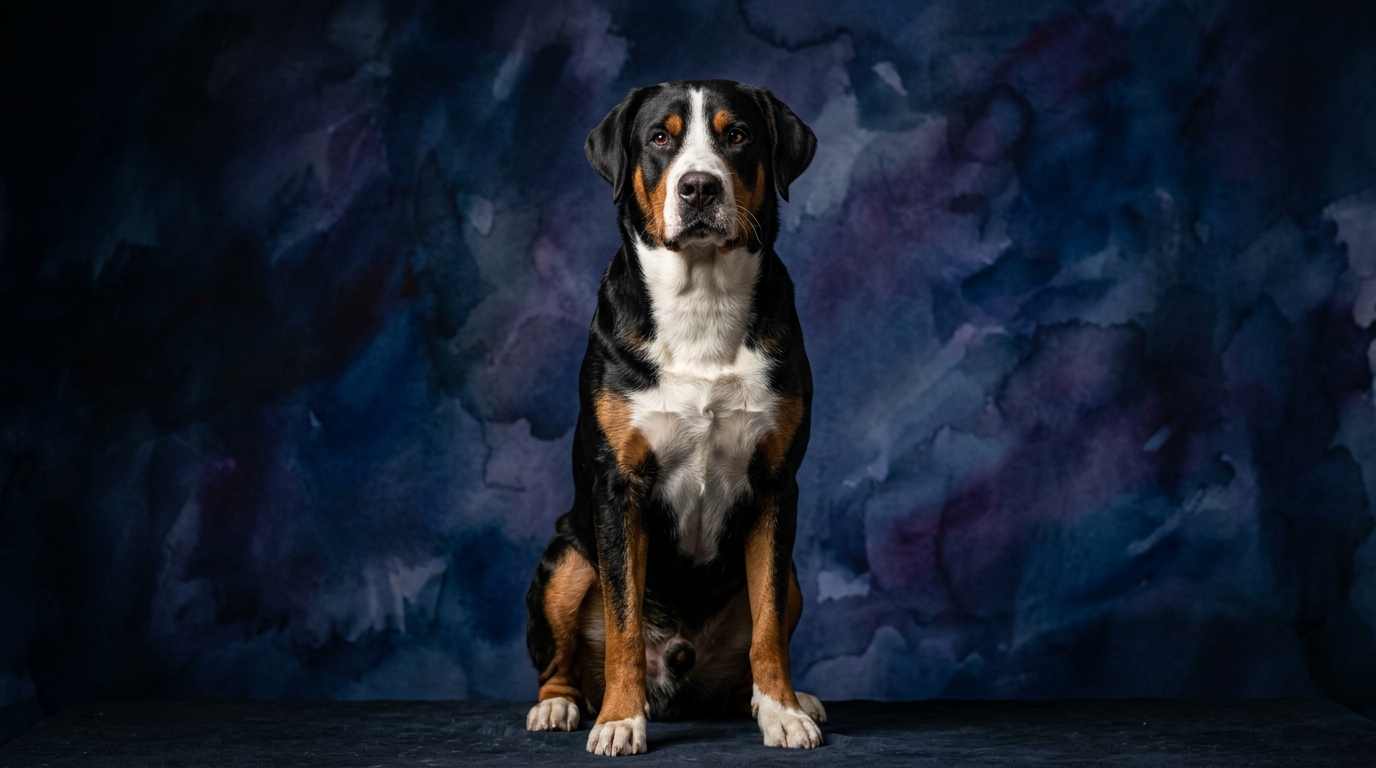
Side-by-Side IQ Profile: Greater Swiss Mountain Dog
Problem Solving (3/5): The Greater Swiss Mountain Dog approaches challenges practically, often seeking solutions through physical manipulation or learned procedures tied to farm tasks like moving objects. Their problem-solving is rooted in a history of assisting with tangible tasks, requiring them to figure out efficient methods.
Training Speed (3/5): These dogs generally learn new commands and routines at a moderate pace, responding well to consistent, positive reinforcement, especially when the training is purposeful and structured. They appreciate understanding their role in a task, which aids in retention and application.
Social Intelligence (3/5): Their social understanding is geared towards family and immediate human companions, often displaying discernment and a degree of reservation with strangers. They interpret human cues effectively, particularly when those cues relate to cooperative work or household routines.
Instinctive Drive (3/5): The Greater Swiss possesses a robust and diverse instinctive drive for drafting, herding, and guarding, reflecting their multi-purpose working heritage. This drive translates into a desire for purposeful activity and contributing to a structured 'pack' effort.
Memory (3/5): They exhibit solid memory for learned behaviors, routines, and the layout of their familiar environment. They retain commands and expectations over time, especially when those elements are consistently reinforced and integrated into their daily life or 'work.'
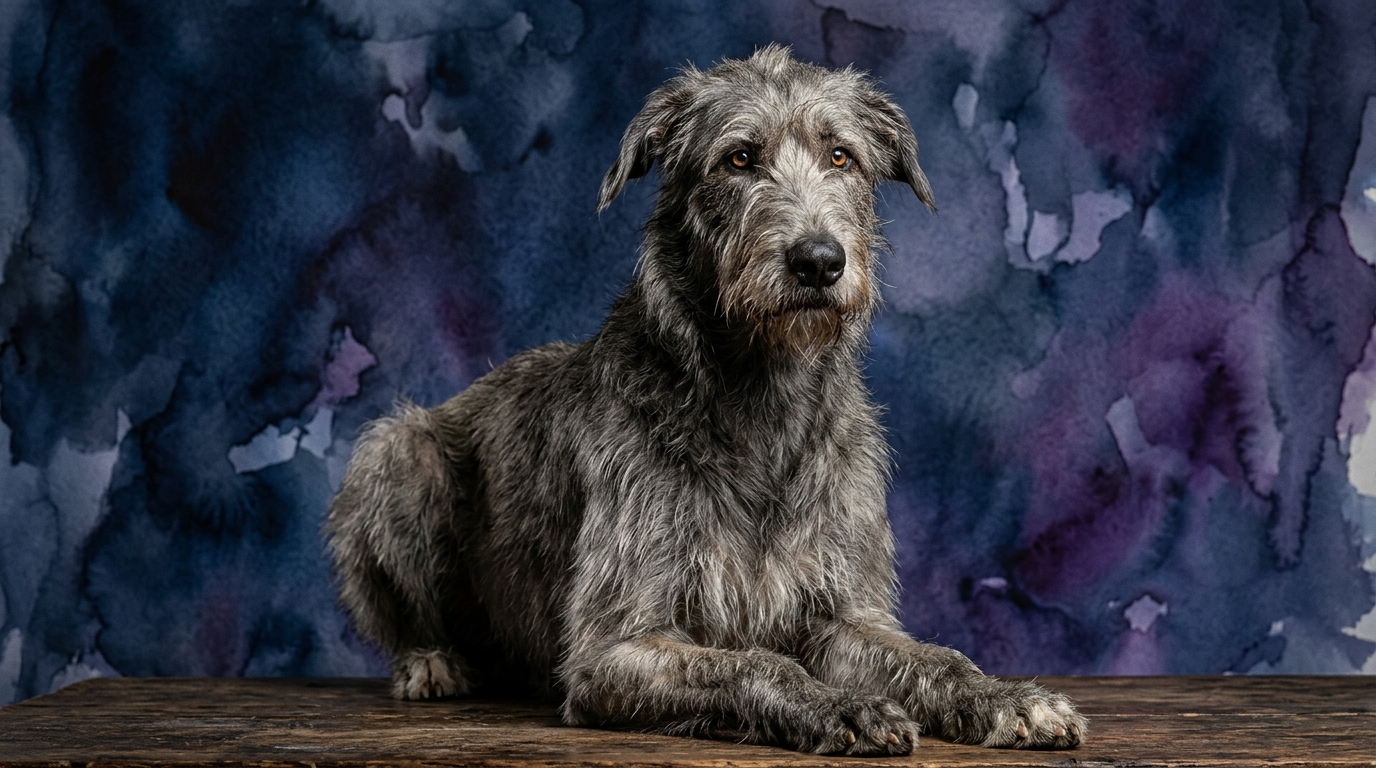
Side-by-Side IQ Profile: Irish Wolfhound
Problem Solving (3/5): The Irish Wolfhound's problem-solving often leans towards independent observation and strategic pursuit, characteristic of a sighthound. They excel at figuring out how to overcome terrain or anticipate the movement of a distant target, relying on visual cues and their own judgment.
Training Speed (3/5): While capable of learning, Irish Wolfhounds can appear to learn at a moderate pace, largely due to their independent nature and occasional disinterest in repetitive drills. Training success hinges on patience, positive reinforcement, and making the process engaging and relevant to their motivations.
Social Intelligence (3/5): Irish Wolfhounds are known for their profound sensitivity and deep, affectionate bonds with their family, often reading subtle emotional cues. While generally gentle, they can be reserved or indifferent towards strangers, preferring the quiet company of their inner circle.
Instinctive Drive (3/5): Their primary instinctive drive is the sighthound's powerful urge to spot, chase, and pursue. This drive is less about complex multi-step tasks and more about sustained focus, speed, and endurance over long distances, a legacy of their ancient hunting roles.
Memory (3/5): Irish Wolfhounds possess a good memory, especially for routes, familiar people, and past experiences, particularly those involving exciting outdoor exploration. However, their memory for commands might sometimes be overridden by a strong instinctual pull in the moment.
Where the Greater Swiss Mountain Dog Wins Cognitively
The Greater Swiss Mountain Dog’s cognitive strengths particularly shine in areas demanding collaboration and a structured approach to tasks. Their heritage as multi-purpose farm dogs means they excel at practical, multi-step problem-solving that directly serves a human goal. A Swissy might readily understand and execute a sequence like retrieving a specific tool, bringing it to a person, then waiting for the next instruction, demonstrating consistent follow-through. This ability to break down tasks and perform reliably, often without constant supervision, is central to their working intelligence. Their social intelligence is finely tuned to human cooperative efforts, adept at reading commands and the intent behind them, fostering seamless partnership in endeavors like carting or obedience. Their memory for learned sequences and their application in diverse, structured environments gives them an edge in adaptability within established parameters.
Where the Irish Wolfhound Wins Cognitively
Conversely, the Irish Wolfhound exhibits a distinct set of cognitive advantages, rooted deeply in their sighthound heritage. Their problem-solving prowess leans towards keen observation and independent judgment, especially over vast distances. An Irish Wolfhound might demonstrate superior spatial awareness, remembering optimal paths or anticipating distant animal movements based on visual cues. Their instinctive drive for pursuit, combined with exceptional visual processing, allows them to identify and track targets with intense focus and endurance. This isn't merely speed; it's a sophisticated cognitive mapping of their environment and the ability to make rapid, autonomous decisions in dynamic situations. Furthermore, their social intelligence, while reserved with strangers, is marked by deep emotional sensitivity within their family, often picking up on subtle mood changes and offering quiet companionship, a testament to their nuanced understanding of human emotion.
Which is Easier to Train and Why
Regarding ease of training, the Greater Swiss Mountain Dog generally presents a more straightforward path. Their working dog mentality often includes an inherent desire to please and a natural inclination towards understanding and performing tasks. They respond well to consistent, positive reinforcement and thrive on having a job. Their focus during training sessions tends to be more consistent, less prone to distraction by distant sights or independent whims. Their problem-solving skills are often applied to successfully completing a command for reward, making the training loop direct. In contrast, training an Irish Wolfhound requires a different approach, acknowledging their independent and sometimes philosophical nature. While capable, their sighthound instincts mean they might prioritize a scent or distant movement over a verbal command. Training demands more patience, creativity, and understanding of their motivations. Harsh corrections are counterproductive due to their sensitive nature; positive reinforcement, game-based training, and short, engaging sessions are more effective. Their unique behavioral drivers mean they learn when they perceive value or alignment with their inner world, not solely to please.
Which Suits Active Owners vs Relaxed Owners
The choice between these breeds significantly depends on an owner's lifestyle, specifically regarding activity levels and desired engagement. Active owners seeking structured activities, hiking, and a canine partner for specific tasks might find the Greater Swiss Mountain Dog a more fitting match. Their natural inclination for work means they thrive on purpose-driven exercise like carting, obedience, or competitive weight pulling. They enjoy long walks, but these are often more fulfilling with a 'destination' or task, engaging both body and mind. For active owners who also appreciate periods of profound calm and independent exploration, the Irish Wolfhound might be surprisingly suitable. While requiring significant bursts of exercise—ample space to gallop and long, steady walks—they are renowned for indoor tranquility. Once exercised, they often become giant, gentle 'couch potatoes,' content to lounge quietly. A truly 'relaxed' owner, meaning one preferring minimal interaction or exercise, would struggle with either. However, an owner enjoying intense activity bursts followed by peaceful companionship might find the Irish Wolfhound's rhythm more aligned, while those preferring consistent, purposeful daily engagement might lean towards the Greater Swiss.
The Verdict
Choose the Greater Swiss Mountain Dog if you seek a collaborative, purposeful companion eager to engage in structured activities and share a diligent work ethic.
Opt for the Irish Wolfhound if you appreciate independent thought, profound emotional sensitivity, and a calm, majestic presence that balances bursts of outdoor activity with serene indoor companionship.
🧠 Find Your Pet's IQ Score
Our Pet IQ Lab assessment covers 25+ tests across 5 cognitive dimensions — personalized to your breed.
Take the Full IQ Test →Frequently Asked Questions
Do Greater Swiss Mountain Dogs or Irish Wolfhounds bark a lot?
Greater Swiss Mountain Dogs can be vocal, often using their deep bark as a warning or to communicate their presence. Irish Wolfhounds are generally quieter, though they will bark if startled or to alert their family to something unusual.
Are either of these breeds good with children?
Both breeds are typically gentle and tolerant with children within their family, often displaying patience and a protective nature. However, due to their impressive size, supervision is always crucial to prevent accidental bumps with smaller children during play.
What are the main health concerns for these breeds?
Greater Swiss Mountain Dogs can be prone to hip and elbow dysplasia, bloat, and epilepsy, which require careful screening and management. Irish Wolfhounds are susceptible to bloat, heart conditions like dilated cardiomyopathy, and bone cancer (osteosarcoma), making regular veterinary check-ups important.