Side-by-Side Cognitive Profiles
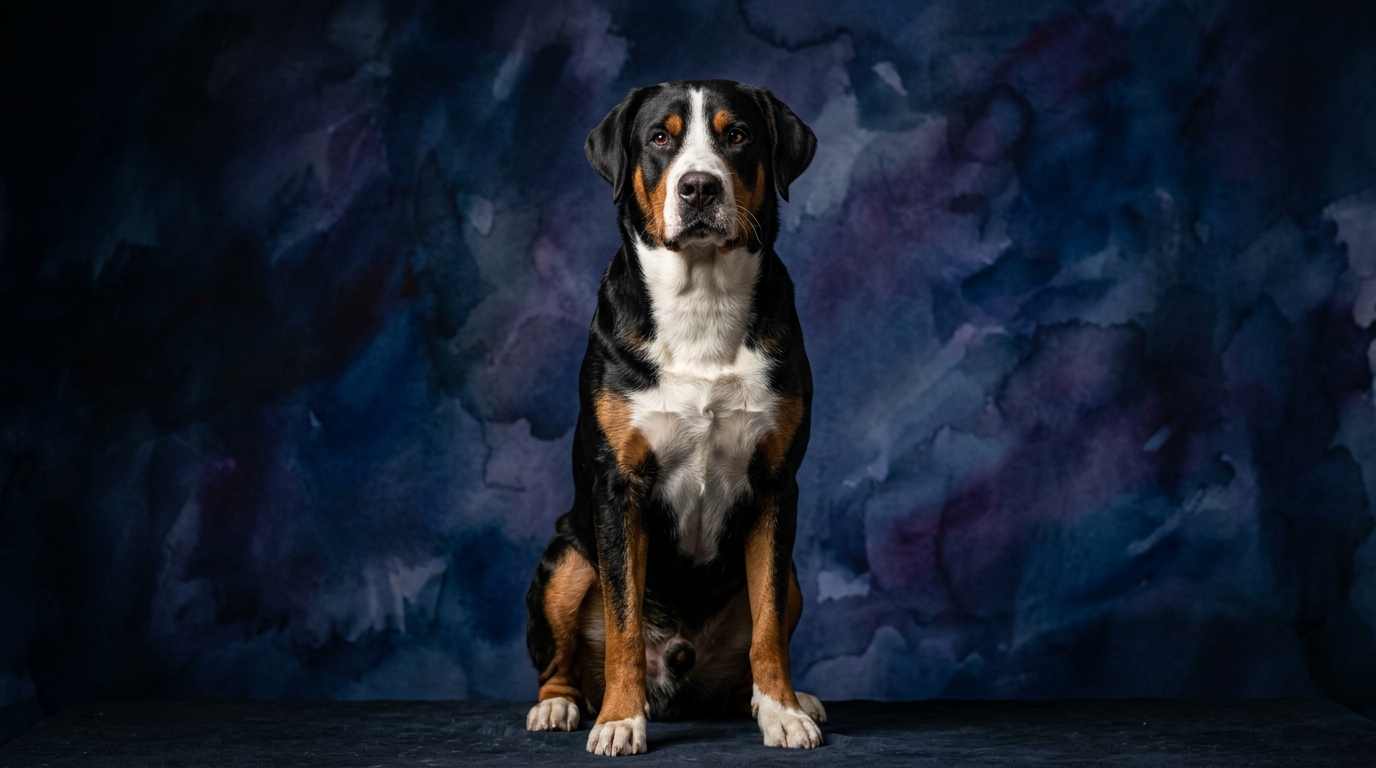
The Greater Swiss Mountain Dog, a robust working dog from the Working Group, presents a balanced and consistent cognitive profile, scoring 3 out of 5 across all evaluated dimensions. Its problem-solving ability, rated at 3/5, suggests a dog capable of navigating familiar challenges with methodical consistency rather than rapid innovation. Training speed, also 3/5, indicates that while the Swissy can learn and retain commands, it typically benefits from clear, patient, and repetitive instruction. Social intelligence, at 3/5, points to a dog that forms strong bonds and understands human cues within established relationships, though perhaps not with the immediate read of a highly people-focused breed. Instinctive drive, again 3/5, reflects a solid foundation of working instincts, whether for drafting or guarding, which are present but manageable. Finally, memory at 3/5 means the Swissy retains learned behaviors and associations reliably over time, contributing to its dependable nature.
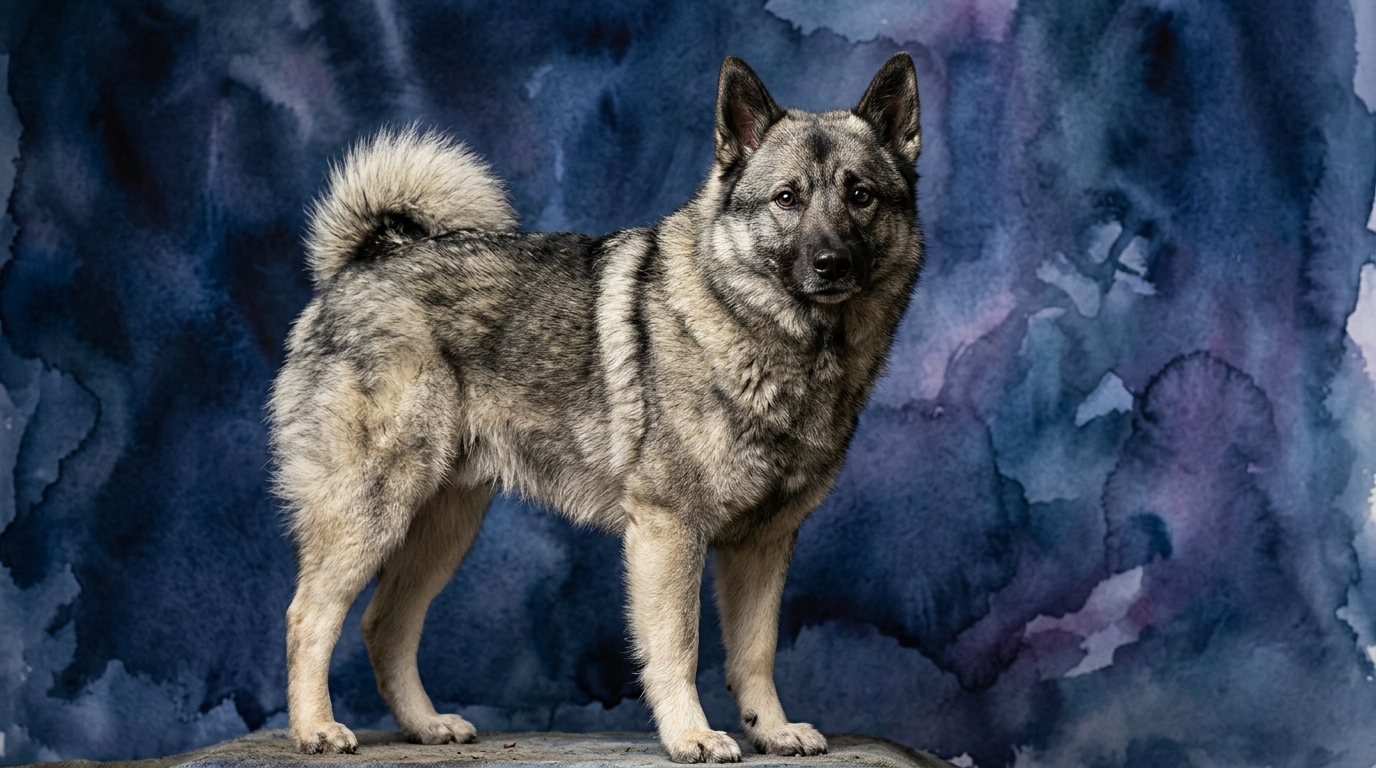
The Norwegian Elkhound, a resilient hunter from the Hound Group, exhibits a more specialized cognitive pattern with several higher scores. Its problem-solving ability shines at 4/5, indicating a dog that can independently assess situations and devise solutions, a crucial trait for a solo hunting companion. Training speed also rates higher at 4/5, suggesting a quicker grasp of new concepts and commands, though often paired with a hound's independent streak. Social intelligence matches the Swissy at 3/5, meaning it connects well with its chosen human companions but might be more reserved with strangers. Instinctive drive, like the Swissy, is 3/5, reflecting its strong heritage as a big-game hunter, which manifests as a keen sense of smell and pursuit. Notably, its memory is also 4/5, allowing it to remember complex sequences, scent trails, and learned tasks efficiently, which is invaluable for its working role.
Where the Greater Swiss Mountain Dog Wins Cognitively
While the Norwegian Elkhound boasts higher scores in specific areas, the Greater Swiss Mountain Dog's cognitive strength lies in its profound consistency and robust reliability across all intellectual dimensions. With a steady 3/5 in problem-solving, training speed, social intelligence, instinctive drive, and memory, the Swissy offers a predictably stable cognitive experience. This breed isn't prone to sudden bursts of independent thought that might challenge a handler; instead, its moderate problem-solving capacity makes it adept at tasks requiring steadfast application of known solutions rather than creative improvisation. For instance, repeatedly pulling a cart along a familiar route or guarding a specific area benefits from this unwavering mental approach. Its uniform intellectual profile means owners can expect a dog that learns at a steady pace, remembers what it’s taught reliably, and maintains a consistent social understanding, making it an exceptionally dependable partner in structured environments. This cognitive balance contributes to its calm demeanor and suitability as a steadfast companion and worker, requiring less mental "management" than a dog with more pronounced, and potentially more challenging, individual cognitive peaks.
Where the Norwegian Elkhound Wins Cognitively
The Norwegian Elkhound distinguishes itself with a superior capacity for rapid learning, adept problem-solving, and robust memory, all rated at 4/5. These elevated scores reflect a cognitive style optimized for independent work and complex decision-making in challenging environments. Its 4/5 problem-solving ability means the Elkhound is often quicker to figure out novel puzzles or navigate new situations without direct human intervention, a vital trait for a dog tasked with tracking game autonomously. This translates into a dog that can adapt more readily to changing circumstances and might even appear to "outthink" its handler in certain scenarios. The higher training speed (4/5) indicates a quicker acquisition of commands and concepts, potentially allowing for more advanced or intricate training protocols. Furthermore, its 4/5 memory ensures that these learned skills and solutions are retained effectively, building a deep repertoire of knowledge. This allows the Elkhound to recall complex scent patterns or remember specific routes, making it highly effective in roles requiring sustained cognitive engagement and detailed recall, such as advanced scent work or agility. The Elkhound's cognitive strengths lean towards a more independent and adaptable intellect, excelling in situations that demand quick processing and retained knowledge.
Which is Easier to Train and Why
When evaluating trainability, the Norwegian Elkhound generally presents a quicker learning curve due to its 4/5 training speed and superior memory, compared to the Greater Swiss Mountain Dog's consistent 3/5 in both areas. The Elkhound's faster processing allows it to grasp new commands and sequences of actions with fewer repetitions. This breed often shows an eagerness to engage in training that stimulates its problem-solving intellect, quickly connecting actions with desired outcomes. However, its strong instinctive drive and independent hound nature (3/5 instinctive drive, but coupled with 4/5 problem solving) can sometimes manifest as selective listening if it perceives a more interesting scent or activity, requiring a trainer who understands how to maintain motivation and focus. In contrast, the Greater Swiss Mountain Dog, with its 3/5 training speed, will require more patience and consistency. While it eventually learns and retains commands reliably (3/5 memory), the process is often more deliberate. The Swissy's lower problem-solving score means it might not spontaneously offer solutions or generalize learned behaviors as quickly, benefiting greatly from structured, consistent routines and positive reinforcement that clearly define expectations. Its steadier nature, however, might make it less prone to distraction by environmental stimuli than the Elkhound's keen hunting instincts. Therefore, while the Elkhound might learn faster, the Swissy’s consistent, if slower, approach can be easier for novice owners who prioritize predictability over quick, but sometimes challenging, intellectual engagement. For experienced trainers, the Elkhound offers a rewarding challenge of advanced training, while the Swissy is a dependable student for foundational obedience.
Which Suits Active Owners vs. Relaxed Owners
The choice between a Greater Swiss Mountain Dog and a Norwegian Elkhound significantly depends on an owner's lifestyle and their capacity for mental and physical engagement. The Norwegian Elkhound, with its enhanced problem-solving and memory (both 4/5), coupled with its instinctive drive (3/5) as a hunting hound, thrives with active owners who can provide consistent mental stimulation and vigorous physical exercise. This breed needs outlets for its sharp intellect, such as advanced obedience, agility, tracking, or other "job-like" activities that challenge its brain and body. A relaxed owner who cannot meet these needs might find the Elkhound resorting to self-employment, potentially leading to behaviors like excessive barking, digging, or destructive chewing out of boredom. Its heritage as a big-game hunter means long walks are good, but off-leash exploration in secure areas or scent work is even better to satisfy its independent drive. In contrast, the Greater Swiss Mountain Dog, with its balanced 3/5 across all cognitive dimensions, is generally better suited for owners seeking a more relaxed, yet still engaged, companion. While certainly not a couch potato, the Swissy's energy levels are typically more moderate than the Elkhound's, and its cognitive needs are met through consistent routines, family interaction, and regular, but not necessarily intense, exercise like walks, hiking, or even carting. Its steady temperament and less pronounced independent problem-solving mean it's less likely to create its own adventures if under-stimulated. A relaxed owner who still commits to daily walks and consistent, gentle training will find the Swissy a loyal and content companion, appreciating its predictable nature.
The Verdict
Choose Greater Swiss Mountain Dog if you value unwavering dependability and a steady, predictable cognitive partner that thrives on routine and consistent, patient guidance, and you prefer a dog with moderate problem-solving and training speed that offers a calm presence.
Choose Norwegian Elkhound if you are an active individual seeking a quick-witted, independent thinker who learns rapidly and excels at complex problem-solving and memory-intensive tasks, and you can provide ample mental and physical challenges.
🧠 Find Your Pet's IQ Score
Our Pet IQ Lab assessment covers 25+ tests across 5 cognitive dimensions — personalized to your breed.
Take the Full IQ Test →Frequently Asked Questions
Are Greater Swiss Mountain Dogs difficult to train?
Greater Swiss Mountain Dogs are not difficult to train, but they require patience and consistency due to their 3/5 training speed. They learn reliably and retain commands well with clear, positive reinforcement, making them good students for owners who appreciate a methodical approach.
Do Norwegian Elkhounds have a strong prey drive?
Yes, Norwegian Elkhounds possess a strong instinctive drive (3/5) stemming from their history as hunting dogs. This often translates into a keen interest in tracking scents and pursuing small animals, necessitating secure leashing and recall training.
Which breed is better for a first-time dog owner?
For a first-time dog owner, the Greater Swiss Mountain Dog might be slightly more manageable due to its consistent temperament and predictable cognitive profile, provided the owner is committed to patient, structured training. The Elkhound's higher problem-solving and independent nature might be more challenging for a novice.