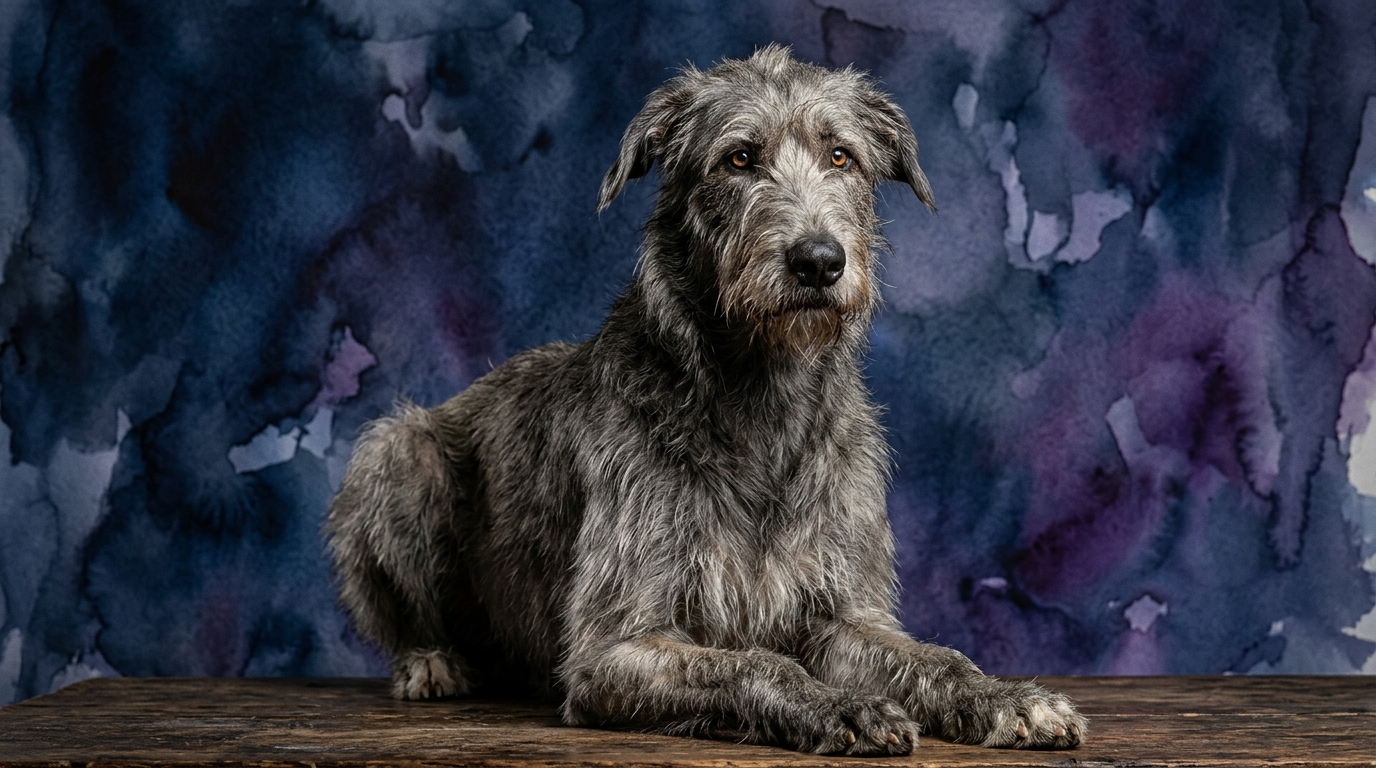
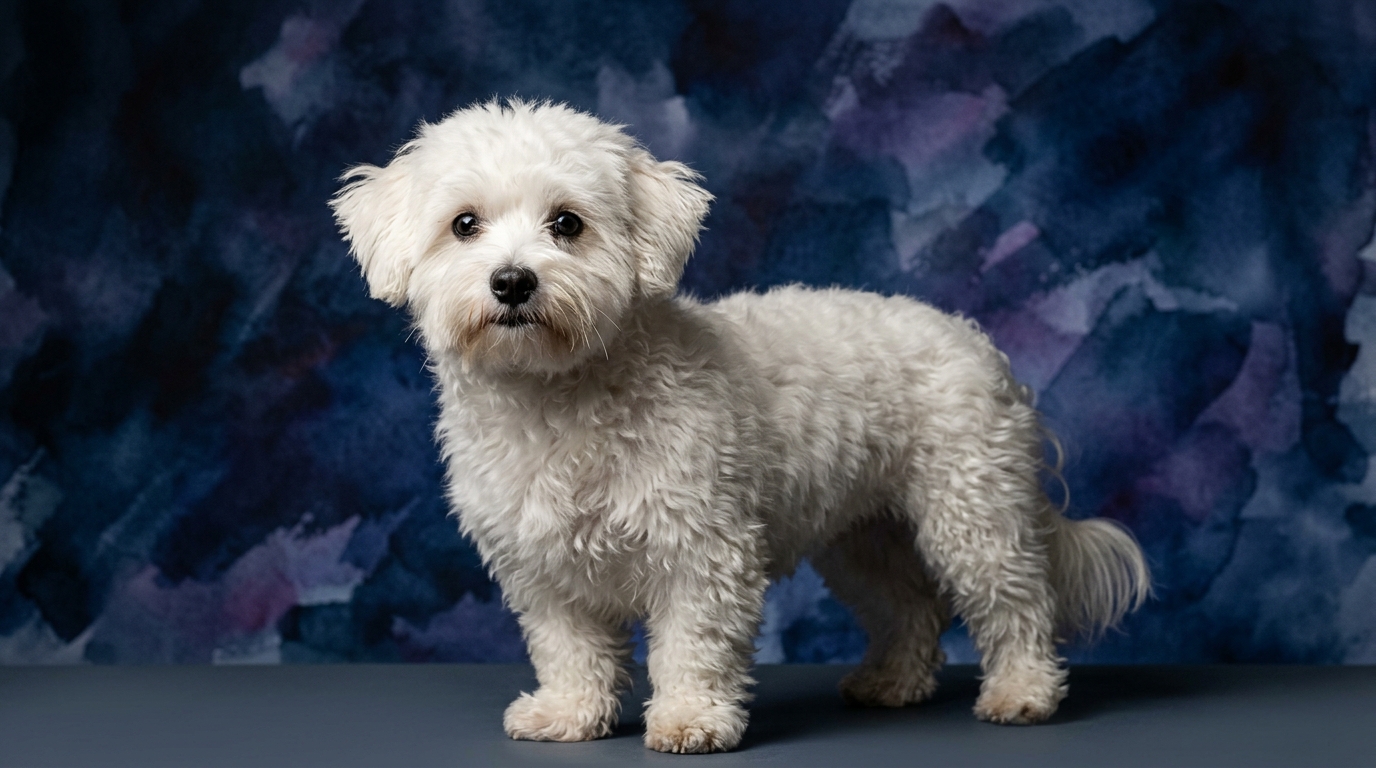
Side-by-Side IQ Profile: Irish Wolfhound vs. Coton de Tuléar
The Cosmic Pet Pet IQ Lab assesses five crucial dimensions of canine cognition, rating each on a scale of 1 to 5. Interestingly, both the Irish Wolfhound and the Coton de Tuléar share a consistent 3/5 rating across all categories, suggesting a balanced and competent, if not exceptional, cognitive aptitude. Understanding what a 3/5 signifies for each breed in context reveals their unique mental landscapes.
For the Irish Wolfhound, a 3/5 in **Problem Solving** indicates a dog capable of learning through experience and repetition, rather than one quick to devise novel solutions to complex challenges. They can navigate familiar environments and learn established routines effectively, but may not independently strategize intricate escape routes or puzzle toys without prior guidance. Their **Training Speed** at 3/5 means they learn new commands at a moderate pace, requiring consistent, patient instruction and reinforcement. They are not 'one-and-done' learners, nor are they particularly stubborn; rather, they absorb information steadily over time. Their **Social Intelligence**, also 3/5, reflects an ability to understand basic human cues and form strong bonds, though they might not always seek out complex social interactions beyond their immediate family circle. They are observant of their human companions but often carry a quiet dignity. The 3/5 in **Instinctive Drive** for the Wolfhound speaks to their sighthound heritage; while not constantly hunting, a significant drive to observe and pursue moving objects is present, reflecting a cognitive engagement with their environment. Finally, their **Memory** at 3/5 suggests they retain learned behaviors and experiences moderately well, benefiting from occasional refreshers but generally remembering past lessons and routines.
The Coton de Tuléar also registers a 3/5 in **Problem Solving**, indicating a capacity for learning through trial and error, particularly when motivated by reward or companionship. They can master simple puzzles or navigate household challenges, often with a charming persistence, but are not typically master strategists. Their **Training Speed** at 3/5 means they too learn at a moderate pace, often eager to please and highly responsive to positive reinforcement, making training an engaging process. They can pick up a variety of tricks and commands, provided the training is consistent and rewarding. In **Social Intelligence**, a 3/5 for the Coton highlights their strong aptitude for reading human emotions and thriving on companionship. They are adept at integrating into family dynamics and often seek out interaction, demonstrating a keen awareness of their human's mood and preferences. Their **Instinctive Drive** at 3/5 is typically channeled towards play, companionship, and perhaps mild territorial awareness rather than a strong prey drive, reflecting their history as companion animals. Lastly, their **Memory** at 3/5 means they retain information about people, routines, and learned behaviors quite well, remembering past interactions and established household rhythms.
Where the Irish Wolfhound Wins Cognitively
Despite sharing identical 3/5 ratings, the Irish Wolfhound's cognitive strengths manifest uniquely, particularly in the domain of **Instinctive Drive**. Their 3/5 drive is rooted in the ancient sighthound function of observing and pursuing large game, which requires a specific form of independent cognitive processing. This translates into a focused, deliberate observation of their surroundings and an ability to make independent decisions based on visual stimuli, even at a distance. Their problem-solving, while rated 3/5, often involves a spatial intelligence geared towards efficiently traversing open spaces or understanding complex terrain, reflecting their historical role. This nuanced application of their cognitive abilities allows them to excel in environments demanding a calm, independent assessment rather than constant human direction.
Where the Coton de Tuléar Wins Cognitively
The Coton de Tuléar, with its matching 3/5 scores, demonstrates a distinct cognitive advantage in its application of **Social Intelligence**. Their 3/5 rating here emphasizes their capacity for intimate companionship and their exceptional ability to read and respond to subtle human cues. This means their problem-solving often revolves around understanding how to gain attention, elicit play, or provide comfort, showcasing a highly adaptive social cognition. While their **Training Speed** is also 3/5, their inherent desire to be involved and to please their human companions can make them appear quicker to grasp new concepts in a positive, reward-based training setting. Their cognitive engagement is deeply intertwined with their social environment, making them particularly adept at navigating human-centric situations and forming strong, responsive bonds.
Which is Easier to Train and Why
When considering ease of training, the Coton de Tuléar often presents as the more manageable choice, despite both breeds sharing a 3/5 rating for training speed. This perception stems from several behavioral differences. Cotons possess a strong innate desire for human companionship and often thrive on positive reinforcement, making them highly motivated to engage in training sessions. Their smaller size also makes them physically easier to manage during training, and their social intelligence means they are usually attuned to their trainer's expressions and voice. Their problem-solving often manifests in quickly understanding what actions yield a desired reward or attention, streamlining the learning process in a domestic setting.
The Irish Wolfhound, while equally capable of learning at a moderate pace (3/5 training speed), requires a different training approach. Their independent sighthound nature means they can be more easily distracted by environmental stimuli (due to their instinctive drive) and might test boundaries more readily. Their sheer size necessitates early and consistent training to ensure they are manageable adults, as a misbehaving Wolfhound presents significant physical challenges. While they are not disobedient, their cognitive process for learning often requires more patience and structured repetition, as their problem-solving might involve figuring out how to achieve their own objectives, which may not always align with the trainer's immediate goal. The training journey for a Wolfhound is often longer and more demanding due to these inherent breed characteristics, even if their underlying learning capacity is similar to a Coton.
Suited for Active vs. Relaxed Owners
The Irish Wolfhound is better suited for owners who appreciate a calm, dignified presence indoors but are fully prepared for significant outdoor exercise requirements. While they are not hyperactive, their large frame and sighthound heritage mean they need ample space to stretch their legs, ideally a securely fenced yard for galloping, and regular, lengthy walks. Their cognitive engagement often involves observing their surroundings with a quiet intensity. Owners should be prepared for bursts of activity interspersed with long periods of repose, making them suitable for active individuals who can provide consistent, structured outlets for their physical and mental energy.
The Coton de Tuléar, in contrast, is an excellent match for owners seeking a constant, adaptable companion who thrives on consistent interaction. While they enjoy walks and playtime, their activity needs are moderate and can often be met with indoor games and shorter outings. Their cognitive engagement flourishes through being involved in family activities, learning new tricks, and receiving ample attention. They adapt well to various living situations, from apartments to larger homes, as long as they are integrated into the daily lives of their human companions. This makes them ideal for more relaxed owners who value a sociable, interactive dog rather than one requiring extensive, high-impact exercise.
The Verdict
Choose the Irish Wolfhound if you admire majestic presence, quiet dignity, and are prepared for a large dog's specific needs, including substantial exercise, patient training, and a calm, observant companion.
Opt for the Coton de Tuléar if you desire an affectionate, adaptable, and socially engaged companion who thrives on daily interaction and moderate activity, fitting well into various living situations.
🧠 Find Your Pet's IQ Score
Our Pet IQ Lab assessment covers 25+ tests across 5 cognitive dimensions — personalized to your breed.
Take the Full IQ Test →Frequently Asked Questions
Are Irish Wolfhounds good at learning tricks?
With a training speed of 3/5, Irish Wolfhounds can learn tricks, but it requires consistent, patient teaching and positive reinforcement. They may not pick them up as quickly as some other breeds, but they are capable of mastering a range of commands and behaviors over time.
How do Coton de Tuléars use their social intelligence?
Coton de Tuléars utilize their 3/5 social intelligence to read human emotions, understand household dynamics, and seek interaction. They often use their charm and responsiveness to engage with their family, adapting their behavior to fit social cues and maintain close companionship.
Does size impact a dog's problem-solving ability?
While size doesn't directly determine a dog's core problem-solving capacity (both breeds here are 3/5), it can influence *how* that ability manifests. A larger dog like the Wolfhound might apply problem-solving to physical navigation, while a smaller Coton might focus on manipulating objects or human attention within a confined space.