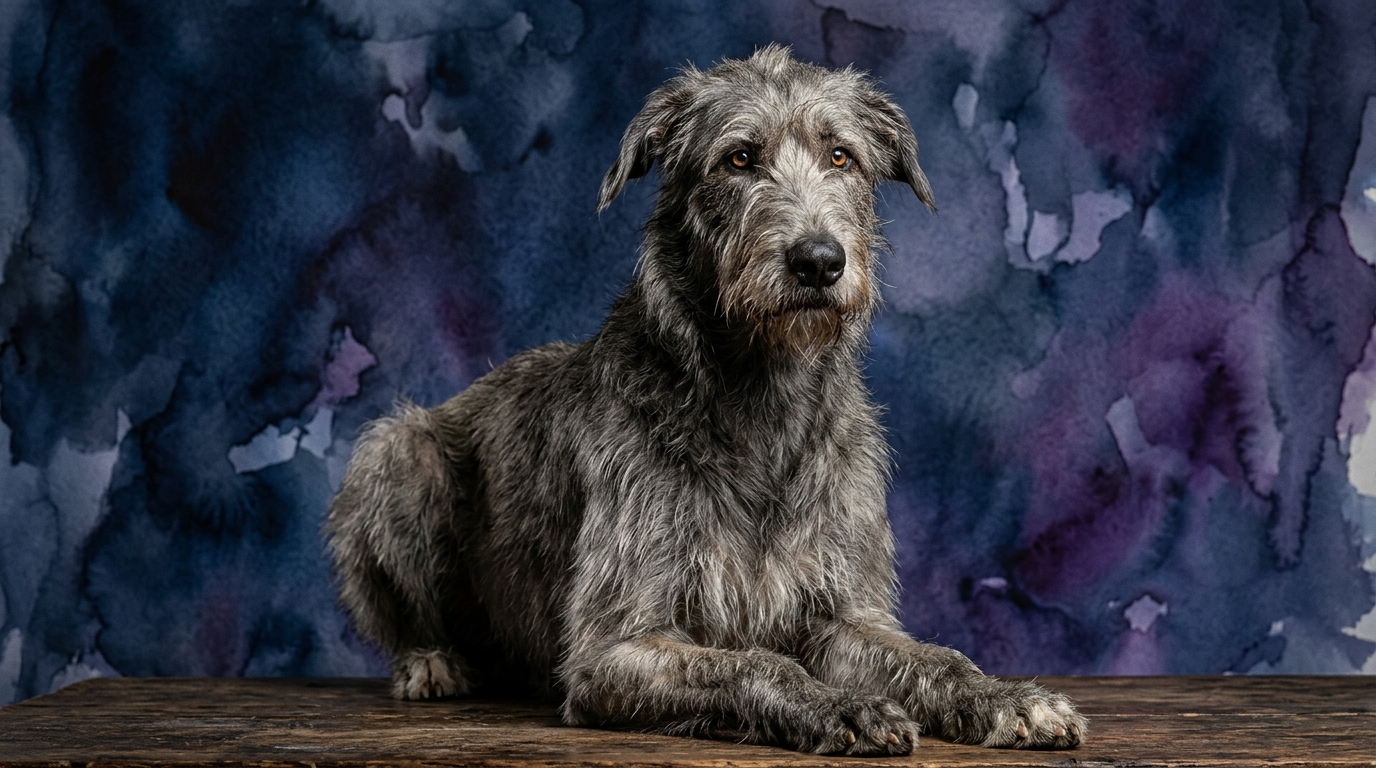
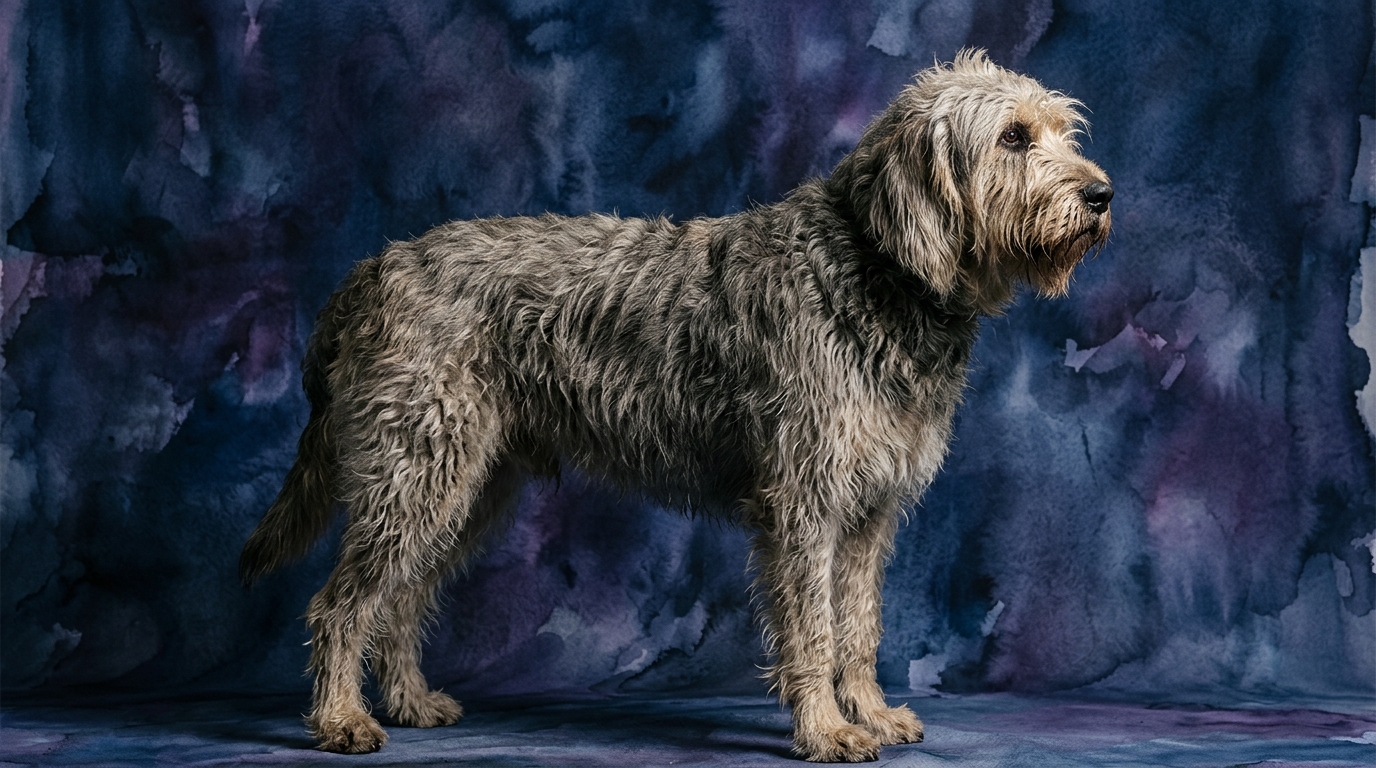
Side-by-Side IQ Profile: Irish Wolfhound vs. Otterhound
**Irish Wolfhound:**
**Problem Solving (3/5):** These gentle giants demonstrate a moderate capacity for problem-solving. Their sighthound history means they excel at quick visual assessments and independent decisions in open spaces, rather than complex, methodical puzzles. They apply learned solutions to familiar situations.
**Training Speed (3/5):** Irish Wolfhounds learn at a steady pace, thriving with patient, consistent positive reinforcement. They aren't rapid learners of complex commands, needing clear instruction and repetition. Their independent spirit requires engaging, rewarding training to maintain focus.
**Social Intelligence (3/5):** With moderate social intelligence, they bond strongly with family and generally interact well with other animals, though sighthound instincts can affect smaller, fast-moving creatures. They read human moods but their independence means they don't constantly seek direction.
**Instinctive Drive (3/5):** Their instinctive drive, primarily for coursing, is present but manageable. While they chase movement, this drive is not overwhelming in a well-managed home with appropriate outlets. It requires awareness and responsible handling in unfenced areas.
**Memory (3/5):** Irish Wolfhounds have good memory for routines, commands, and familiar people and places. They recall training cues effectively, especially with positive associations, but might not retain complex sequences over long periods without reinforcement.
**Otterhound:**
**Problem Solving (3/5):** Otterhounds exhibit a moderate problem-solving ability, often manifesting in methodical tracking. Their historical purpose required following intricate scent trails, indicating strength in persistent, sequential problem-solving rather than quick visual deductions. They excel at figuring out “where the scent went” puzzles.
**Training Speed (3/5):** Otterhounds learn at a steady, deliberate pace. Their scenthound nature often means single-mindedness on scent, requiring immense patience, consistency, and high-value rewards. They reliably perform established commands once learned, but aren't quick to pick up new tricks.
**Social Intelligence (3/5):** Moderate social intelligence allows them to thrive in pack environments, human or canine. Generally amiable, they read social cues within their family. However, scent focus can make them less outwardly responsive when a compelling smell is present.
**Instinctive Drive (3/5):** The Otterhound’s instinctive drive for scent and tracking is a strong, persistent 3/5. Once on a scent, redirection can be incredibly difficult. This powerful desire to follow a trail is a significant behavioral characteristic requiring careful management and suitable outlets.
**Memory (3/5):** Otterhounds have good memory, especially for scent trails and the locations of interesting smells. They recall familiar routes and people well, and once a command is truly learned, it tends to stick. Their memory is practical, serving their primary function of tracking.
Where the Irish Wolfhound Wins Cognitively
The Irish Wolfhound, with its background as a sighthound, often demonstrates a subtle cognitive advantage in tasks requiring quick visual processing and independent decision-making in open spaces. Their capacity to rapidly assess a visual field and react to movement, even with a 3/5 problem-solving score, suggests a specific acuity in spatial awareness and immediate situational assessment, crucial for coursing large game without direct human instruction. This translates to a dog that can quickly navigate complex visual environments, such as a busy dog park or a new trail, with a certain self-assuredness.
Where the Otterhound Wins Cognitively
Conversely, the Otterhound's cognitive strengths lie in areas demanding persistence, sequential processing, and an unparalleled focus on olfactory information. While sharing a 3/5 problem-solving score, their historical role as scent hounds means they excel at systematically breaking down complex scent puzzles. This breed showcases superior cognitive endurance in tracking, capable of maintaining intense concentration over long periods to follow a faint trail, a nuanced form of problem-solving that leverages their exceptional olfactory memory and methodical approach, distinguishing them from their visually-oriented counterpart.
Which is Easier to Train and Why
Determining which breed is 'easier' to train, given both score 3/5 in training speed, depends heavily on the training context and owner's approach. Irish Wolfhounds, while independent, often respond well to gentle, positive reinforcement centered around their desire for companionship and comfort. They tend to be more sensitive to harsh corrections and thrive with patient, consistent methods that build trust, making them amenable to learning household manners and basic obedience within a loving family structure. Otterhounds, however, present a different training dynamic; their powerful scent drive means that once they are 'on' a smell, their focus becomes almost singular, making it challenging to redirect them. Training an Otterhound often requires more structured, game-based approaches that leverage their love for scent work, turning obedience into a rewarding 'hunt' rather than a chore, and demanding an owner who understands their profound instinctive motivations.
Which Suits Active Owners vs. Relaxed Owners
When considering lifestyle, the Irish Wolfhound generally suits owners who appreciate a relaxed home environment but are prepared for bursts of activity. Despite their immense size, they are often described as 'gentle giants' indoors, content to lounge near their family. However, they still require regular, substantial exercise – brisk walks, secure off-leash running in a safe area – to maintain health and mental well-being, making them a fit for owners who can provide these periodic, intense exercise outlets. The Otterhound, on the other hand, is better suited for truly active owners who can dedicate significant time to physical and mental stimulation, especially activities that engage their powerful scenting abilities. They thrive on long walks, hikes, and particularly enjoy scent games or even formal tracking work, requiring consistent engagement to prevent boredom and destructive behaviors. While they can relax indoors, their need for purposeful activity is more pronounced and constant than that of the Irish Wolfhound.
The Verdict
Choose the Irish Wolfhound if you seek a majestic, calm companion who enjoys comfortable lounging at home but still requires regular, vigorous exercise in a secure environment. Their independent nature suits owners who appreciate a dog with self-possession and respond well to gentle, consistent guidance within a loving, calm household.
Opt for the Otterhound if you are an active, outdoors-oriented owner eager to engage in consistent, stimulating activities, especially scent work or long hikes. This breed thrives with owners who can patiently channel their tenacious tracking instincts and provide ample mental and physical challenges to satisfy their unique drive.
🧠 Find Your Pet's IQ Score
Our Pet IQ Lab assessment covers 25+ tests across 5 cognitive dimensions — personalized to your breed.
Take the Full IQ Test →Frequently Asked Questions
Do Irish Wolfhounds and Otterhounds make good family pets, despite their independent streaks?
Both breeds can be wonderful family pets, known for their amiable dispositions once properly socialized and trained. Irish Wolfhounds are often gentle with children, while Otterhounds are playful and tolerant, though their large size means supervision is always wise around very young children. Their independence doesn't preclude strong family bonds; it simply means they might not always be underfoot.
What kind of mental stimulation is best for each breed?
For the Irish Wolfhound, mental stimulation can involve short training sessions, puzzle toys, and exploring new environments visually during walks. Otterhounds benefit immensely from nose work, tracking games, and long walks that allow them to explore scents, which engages their primary cognitive strength and satisfies their instinctive drive.
Are either of these breeds suitable for first-time dog owners?
Both breeds, due to their size, specific needs, and moderate training speed, are generally better suited for experienced dog owners. Their unique hound characteristics – the Irish Wolfhound's sighthound independence and the Otterhound's persistent scent drive – require an owner who understands breed-specific behaviors and is committed to consistent training and management.