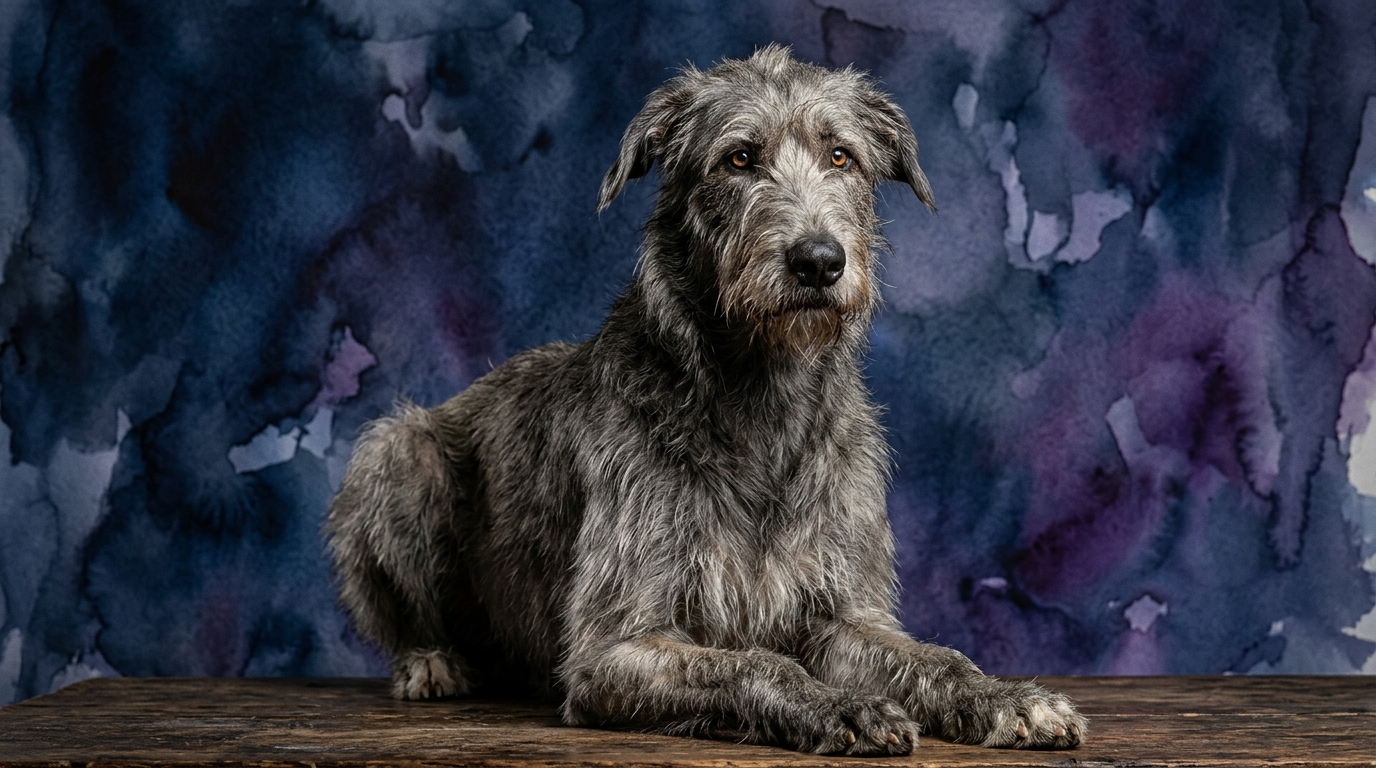
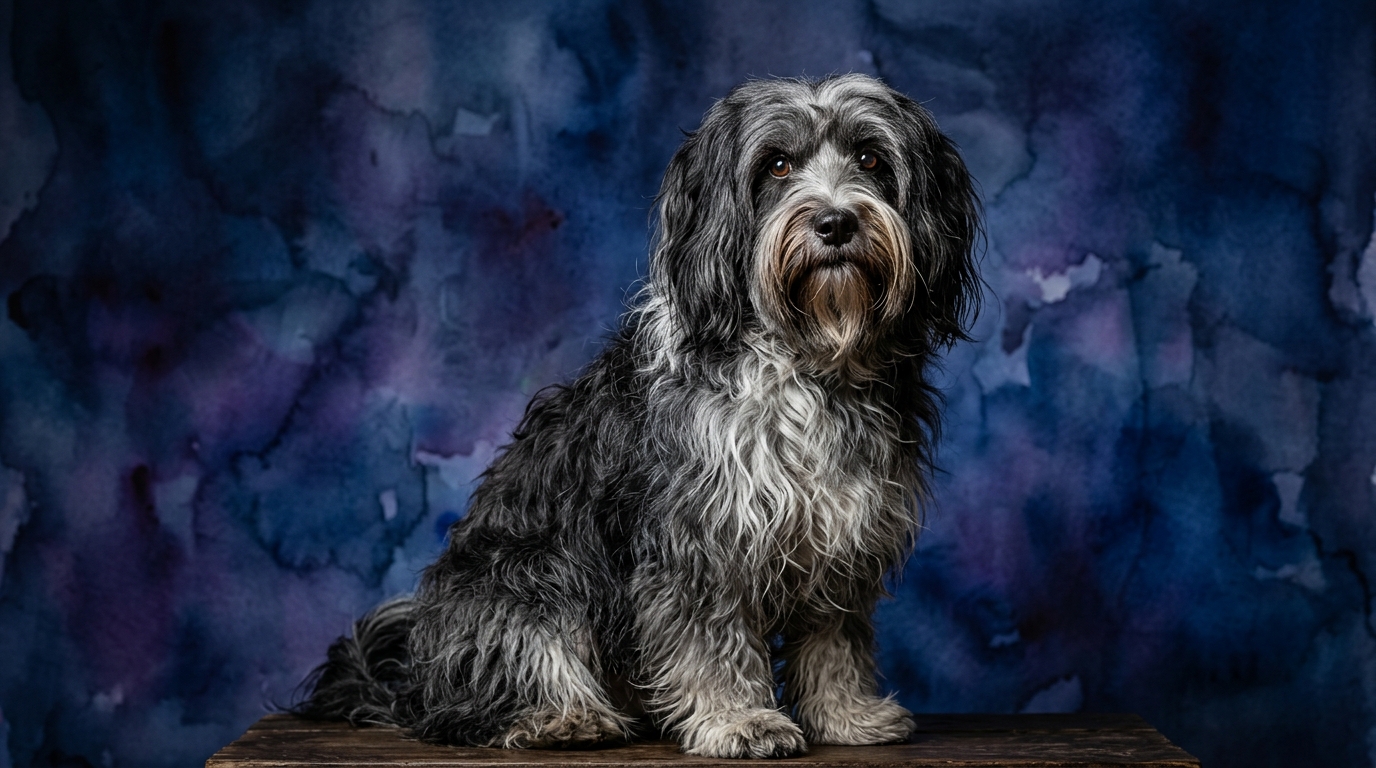
Side-by-Side Cognitive Profile: Wolfhound vs. Terrier
The Cosmic Pet Pet IQ Lab assesses canine intelligence across five critical dimensions, each rated on a scale of 1 to 5. Intriguingly, both the Irish Wolfhound and the Tibetan Terrier score a consistent 3/5 across the board, suggesting a moderate capability in each area. However, the *application* of these scores varies significantly due to their distinct breed characteristics and historical roles.
**Irish Wolfhound (Hound, Not Coren-ranked)**
**Problem Solving (3/5):** These towering sighthounds approach challenges with deliberate, observant patience. They might not quickly manipulate objects, but excel at spatial reasoning, understanding environment, and identifying pathways, often relying on keen eyesight and stature.
**Training Speed (3/5):** Wolfhounds learn at a moderate pace, requiring consistent, positive reinforcement. Their sighthound nature means they might ponder a command before complying, a thoughtful consideration rather than defiance.
**Social Intelligence (3/5):** Known for calm, gentle disposition, Irish Wolfhounds display quiet empathy. They read human emotions, responding with comforting presence, forming deep, loyal bonds within their family.
**Instinctive Drive (3/5):** Their historical role as large game hunters translates into strong, focused prey drive. While not impulsive, once a target is sighted, their instinct to pursue is powerful and can override commands.
**Memory (3/5):** Wolfhounds remember routines, people, and places with moderate retention. They won't forget a favored route or friendly face, but complex sequences might need regular refreshers.
**Tibetan Terrier (Non-Sporting, Coren rank #63)**
**Problem Solving (3/5):** Tibetan Terriers exhibit a clever, resourceful approach to problems. They might use agility and discernment to access desired items or navigate tricky spaces, sometimes employing tenacious trial and error.
**Training Speed (3/5):** These spirited dogs also learn moderately, but with a distinct independent streak. While capable, their willingness often hinges on task value or mood, requiring engaging, varied training methods.
**Social Intelligence (3/5):** Tibetan Terriers are highly attuned to humans, displaying a discerning social nature. Affectionate with family, they can be reserved with strangers, carefully assessing interactions before fully engaging.
**Instinctive Drive (3/5):** Historically watchdogs and monastery companions, their drive manifests as keen environmental awareness and protective instinct towards family and territory. They possess a strong 'gathering' instinct, often keeping family within sight.
**Memory (3/5):** Tibetan Terriers have moderate memory, recalling past experiences, training, and social cues effectively. They can recall complex sequences if motivated, but their independence might mean choosing not to demonstrate recall.
Where the Irish Wolfhound Excels Cognitively
The Irish Wolfhound's cognitive strengths shine in areas demanding calm observation and measured response, particularly given their imposing size. Their Problem Solving at 3/5, while numerically matching the Tibetan Terrier, manifests through a more spatial and environmental understanding. They are masters of their surroundings, often processing visual cues from a distance with sighthound discernment. This means they assess situations to find direct or least effortful solutions, leveraging height and reach, rather than frantic attempts. Their Social Intelligence, also 3/5, is characterized by profound, gentle empathy; they excel at providing a calming presence, intuitively sensing when a family member needs quiet companionship, offering support without being overbearing.
Where the Tibetan Terrier Shows Unique Cognitive Advantages
The Tibetan Terrier, with its Coren rank of #63, demonstrates a different flavor of cognitive prowess, despite sharing the same 3/5 scores. Their Problem Solving at 3/5 often involves a more hands-on, persistent approach. They are adept at manipulating objects, figuring out latches, or finding creative ways to reach desired items, demonstrating a clever resourcefulness, sometimes mischievous. This breed's instinctive Drive, also 3/5, leans heavily into territorial awareness and a watchful nature. They possess an acute sense of environment, quickly noticing changes and alerting their family. This makes their social intelligence, while rated 3/5, particularly geared towards discerning friend from perceived foe, offering discerning loyalty. Their memory, at 3/5, is often bolstered by keen observational skills, allowing them to recall specific events or cues with impressive detail, especially pertaining to territory or family.
Training Dynamics: Which Breed is Easier?
Both breeds present a moderate training challenge, sharing a 3/5 Training Speed, but the *nature* of that challenge differs. The Irish Wolfhound, despite sighthound independence, is often motivated by strong bonds and companionship. Training requires patience and understanding their thoughtful, sometimes slow, processing. They respond best to calm, consistent positive reinforcement, as harshness can shut them down. Their impressive size means early, consistent leash training and polite manners are crucial. Their instinctive prey drive of 3/5 means off-leash reliability in distracting environments is a significant undertaking. The Tibetan Terrier, also scoring 3/5, brings a distinct terrier-like independence and discerning nature. They learn quickly but may obey only if they perceive a good reason or if training is an engaging game. Their curiosity and potential stubbornness require varied, fun, highly motivating sessions. Their instinctive drive (3/5) towards guarding and observation means quick learning of 'watchdog' behaviors, but their independent streak can make recall a persistent project, especially when exploration calls.
Matching Breed to Lifestyle: Active vs. Relaxed Owners
The choice between an Irish Wolfhound and a Tibetan Terrier for active versus relaxed owners hinges less on raw 'intelligence' and more on lifestyle compatibility. The Irish Wolfhound, despite its size, is often a 'gentle giant' with periods of intense activity followed by long rest. They require regular, moderate exercise—brisk walks or trotting in a securely fenced area—but are not for high-impact sports. Their deep social intelligence and calm demeanor make them excellent companions for relaxed owners who enjoy quiet companionship, predictable routine, and have ample space. Owners must be prepared for growth spurts and associated exercise restrictions, but once mature, they fit well into a more relaxed household providing consistent, substantial walks. In contrast, the Tibetan Terrier, while not a high-energy 'sporting' breed, thrives with more consistent mental and physical engagement. Their problem-solving abilities and instinctive drive to observe and participate mean they benefit from active owners providing daily walks, play, and mental enrichment like puzzle toys or scent work. They are agile and enjoy exploring, suiting owners who enjoy hiking or dog sports like agility. Their social intelligence means they enjoy involvement in family activities, making them a better fit for owners who appreciate a constant, curious companion.
The Verdict
Choose an Irish Wolfhound if you seek a calm, empathetic giant content with moderate exercise and quiet companionship, valuing a deep, gentle bond over high-octane activity. Their thoughtful nature and imposing presence suit a relaxed, spacious home environment.
Opt for a Tibetan Terrier if you desire a clever, spirited companion who thrives on engagement, enjoys problem-solving games, and offers discerning loyalty within an active family setting. Their adaptable size and curious mind suit owners ready for consistent mental and physical enrichment.
🧠 Find Your Pet's IQ Score
Our Pet IQ Lab assessment covers 25+ tests across 5 cognitive dimensions — personalized to your breed.
Take the Full IQ Test →Frequently Asked Questions
Do Irish Wolfhounds respond well to obedience training?
Irish Wolfhounds respond well to consistent, positive obedience training, learning at a moderate pace. Their independent sighthound nature means they process commands thoughtfully, so patience and understanding of their gentle temperament are key for success.
Are Tibetan Terriers good at learning tricks?
Tibetan Terriers are quite capable of learning tricks, often enjoying the mental stimulation and attention. Their problem-solving skills and spirited nature mean they thrive on engaging, varied training methods that make learning feel like a fun game.
How does Coren rank relate to the Pet IQ Lab scores?
The Coren rank primarily assesses working and obedience intelligence, focusing on how quickly a dog learns and obeys commands. Pet IQ Lab scores, like those for the Irish Wolfhound and Tibetan Terrier, offer a broader, multi-dimensional view of cognition, including problem-solving, social intelligence, and instinctive drives, providing a more holistic understanding beyond just obedience.