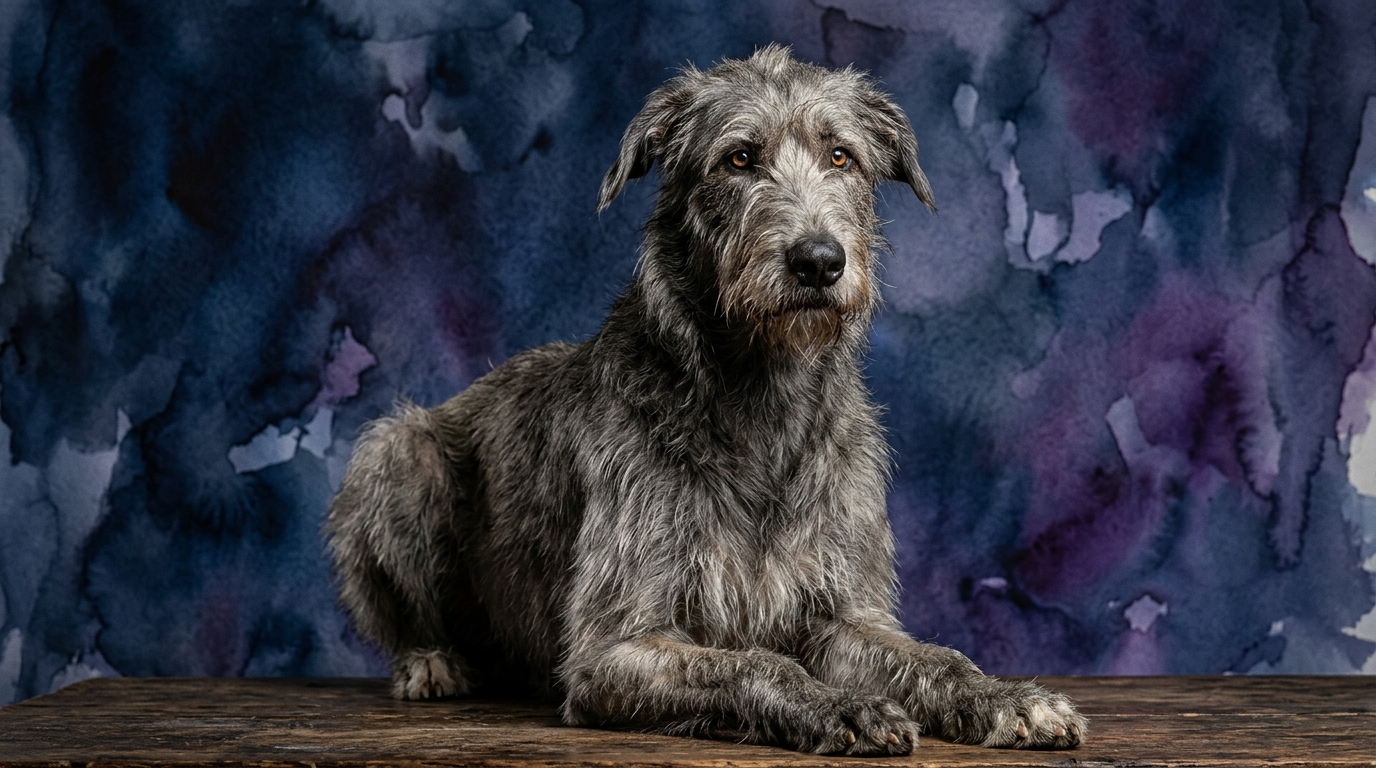
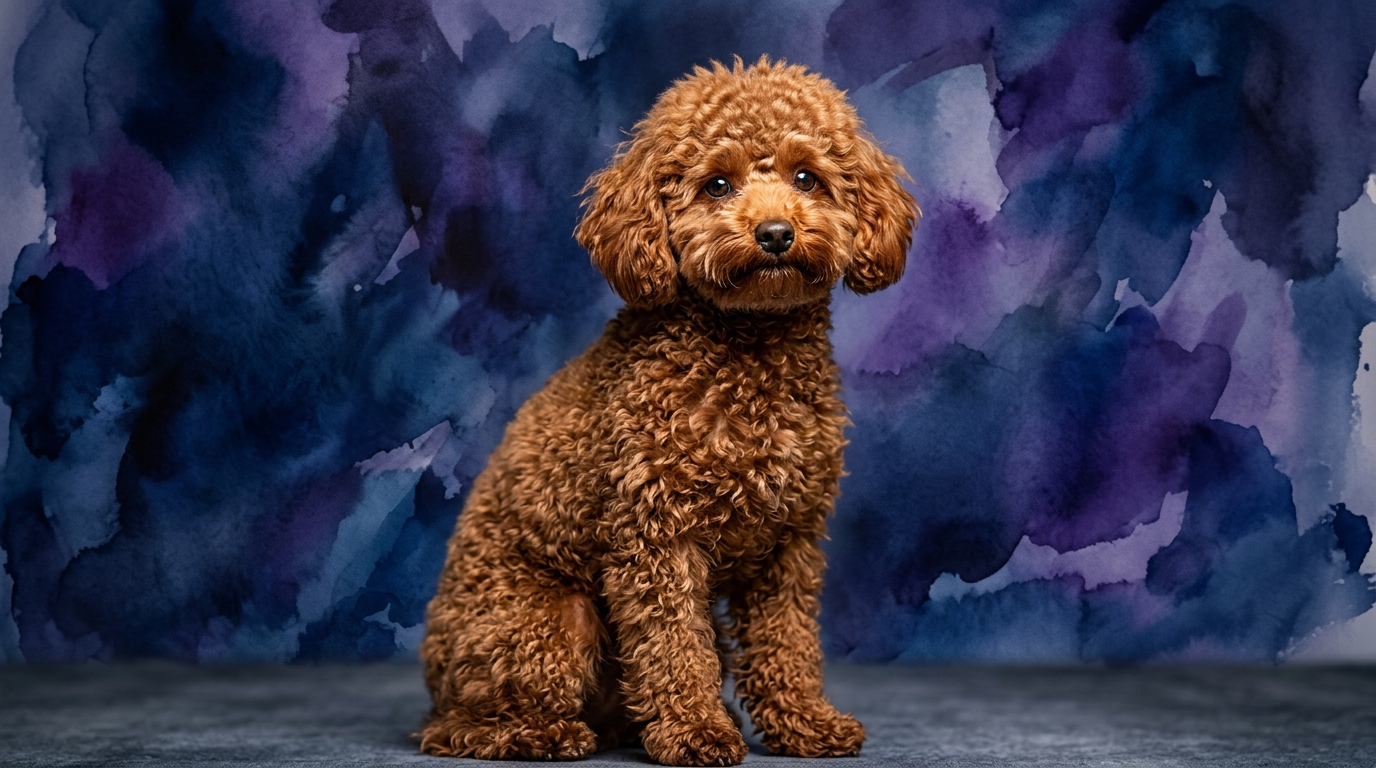
Side-by-Side IQ Profile: Irish Wolfhound vs. Toy Poodle
The majestic Irish Wolfhound, a breed celebrated for its historical role in hunting large game, presents a balanced cognitive profile within the Cosmic Pet Pet IQ Lab framework. Their Problem Solving is rated 3/5, suggesting a practical intelligence geared towards navigating their environment and tasks, often relying on direct action rather than abstract thought. This might manifest as persistent effort to overcome physical barriers or a focused pursuit of an objective. Their Training Speed, also at 3/5, indicates they are capable learners, but require patience and consistent repetition to master new commands, absorbing information at a steady, deliberate pace. Social Intelligence stands at 3/5, reflecting an ability to form deep bonds and understand household dynamics, often expressed through a calm, observant demeanor rather than overt displays. Their Instinctive Drive, scored 3/5, is present but manageable; while possessing a strong sight-hound's urge to chase, it's typically not overwhelming in a domestic setting. Finally, their Memory, at 3/5, ensures they retain learned behaviors and recognize familiar people and routines, though complex sequences might need occasional refreshing.
The sprightly Toy Poodle, a breed whose origins trace back to water retrieval despite its modern companion role, showcases a markedly different, often more accelerated, cognitive skill set. Scoring a perfect 5/5 in Problem Solving, these dogs exhibit remarkable resourcefulness, quickly analyzing novel situations and devising clever strategies to achieve their goals, whether it’s opening a cabinet or figuring out a puzzle toy. Their Training Speed is also an impressive 5/5, meaning they grasp new commands and concepts with exceptional rapidity, often requiring only a few repetitions before understanding. This makes them incredibly responsive and a joy to teach. Social Intelligence is rated 3/5; while deeply affectionate and capable of understanding human moods, their primary mode of interaction might be more task-oriented or focused on eliciting specific responses. Their Instinctive Drive, like the Wolfhound, is 3/5, a moderate level that can manifest as an interest in retrieving or playful chase, a remnant of their working ancestry, but easily channeled. Crucially, their Memory is 5/5, ensuring that once a skill or piece of information is learned, it is retained for extended periods, contributing to their impressive long-term behavioral repertoire.
Where the Irish Wolfhound Wins Cognitively
While the Toy Poodle boasts higher numerical scores in several categories, the Irish Wolfhound possesses a distinct cognitive strength rooted in its historical purpose and physical presence. Their 3/5 in instinctive drive is not a weakness but a specific type of focused, tenacious intelligence. This drive, honed over centuries for the sustained pursuit of large, fast-moving prey, translates into a remarkable capacity for endurance and single-minded dedication to a task once engaged. Unlike breeds that might quickly solve a puzzle then lose interest, a Wolfhound's cognitive strength lies in its ability to maintain focus and effort over time, a trait crucial for tasks requiring stamina and determination rather than rapid-fire problem-solving. Their social intelligence, while 3/5, often manifests as a profound, quiet understanding of their human companions, offering a calm, steady presence that is less about performing tricks and more about deep, empathetic connection. They are not easily flustered by environmental changes, demonstrating a robust mental resilience and a dignified, unyielding spirit that speaks to a deep internal fortitude. This calm processing of their environment, coupled with their physical power, allows them to approach challenges with a measured, deliberate perspective.
Where the Toy Poodle Wins Cognitively
The Toy Poodle’s cognitive strengths are undeniably prominent, particularly in areas of rapid acquisition and retention of information. Their 5/5 Problem Solving score means they are constantly analyzing their environment, often figuring out complex sequences of actions to get what they want, whether it’s opening a treat jar or navigating an intricate obstacle course. This isn't just about simple curiosity; it’s about genuine strategic thinking and adaptability. Coupled with a 5/5 Training Speed, they are extraordinarily quick studies, absorbing new commands and concepts with minimal repetition. This rapid learning curve allows them to master an extensive vocabulary of cues and perform complex, multi-step behaviors with ease. Their 5/5 Memory is the lynchpin of this cognitive prowess, ensuring that once a skill is learned, it is rarely forgotten, making them ideal candidates for advanced obedience, agility, or even service work where a vast repertoire of retained behaviors is essential. This combination of quick thinking, rapid learning, and excellent recall makes the Toy Poodle incredibly versatile and capable of excelling in almost any mental challenge presented to them.
Which is Easier to Train and Why?
Without question, the Toy Poodle is significantly easier to train, a fact directly supported by their impressive 5/5 scores in both training speed and memory. They possess an innate eagerness to engage in learning, often finding the process itself highly rewarding. Their quick comprehension means they can pick up a new command in just a few sessions, and their exceptional recall ensures that once learned, it sticks. This makes shaping complex behaviors, from advanced obedience to intricate tricks, a relatively smooth and efficient process. In contrast, the Irish Wolfhound, with its 3/5 scores in training speed and memory, requires a more patient and consistent approach. They are not unwilling to learn, but their processing speed is more deliberate. Repetition is key, and handlers must be prepared for a longer learning curve for each new command. While capable of mastering obedience, their learning is more about understanding the "why" and building a routine, rather than a quick assimilation of abstract cues. Their training benefits from positive reinforcement and clear, consistent instruction over time, building on their steady, rather than rapid, cognitive absorption.
Which Suits Active vs. Relaxed Owners?
The choice between these two breeds often hinges on the owner's lifestyle and their preferred level of engagement. Active owners who enjoy daily mental challenges and structured activities would find the Toy Poodle an ideal match. Their 5/5 problem-solving and training speed mean they thrive on consistent mental stimulation, excelling in dog sports like agility, rally, or even complex trick training. While their physical exercise needs are moderate, their minds demand engagement, making them perfect for owners who want to actively teach and interact with their dog on a daily basis, exploring new skills and reinforcing learned behaviors. Conversely, the Irish Wolfhound is better suited for more relaxed owners who appreciate a calm, dignified presence and a steady routine. While they require regular, moderate physical exercise to maintain their substantial build, their cognitive needs are less about constant learning and more about companionship and routine. Their 3/5 instinctive drive and moderate scores in other areas mean they are content with a few long walks or yard time, followed by extended periods of quiet companionship. They offer a serene presence, observing their surroundings with a quiet intelligence that doesn't demand constant mental output, making them a wonderful fit for those seeking a gentle, steadfast companion.
The Verdict
If you seek a calm, gentle giant with a quiet, dignified presence, who will be a steadfast companion and thrives on patient, consistent guidance, the Irish Wolfhound is an excellent choice.
However, if you desire a highly trainable, quick-witted canine partner eager to learn complex tasks, participate in mental challenges, and thrive on consistent engagement and interaction, the Toy Poodle will undoubtedly delight.
🧠 Find Your Pet's IQ Score
Our Pet IQ Lab assessment covers 25+ tests across 5 cognitive dimensions — personalized to your breed.
Take the Full IQ Test →Frequently Asked Questions
Are Irish Wolfhounds difficult to train because of their moderate scores?
Not difficult, but they require a different approach. Their 3/5 training speed means patience and consistent repetition are key. They learn steadily, not quickly, and respond best to positive reinforcement and clear, predictable routines.
Do Toy Poodles need a lot of mental stimulation despite their small size?
Absolutely. With 5/5 scores in problem-solving, training speed, and memory, Toy Poodles thrive on mental challenges. They need puzzle toys, learning new tricks, or participating in dog sports to keep their sharp minds engaged and prevent boredom-related behaviors.
How does size relate to intelligence in these specific breeds?
In this comparison, size doesn't directly dictate general intelligence, but rather the type of intelligence emphasized. The massive Irish Wolfhound showcases a steady, physically-oriented intelligence, while the tiny Toy Poodle demonstrates a rapid, versatile, and highly trainable cognitive profile. Both are capable, but their strengths lie in different domains.