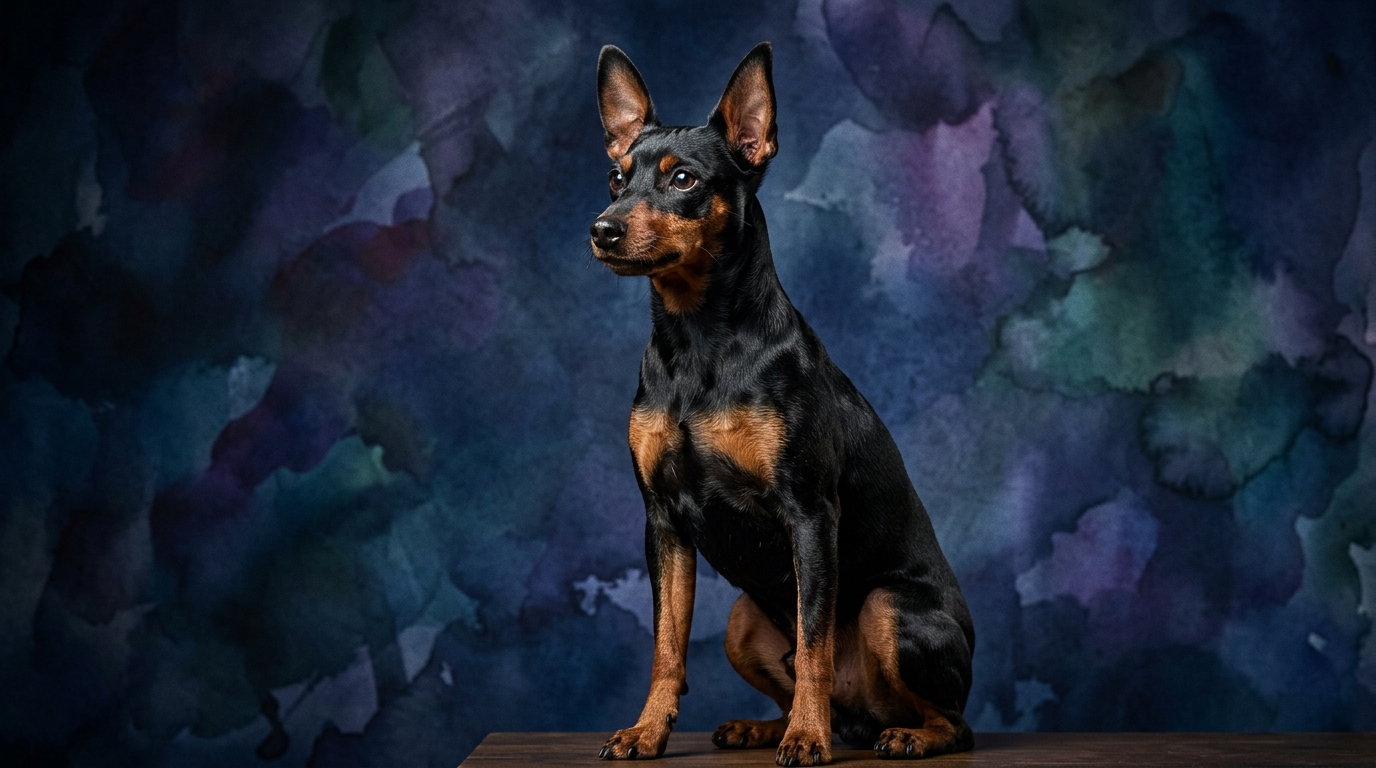
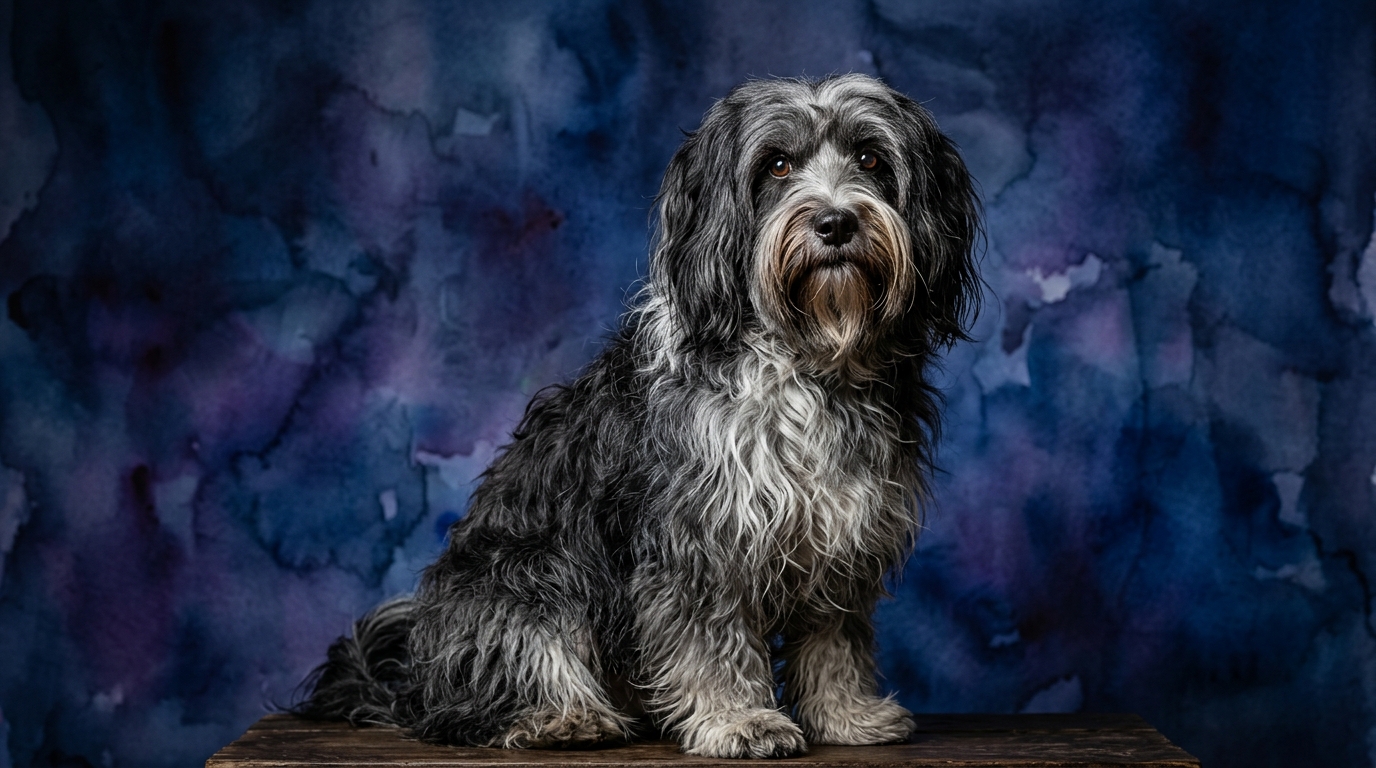
Side-by-Side Cognitive Profile: Miniature Pinscher vs. Tibetan Terrier
The Cosmic Pet Pet IQ Lab assesses canine intelligence across five key dimensions, and remarkably, both the Miniature Pinscher and the Tibetan Terrier share identical scores of 3/5 in each category. However, these scores manifest uniquely in their breed-specific behaviors and approaches to the world.
The Miniature Pinscher, a spirited toy breed, exhibits a Problem Solving score of 3/5, suggesting they are adept at navigating their environment to achieve desired outcomes, often involving ingenuity in securing resources or exploring forbidden spaces. Their Training Speed, also 3/5, indicates they grasp concepts readily, but their independent streak means compliance isn't always guaranteed without compelling motivation. Social Intelligence at 3/5 allows them to read cues and manipulate situations to their benefit, displaying a discerning approach to interactions. An Instinctive Drive of 3/5 manifests as a robust prey drive, territorial barking, and a bold demeanor. Their Memory, rated 3/5, enables them to recall routines and past experiences, both positive and negative, influencing future behaviors.
The Tibetan Terrier, a versatile non-sporting breed, also holds a Problem Solving score of 3/5, showcasing an ability to figure out moderate challenges and adapt to new situations rather than inventing complex solutions. Their Training Speed of 3/5 means they learn at a steady pace, often requiring patience and consistent methods to solidify commands due to their thoughtful, sometimes independent, nature. Social Intelligence at 3/5 allows them to form deep bonds with their family, communicate their needs effectively, and be observant of their surroundings, though they can be reserved with strangers. Their Instinctive Drive, also 3/5, is characterized by strong watchdog tendencies, a natural curiosity, and an inclination towards companionship. With a Memory score of 3/5, they retain training, recognize individuals, and remember past events, contributing to their consistent character.
Where the Miniature Pinscher’s Cognition Shines
Despite identical numerical scores, the Miniature Pinscher often exhibits a more assertive and quick-witted application of its cognitive abilities, particularly in self-serving problem-solving and immediate decision-making. Their "terrier-like" tenacity, originating from their ratter heritage, means they excel at finding creative ways to overcome obstacles that stand between them and their desires, such as opening cabinets or outmaneuvering a gate. This resourcefulness, coupled with a bold and independent spirit, means a Min Pin will often assess a situation rapidly and act decisively, sometimes before a human can intervene. While a Tibetan Terrier might ponder a solution, a Min Pin is often already executing a plan, demonstrating a proactive, rather than reactive, form of intelligence, especially when it comes to navigating their immediate environment and asserting their will. This makes them particularly sharp in situations requiring quick, independent thought, even if that thought leads to mischief.
Where the Tibetan Terrier’s Cognition Excels
The Tibetan Terrier's cognitive strengths often lean towards adaptability, thoughtful observation, and a nuanced understanding of social dynamics within their family unit. While their Problem Solving score is the same, their approach tends to be more methodical and less impulsive than a Min Pin's. Their heritage as companion and guardian dogs in challenging environments has fostered a capacity for sustained focus on tasks and a deeper attunement to human emotional states, allowing them to provide comfort or alert their owners with remarkable precision. This breed demonstrates a measured intelligence, where learning and application of skills are often driven by a desire for companionship and a sense of purpose within the household. Their capacity for patient observation makes them excellent watchdogs, not just barking indiscriminately, but carefully assessing situations before reacting, indicating a sophisticated level of situational awareness that often surpasses the Miniature Pinscher's more immediate, sometimes reactive, responses.
Training Dynamics: Which Breed is More Amenable?
When evaluating ease of training, the Coren ranking provides a crucial insight. The Tibetan Terrier, ranked #63, is generally considered more amenable to obedience training than the Miniature Pinscher, which is not Coren-ranked. This isn't about raw cognitive capacity, as both breeds share a 3/5 Training Speed. Instead, it reflects behavioral differences. Tibetan Terriers, while independent thinkers, often possess a stronger desire for partnership and a more cooperative nature, making them more receptive to consistent, positive reinforcement. They learn at a steady pace and, with patience, will reliably perform commands. Miniature Pinschers, on the other hand, possess a strong-willed, "what's in it for me" attitude. Their quick minds can lead to them learning commands rapidly, but their independent and sometimes stubborn temperament means they might choose to ignore a command if they perceive a more interesting alternative or lack sufficient motivation. Training a Min Pin often requires more creativity, higher value rewards, and an unwavering commitment to consistency to overcome their inherent self-determination.
Lifestyle Match: Active vs. Relaxed Owners
The choice between these two breeds for active versus relaxed owners hinges on the type of activity and companionship desired. The Miniature Pinscher, despite its small size, is a dynamo of energy. They thrive with owners who enjoy structured play, agility, or consistent daily walks and mental challenges that satisfy their inquisitive and assertive nature. Their need for engagement and their bold personality mean they are better suited for active owners who can channel their boundless energy and provide clear leadership. A relaxed owner might find a Min Pin's constant demand for attention and potential for mischief overwhelming. The Tibetan Terrier, while also requiring regular exercise and mental stimulation, offers a more balanced energy profile. They enjoy adventures and walks but are equally content to settle down for a quiet evening with their family. Their adaptability makes them suitable for moderately active owners who appreciate a companion capable of both adventure and calm, seeking a dog that integrates smoothly into various lifestyle rhythms.
The Verdict
Choose the Miniature Pinscher if you are an active, assertive owner seeking a bold, quick-thinking companion who thrives on structured engagement and can appreciate a strong-willed, independent canine spirit.
Opt for the Tibetan Terrier if you desire a thoughtful, adaptable companion who balances activity with calm, values a cooperative training partnership, and appreciates a dog with a loyal, observant nature.
🧠 Find Your Pet's IQ Score
Our Pet IQ Lab assessment covers 25+ tests across 5 cognitive dimensions — personalized to your breed.
Take the Full IQ Test →Frequently Asked Questions
Do Miniature Pinschers and Tibetan Terriers have similar problem-solving abilities?
Both breeds score 3/5 in problem-solving. Miniature Pinschers tend to apply this with quick, independent action, often to satisfy their own curiosity or desires, while Tibetan Terriers approach problems more methodically, with an eye towards adaptability within their environment.
How does the Coren ranking impact their perceived intelligence?
The Coren ranking primarily measures obedience and working intelligence. The Tibetan Terrier's rank of #63 suggests a higher capacity for consistent compliance in training, whereas the Miniature Pinscher's unranked status indicates a more independent and potentially challenging training experience, despite similar underlying cognitive scores.
Are either of these breeds recommended for first-time dog owners?
Both breeds require consistent training and socialization, but the Tibetan Terrier might be slightly more forgiving for a first-time owner due to its generally more cooperative nature and adaptability. Miniature Pinschers often demand a more experienced hand to manage their strong will and assertive personalities effectively.