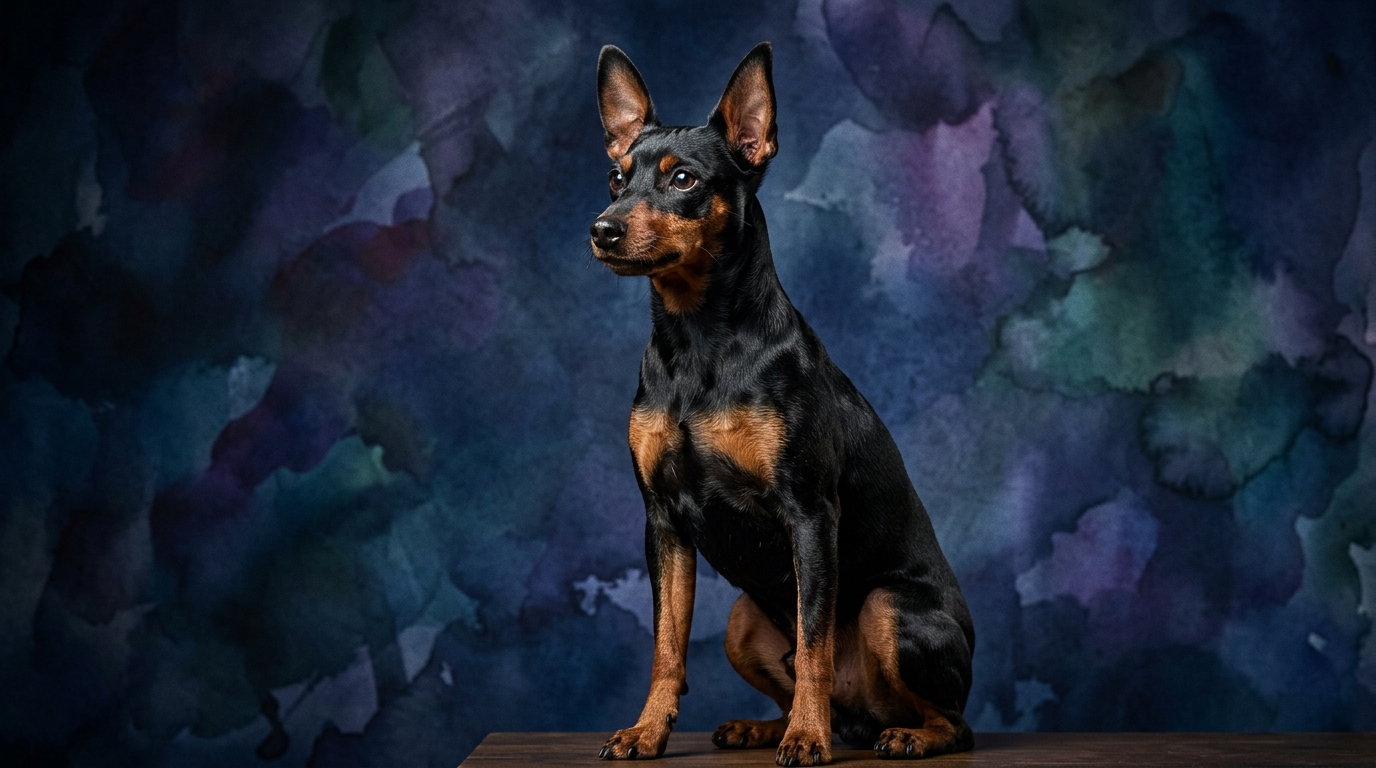
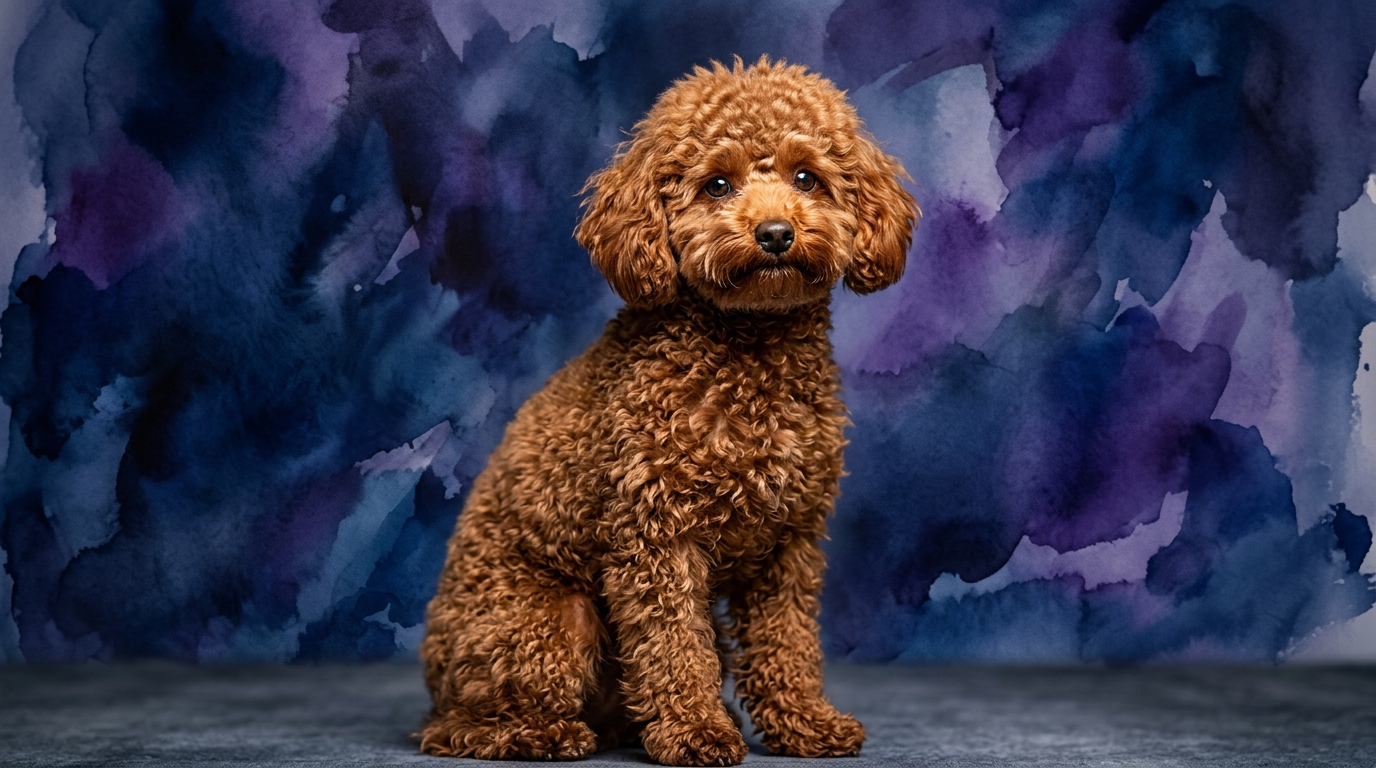
IQ Profile Breakdown
The Cosmic Pet Pet IQ Lab's five-dimensional framework offers a granular view into how these breeds process the world.
Problem Solving: The Miniature Pinscher scores 3/5, indicating a moderate ability to navigate novel situations or puzzles, often through trial-and-error. The Toy Poodle, by contrast, earns a remarkable 5/5, demonstrating superior capacity for strategizing solutions to complex tasks with impressive foresight.
Training Speed: For training speed, the Miniature Pinscher achieves 3/5, suggesting they learn new commands at a moderate pace, typically requiring consistent repetition. The Toy Poodle excels with a 5/5, grasping new instructions with exceptional rapidity, frequently after only a few repetitions.
Social Intelligence: Both breeds share a score of 3/5 in social intelligence. This indicates a moderate understanding of social cues, allowing them to form strong bonds and generally navigate human-canine relationships appropriately, reading basic moods without profound nuance.
Instinctive Drive: In terms of instinctive drive, both also score 3/5. This signifies a moderate level of inherent drives like prey drive or guarding tendencies, which can surface in play or interactions. While present, these drives are typically manageable with appropriate guidance.
Memory: The Miniature Pinscher's memory is rated 3/5, meaning they retain learned information for a moderate duration, benefiting from occasional refreshers. The Toy Poodle showcases exceptional memory recall, earning 5/5, remembering commands, routines, and experiences for extended periods, significantly aiding their training.
Where the Miniature Pinscher Shines Cognitively
While the Toy Poodle boasts top scores, the Miniature Pinscher’s consistent 3/5 across all dimensions points to a balanced, practical intelligence. This equilibrium means the Min Pin is capable without being overwhelmingly dominant in any single cognitive area. Their moderate problem-solving (3/5) suggests a resilient nature; they persist through challenges, often relying on keen observation and an independent spirit. This balanced instinctive drive (3/5) provides enough natural zest and alertness to be engaging companions and effective watchdogs, without being overwhelmingly driven by specific urges demanding constant management. Their social intelligence (3/5) allows them to forge meaningful connections, understanding household dynamics without being overly sensitive. The Min Pin's cognitive profile paints a picture of a self-assured dog, capable of navigating its world with a sensible, grounded approach.
Where the Toy Poodle Excels Cognitively
The Toy Poodle's cognitive profile is marked by exceptional aptitude in specific areas, positioning it as a standout performer. Its 5/5 scores in Problem Solving, Training Speed, and Memory are indicative of a deeply analytical and highly retentive mind. This breed’s superior problem-solving allows it to quickly assess new situations, understand complex sequences, and devise effective strategies for tasks like opening cabinets or mastering agility courses. Their rapid training speed (5/5) means they grasp new concepts and commands with astonishing ease, often requiring only a handful of repetitions. This makes them incredibly rewarding for owners who enjoy advanced obedience or dog sports. Complementing this is their remarkable memory (5/5), ensuring that once a lesson is learned, it is retained for a very long time, allowing for an extensive repertoire of behaviors. The Toy Poodle’s distinction as Coren rank #2 further underscores this operational intelligence, reflecting their consistent ability to understand and execute commands.
Which is Easier to Train and Why
When it comes to ease of training, the Toy Poodle holds a distinct advantage, primarily due to its 5/5 scores in both Training Speed and Memory. A Toy Poodle will pick up new commands and routines with remarkable swiftness, often requiring only a few repetitions before consistent understanding. Their exceptional memory ensures long-term retention, reducing the need for constant refreshers. This combination makes them highly responsive to positive reinforcement and a joy for owners pursuing complex obedience or dog sports. Toy Poodles are generally eager to please and thrive on mental engagement, actively seeking opportunities to learn.
In contrast, the Miniature Pinscher, with its 3/5 in Training Speed and Memory, requires a more patient and consistent approach. While capable of learning, they may take more repetitions to grasp new commands and need frequent refreshers. Their moderate problem-solving (3/5) means they might occasionally test boundaries rather than immediately complying, requiring a firm yet fair hand. Behavioral insights reveal Min Pins possess a strong, independent streak and can be more opinionated, less inherently driven to please. Owners must establish clear expectations and maintain consistency to overcome potential stubbornness, making the training journey a more deliberate process compared to the Poodle's rapid assimilation.
Which Suits Active Owners vs. Relaxed Owners
Understanding these cognitive profiles helps in matching breeds to appropriate lifestyles. For active owners who enjoy engaging in mental and physical challenges, the Toy Poodle is an exceptional match. Its high scores in problem-solving, training speed, and memory mean it thrives on consistent mental stimulation, excelling in activities like agility or complex trick training. An active owner can leverage the Toy Poodle's cognitive prowess to keep them engaged, preventing boredom.
The Miniature Pinscher, while energetic, offers a different dynamic. With its balanced 3/5 scores, it suits owners who appreciate a dog with a robust physical presence and a moderate need for mental engagement. They are spirited and enjoy regular walks and playtime, but their cognitive profile suggests they might be more satisfied with practical daily interactions and less demanding mental challenges than the Toy Poodle. They are well-suited for owners who enjoy an active lifestyle involving regular exercise and consistent, but not necessarily advanced, training.
For more relaxed owners, the distinction becomes even clearer. A relaxed owner might find the Miniature Pinscher’s balanced cognitive profile more forgiving. While still requiring exercise and consistent training, their moderate need for constant mental puzzles makes them less prone to frustration if advanced mental challenges aren't a daily occurrence. The Toy Poodle, conversely, can become bored and develop undesirable behaviors if its substantial cognitive needs are not met. Even with moderate physical activity, a Toy Poodle benefits immensely from regular short bursts of training, puzzle toys, and interactive games to keep its sharp mind occupied, making it potentially less suitable for an owner seeking a truly "low-maintenance" cognitive companion.
The Verdict
Opt for the Miniature Pinscher if you appreciate a balanced, self-assured companion with moderate cognitive demands, requiring consistent but not necessarily complex training, and valuing their independent spirit. They are ideal for owners seeking a spirited, physically active dog that integrates smoothly into a moderately stimulating home.
Select the Toy Poodle if you are an owner eager to engage in advanced training, dog sports, or extensive mental challenges, and you appreciate a highly responsive, quick-learning companion. This breed thrives with consistent mental stimulation and will reward dedicated owners with impressive displays of cognitive ability.
🧠 Find Your Pet's IQ Score
Our Pet IQ Lab assessment covers 25+ tests across 5 cognitive dimensions — personalized to your breed.
Take the Full IQ Test →Frequently Asked Questions
Are Miniature Pinschers truly stubborn?
Miniature Pinschers can exhibit a strong independent streak, which some owners interpret as stubbornness. Their moderate training speed (3/5) means they require consistent, engaging training and clear boundaries to learn effectively, as they are less inherently driven to please than some breeds.
Do Toy Poodles require constant mental exercise?
Toy Poodles, with their exceptional problem-solving, training speed, and memory (all 5/5), thrive on mental stimulation. While "constant" might be an overstatement, they do benefit significantly from regular puzzle toys, training sessions, and interactive games to prevent boredom and channel their cognitive energy constructively.
Which breed is better for first-time dog owners?
For first-time dog owners, the Toy Poodle's eagerness to learn and rapid training speed (5/5) can make the training process very rewarding and build confidence. However, their high mental stimulation needs must be met. A Miniature Pinscher can also be a good choice with consistent guidance, but their independent nature (3/5 training speed) may require more patience and a firmer, more experienced hand in establishing routines.