Side-by-Side Cognitive Profiles: Elkhound vs. Eskie
To truly understand these breeds, we first examine their individual cognitive strengths and how these contribute to their overall intellectual makeup, as measured by our Pet IQ Lab dimensions.
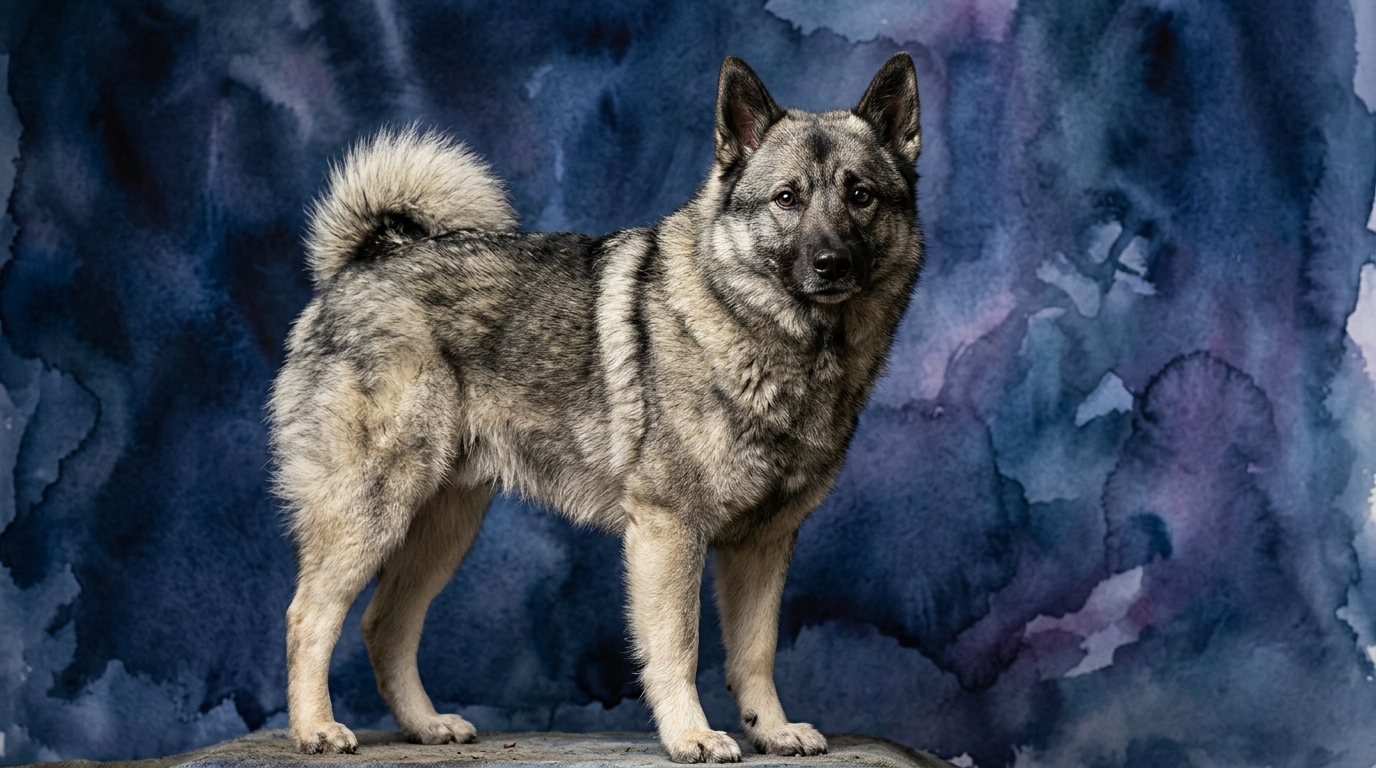
The Norwegian Elkhound, a breed historically valued for its hunting prowess, is recognized by Coren's ranking at #36, reflecting its strong cognitive capabilities. Its Problem Solving is rated 4/5, indicating a high capacity for independent thought and strategic planning, essential for its historical role in tracking and holding large game. This breed can often devise solutions to environmental challenges or training puzzles with notable ingenuity.
Elkhounds' Training Speed is also rated 4/5, meaning they possess a keen desire to learn and a quick grasp of new commands, generally picking up new behaviors rapidly. However, their independent streak means consistent, engaging methods are crucial; they process instructions efficiently and retain them effectively. Their Social Intelligence stands at 3/5; while capable of forming strong bonds with their human families, their social cognition is more focused on pack dynamics and less on universal human-canine social cues, making them more reserved with strangers.
With an Instinctive Drive of 3/5, their deeply ingrained hunting instincts are a significant part of their cognitive makeup, manifesting as a strong prey drive and a natural inclination to explore and scent. This drive influences their focus and motivation, often requiring redirection in a domestic setting. Finally, their Memory is rated 4/5, exhibiting an impressive ability to recall learned behaviors, routines, and even specific locations or scents over extended periods, aiding significantly in training retention and navigating familiar environments.
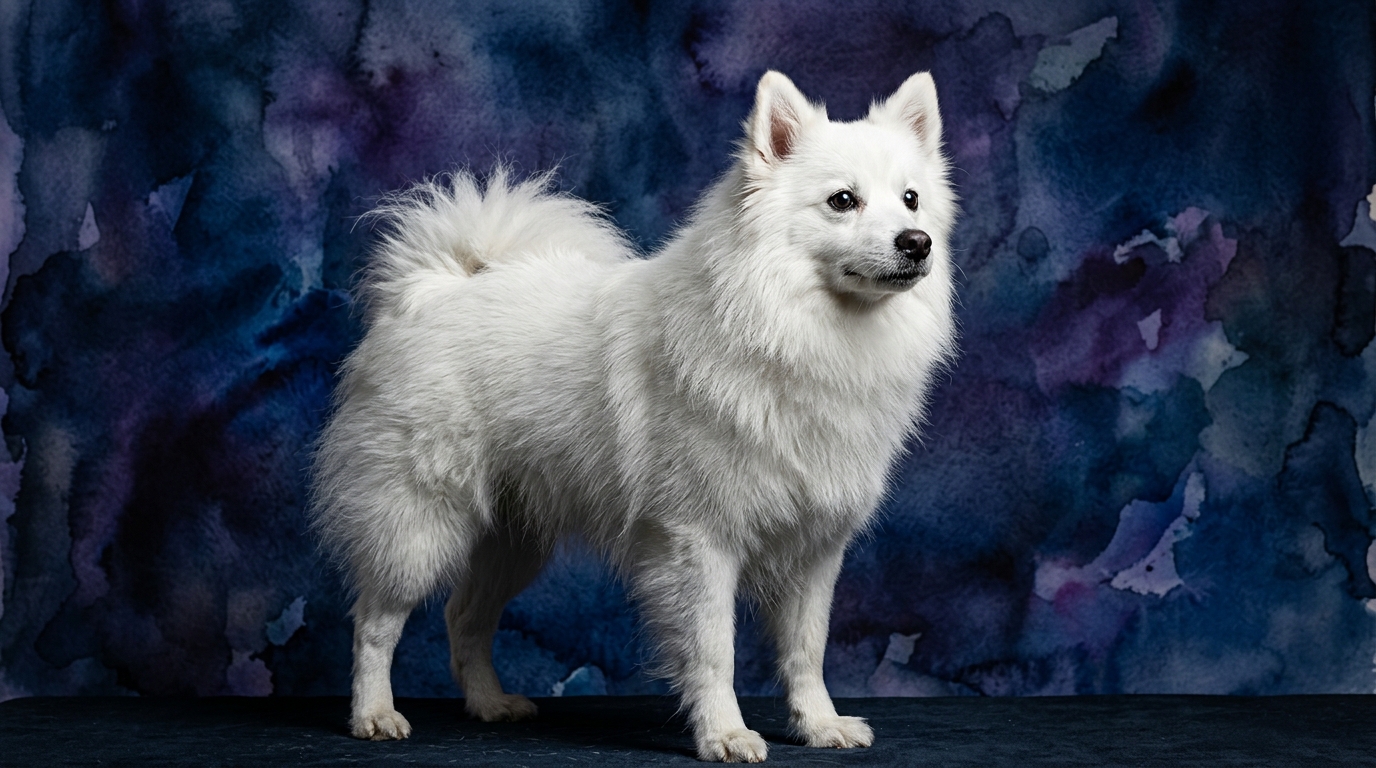
The American Eskimo Dog, though not Coren-ranked, presents a balanced and versatile cognitive profile. Its Problem Solving is rated 3/5, demonstrating a moderate aptitude, often relying on learned strategies rather than spontaneous innovation. They can navigate puzzles and adapt to new situations but might take longer to devise novel solutions. Their Training Speed is 3/5; Eskies are generally eager to please and responsive to positive reinforcement, learning new tasks at a steady pace. While not as lightning-quick as some breeds, their consistency and focus make them willing pupils.
American Eskimo Dogs' Social Intelligence is 3/5; they are renowned for their outgoing and affectionate nature within their family unit, possessing a good understanding of human emotions and social cues. They thrive on interaction and can be quite attuned to their owner's moods. Their Instinctive Drive is also 3/5; while not possessing the intense hunting drive of a hound, Eskies retain a moderate instinct for guarding and companionship, along with a notable vocalization drive. Their historical role as circus performers also hints at an innate desire to perform and engage. Their Memory is rated 3/5, a solid capacity for commands, routines, and familiar faces, which aids in household integration and basic obedience, recalling pleasant experiences and learned associations reliably.
Where the Norwegian Elkhound Excels Cognitively
The Norwegian Elkhound's standout cognitive strengths lie primarily in its superior problem-solving abilities and rapid training assimilation. Their 4/5 rating in both problem-solving and training speed indicates a dog that not only quickly grasps new concepts but also independently applies that knowledge to overcome obstacles. This translates to an animal that is often one step ahead, capable of figuring out how to open a gate or retrieve a hidden toy with minimal assistance. Their superior memory (4/5) further enhances this, allowing them to retain complex sequences of commands or intricate routes, making them adept at advanced obedience or scent work. This combination allows for a more autonomous learning process and a greater capacity for adapting to nuanced, unpredictable situations, making them excellent candidates for complex tasks or competitive dog sports.
Where the American Eskimo Dog Shines Cognitively
While the Elkhound might edge out in raw problem-solving speed, the American Eskimo Dog brings a unique blend of moderate yet consistent cognitive attributes that make it an excellent companion. With a consistent 3/5 across problem-solving, training speed, social intelligence, instinctive drive, and memory, the Eskie demonstrates a balanced and reliable cognitive profile. Their particular strength lies in their strong social intelligence and eagerness to please, which, while rated similarly to the Elkhound, manifests differently through a more overt desire for interaction and understanding human cues. This balance results in a highly adaptable and emotionally responsive dog that can seamlessly integrate into diverse family dynamics, often anticipating needs and reacting with empathy. Their consistency means they are less prone to the independent "thinking for themselves" that can sometimes challenge Elkhound owners, making them remarkably steady and predictable companions.
Training Dynamics: Which Breed is Easier?
Determining which breed is "easier" to train isn't solely about raw intelligence, but rather about alignment with owner expectations and training styles. The Norwegian Elkhound, with its 4/5 training speed, can technically learn commands faster. However, its significant problem-solving ability (4/5) and strong instinctive drive (3/5) mean it often thinks independently and can be quite opinionated. This requires an owner who is patient, consistent, and can make training engaging and rewarding to overcome their occasional stubbornness or tendency to follow their nose. They need a compelling "why" for compliance beyond just pleasing their owner, often responding best to challenges that tap into their innate problem-solving skills and desire for exploration.
Conversely, the American Eskimo Dog, with a 3/5 training speed, might take a bit longer to master a new trick, but their eagerness to please and moderate instinctive drive make them generally more compliant and less likely to challenge authority. They respond exceptionally well to positive reinforcement, thriving on praise and interaction, making them highly motivated to cooperate. For a first-time owner or someone seeking a more straightforward training experience, the Eskie's consistent and cooperative nature often translates to an "easier" journey. They are less likely to diverge from learned behaviors or pursue independent agendas, making them excellent candidates for basic obedience and even trick training where the goal is shared fun rather than independent problem-solving.
Lifestyle Fit: Active Seekers vs. Relaxed Companions
The cognitive makeup of these breeds directly influences their ideal lifestyle. The Norwegian Elkhound, with its robust problem-solving, quick learning, and moderate instinctive drive, thrives with active owners who can channel its mental and physical energy. This breed needs regular engagement in activities that stimulate its mind, such as advanced obedience, agility, hiking, or even scent work, to prevent boredom and destructive behaviors. They are best suited for individuals or families who embrace outdoor adventures and can provide consistent mental challenges to satisfy their independent and strategic thinking, making them a true partner in exploration and activity. Their cognitive profile demands a lifestyle that offers novelty and purposeful engagement.
The American Eskimo Dog, with its balanced cognitive profile and strong social intelligence, is a versatile companion that can adapt to a wider range of owner activity levels. While they certainly enjoy playtime and walks, their need for intense, independent mental stimulation is generally lower than the Elkhound's. They are more content with regular, moderate exercise combined with plenty of family interaction and opportunities to "perform" or be involved in household activities. This makes them suitable for owners who might prefer a more relaxed pace but still value an engaged, responsive, and emotionally attuned canine presence in their daily lives, valuing companionship and shared experiences over demanding physical feats.
The Verdict
Choose the Norwegian Elkhound if you seek a cognitively nimble partner for active pursuits, capable of independent thought and excelling in challenging training scenarios. They thrive with experienced owners who appreciate a dog that thinks for itself and is ready for adventure.
Opt for the American Eskimo Dog if you desire a balanced, eager-to-please companion who excels in social interaction and adapts smoothly to family life, offering a consistent and emotionally responsive presence.
🧠 Find Your Pet's IQ Score
Our Pet IQ Lab assessment covers 25+ tests across 5 cognitive dimensions — personalized to your breed.
Take the Full IQ Test →Frequently Asked Questions
Are Norwegian Elkhounds good for first-time dog owners?
Norwegian Elkhounds can be challenging for first-time owners due to their independent nature, strong prey drive, and need for consistent, engaging training. Their quick minds require an owner committed to mental stimulation and firm but fair leadership to channel their instincts effectively.
Do American Eskimo Dogs bark a lot?
American Eskimo Dogs are known for being vocal, often using barks, howls, and "woos" to communicate, a trait stemming from their instinctive drive for guarding and interaction. Early training to manage vocalization is beneficial, as they can be quite expressive.
Which breed is better for apartment living?
While both breeds can adapt to apartment living with sufficient exercise, the American Eskimo Dog is generally better suited due to its smaller size and slightly lower, though still present, requirement for intense mental and physical activity. The Norwegian Elkhound's independent nature and need for extensive stimulation might make apartment life more challenging without dedicated daily effort.