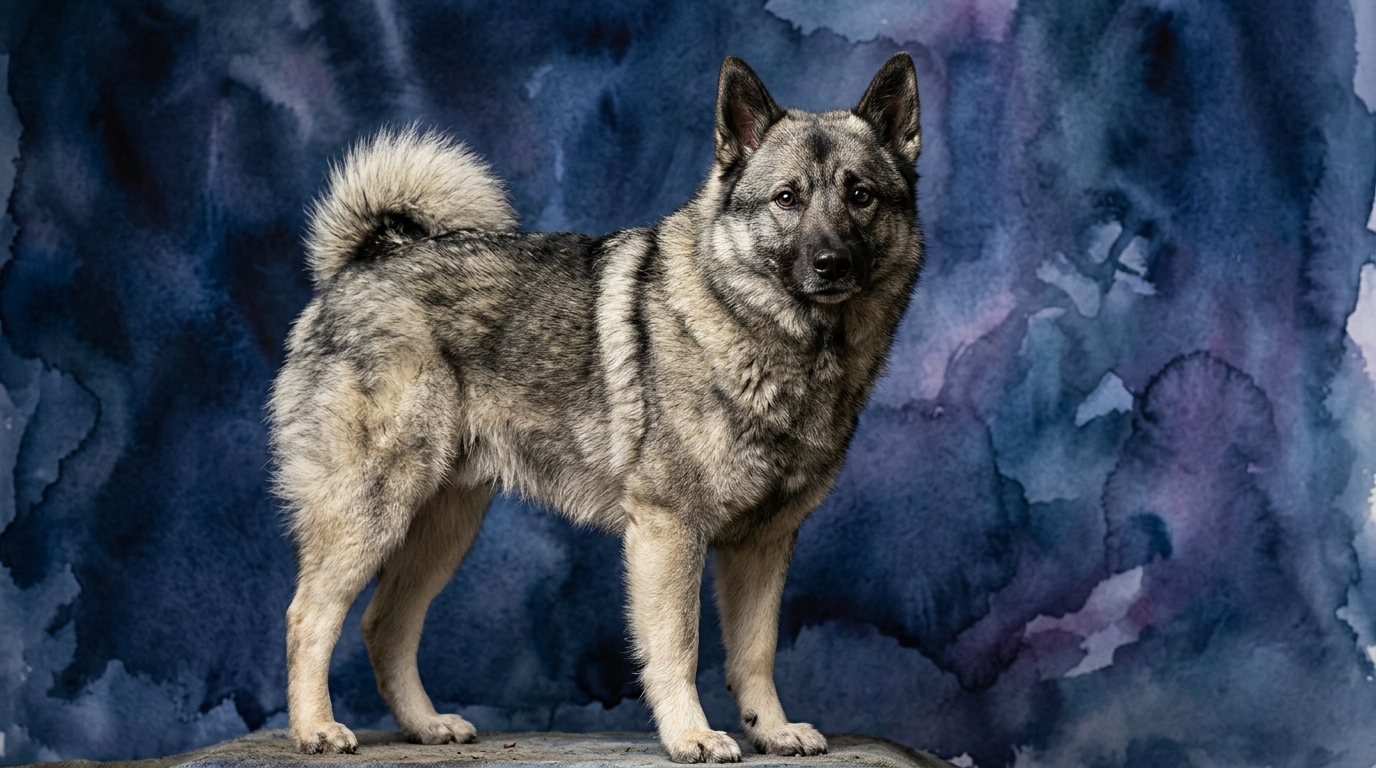
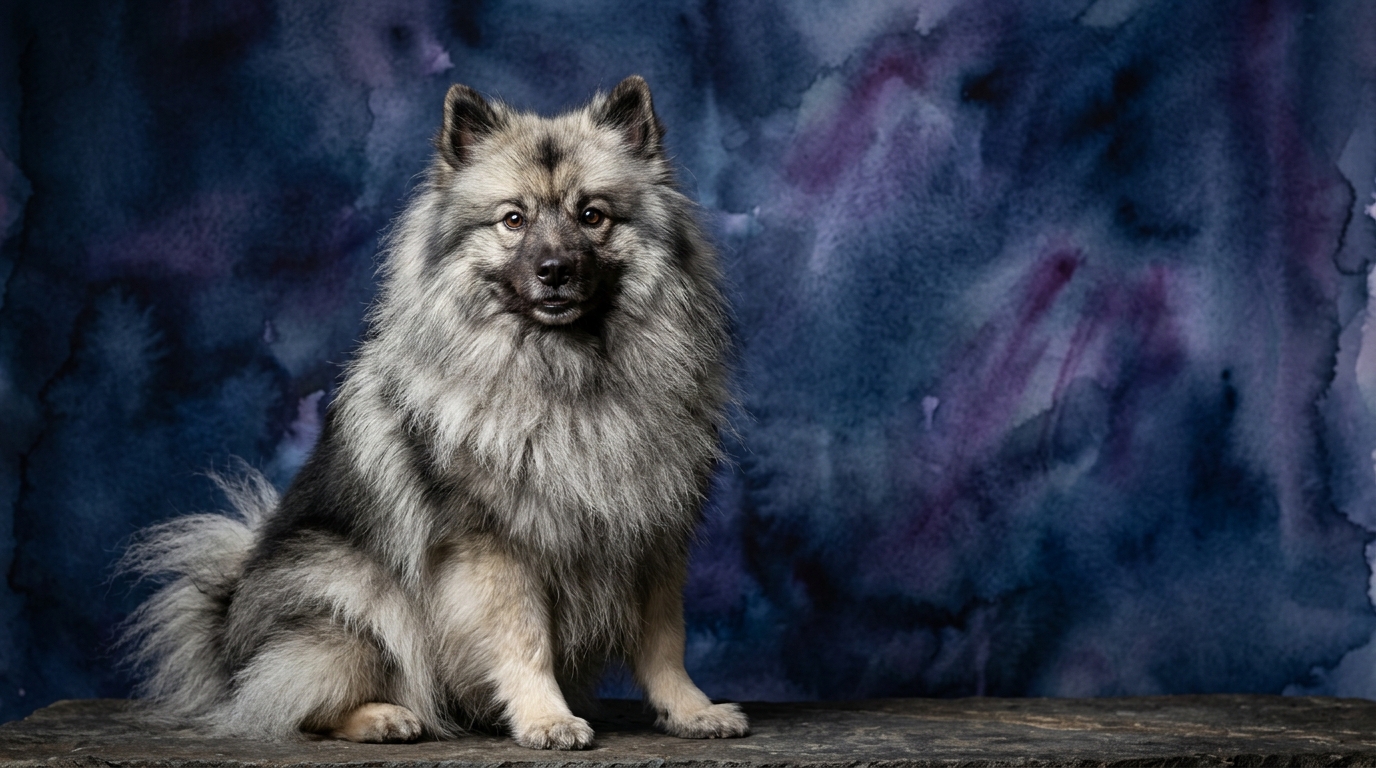
Side-by-Side Cognitive Profile: Elkhound vs. Keeshond
The Cosmic Pet Pet IQ Lab provides a structured framework for understanding canine intelligence, assessing five key dimensions. For the Norwegian Elkhound, ranked #36 by Coren, its cognitive scores reflect a blend of independence and capability. Its Problem Solving is rated 4/5, indicative of a resourceful mind adept at navigating complex situations, a trait honed by centuries of tracking game in challenging terrains. Training Speed also scores 4/5, meaning Elkhounds grasp new commands with commendable pace, though their independent nature necessitates consistent, engaging methods to maintain focus. Social Intelligence stands at 3/5; while deeply loyal to their family, they tend to be reserved with strangers and other animals, requiring careful early socialization. Instinctive Drive is 3/5, manifesting as a persistent desire to explore and track, a legacy of their hound ancestry. Finally, Memory is 4/5, allowing them to effectively retain learned behaviors and routines, aiding in long-term training reinforcement.
The Keeshond, with a significantly higher Coren rank of #16, presents a slightly different cognitive emphasis. Its Problem Solving capability matches the Elkhound at 4/5, demonstrating a clever ability to assess situations and devise solutions, often in pursuit of attention or manipulating objects. Training Speed is also 4/5, indicating a swift learning capacity, though their spirited personality benefits from varied approaches to prevent boredom. Social Intelligence is 3/5, similar to the Elkhound; they form deep bonds within their family but can be discerning or aloof with unfamiliar individuals. Instinctive Drive is rated 3/5, often manifesting as alert barking or a desire to 'herd' family members, a nod to their watchdog heritage. Where the Keeshond truly distinguishes itself is in Memory, earning a perfect 5/5. This exceptional recall allows them to retain an extensive repertoire of commands and social cues with remarkable precision over extended periods, making them highly reliable once a behavior is ingrained.
Where the Norwegian Elkhound Wins Cognitively
While many cognitive dimensions align, the Norwegian Elkhound's unique strengths are deeply rooted in its working heritage. Its Problem Solving skills, rated 4/5, are particularly robust when applied to environmental challenges or tasks requiring sustained focus and independent thought, a direct legacy of tracking large game in rugged terrain. An Elkhound isn't just solving a puzzle; it's navigating a simulated wilderness, using its intellect to overcome physical barriers or track scents, often without direct human guidance. This translates to an inherent resourcefulness that allows them to adapt and persevere in novel situations, demonstrating a practical, hands-on application of their cognitive abilities. Their Instinctive Drive, while rated similarly to the Keeshond at 3/5, is often channeled into more physically demanding, scent-driven tasks, making them particularly adept at activities like scent work or search and rescue simulations where sustained cognitive effort is paired with physical endurance and a keen nose.
Where the Keeshond Wins Cognitively
The Keeshond's cognitive superiority is most evident in its exceptional Memory, scoring a perfect 5/5 compared to the Elkhound's 4/5. This translates to a profound ability to retain an extensive vocabulary of commands, remember complex sequences of actions, and recall social interactions with remarkable accuracy. For owners, this means once a behavior is established, it is deeply ingrained, making the Keeshond a consistently reliable companion. Their higher Coren rank of #16, significantly ahead of the Elkhound's #36, further underscores their superior working and obedience intelligence. This isn't just about learning speed, but also the consistency of their response to known commands, obeying the first command a higher percentage of the time. This keenness to absorb and retain information, coupled with their inherent desire to be near their humans, gives them an edge in formal obedience and complex trick training, where precise recall and consistent execution are paramount.
Which is Easier to Train and Why
Based on their cognitive profiles, the Keeshond generally presents a slightly easier training journey, primarily due to its superior memory and higher Coren rank. While both breeds share a 4/5 Training Speed, the Keeshond's perfect 5/5 Memory means that once a command or behavior is learned, it is less likely to be forgotten, reducing the need for repetitive refresher sessions. Their Coren rank of #16 indicates they typically understand a new command in fewer repetitions and obey the first command more frequently than the Elkhound. This translates to a more fluid and less frustrating training experience for many owners. The Elkhound, with its independent hound nature and strong instinct to follow scents, can sometimes be more challenging to keep focused, requiring more creative and high-value rewards to maintain engagement, especially outdoors. The Keeshond, historically a close companion, often thrives on pleasing its people, making motivation for training more intrinsically tied to human interaction, leading to a more cooperative demeanor during sessions.
Suitability for Active vs. Relaxed Owners
For the active owner seeking a robust partner for outdoor adventures, the Norwegian Elkhound is often the more suitable choice. Its sturdy physical build and historical role as a hunting dog mean it possesses the stamina and desire for extended periods of activity, such as hiking, jogging, or exploring rugged trails. Their moderate Instinctive Drive, particularly for scent work, makes them excellent companions for activities that engage both their body and their nose, thriving when given a 'job' to do outdoors. They require consistent physical exertion to prevent boredom and channel their inherent energy constructively.
Conversely, while also energetic, the Keeshond is generally better suited for owners who prefer a more relaxed lifestyle, albeit one that still includes regular, moderate exercise. Their history as companion and watchdogs means they are content with daily walks, playtime in a secure yard, and ample indoor interaction. They are less inclined to demand intense, prolonged physical exertion in harsh environments, instead preferring to be an integral part of family life, often content to observe their surroundings from a comfortable vantage point after their exercise needs are met. Their strong desire for companionship makes them thrive on being close to their humans, making them excellent house dogs.
The Verdict
Choose the Norwegian Elkhound if you seek a robust, independent partner for outdoor adventures and enjoy engaging a dog with strong problem-solving skills for practical tasks.
Opt for the Keeshond if you prioritize a highly trainable companion with exceptional memory for obedience and tricks, thriving on close family interaction in a more home-centric lifestyle.
🧠 Find Your Pet's IQ Score
Our Pet IQ Lab assessment covers 25+ tests across 5 cognitive dimensions — personalized to your breed.
Take the Full IQ Test →Frequently Asked Questions
Is the Keeshond truly "smarter" than the Norwegian Elkhound?
The Keeshond's Coren rank of #16 compared to the Elkhound's #36 indicates a higher working and obedience intelligence, meaning they generally learn new commands faster and respond more consistently. Their superior memory (5/5) also gives them an edge in retaining information long-term, suggesting a more reliable cognitive performance in structured environments.
Do both breeds require a lot of mental stimulation?
Yes, both breeds benefit significantly from mental engagement, though the nature of stimulation might differ. The Elkhound thrives on activities that tap into its problem-solving and instinctive drive, like scent games or puzzle toys. The Keeshond, with its excellent memory, enjoys learning new tricks, participating in obedience training, and interactive play that engages its quick wit.
Which breed is better for a first-time dog owner?
The Keeshond might be slightly more forgiving for a first-time owner due to its higher trainability, consistent memory, and eagerness to please, which can make the training process smoother. The Elkhound's independent streak and strong hunting instincts require a more experienced hand to guide and manage effectively, potentially posing more challenges for a novice.