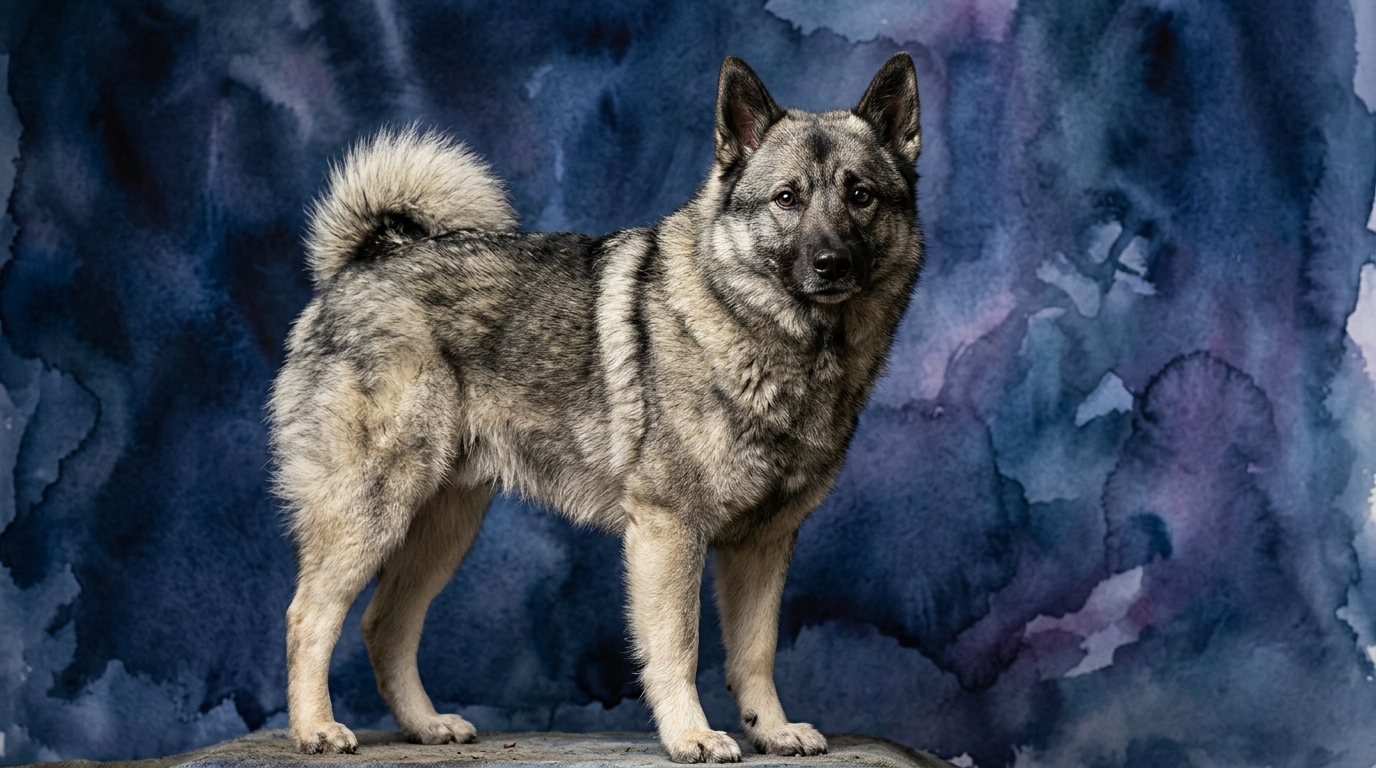
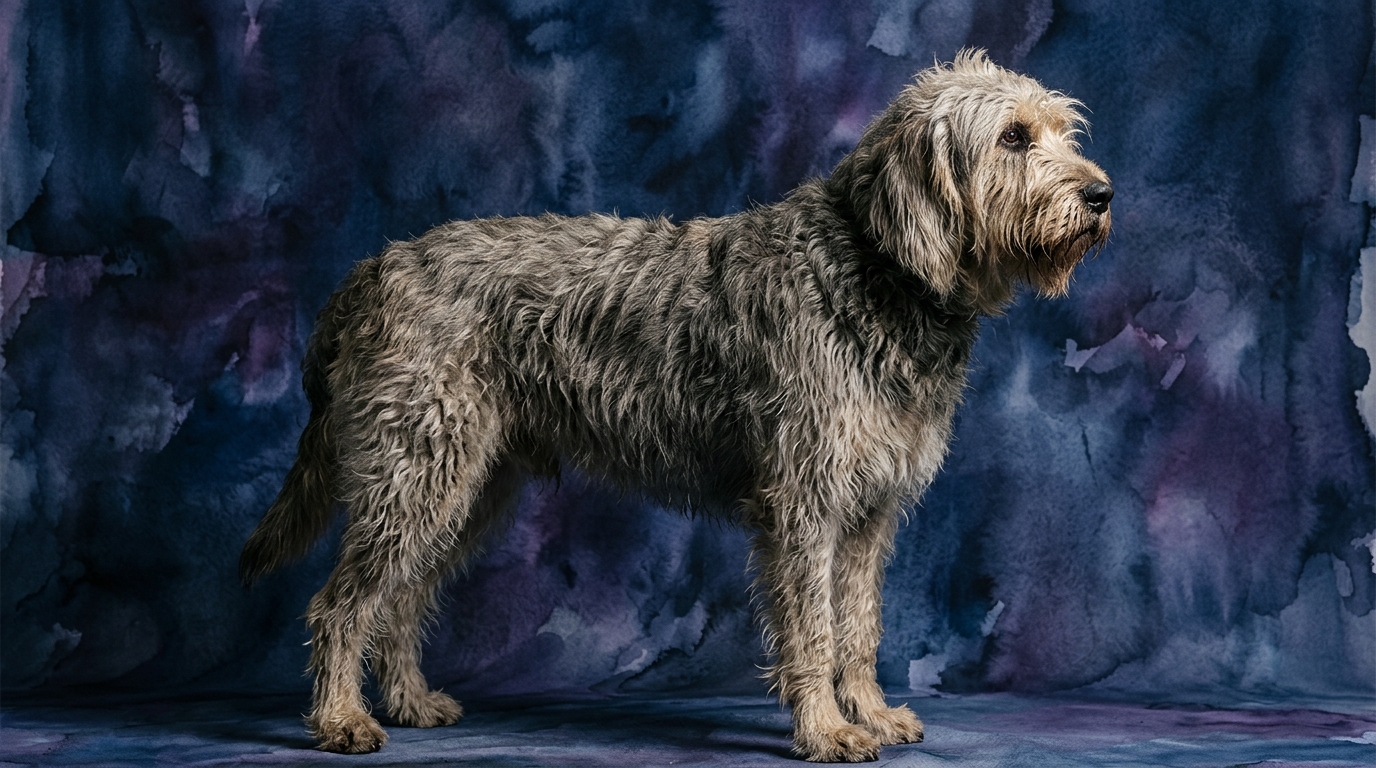
Side-by-Side IQ Profile: Elkhound vs. Otterhound
The Cosmic Pet Pet IQ Lab data provides a granular view of each breed’s cognitive landscape across five crucial dimensions.
**Norwegian Elkhound (Coren Rank #36):** This breed exhibits a notable aptitude for mental engagement.
**Problem Solving (4/5):** Elkhounds display a strong capacity for independent thought, often figuring out how to overcome obstacles or manipulate their environment to achieve desired outcomes. They learn from experience and can apply solutions to novel situations.
**Training Speed (4/5):** Owners will find Elkhounds generally quick to grasp new commands and routines, requiring fewer repetitions to solidify learning. Their responsiveness makes the training process efficient and rewarding.
**Social Intelligence (3/5):** Possessing a moderate social intelligence, Elkhounds understand human cues and pack dynamics, adapting well to family life while maintaining a degree of independent character. They are generally amiable but not overly demanding of constant interaction.
**Instinctive Drive (3/5):** Their historical role as a hunting companion translates into a balanced instinctive drive. While they have a strong prey drive and a desire to explore, it is typically manageable within a domestic setting with appropriate outlets.
**Memory (4/5):** An excellent memory ensures Elkhounds retain learned behaviors, routes, and past experiences effectively. This strong recall supports consistent behavior and aids in long-term training retention.
**Otterhound (Not Coren-Ranked):** This less common breed demonstrates a steady, purposeful cognitive style.
**Problem Solving (3/5):** Otterhounds exhibit practical problem-solving skills, particularly in scenarios related to their primary drive: scent work. They are adept at systematic searching and navigating physical challenges when focused on a task, though perhaps less inclined towards abstract puzzles.
**Training Speed (3/5):** Their training speed is reliable, meaning they learn new commands steadily with consistent reinforcement. While not as immediate as some breeds, once a lesson is learned, it tends to be well-retained.
**Social Intelligence (3/5):** Similar to the Elkhound, Otterhounds possess a moderate social intelligence. They form strong bonds with their families and generally display a good-natured, adaptable temperament in various social settings.
**Instinctive Drive (3/5):** The Otterhound’s instinctive drive is powerfully channeled towards tracking and endurance, honed for long pursuits. This drive manifests as remarkable focus and persistence, which, when properly directed, is a significant asset.
**Memory (3/5):** Otterhounds have a solid memory, enabling them to recall commands and familiar environments consistently. This supports their training and allows them to maintain stable routines, contributing to their dependable nature.
Where the Norwegian Elkhound Wins Cognitively
The Norwegian Elkhound clearly excels in cognitive flexibility and rapid assimilation of new information. Their 4/5 scores in Problem Solving and Training Speed mean they not only grasp concepts quickly but can also apply that understanding to novel situations, making them adept at navigating complex environments or learning multi-step tasks. This breed's superior memory, also rated 4/5, underpins their quicker training speed, allowing them to retain lessons with fewer repetitions and recall them reliably over time, a distinct advantage for owners seeking a responsive and adaptable companion. Furthermore, their problem-solving prowess translates into a dog that can independently figure out solutions, from opening latches to devising play strategies, demanding owners who can provide mentally stimulating outlets and varied challenges.
Where the Otterhound Wins Cognitively
While the Otterhound's scores are consistently solid 3/5s, their cognitive strengths lie in an unwavering dedication to a task, particularly scent-related endeavors. Their problem-solving, though rated 3/5, is profoundly practical and persistent, allowing them to systematically follow a trail over challenging terrain for extended periods, a feat requiring immense focus and sensory processing that few breeds can match. This breed’s robust instinctive drive, also 3/5, combined with its steady memory, makes it a tenacious worker that won't easily abandon a pursuit, showcasing a unique cognitive stamina. Rather than outsmarting a situation with novel approaches, the Otterhound's cognition shines in its methodical, enduring application of its natural abilities, making it an unparalleled partner for specific scent-based activities where steadfast persistence trumps rapid, abstract adaptation. Their steady social intelligence also means they are less prone to anxiety from overly complex social cues, offering a stable, amiable presence that thrives on predictable interactions.
Which is Easier to Train and Why
Based on the Cosmic Pet Pet IQ Lab data, the Norwegian Elkhound is demonstrably easier to train, primarily due to its 4/5 Training Speed and 4/5 Memory scores. An Elkhound will typically pick up new commands and routines with fewer repetitions, retaining them more effectively over time, which translates to a more efficient and less frustrating training process for the owner. For instance, teaching an Elkhound a multi-step retrieve might only require a handful of sessions, while an Otterhound, with its 3/5 Training Speed and Memory, would likely need more consistent reinforcement and patience to solidify the same behavior. The Elkhound's higher problem-solving ability also means they can generalize learned behaviors to new contexts more readily, whereas an Otterhound might require more explicit guidance in varied environments. The Otterhound's strong, single-minded instinctive drive, while valuable for its historical purpose, can also present a training challenge if not properly channeled, often requiring more creative and persistent methods to overcome its natural inclinations and keep its focus.
Suited Owners: Active vs. Relaxed
The Norwegian Elkhound, with its higher scores in problem-solving and memory, generally suits active owners who are prepared to provide significant mental stimulation alongside physical exercise. These dogs thrive on learning new tricks, participating in dog sports like agility or obedience, and engaging in puzzles that challenge their intellect, making them ideal for owners who enjoy interactive training and varied activities. A relaxed owner might find an Elkhound's unmet mental needs leading to innovative, potentially destructive, independent problem-solving around the house. In contrast, the Otterhound, while certainly requiring regular physical activity to satisfy its robust instinctive drive for scent work and endurance, might be a better fit for owners who prioritize consistent outdoor adventures over complex mental gymnastics. Their steady cognitive profile suggests they are less prone to boredom from a lack of novel mental challenges, finding satisfaction in long, purposeful walks, tracking games, or simply being a steady companion, making them suitable for active owners who appreciate a more straightforward, yet equally engaged, canine partner.
The Verdict
Choose the Norwegian Elkhound if you seek a highly trainable, adaptable companion keen on learning new skills and engaging in complex mental activities, ideal for owners who enjoy interactive challenges and consistent intellectual stimulation. This breed thrives with an owner who can harness its quick grasp and problem-solving talents.
Opt for the Otterhound if you value unwavering persistence, a robust scent drive, and a steady, good-natured temperament, particularly if you are an active individual who enjoys long outdoor excursions and can provide consistent, patient guidance. This breed excels as a devoted companion in environments that allow its natural tracking abilities to flourish.
🧠 Find Your Pet's IQ Score
Our Pet IQ Lab assessment covers 25+ tests across 5 cognitive dimensions — personalized to your breed.
Take the Full IQ Test →Frequently Asked Questions
Are Norwegian Elkhounds good family dogs for first-time owners?
Norwegian Elkhounds can be good family dogs, especially for first-time owners willing to invest in consistent training and mental engagement. Their 4/5 training speed and memory make them responsive learners, but their independence and problem-solving require an owner who understands the importance of structured activities to prevent boredom and mischief.
How much exercise does an Otterhound need daily?
Otterhounds require substantial daily exercise, typically an hour or more of vigorous activity, due to their strong instinctive drive and endurance. This should include opportunities for long walks, scent work, or swimming to satisfy their physical and mental needs, preventing boredom and channeling their energy in constructive ways.
Do Otterhounds have a strong prey drive, and how does it compare to Elkhounds?
Both breeds possess a notable prey drive, but it manifests differently. The Otterhound's 3/5 instinctive drive is characterized by tenacious scent tracking, making them highly focused on a trail once they pick it up. The Elkhound's 3/5 drive involves more general hunting instincts for larger game. An Otterhound will likely be more single-mindedly focused on a scent, requiring careful leash management and secure fencing.