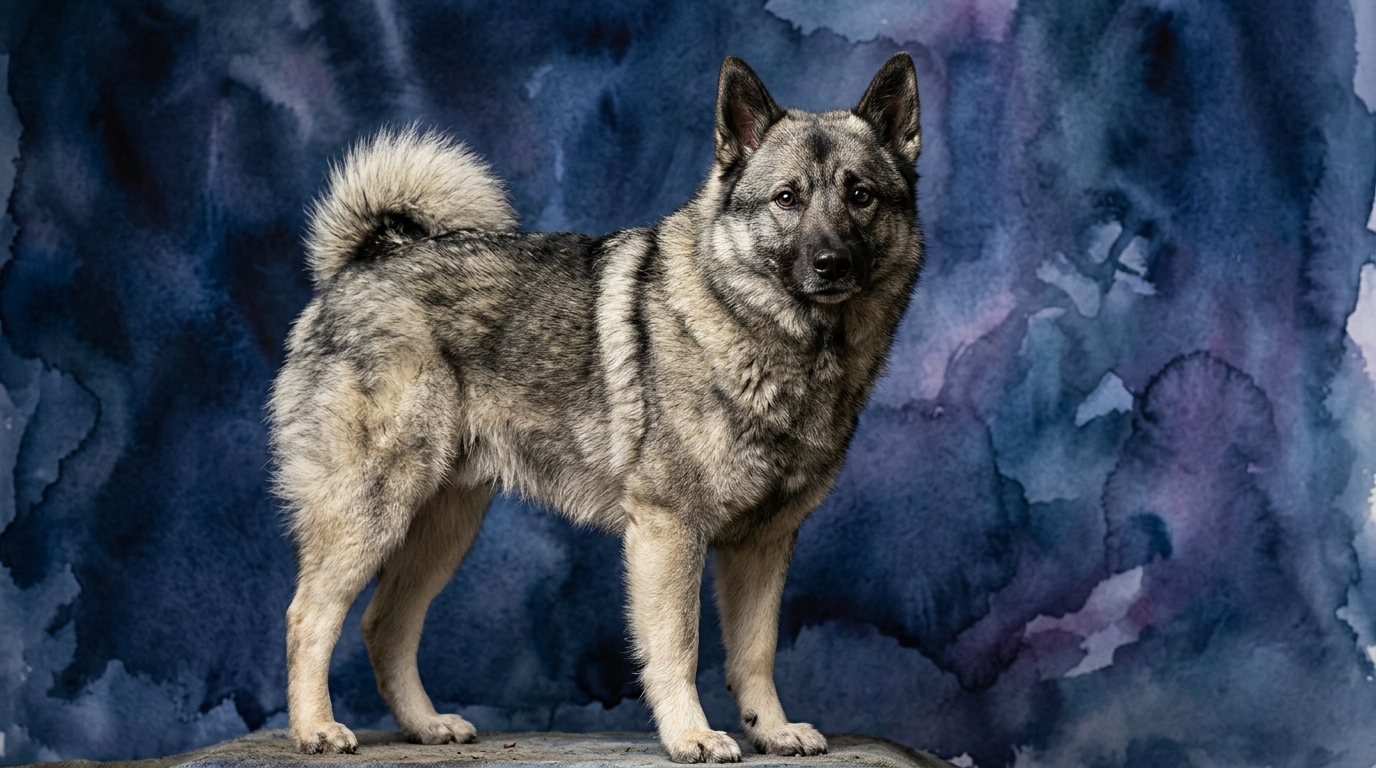
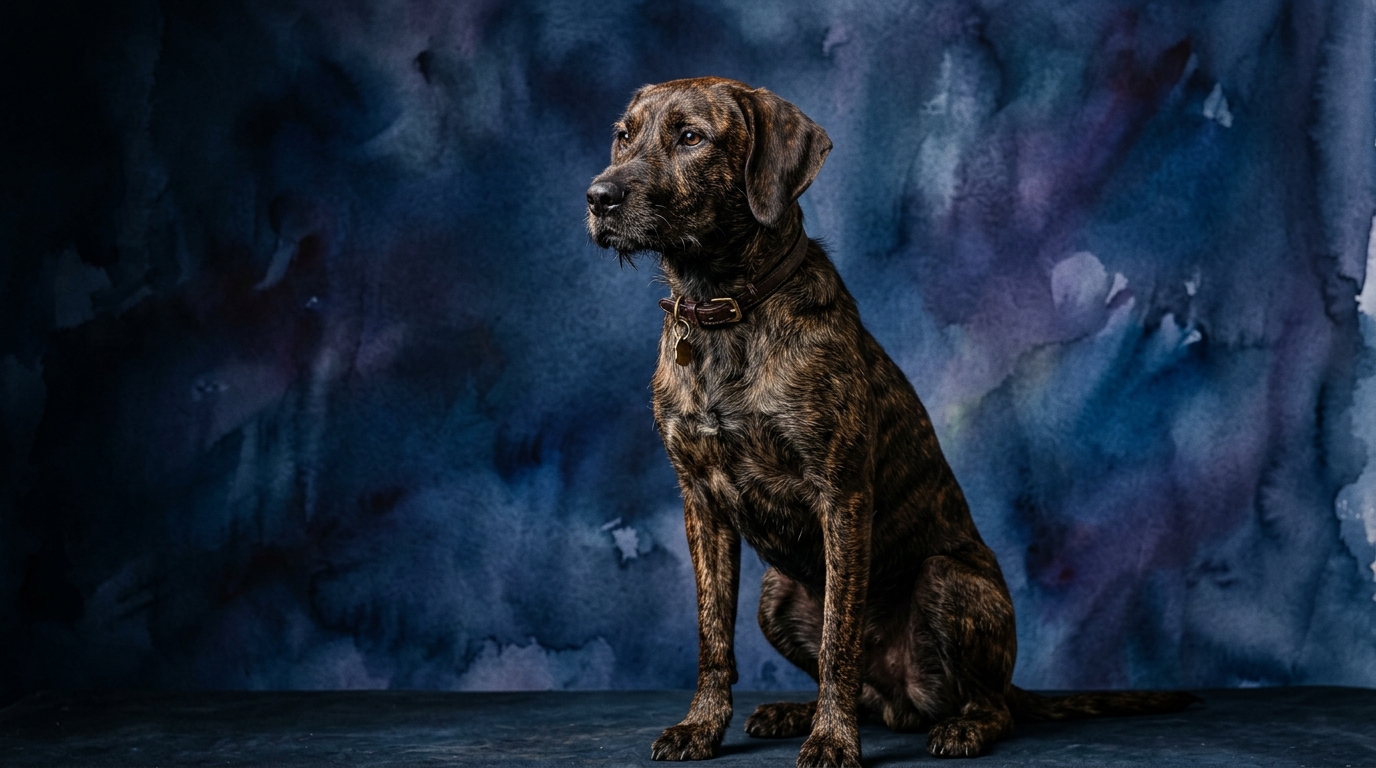
Side-by-Side IQ Profile: Elkhound vs. Plott Hound
The Cosmic Pet Pet IQ Lab employs a five-dimensional framework to assess canine intelligence, revealing nuanced differences between breeds. For the Norwegian Elkhound, a breed recognized by Coren at rank #36, we observe a robust problem-solving capacity rated at 4/5, indicating an ability to navigate complex situations and strategize effectively. Their training speed also scores 4/5, suggesting a quick grasp of new commands and routines. Social intelligence stands at 3/5, pointing to a moderate understanding of human cues and group dynamics, while instinctive drive is 3/5, reflecting a balanced, yet present, urge for their traditional working roles. Memory, crucial for learning and recall, is strong at 4/5, enabling them to retain information over time.
In contrast, the Plott Hound, a breed not appearing on Coren's general intelligence rankings, presents a more focused, albeit slightly lower, cognitive profile across several dimensions. Their problem-solving ability is rated 3/5, suggesting they can tackle challenges but might rely more on trial-and-error or persistence than intricate planning. Training speed is also 3/5, indicating they are trainable but may require more repetition and patience to solidify new behaviors. Social intelligence mirrors the Elkhound at 3/5, suggesting similar capacities for interaction. Instinctive drive, central to their heritage, is 3/5, reflecting a powerful, directed prey drive. Memory for the Plott Hound is 3/5, meaning they can recall learned behaviors and experiences, though perhaps not with the same immediate precision as their Elkhound counterparts.
Where the Norwegian Elkhound Holds a Cognitive Edge
The Norwegian Elkhound demonstrates a clear advantage in cognitive flexibility and retention, scoring 4/5 in both problem-solving and memory compared to the Plott Hound’s 3/5 in these areas. This enhanced problem-solving means Elkhounds are often quicker to analyze new scenarios, figure out how to open a tricky gate, or understand multi-step commands without extensive prior exposure. Their ability to connect cause and effect appears more readily accessible.
Furthermore, the Elkhound’s superior memory contributes to faster and more consistent learning. They are more likely to remember a sequence of commands after fewer repetitions and retain those lessons over longer periods. This cognitive strength allows them to adapt more fluidly to varied environments and learning tasks, making them potentially more versatile in activities that demand rapid assimilation of new information or complex behavioral chains.
Understanding the Plott Hound's Unique Cognitive Strengths
While the Plott Hound may not outscore the Elkhound in general problem-solving or memory, its cognitive profile is uniquely optimized for its historical purpose: tracking and baying large game. The Plott's instinctive drive, rated 3/5, while numerically equal to the Elkhound's, manifests with an unparalleled focus and tenacity when engaging their scenting abilities. This isn't just about the presence of an instinct, but its singular intensity and direction.
Their 3/5 social intelligence, combined with their determined drive, fosters an independence that, in their working context, can be seen as a strength. A Plott Hound is bred to work autonomously, often far from its handler, relying on its own judgment and unwavering pursuit of a scent trail. This single-minded dedication, even if it translates to a slightly slower training speed in general obedience, is a cognitive advantage in their specialized field, allowing them to block out distractions and persevere where other breeds might falter.
Ease of Training: Behavioral Differences in Action
When it comes to general obedience and learning new commands, the Norwegian Elkhound generally presents as the easier breed to train. Their 4/5 training speed and 4/5 memory mean they typically pick up new cues more quickly and retain them with fewer repetitions. An Elkhound is often eager to engage with its owner in training sessions, showing a willingness to understand and comply, which stems from their balanced social intelligence and problem-solving aptitude. They tend to generalize learned behaviors more readily to different environments, making training progress feel more consistent.
The Plott Hound, with a 3/5 training speed and 3/5 memory, requires a more patient and consistent approach. Their powerful instinctive drive, while not higher in score, often means their nose can override their ears. They are trainable, but their independent nature and single-minded focus on scent can make them appear more stubborn or less responsive to traditional obedience cues, especially when a compelling scent is present. Training a Plott often involves harnessing their drive, making it part of the reward system, rather than trying to suppress it entirely, which requires a deeper understanding of hound behavior and motivation.
Matching Breeds to Owner Lifestyles: Active vs. Engaged
Neither the Norwegian Elkhound nor the Plott Hound are suited for truly 'relaxed' owners in the sense of minimal daily engagement. Both breeds require substantial mental and physical activity. However, the *type* of activity they thrive on differs. The Norwegian Elkhound, with its higher problem-solving and memory scores, flourishes with varied activities that challenge both its body and mind. Owners who enjoy hiking, agility, obedience trials, or even complex trick training will find a willing and capable partner in an Elkhound. They appreciate a diverse routine and thrive on intellectual engagement alongside their physical exercise.
The Plott Hound, while also demanding high activity, requires a more specific outlet for its powerful, scent-driven instincts. Owners who are passionate about scent work, hunting, or activities like tracking and barn hunting will find the Plott Hound in its element. Their endurance is formidable, and they need sustained physical exertion that allows them to use their nose and follow a trail. A 'relaxed' owner who cannot dedicate time to fulfilling this intrinsic drive will likely find a Plott Hound becoming restless and potentially destructive, as their cognitive strengths are tied to their specialized working heritage.
The Verdict: When to Choose Each Breed
The Verdict
Choose a Norwegian Elkhound if you seek a versatile, quick-learning companion eager for varied mental and physical challenges, and you appreciate a dog that adapts readily to diverse training activities and family life.
Opt for a Plott Hound if you are an experienced, dedicated owner prepared to channel a powerful, independent scent drive through consistent, focused training and provide ample opportunities for their specialized tracking abilities.
🧠 Find Your Pet's IQ Score
Our Pet IQ Lab assessment covers 25+ tests across 5 cognitive dimensions — personalized to your breed.
Take the Full IQ Test →Frequently Asked Questions
Are Plott Hounds difficult to train for basic obedience?
Plott Hounds can be more challenging for basic obedience due to their independent nature and strong scent drive. They require patience, consistency, and often benefit from training methods that incorporate their natural tracking instincts to keep them engaged and motivated.
Do Norwegian Elkhounds need a lot of exercise and mental stimulation?
Yes, Norwegian Elkhounds require significant daily exercise and mental stimulation. Their background as hunting dogs means they thrive on activities that engage their problem-solving abilities and physical stamina, such as long walks, hikes, and interactive training sessions.
Which breed is generally better suited for a first-time dog owner?
Given their quicker training speed and more adaptable nature, the Norwegian Elkhound is generally a more manageable choice for a first-time dog owner. Plott Hounds, with their intense drive and independence, typically benefit from an owner with prior experience handling working hounds.